Olsztyn, Poland – detailed information about the city. Guide to Olsztyn: popular attractions with photos and descriptions.
Contents
Olsztyn
Olsztyn is an ancient city located in the north of Poland the banks of the river Lyna. This is the administrative center of the Warminsko-Mazury voivodship
- Story
- Nature and parks
- Kitchen
- Accommodation and best time to visit
- Sights of Olsztyn
- Shopping and shopping
Olsztyn history
The history of Olsztyn is closely connected with the history of Warmia – the historical areas on the southern coast of the Baltic Sea. For 6 centuries of its existence, the city has repeatedly changed the state and territorial affiliation, on his land were erased and intertwined with different ethnic, cultural and religious influences and traditions.
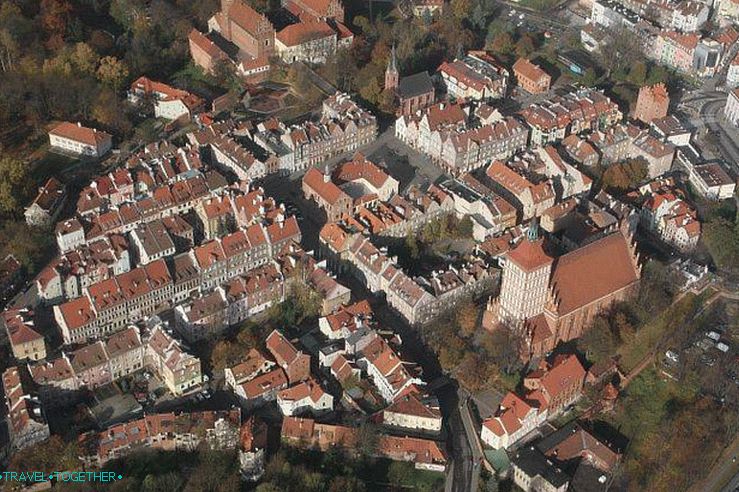 Panorama Olsztyn
It is known that the first settlements on the site of the modern cities were from the epochs of Neolithic, bronze and iron. In the thirteenth century the surrounding lands inhabited by the Prussian tribes were seized Knights of the Teutonic Order and transferred to the Diocese of Varmia. AT this time here was built the first watchtower in the bend Ыyni.
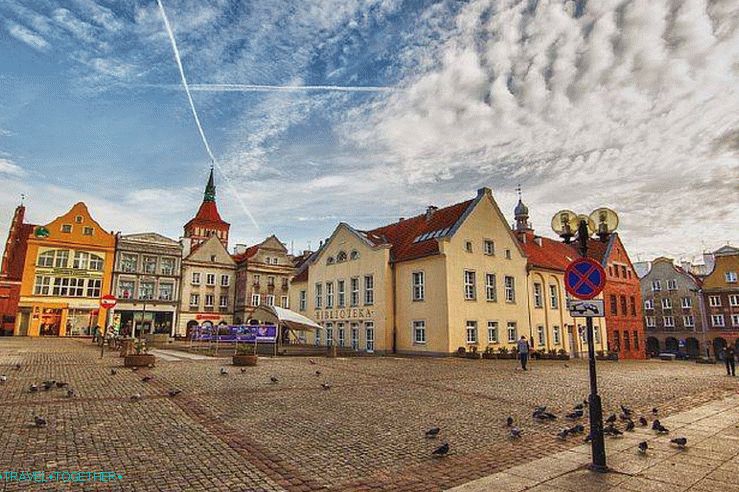 Historical Centre
The foundation of Olsztyn dates from the mid-14th century. The founder of the city and his future mayor was Jan Lice, who later for services he received the nobility and became an important person in Warmia.
The city was given the name Allenstein, from the Prussian name Lyna – Alna (which means “doe”). The German word “stein” in this sense interpreted as a “castle,” that is, a castle on Alna. Current city name – this is Polish compliance with the primary name used the local population for centuries.
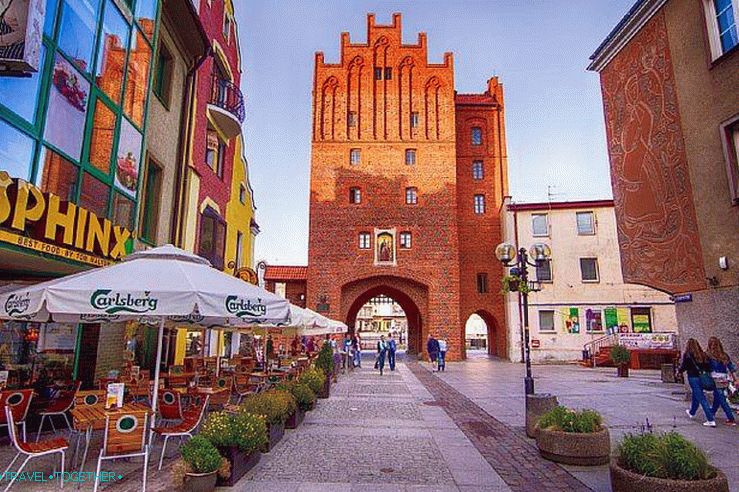
At this time, the city is actively growing and strengthening. Built powerful defenses. Over time, a series of defense walls was closed by the Upper Gate, then called High and preserved to this day.
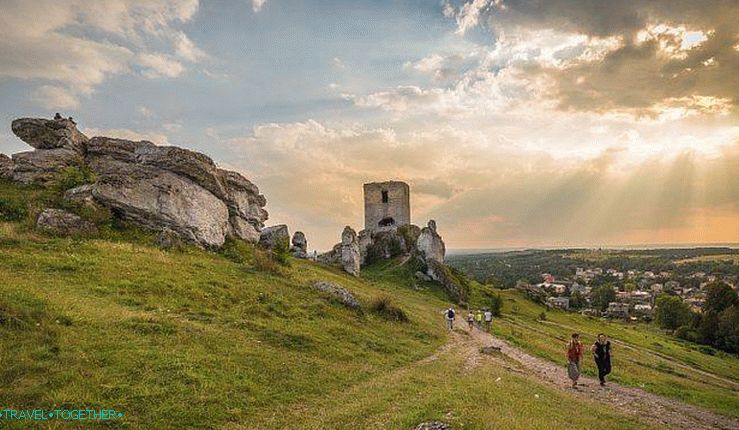 Ruin Olsztyn Castle
In the 15th century, conflicts between the Teutonic Order and Poland. During the great war in 1410, Olsztyn the castle was surrendered to the Polish king. After the end of the struggle Olsztyn returned to the possession of the Teutonic Order. However, for several years now later – in 1414 during the famine war – the troops of king Jagiela robbed the city.
The following clashes occurred here during thirteen years of the war launched by the Prussian Union, to which Olsztyn joined in 1440. At the beginning of 1454 the townspeople seized the castle. As a result of betrayal, a year and a half later, the city and castle occupied crusaders. After a series of conflicts and the transition Warmia Bishop to the Polish side in Olsztyn temporarily settled royal retinue.
Compiled in 1466, the II Torun world gave the city along with whole Warmia under the domination of the Polish Crown. However, the conflict is not ended and in 1478 Olsztyn was involved in internecine “princely war” between the Bishop of Warmia, Nicholas Tungen and Polish king, which lasted almost 2 centuries.
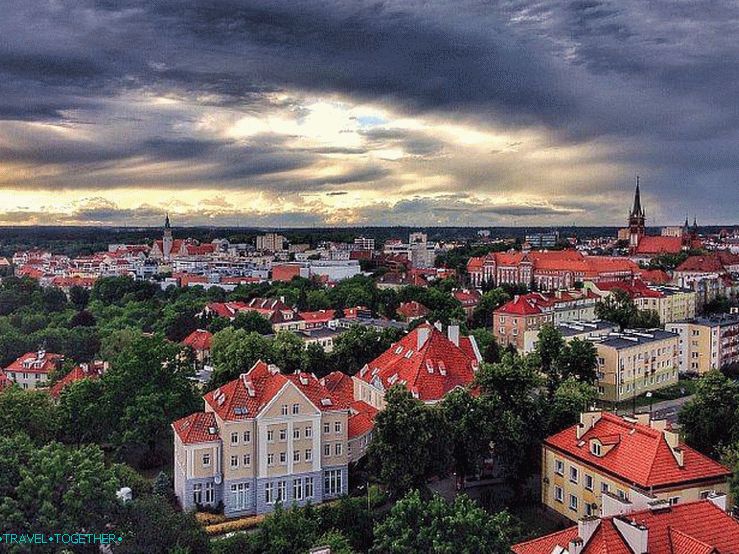 Panorama Olsztyn
At the beginning of the 16th century, Nicolaus Copernicus lived in the city. Great astronomer He performed the duties of mayor in the city in 1516-19 and 1520-21. He was engaged in settling the surrounding villages, wrote a treatise on the monetary units and led astronomical observations.
After the secularization of the Teutonic Order and the triumph of the Prussians in 1525 came the decades of the world, here called the “golden age Warmia “. During this period Olsztyn was built and grew rich.
Unfortunately, the prosperity period ended with a lot fire in 1620, which destroyed all buildings except church and castle. The next disaster was the plague in 1624.
The following fires (1669, 1708, 1712) and the raids of the Swedish troops in process III northern (1703-04, 1708) war ended destruction of the city, and most of his fall helped the plague epidemic, which in 1709-10 destroyed a significant part of its population.
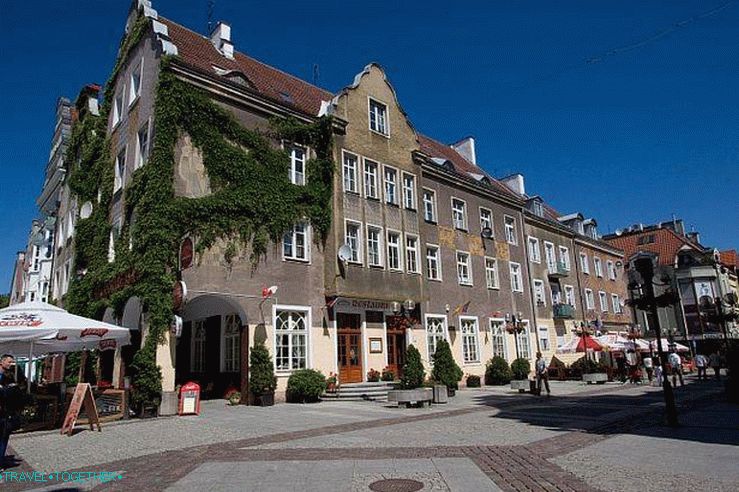 Historical Centre
In 1772, as a result of the first partition of Poland, Olsztyn, along with the rest of Warmia was in Prussia.
In 1836 the position of burgomaster was taken by Jacob Rarkovsky and was mayor of the city for 29 years. Throughout this Olsztyn time bloomed, dried remnants of the urban moat, paved and the streets are lit up, the bathing area and the first city school are open, laid parks and Korotov Yakubovo.
At the end of the 19th century, the city developed industry, the city turned into a major industrial center. Dynamic period Development violated the First World War. Also the city is very strong suffered during the second world war. Recovery cities lasted until the end of the 50s of the 20th century.
Nature and parks
Although it is the largest city and capital Voivodeship, the nature of Olsztyn is quite picturesque. Around cities there are 11 lakes and 4 small reservoirs. They are located in mainly in the western part of the city. The eastern part of Olsztyn may boast only three lakes at the very edge of the city.
Between the western and eastern parts of the city, along its northern border extends City Forest. Having an area of about 1300 hectares, it is one of the largest urban forest complexes in Europe. He can be proud of his long a story that began with the founding of the city.
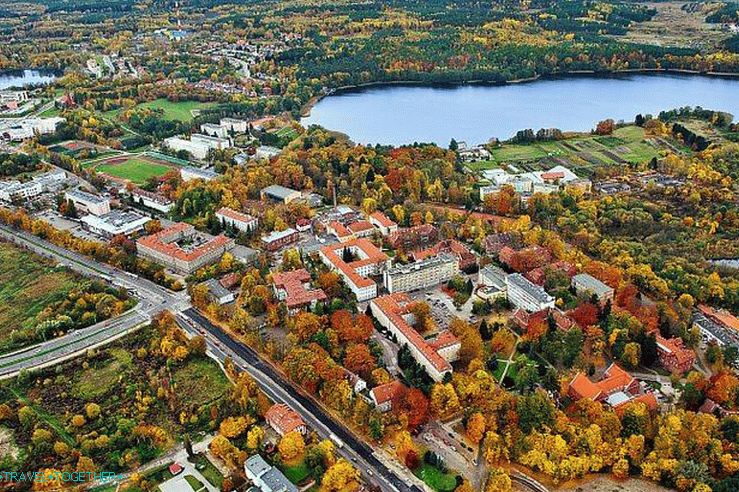 Neighborhood Olsztyn – forests and lakes
The Park was established adjacent to the City Forest in 1862. Yakubovo with Mummel lake (0.3 hectares), castle park stretching along Lyna and the Old City and Park them. Kusotsinskogo.
The southern part of Olsztyn is adjacent to this forest, which is rare happens in big cities. In close proximity are located 11 reserves and many tourist routes. Therefore, if You love nature in Olsztyn. You will definitely like it.
Kitchen
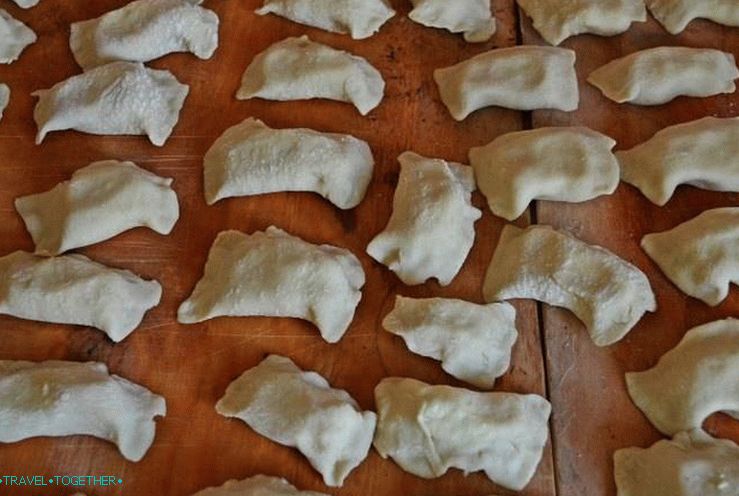
Warmian cuisine is primarily a variety of dishes, reflecting the history of lands on which the influences of many cultures and ethnic groups as well as culinary traditions. Kitchen the region combines the old Polish traditions, Mazur, Kurpie, as well as the culinary traditions of Germany, Russia, Ukraine. In the kitchen, many dishes of meat, cabbage, potatoes, and flour products – dumplings and dumplings, Warmian dumplings. Is rich Warmian cuisine and fish dishes that are wealth Warmia and Mazur. The most popular are pike, zander, eel, whitefish and perch. Fresh and mouth-watering regional specialties can be enjoyed at numerous catering establishments in the territory cities.
One of the regional products that Olsztyn is famous for is the beer of the local brewery “Kormoran”. Traditional unpasteurized drink A real gift for gourmets. In its range of brewing the plant has a wide selection of beers: classic beer, drinks with different flavors based on recipes from around the world, and also lavender beer. Regional beer is bottled in many local pubs.
Accommodation and best time to visit Olsztyn
Find accommodation in Olsztyn is not difficult. Here is located there are enough hotels for every taste and budget. The main thing to book accommodation needs to be in advance. I recommend to book hotels in historical downtown.
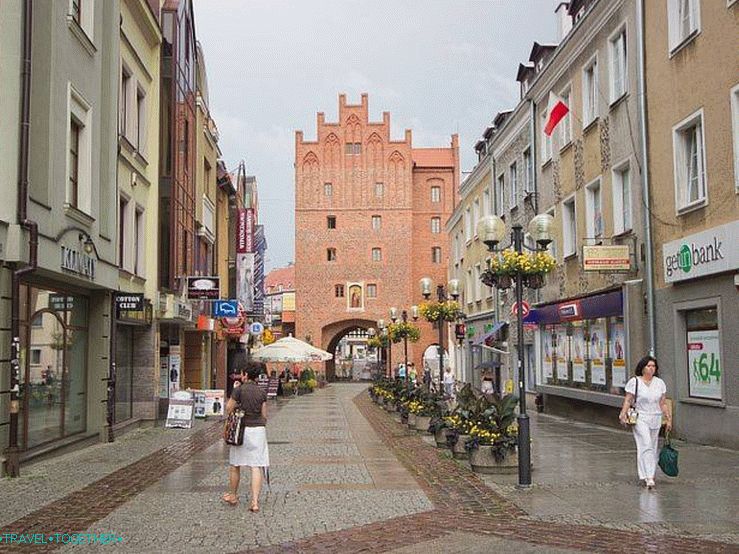 the main street cities
Despite the fact that you can always come to Olsztyn during best time to visit this beautiful city April-May and September-October.
Sights of Olsztyn
The most important sights of Olsztyn:
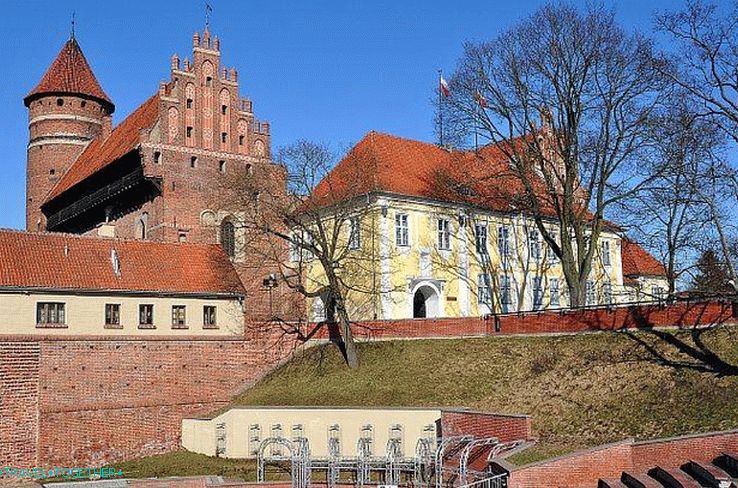
Olsztyn Castle – built in the fourteenth century in the Gothic style. The castle began to be built in 1346 and at first it consisted of single wing. He was surrounded by defensive walls and a moat. To get in the lock could be on a drawbridge.
 Gothic castle in Olsztyn
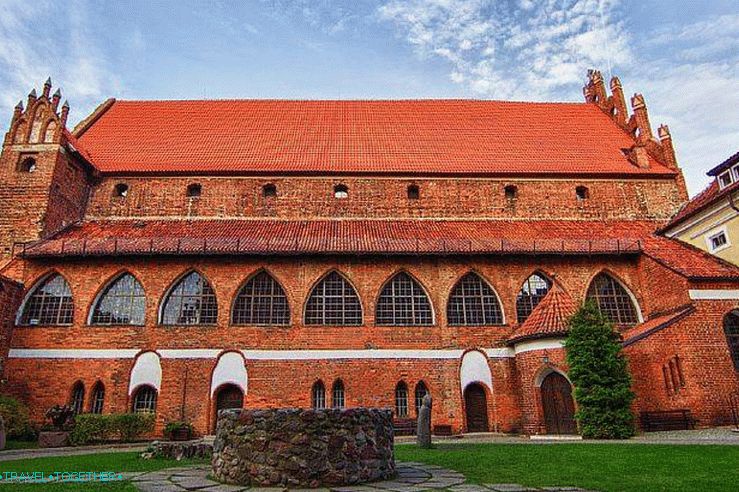
The southwestern wing of the castle was built in the fifteenth century. Tower was built in the middle of the fourteenth century. Rebuilt at the beginning sixteenth century in a round shape with a square base. Height towers 40 meters. At the same time, the castle walls were raised to a height 12 meters and supplemented by a second belt of fortifications and fortified towers.
 Courtyard the castle
The walls of the castle combined with the city walls and created a powerful Bastion to protect Olsztyn. Today, the castle is a regional the museum.
The High (Upper) Gate is a 14th century city gate, which were used to access a well-preserved city part of the original city fortifications of Olsztyn.
 High (Upper) Gate
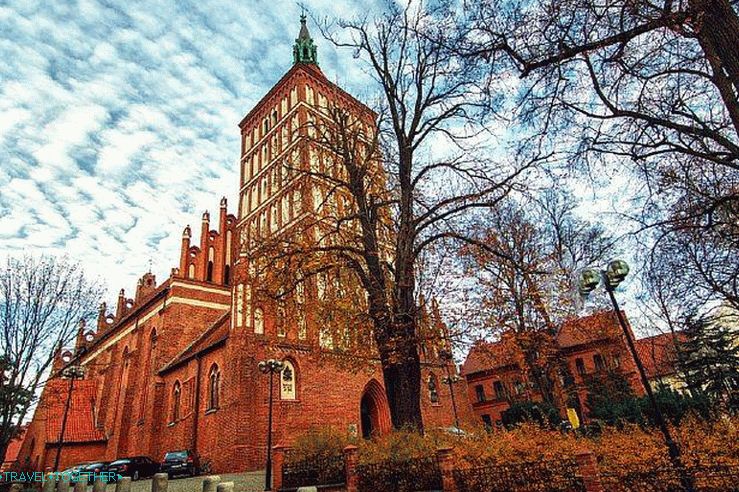
Basilica of sv. Yakuba – the cathedral of the second half 14th century, the most important church of Olsztyn.
 Basilica of sv. Yakuba
Church of sv. Lawrence – an ancient church of the 14th century. The church was built in the late gothic style of brick on granite foundation. Its interior is decorated in baroque style. The main structural element of the internal walls are arched niche. Many historians believe that this is the oldest church cities.
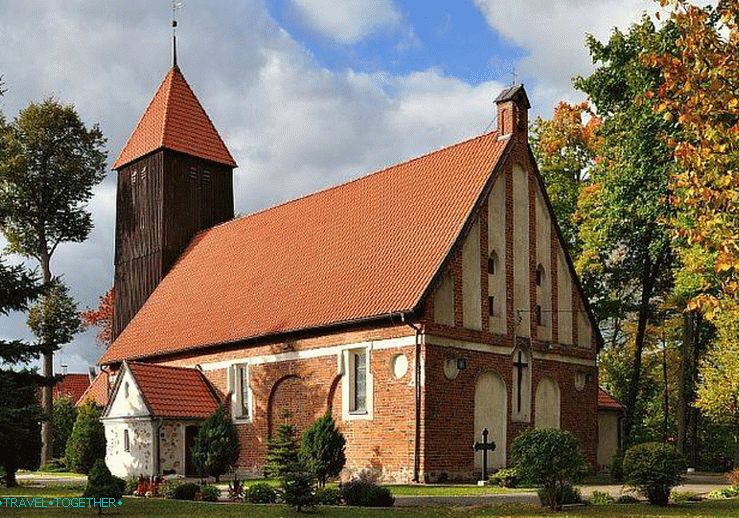 Church of sv. Lawrence
Old Town Hall – a historic building built in 14 century. The location of the municipal authorities of the city.
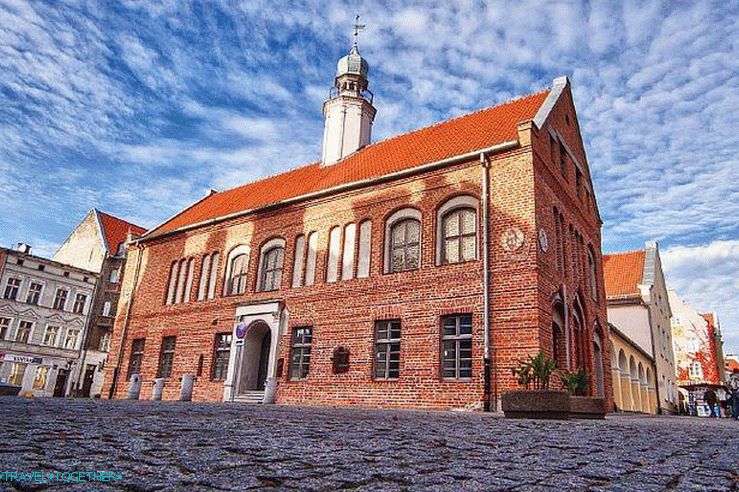 The old town hall
Old chapel – was built in the second half sixteenth century, on the corner of Grunwald and Jagiello. it’s one of the oldest surviving architectural monuments of Olsztyn.
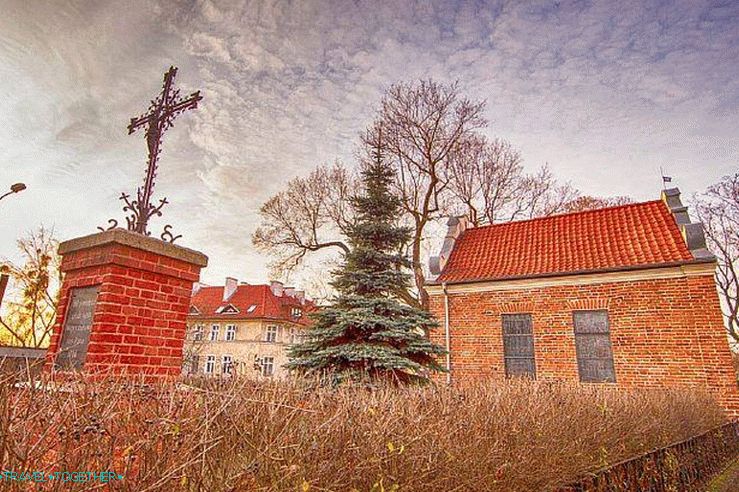 Old chapel
Bishop’s Palace – the palace of the second half of the 18th century, built in neo-baroque style.
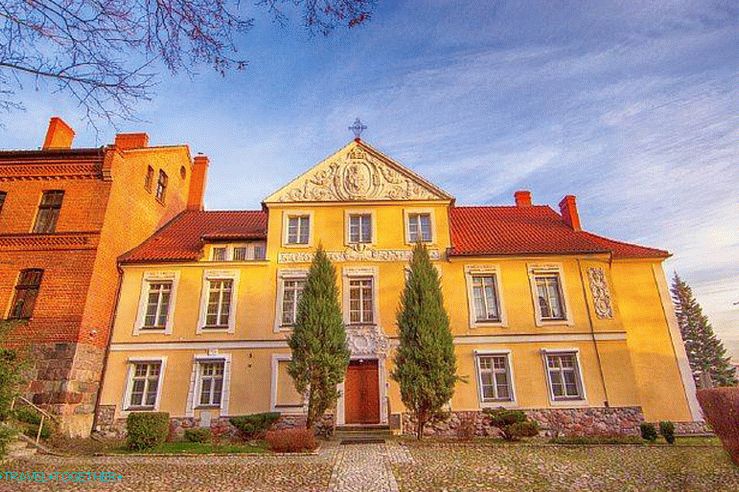 Episcopal palace
Shopping and Shopping in Olsztyn
For shopping and shopping in Olsztyn you can visit the following shopping centers:
- Aura Centrum Olsztyna – aleja Piłsudskiego 16
- Warminska Gallery – Tuwima 26