Innsbruck (Austria) – the most detailed information about the city with photos. The main attractions of Innsbruck with a description, guides and cards.
Contents
City Innsbruck (Austria)
Innsbruck is the fifth largest city in Austria, the capital of Tyrol. Located in the southwest of the country in a surprisingly beautiful area in the heart of the Alps at the intersection of routes between Germany and Italy. Innsbruck is the largest ski resort in the Alps, which twice hosted the Winter Olympics and many others significant sporting events. Very noteworthy also is its medieval old town, surrounded by a ring of mountains, with narrow winding streets and houses in the late Gothic style. Besides of this, Innsbruck was for some time the capital of the Holy Roman empire.
- Geography and climate
- Best time to visit
- Practical information
- Story
- How to get there
- Shopping and shopping
- Food and drink
- sights
- Video
- Maps and guides
- Comments and reviews
Geography and climate
Innsbruck is located almost in the center of the Eastern Alps in the valley. River Inn. The climate is moderately continental. Winters are usually cold and snowy. Summer is quite changeable. Can be like pretty hot and dry (under 30 degrees), and cool and rainy. Nights cool even in summer. For the year falls almost 1000 mm precipitation.
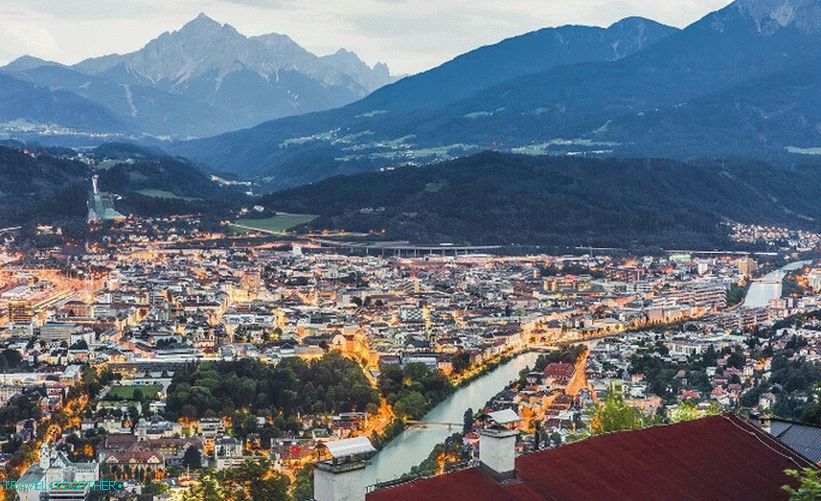 Panorama of Innsbruck
Best time to visit
Innsbruck can be visited all year round. To enjoy a walk The best time in the city and its surroundings is summer and early autumn. For skiing it is better to choose the period from November to March.
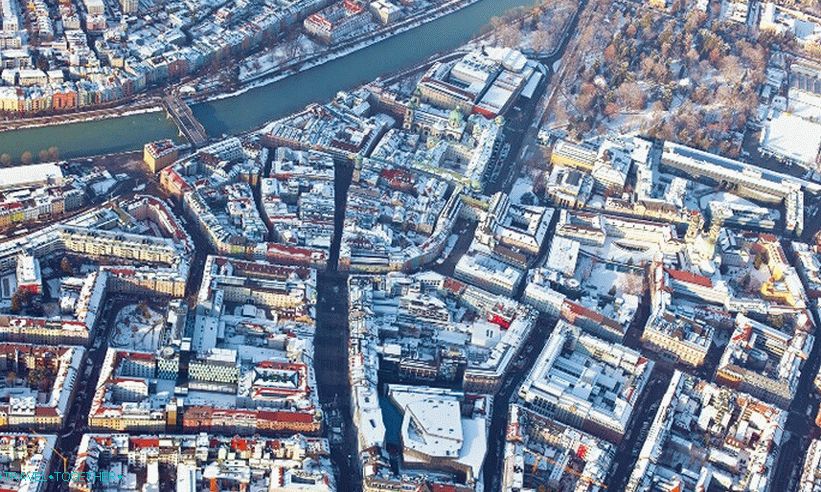 Winter Innsbruck
Practical information
- The population is 132.5 thousand people.
- The area is 104.81 square kilometers.
- The language is German.
- Currency – Euro.
- Visa – Schengen.
- Time – Central European UTC +1, in summer +2.
Story
The first mention of Innsbruck dates back to 1180. In 1234 The city was founded by Otto Meransky, the county palatine of Burgundy. Tyrol in Antiquity was conquered by the Romans. This alpine region played an important connecting role between the north and south roman provinces. After the collapse of the Roman Empire and the collapse of the Western Roman Empire Tyrol was conquered first Alemanni, then Ostgottami. AT 6th century Bavarians occupied the Inn Valley.
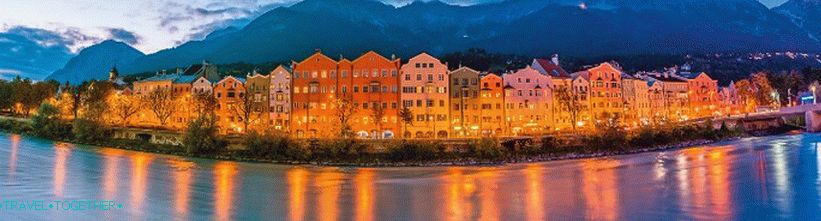 Old town on river inn
In 1234, Innsbruck received city rights and privileges. In 1271 Year Tyrol gained independence from Bavaria. In 1420 Innsbruck became the capital of Austria. In 1363 Tyrol was annexed to the state of the Habsburgs. In 1426 Innsbruck becomes the capital. region. In 1504, Maximilian I moved the gunsmiths here, and in 1508 made the city the capital of the Holy Roman Empire.
In 1669, a university was founded in Innsbruck. During the period Napoleonic wars Tyrol was transferred to Bavaria. In 1814, after Congress of Vienna, the region again became part of Austria. In 1938 Tyrol was annexed by Germany and became part of Austria only in 1955
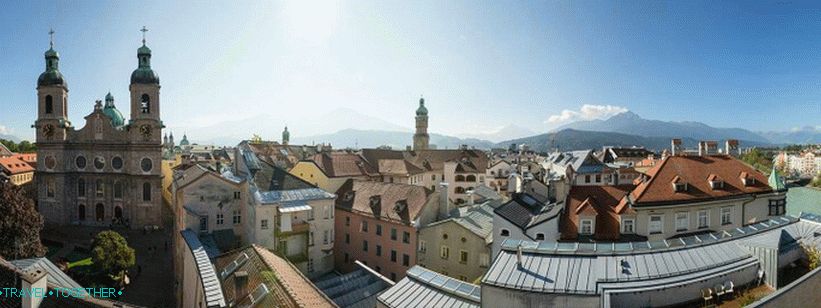 Panorama of Innsbruck
How to get there
Innsbruck Airport is the largest in Tyrol. It takes flights from Vienna, Frankfurt, as well as seasonal flights from Amsterdam, London, Berlin, Düsseldorf, Hamburg, Kiev and Moscow. Regarding Munich and Salzburg airports are located nearby.
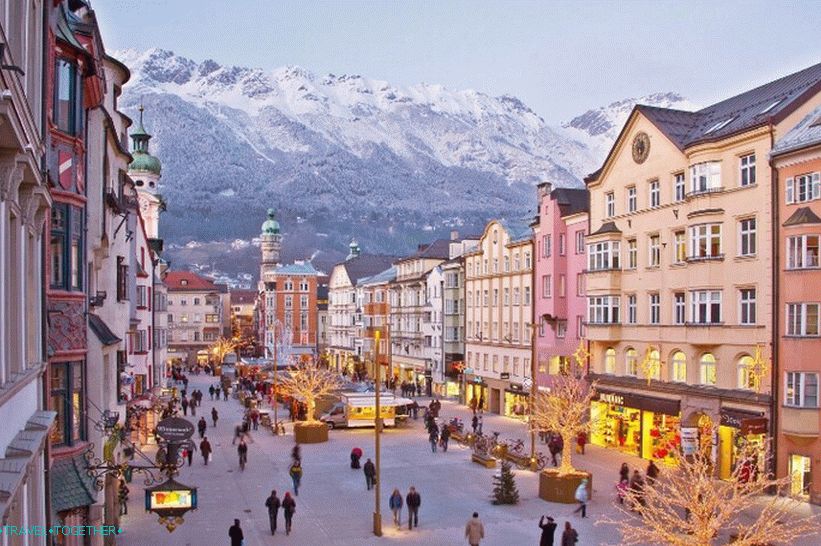 Innsbruck
Innsbruck has direct trains from Venice, Bolzano, Zurich, Munich, Graz, Vienna (via Linz and Salzburg). Get to the capital Tyrol on the car can be on the motorways A12 and A13.
Shopping and shopping
Many shops can be found in the old town and on the main boulevards: Theresien-Straße, Franziskanerplatz, Sparkassenplatz, Anichstraße and Museumstraße. On the street Meranerstraße you can buy original Tyrolean souvenirs.
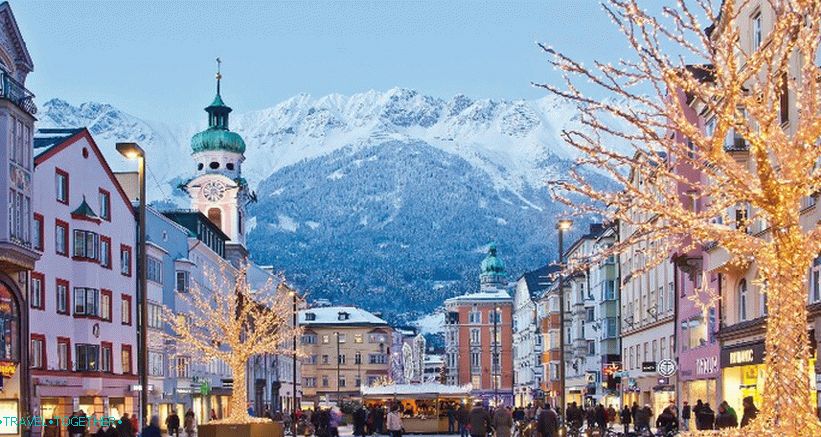 On the streets historical center
Shopping centers Innsbruck:
- Rathaus Gallerien at Maria-Theresien-Straße
- Kaufhaus Tyrol right across from Rathaus Gallerien
- Sillpark near the train station
- Dez
Food and drink
Tyrol’s gastronomy was greatly influenced by the cuisine of Germany and Italy. First courses necessarily include hot soups to fight cold tyrolean winters.
Traditional dishes:
- Frittatensuppe – pancake soup with greens.
- Rindsuppe – pork soup.
- Speckknödelsuppe – soup with meatballs (Knödel). One of the most typical Tyrolean dishes.
- Wurstsalat – Austrian salad with sausage and cheese.
- Käsespätzle – potato pus with fried onions.
- Innsbrucker Gröstl – potatoes with sauce and meat.
- Schlutzkrapfen – classic ravioli.
- Tafelspitz – beef tenderloin with potato a salad.
sights
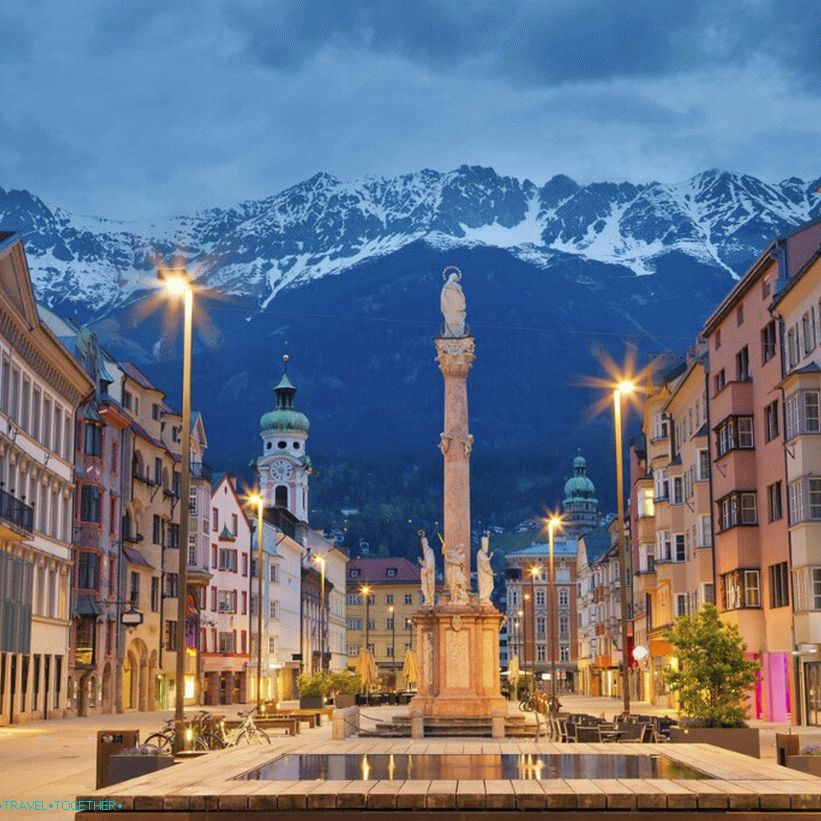 Old city Innsbruck
Old Town or Alstadt of Innsbruck is filled with beautiful examples of old architecture as well as luxurious buildings of the era Renaissance, Baroque and Rococo. The historic center is located on on the banks of the Inn River, surrounded by magnificent Alpine landscapes. The old city has the shape of a semicircle and is called Graben. Most old streets with narrow medieval houses and arcade facades are pedestrian.
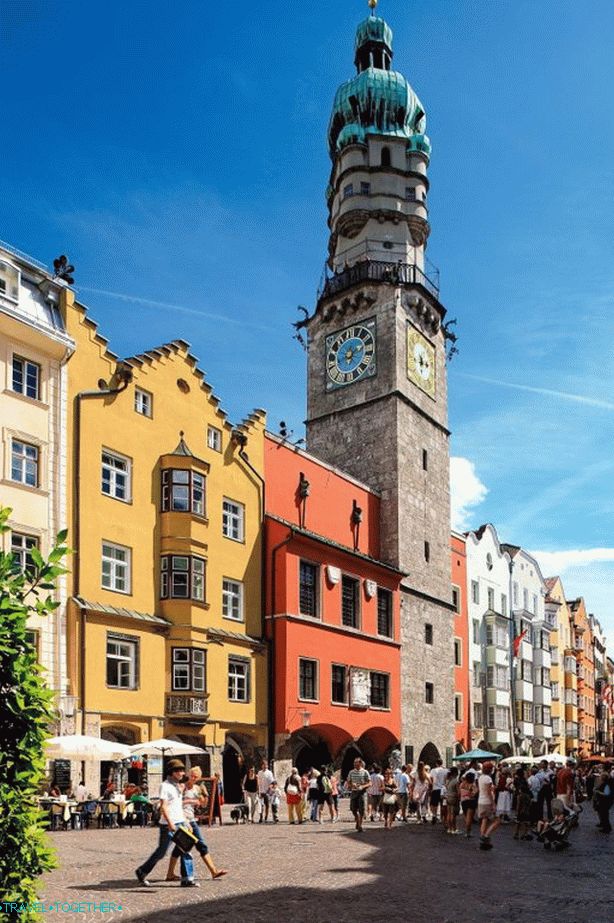 City tower
When walking through the old town, note the following Sights: Helblinghaus (house with a beautiful facade), Goldener Adler (the oldest hotel of the 16th century, in which the emperors and Goethe stayed), Stadtturm (57-meter 14th century watchtower next to the old town hall), Ottoburg (residential tower of the 15th century), Deutschordenshaus (house of the Teutonic Order of 1532) Burgriesenhaus (historic house of the end of the 15th century).
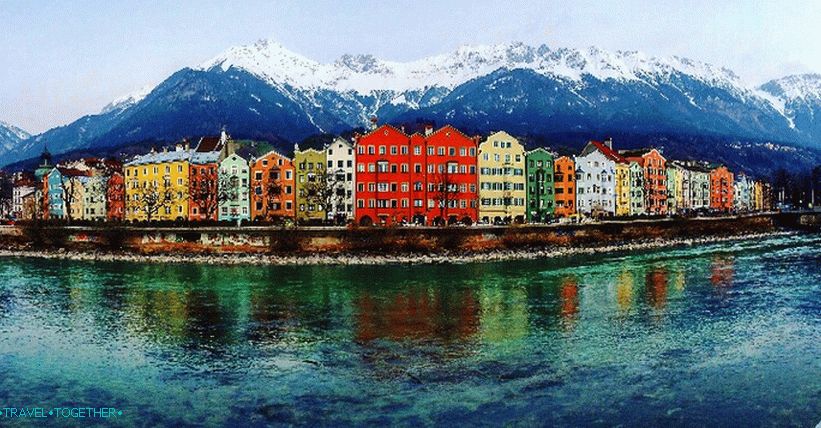 Inn River
Be sure to walk along the Inn River to enjoy beautiful scenery and look at some interesting attractions. In the area of Mariahilf is an old a church with beautiful ancient frescoes, in the district of Hoetting also the old temple is located in Höttinger on Höhenstrasse a beautiful view of the mountains, and near the bridge Alte Innbrücke held a market.
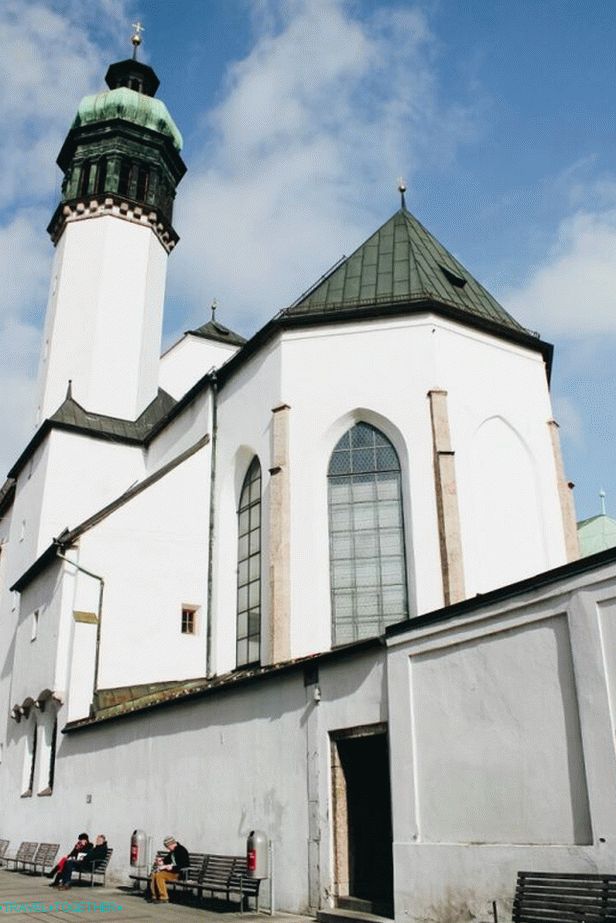 Hofkirche
The Hofkirche is an impressive late gothic church from the 16th century. The most important feature of this temple is the tomb and museum. Holy Roman Emperor Maximilian I. Tomb Maximilian is considered a masterpiece of the German Renaissance and is decorated sculptures and wrought iron items with bas-reliefs.
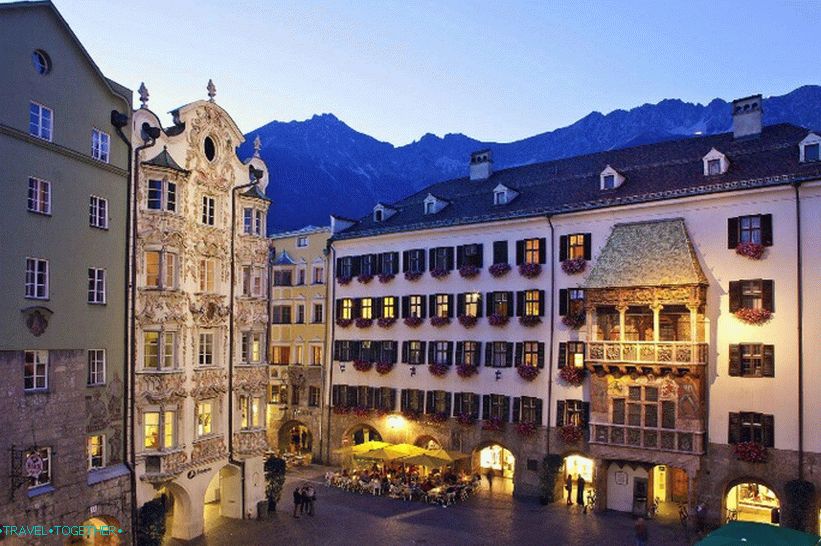 Goldenes Dachlor the golden roof
Goldenes Dachl or Golden Roof – a magnificent balcony in style. late gothic, built in honor of the marriage of Maximilian I with Maria Sforza in 1496. Lower balustrade consists of more than 2,000 gilded copper tiles and richly decorated with coats of arms. Balcony also decorated with beautiful reliefs. Attraction located in the picturesque quarter of old Innsbruck among old merchants houses.
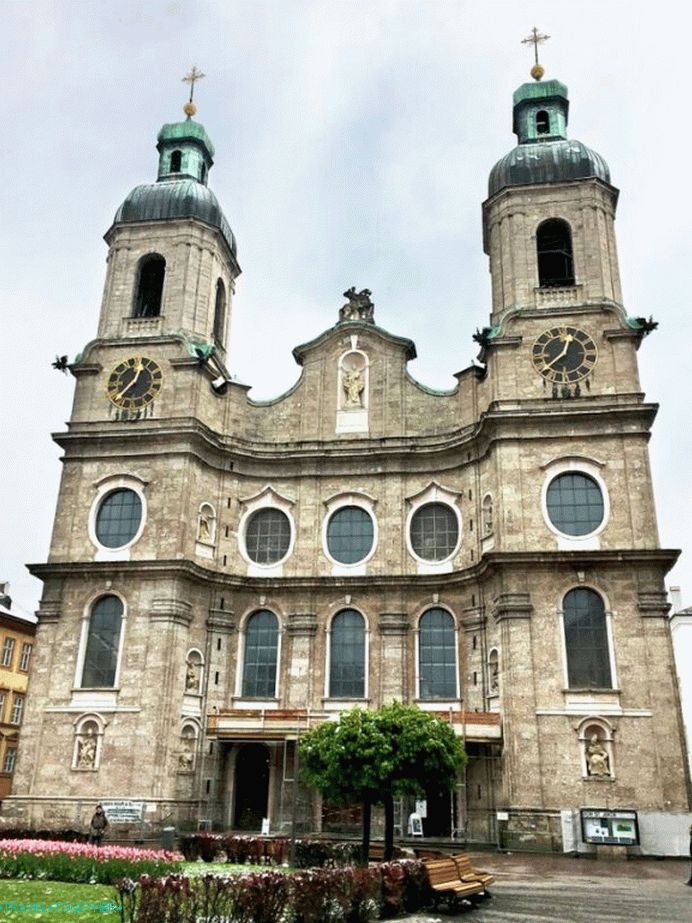 Cathedral of sv. Jacob
Cathedral of sv. Jacob – Innsbruck Cathedral, located on Domplatts. Known for its impressive western front with two towers and a high dome over the choir. The cathedral was built in Baroque style. in 1724 and has a rich interior design.
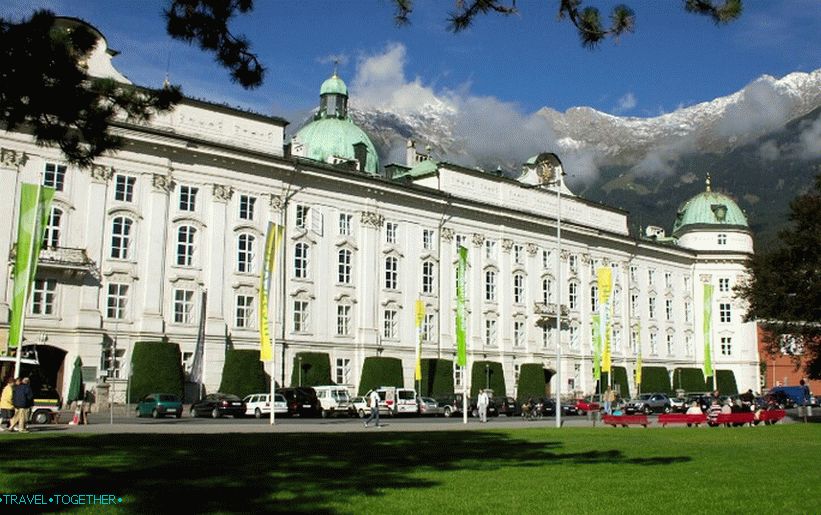 Hofburg
Hofburg – former imperial residence, originally built in the 15th and 16th centuries and rebuilt in the Baroque style in the 18th century. The palace contains beautiful apartments and halls decorated with objects. art.
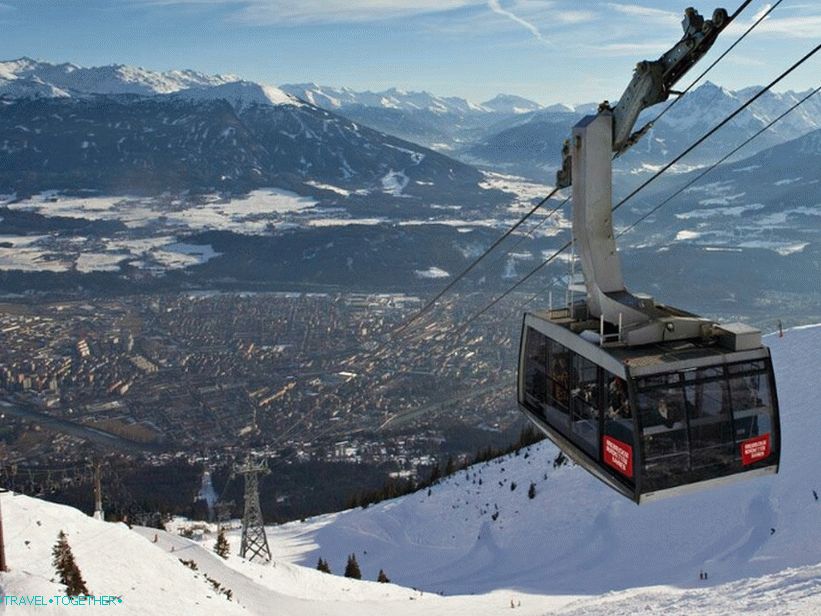 Funicular Nordkettenbahnen
Climb the mountain on the funicular Nordkettenbahnen – this is what be sure to do in Innsbruck. Funicular designed architect Zaha Hadid begins his movement in the center city and passes over the River Inn to the mountain Hungerburg. Restaurants and observation platforms are located at almost every stop.
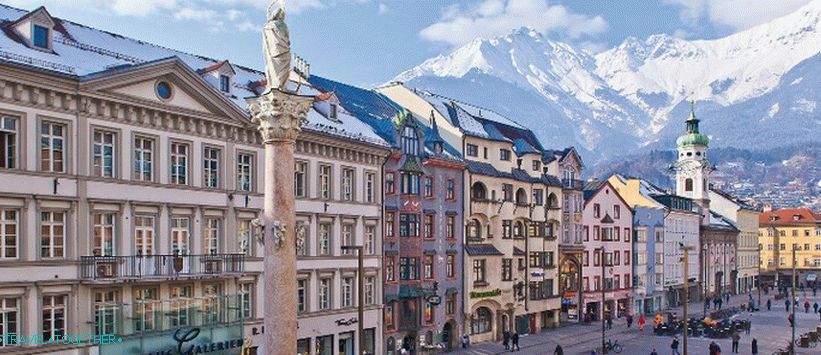 The outside Maria Theresa
Maria Theresia Street – a busy street in the old town with beautiful houses of the 17th and 18th centuries, numerous shops and impressive panorama of the mountains. In the middle of this wide old street, directly opposite the town hall, there is a column of sv. Annasäule erected in 1706 in honor of the departure of the Bavarian troops. Also should pay attention to the Altes Landhaus – Monumental Palace Baroque, built in 1728 with a luxurious and thoughtful hinged facade. Triumphal Gate (Triumphpforte) in the south parts of the street were built in 1765 in honor of the marriage of Leopold Ii.
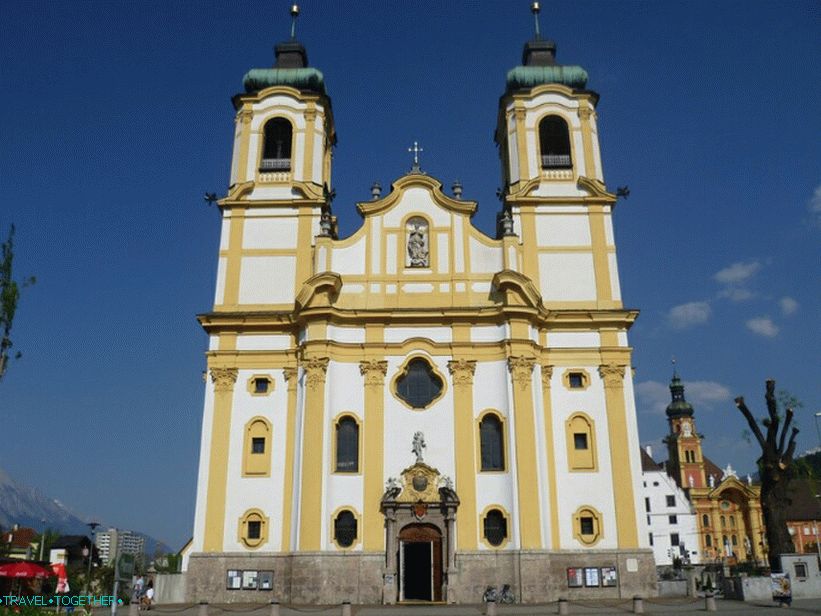 Basilica of Wilten and the old abbey
In the southern district of Innsbruck Vilten is located one of the most beautiful Tyrolean Rococo Churches The interior of the church is decorated Matteus Günther’s magnificent ceiling frescoes and stucco by Franz Xaver Feuchtmayer’s decorations, and on a high altar stands figure of Mary from sandstone, which belongs to the 14th century. Near the ancient abbey is located, which was founded in the 12th century.
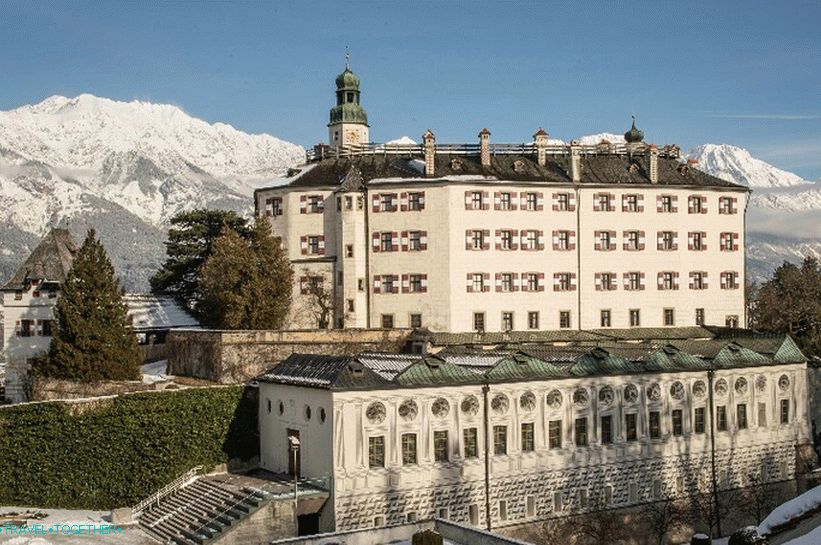 Ambras Castle
Ambras Castle – the residence of the Archduke Ferdinand, located a little southeast of Innsbruck. In Lower Castle (Unterschloss) there are two rooms containing an excellent collection of weapons and armor, and on the ground floor a valuable collection is exhibited works of art, including many sculptures. In the top Castle (Hochschloss) is the bathroom of the wife of Ferdinand, which has been preserved in excellent condition. Great The Spanish Hall between the Lower and Upper Castles is an early example. interior in the style of the German Renaissance.
Sports enthusiasts are advised to visit the Bergisel Hill known for its sports facilities.
Video
Maps and guides
Tourist Card