Ephesus (Turkey) – a detailed description of the photo. Interesting facts about Ephesus and location on the map.
Contents
Ephesus
Ephesus is an antique city on the west coast of Turkey. Located to south of Izmir on the river Small Menderes (in antiquity Kaistr). Ephesus – one of the most famous sights of Turkey, the object UNESCO World Heritage Site. This is a striking cultural landscape, which includes the heritage of the ancient Greeks and Romans, Byzantines and Seljuks.
Ephesus is the largest archaeological site on the territory Asia Minor. In Antiquity, here was located one of the most important ancient Hellenistic cities. Ephesus was built on the coast Aegean Sea, grew and grew rich thanks to trade. Afterwards the bay became shallow, the sea retreated, which caused its decline. Earthquakes buried the city underground until it was discovered archaeologists in the 60s of the 19th century.
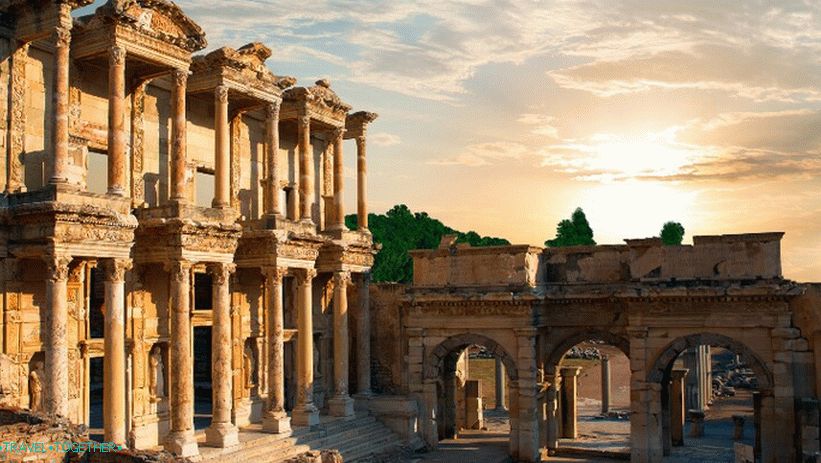
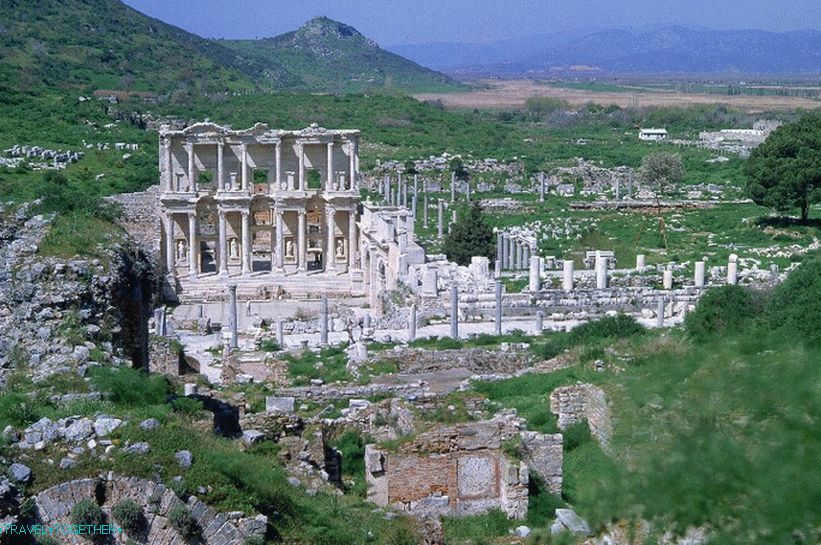 Hilt. Library Celsa
How to get there
Ephesus is located near the town of Selcuk, an hour’s drive from Izmir. From Izmir can be reached by train or bus.
Story
The first city on the site of Ephesus arose in the Hittite era. Was called he was Apache and was the capital of the hostile kingdom of Artsav. In the 11th century before AD Ephesus was inhabited by the Ionians and became the capital of the Carian kingdom The Ionians built a classic Hellenistic city here. with the temples of Athena and Apollo. In the 6th century BC, Ephesus captured Lydians During this period, the city reached its highest peak. Was here built the temple of Artemis, which was recognized as one of the seven wonders Sveta.
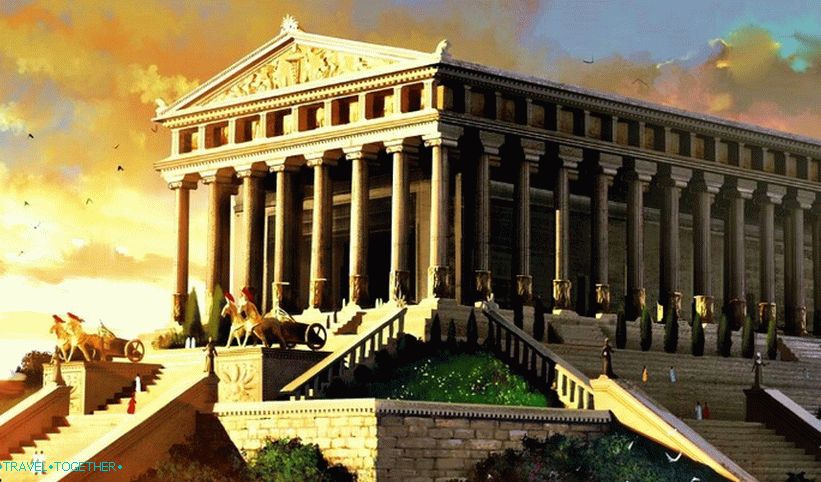 Temple of Artemis
In the 5th century, a battle between the Persians and the Greeks took place at Ephesus, which last suffered a defeat. During the Peloponessian War the city fought in alliance with Sparta against Athens. After the Corinthian War Ephesus was captured by the Persians and released only by Alexander Macedonian. After the death of Alexander, Ephesus captured one of his commanders Lysimachus. Under him, the city was moved to the valley closer to the mountains. and built walls.
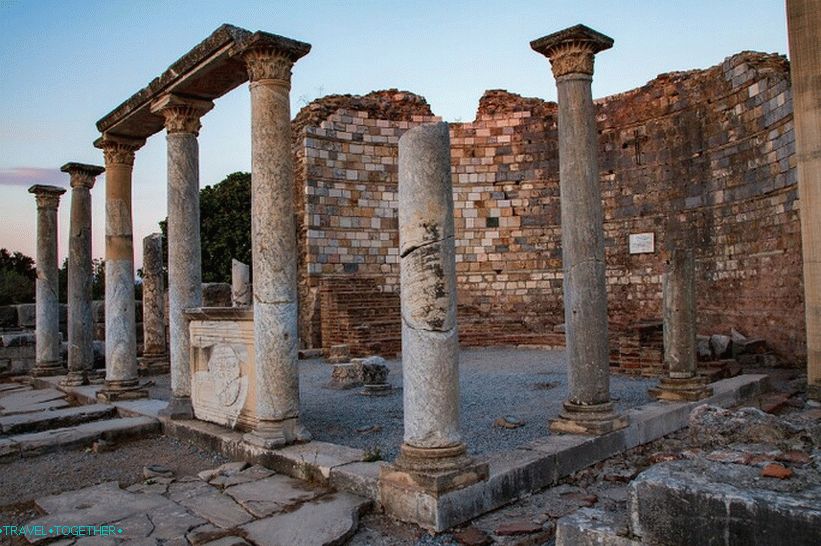 Ruins of Ephesus
In the 2nd century BC, Ephesus became part of the Roman state. AT 1-2 century AD under the Romans, the city is experiencing a new rise. There were built: an impressive theater, the famous library Celsus, temples, aqueduct. In the 3rd century, Ephesus was ravaged by the Goths. After the collapse of the Roman Empire, the city became part of Byzantium and in the 5-6 century was one of its most important cities. In the 7th century, Ephesus was destroyed. an earthquake, the bay became shallow. The city gradually fell into disrepair. Already in the 11th century a small village was located here and practically nothing resembled a large ancient city. In the 15th century, Ephesus was finally abandoned. The city was discovered by archaeologists in the 1860s years
Sights of Ephesus
Ephesus is a unique archaeological site known for first of all, the sights of the Hellenistic and Roman periods as well as early Christian constructions.
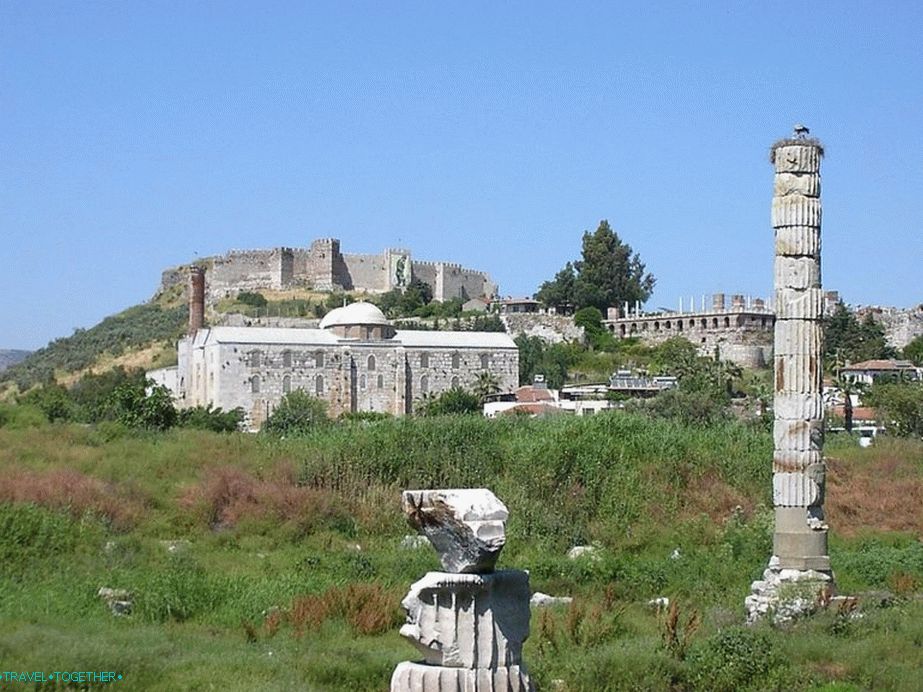 Temple of Artemis
The Temple of Artemis is one of the seven wonders of the world, impressively ancient. a building dedicated to the eponymous Greek goddess. Temple It was an impressive marble building surrounded by 36 huge columns and decorated with sculptures. Until our time from the temple of Artemis remained only ruins. The most interesting finds exhibited in the British Museum.
 Library Celsa
Celsus Library – one of the main attractions Ephesus It was built by the Romans in the 2nd century AD. Library was one of the most beautiful buildings of the ancient city with impressive facade with Corinthian columns.
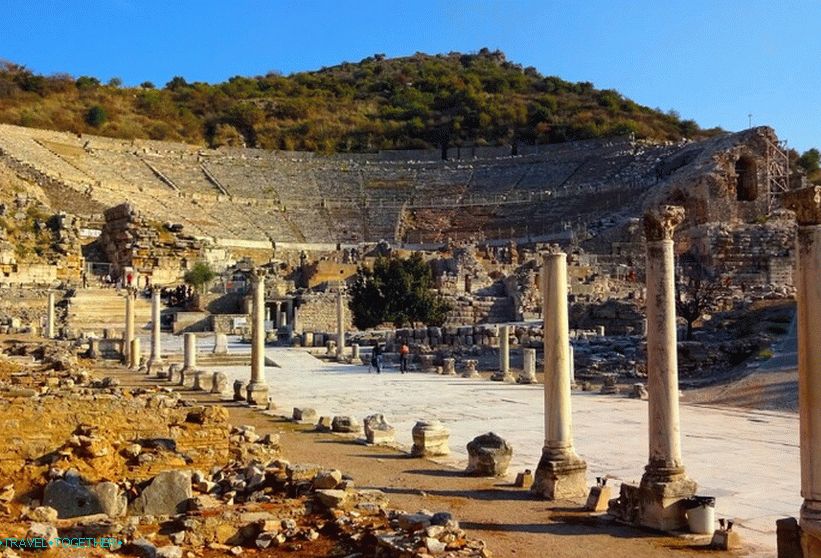 Roman theater
The Roman Theater is one of the most impressive buildings of the ancient Ephesus Originally the theater was built in the 3rd century BC in the reign of Lysimachus. Later it was significantly expanded. by the Romans. This is the largest facility of its kind in the territory. Anatolia, which was used not only for plays, but also for religious, political and philosophical discussions.
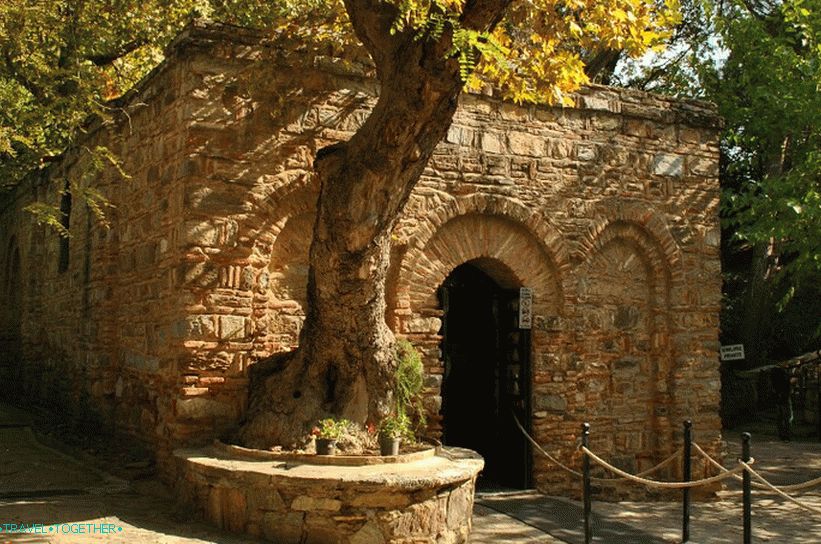 House of the Virgin
The house of the Virgin is a typical example of Roman architecture. In that the ancient house according to legend, spent the last days of the Virgin Mary, which was saved from persecution after the death of Christ.
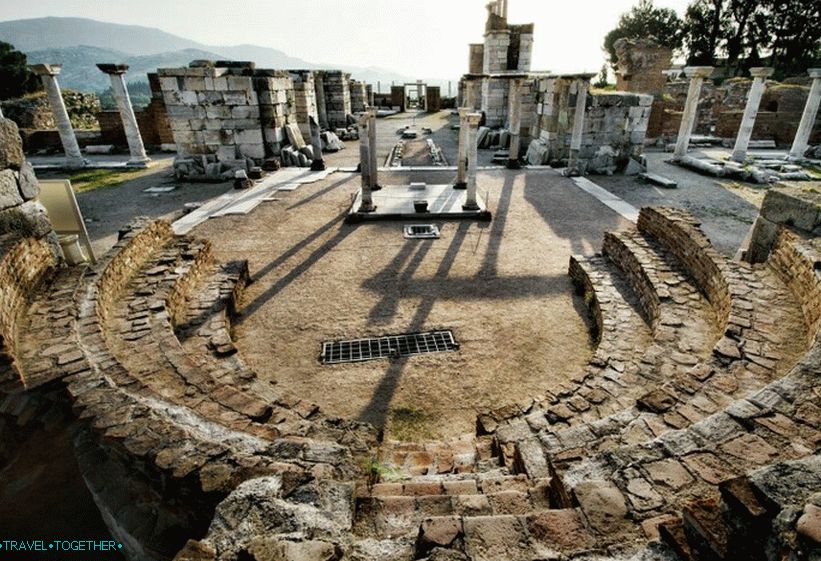 Basilica of sv. John’s
Basilica of sv. John – the ruins of an early Christian church, consecrated to John the Theologian, who lived and preached in Ephesus.
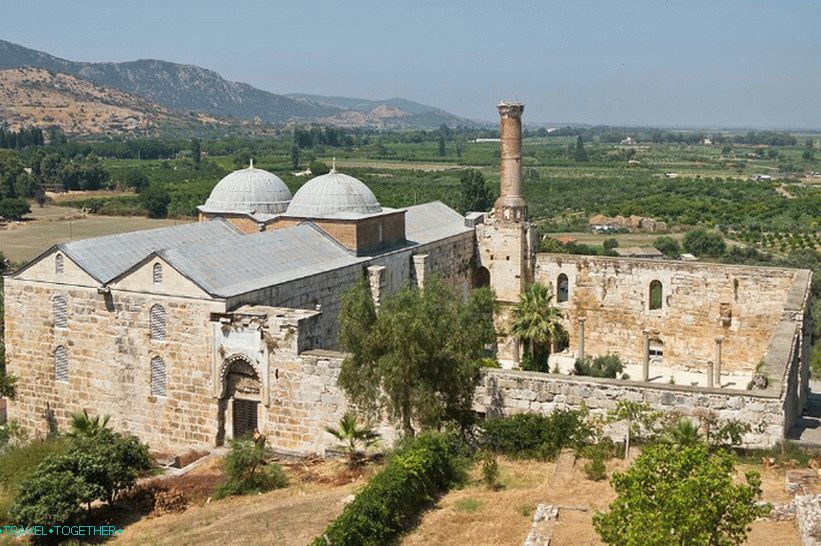 Isa Bey Mosque
The Isa Bey Mosque was built in the 14th century and is one of vivid examples of the religious architecture of the Seljuks.
What else to see in Ephesus:
- The Magnesian Gate – the ruins of the ancient city gateway
- Agora – Roman Square. Discovered in its northeast corner ancient acropolis.
- The Temple of Isis, dedicated to the Egyptian goddess and destroyed in the reign of Emperor Augustus.
- The Odeon is a small theater with a stage for 1500 spectators.
- Street Kuretov – stretched from the gate of Hercules to the library Celsus and agora.
- The fountain of Trayana is one of the best Roman monuments in Ephesus. Was built at the beginning of the 2nd century and dedicated to the roman emperor Traian.
- Temple of Hadrian – one of the best preserved buildings ancient city. It was built in the 2nd century.
- Marble road – a path starting from the theater to the library Celsus. The road was built in the 1st century. Here you can see drawings, which are known as the first advertisement in history.
Interesting Facts
- In its heyday, a quarter lived in Ephesus a million people.
- The Bolshoi Theater accommodated about 24,000 spectators.
- The ancient Greek philosopher Heraclitus lived in Ephesus.
- The library of Celsus was one of the largest in the world and stored 12 000 scrolls.
- Ephesus, which in ancient times was located on the Aegean coast the sea is now located 6 km away.