Hannover (Germany) – the most detailed information about the city. The main attractions of Hanover with a photo and description, guides and maps.
Contents
City of Hannover (Germany)
Hannover is a city in North Germany, the capital and largest city of Lower Saxony. Located on the river Laine at the junction of the foothills Weser and North German Plains. Hannover is often called the “city exhibitions “thanks to a huge exhibition complex in which There are major international events. Interestingly, Hannover is not looks like a typical German city, despite the fact that it was founded in the 12th century. Most of the original sights, old buildings and cultural monuments were destroyed during the Second world war. Alderstadt preserved quite a bit of medieval architecture and ancient atmospheric streets.
The climate is temperate. For the year falls more than 600 mm of rain. which are distributed throughout the year. Average annual temperature is 8.7 degrees. Summer is warm, winter is mild with small frosts.
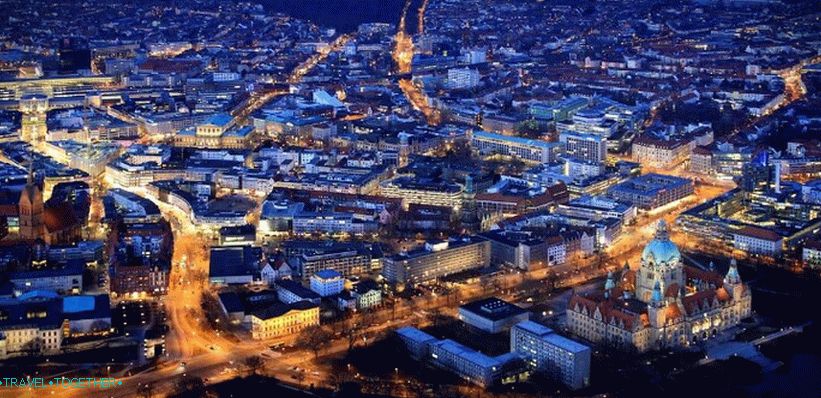 Panorama of Hannover
- Practical information
- Story
- How to get there
- sights
- Video
- Maps and guides
- Comments and reviews
Practical information
- The population is 532.8 thousand people.
- The area is 204.1 square meters. km
- The language is German.
- Currency – Euro.
- Time – Central European UTC +1, in summer +2.
- Oktoberfest is held in Hanover in the autumn, which is one of the largest in germany.
- Christmas markets begin to work from the end of November.
- Souvenirs can be bought in Altstadt and in the Galeria Kaufhof.
- Near the Central Station is a huge shopping Center Early August Gallerie and Kaufland supermarket.
Story
The first mention of the settlement dates back to the mid 12th century, when an ancient castle was founded on the left bank of the Laine. In 1241 Hannover received city rights. By 1350 to protect the city on the foundation of the old fortifications were built new walls and 34 towers. In the 13th century, Hannover entered the Hanseatic League.
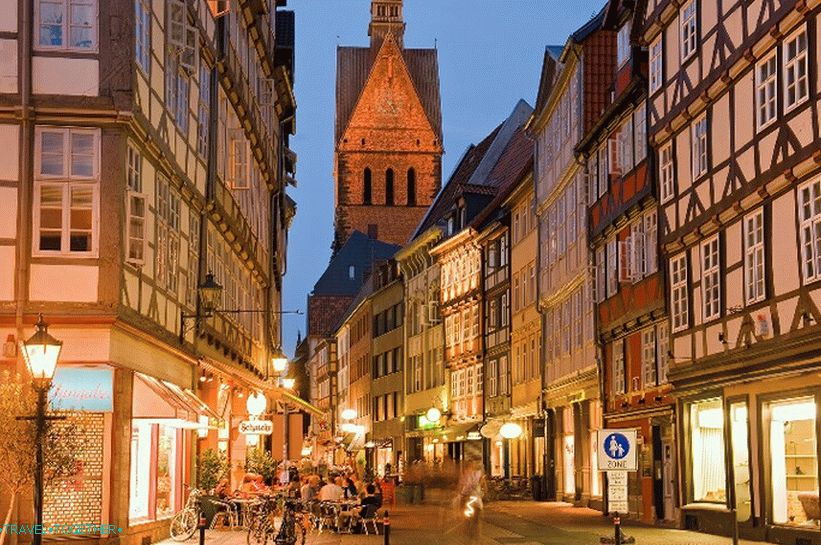 Streets of the Old cities
In the 16th century, Hannover became one of the centers of the Reformation. The Catholic clergy left the city. Interestingly, almost to 19 century Hanover remained Lutheran. In 1626 inflames epidemic of plague, which killed 1/3 of the population of the city. In time of the Thirty Years War duke von Kalenberg makes Hanover its residence and builds new powerful fortifications.
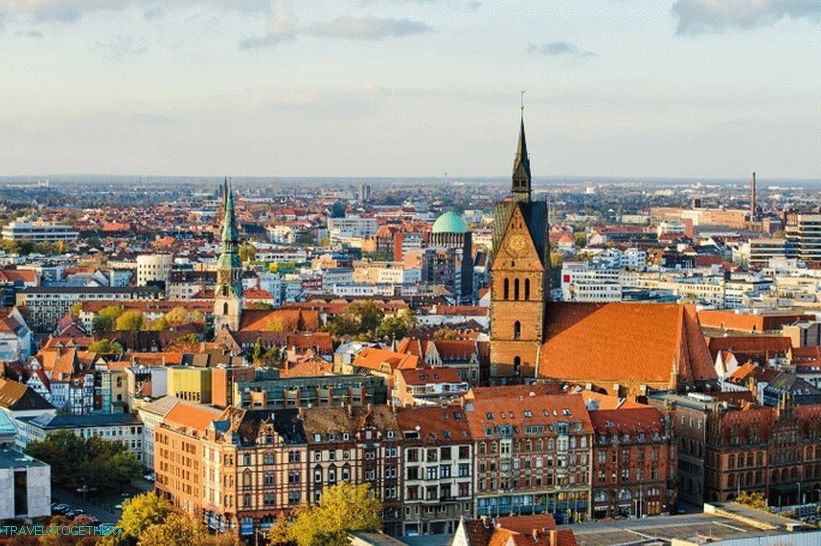 View of Hannover
During the Napoleonic Wars, Hannover was for a decade occupied by french troops. By decision of the Congress of Vienna Hannover kurfyusherstvo receives kingdom status in the composition German Union. In 1826, the city is the first in Europe to receive a new gas street lighting. In 1866, Hannover becomes part of Prussia. During the bombing of World War II was destroyed 90% of the city. In the old city more or less intact preserved total 40 historic buildings. The city was finally restored only in 1961.
How to get there
Hannover has a large airport that serves quite a lot of European airlines. From the airport to the center The city can be reached by S-Bahn. The journey takes about 20 minutes. Ticket price is 3.5 euros.
Due to its location, Hannover has an excellent railway communication with many cities in Germany, as well as with The Netherlands, France, Switzerland and Austria. On high speed trains can reach Frankfurt, Hamburg, Stuttgart, Berlin, Munich and Cologne.
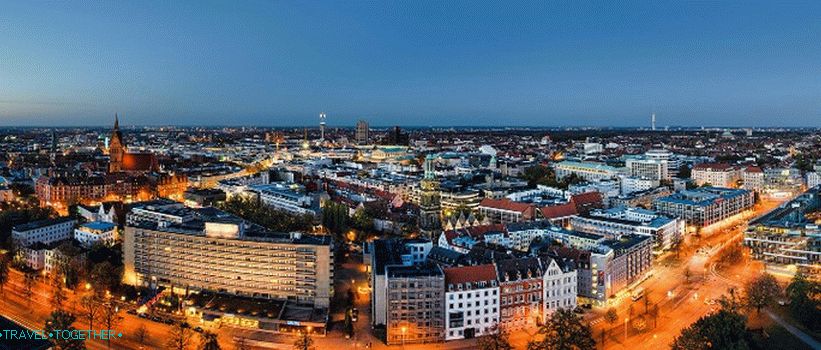 Hanover
Hannover is served by an excellent network of highways. Autobahn A7 – from Hamburg, A2 – from Berlin and Dusseldorf.
sights
The most interesting sights of Hanover.
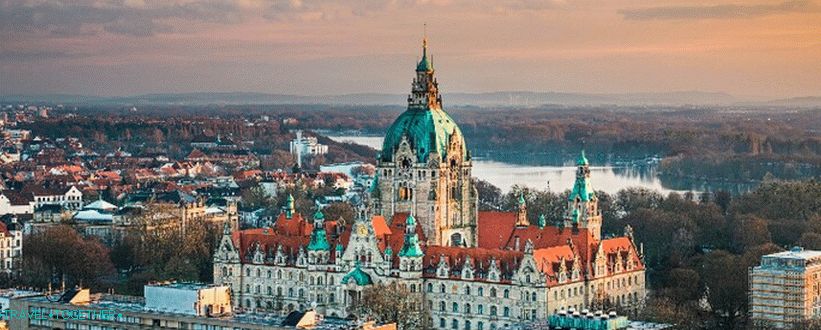 Town hall
New Town Hall – a magnificent building of the early 20th century, one of main landmarks of the city. Often the town hall is taken for a castle. On the dome can be reached by a unique arched elevator.
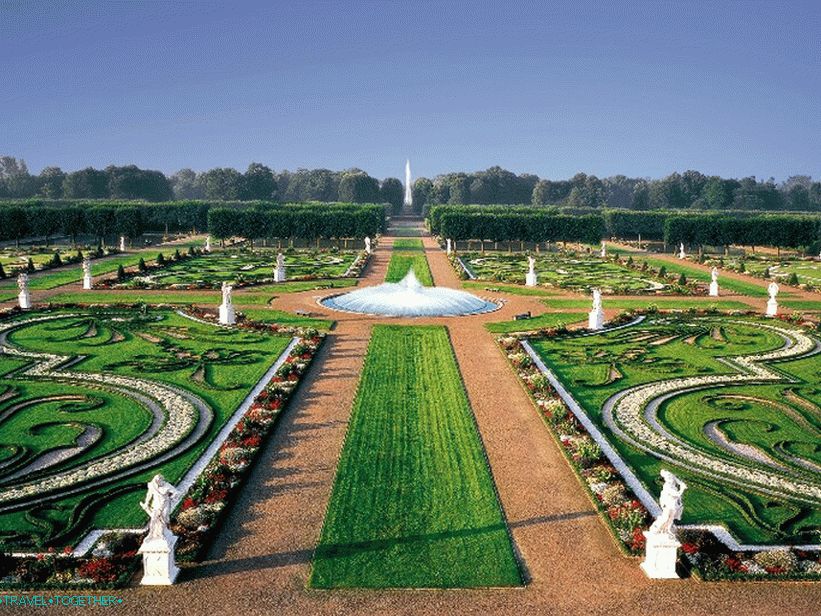 Herrenhausen
Herrenhausen – a magnificent landscape gardening complex, founded in the 17th century. This is one of the most interesting sights. Hannover and a great place to stroll. Many works garden art, fountains, sculptures, castle and greenhouse attract about half a million tourists annually.
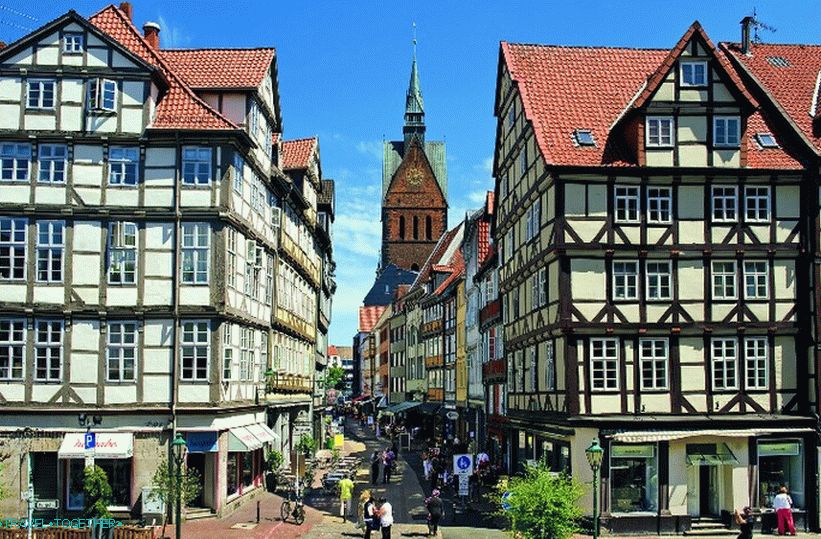 Old city
Despite the destruction of the Second World War in the old city until You can still find traces of the Middle Ages. Once upon a time, Hannover had large historical center with numerous half-timbered houses. Until our time in the original condition no more than 50 have been preserved. historic buildings in the Marktkirche, Kramer- and Burgstraße area.
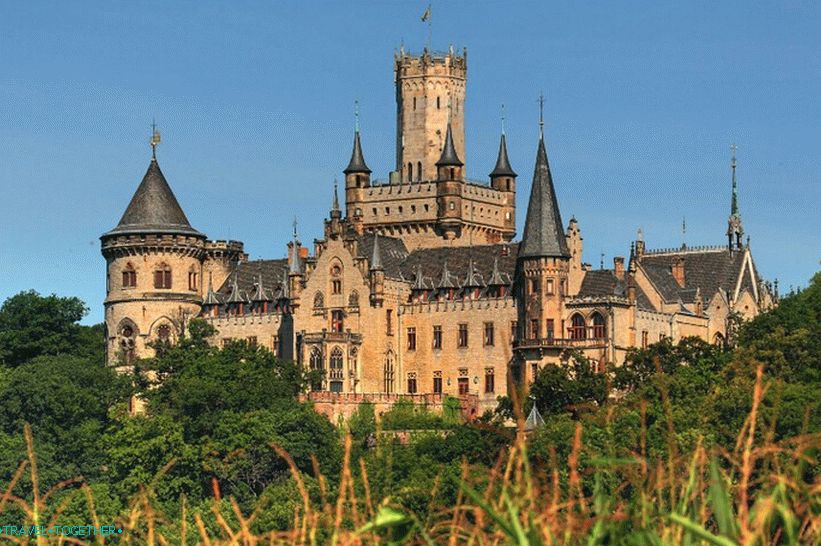 Marienburg Castle
Marienburg Castle – a fairytale castle with court charm 19 century. It still belongs to the family of Guelph, one of the oldest princely families of Europe. The castle has rich interiors of the 18-19 century. The modern look Marienburg received in the middle of the 19th century. Named in honor the wife of the last king of Hanover.
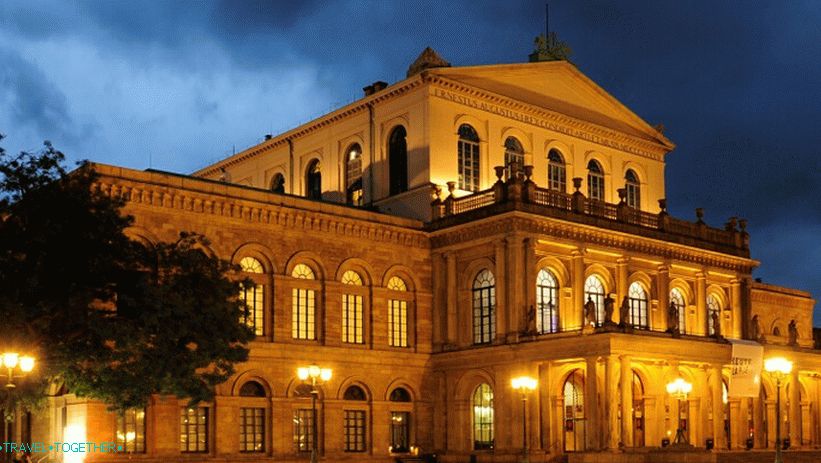 Opera
Opera
The building of the Hannover Opera was built in the middle of the 19th century. it magnificent building in the style of late classicism.
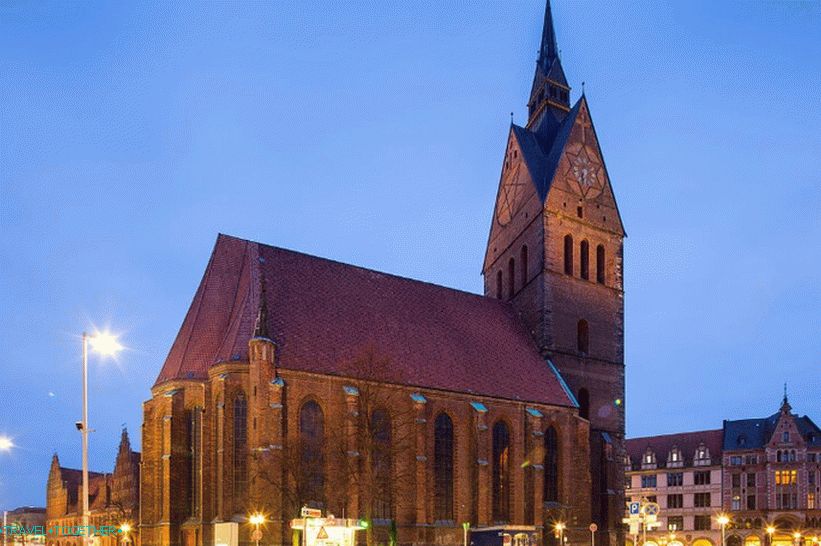 Market church
The Market Church is one of the oldest sacral structures. Hannover. This interesting example of North German brick gothic was built in the 14th century. After the destruction of the Second World War The church was restored in the style of historical authenticity.
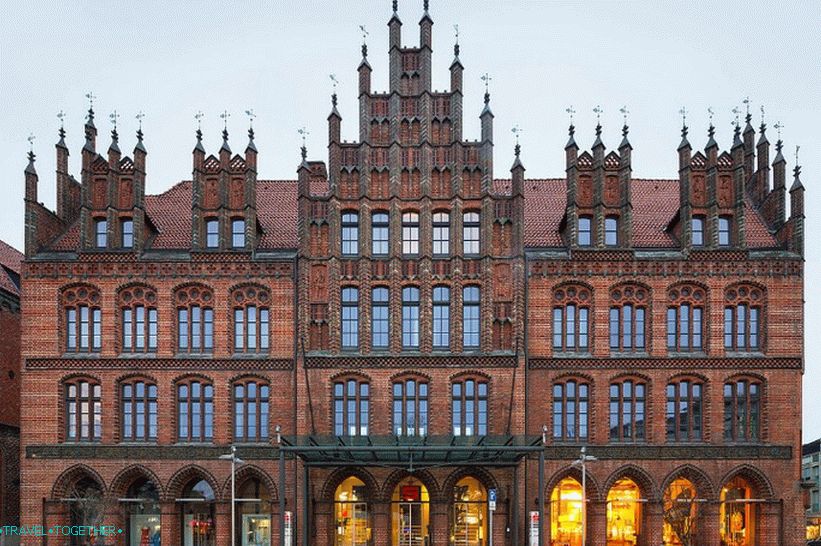 Old Town Hall
Near the market church is the old town hall. Building in brick gothic style was built in 1410.
Video
Maps and guides
S-Bahn Scheme Bus Route Map Hannover Map Hannover Travel Guide in English