Füssen (Germany) – detailed information about the city with photos. The main sights of Fussen with a description, guides and cards.
Contents
City Füssen (Germany)
Füssen is a city in Germany in southern Bavaria, located between Lake Constance and the Bavarian Alps. Known, first of all, with its castle and close proximity to the fabulous Neuschwanstein, which is located a few kilometers east. Fussen is beautiful little town with a romantic atmosphere that the past was famous for its violins.
- Geography and climate
- Practical information
- Story
- How to get there
- sights
- Video
- Maps and guides
- Comments and reviews
Geography and climate
Füssen is located in the south of Bavaria in the historic region of Swabia on the border of Germany and Austria. This tiny town is located on the bank of the Lech River, which forms Forggensee Lake in this place. Fussen has a temperate climate with warm summers and cold (rather snowy) in the winter. The city lies in a beautiful area in close proximity to the beautiful alpine lakes, the Ammersky mountains and magnificent castles.
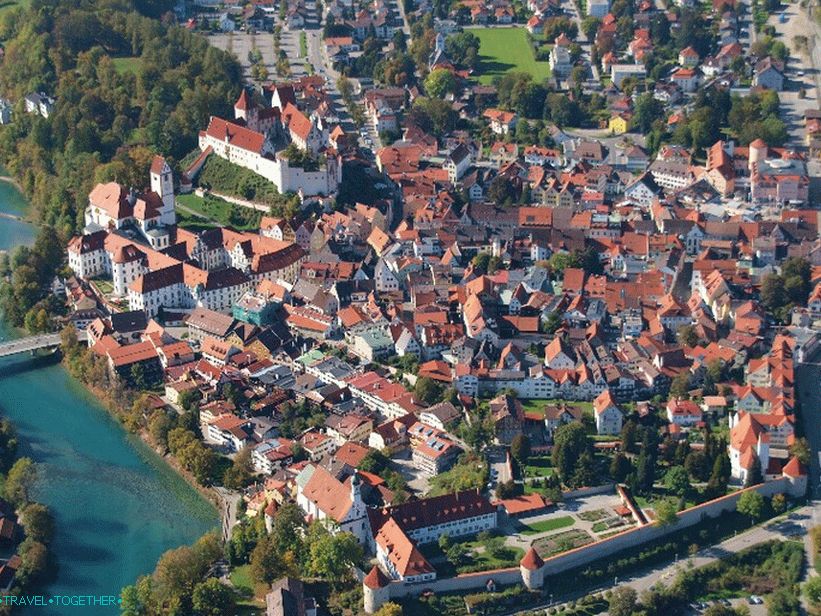 Panorama cities
Practical information
- The population is about 14 thousand people.
- Area – 43.52 km².
- Currency – Euro.
- The language is German.
- Visa – Schengen.
- Time – Central European (UTC +1, summer +2).
- In Fussen ends the famous Romantic Road. Also The city is the starting point for visiting Tyrol.
Story
Füssen is known from the 3rd century AD. like a roman military camp near which passed the road Claudius Augustus. After the collapse of the Roman Empire these territories occupied the Germans. In the 8th century in Fussen St. Magnus was founded Benedictine Abbey, which became important place of pilgrimage. In the 14th century the city was built the residence of the Augsburg bishops. In the Middle Ages, Fussen flourished thanks to trade (especially salt) and was an important religious center.
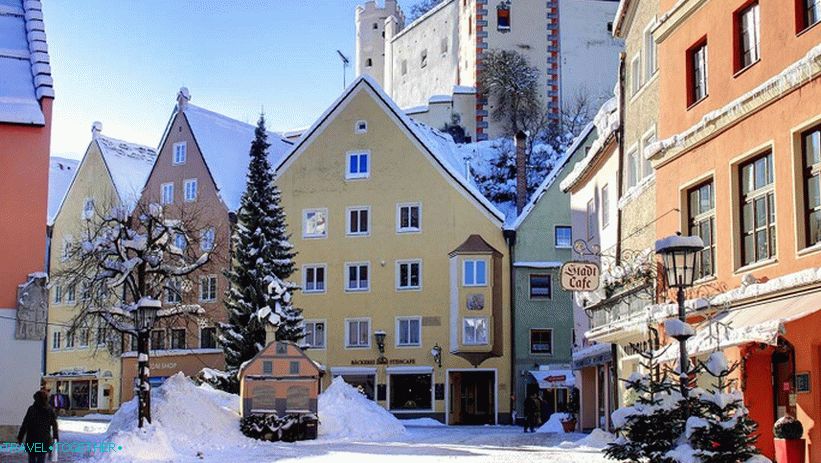 Fussen in winter
In the 16th century, violins and lutes began to be produced in Füssen. Local Masters were famous for their musical instruments throughout Europe. In the following centuries, the city lost its meaning. Reason for this became the war that caused serious damage to trade and his the economy. In the early 19th century, Füssen became part of Bavaria. Now the city is known as one of the main balneological and natural resorts of southern Germany. Great contribution to the tourist Popularity also contributes to the proximity of Fussen to magnificent royal castles.
How to get there
Between two Fussen and Munich every two hours run straight trains, although perhaps the cheapest way to get here – bus tours that can be found in most of the South Bob cities.
From Munich to Füssen, the A 96 motorway leads; exit at Landsberg Ost and follow B 17. From Augsburg Fussen also needs to move on B 17.
sights
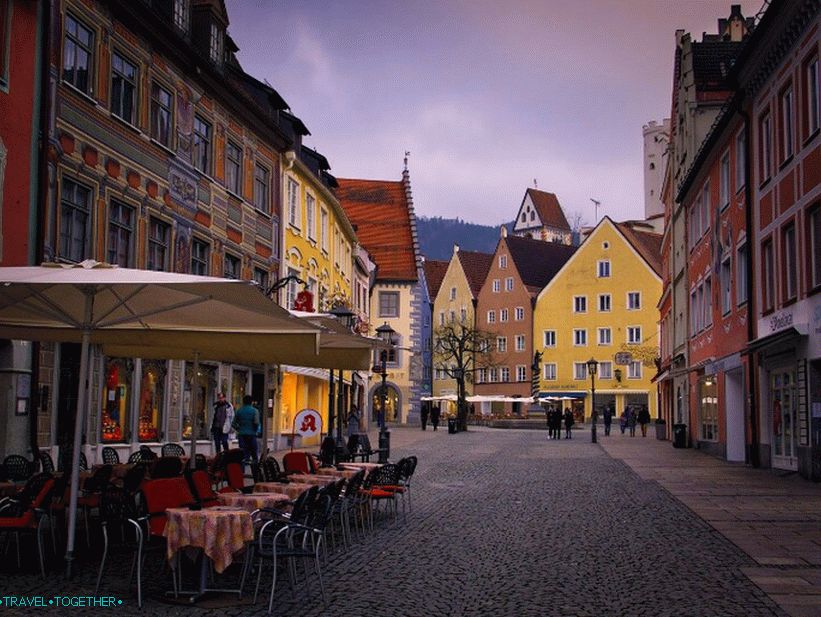 Altstadt fussena
Kroteshny Fussen has a magnificent old town (Altstadt), which as if painted by the artist. He is a beautiful historical ensemble, including baroque churches, ancient gothic houses and sections of medieval walls with towers. The historic center of Fussen – one of the most beautiful and well preserved throughout Germany. He has a wonderful spirit of the past. centuries and charming atmosphere of the Middle Ages.
One of the best ways to experience a new place is to go. to the local bar. The Bierstube at the Hotel Hirsch is charming Traditional Bavarian pub serving local specialties and great draft beer.
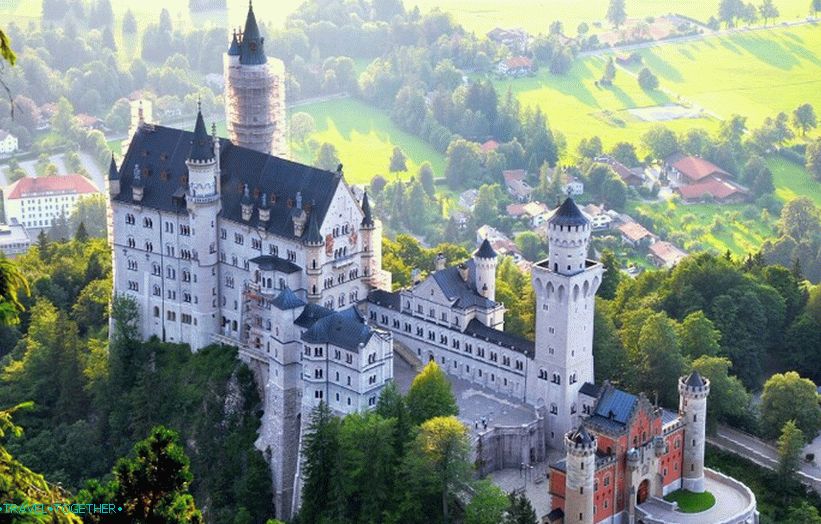 Neuschwanstein
Neuschwanstein (or “New Swan Castle”) – fabulous neo-romanesque castle built on a rocky cliff in the 19th century “mad” Bavarian king Ludwig II near the town Fussen. This fancy architectural creation is considered one of symbol of Germany. The spiers and towers of the castle dominate the forest and by the lake. Behind them the amazing panorama of the Bavarian Alps opens. The castle has luxurious interiors inspired by heroic legends and romantic literature.
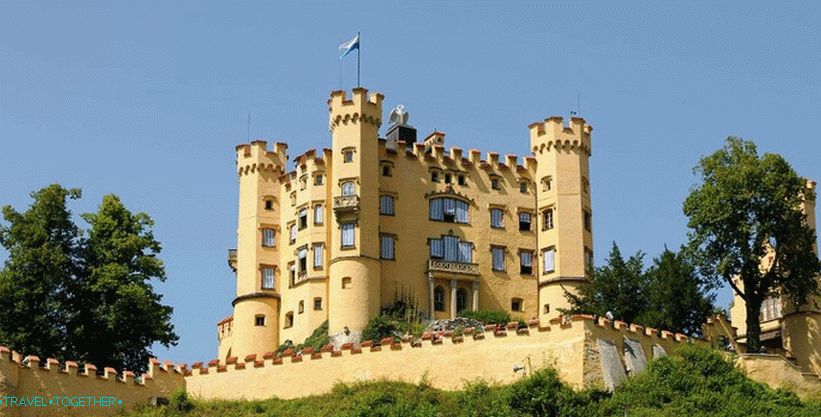 Hohenschwangau
Hohenschwangau – a magnificent neo-gothic style castle romantic era, located among the picturesque Bavarian forests. This building was built by the famous Bavarian king. Ludwig II on the site of a medieval dilapidated castle. Hohenschwangau famous for its magnificent interiors decorated with scenes from medieval legends, as well as original furniture of the 19th century.
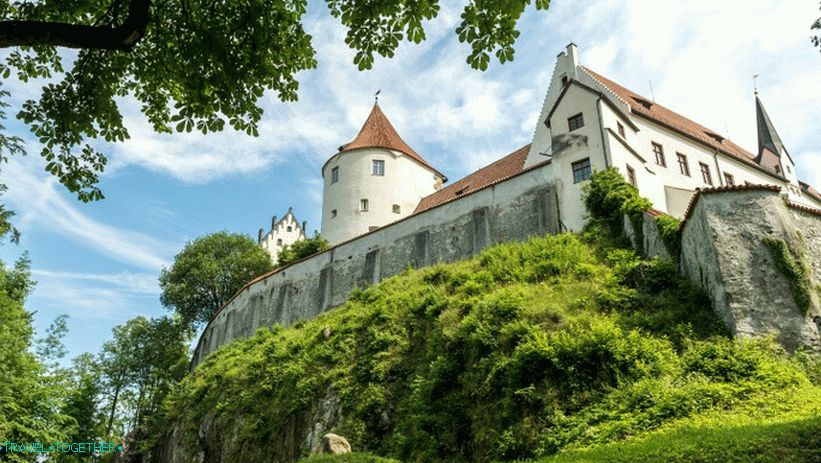 High palace
Above the medieval alleys of Fussen towers High palace. This castle in the past was the residence of the Augsburg Bishops and was founded in the 14th century. It is considered one of the largest and the best preserved late gothic castle complexes in Swabians, offering a combination of rich history and wonderful the atmosphere. Also part of it is the chapel, which bears the title “the highest in Germany”.
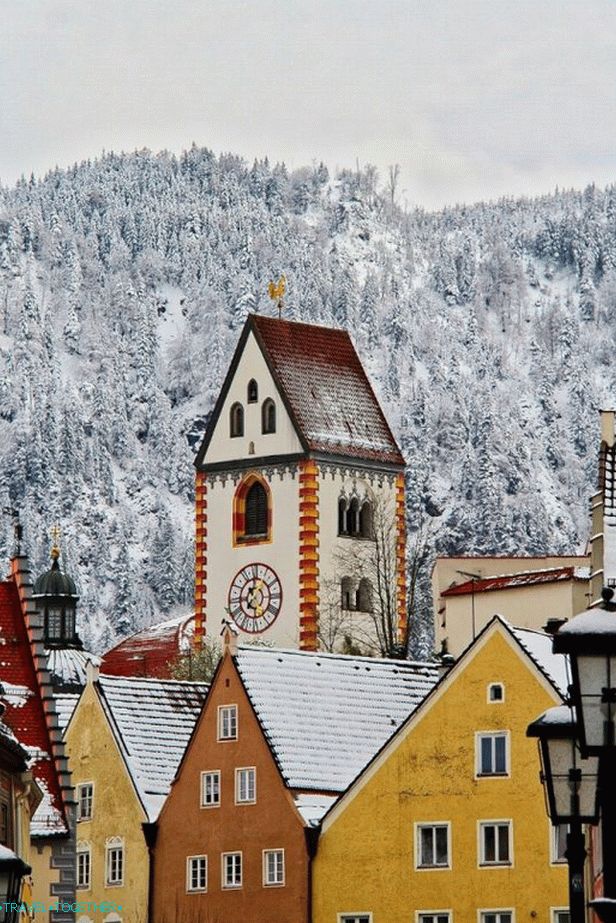 Abbey of sv. Magnus
Abbey of sv. Magnus – a magnificent baroque complex of the former Benedictine monastery, founded in the 8th century. Besides basilica which is the largest and most impressive of numerous religious baroque buildings in the old town, Here you can see the oldest preserved fresco in Bavaria. She is located in the eastern crypt and dates back to the second half 10 century. Also within the walls of the abbey is a museum of historical heritage.
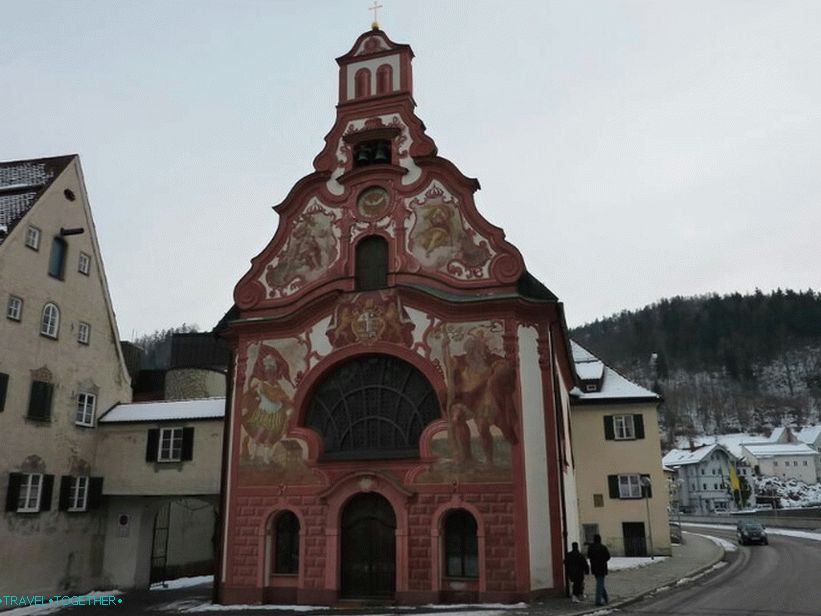 Church of sv. Of the spirit
Church of sv. Ghost is an attractive baroque building with beautiful frescoes, built between 1748 and 1749 years.
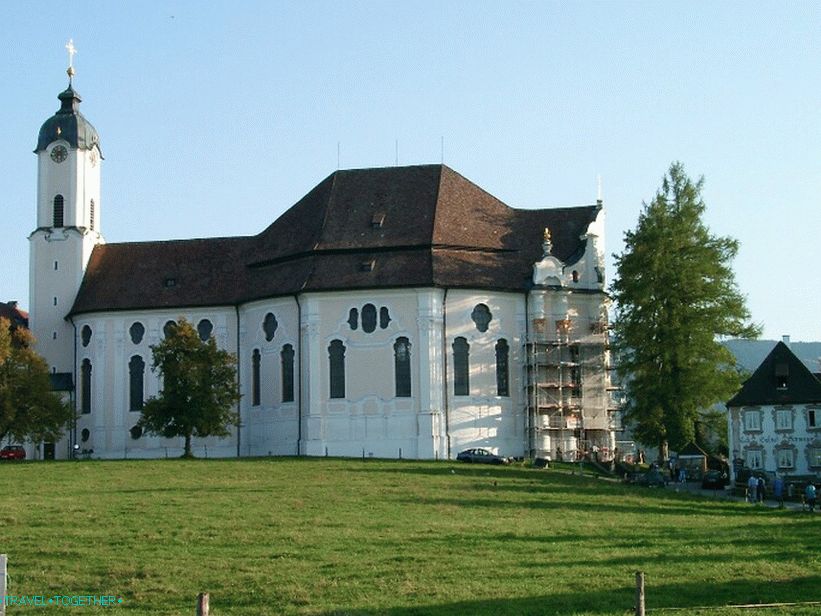 Wieskirche
Wieskirche – 18th century pilgrimage church which is one of the greatest masterpieces of rococo architecture. Church located in the village of Vis and is included in the list of World UNESCO heritage.