Florence, Italy – the most detailed information about the city with photos. The main attractions of Florence with a description, guides and cards.
Contents
City of Florence (Italy)
Florence – a city in Italy in the province of Tuscany, located almost in the center of the country on the banks of the Arno River. it one of the main tourist centers of Europe, which is spread out among the Tuscan hills at a considerable distance from the sea coast. Florence – one of the most significant and famous cultural centers of the European continent. The city is called “the cradle of the Renaissance”. Florence gave the world such giants of thought and art like – Leonardo da Vinci, Michelangelo, Donatello, Dante, Galileo, and the city’s contribution to the development of European science and art are generally difficult to assess. The capital of Tuscany is a city that preserves the charm and magnificence of the past and never cease to amaze with their masterpieces of art, legends the past, marble churches and glitter architecture.
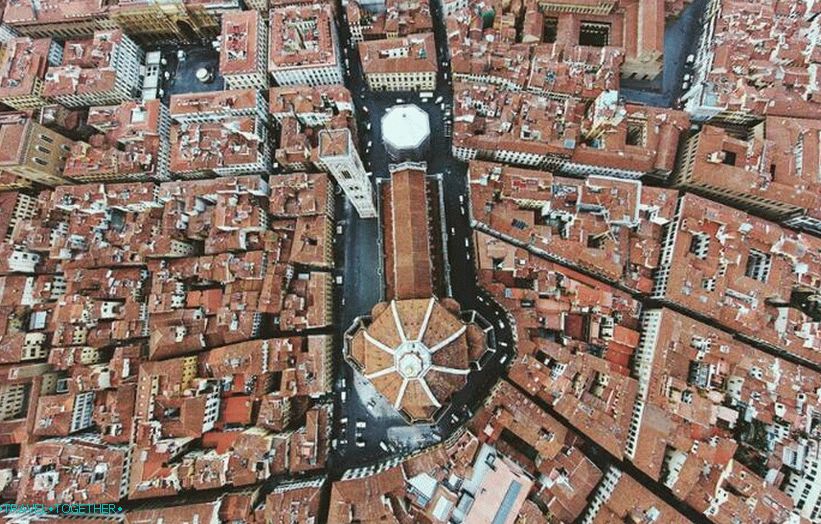 Panorama Florence
Content:
- Best time to visit
- How to get there
- Shopping and shopping
- Museums
- Food and drink
- Story
- Sights of Florence
- The route to the main attractions of Florence on map
Best time to visit
The best time to visit Florence is March-May and September October. Vijule and August here are high humidity and usually very hot. And in November – quite rainy. Winter in Florence is usually quite warm weather with positive temperatures. Snow and frost are rare.
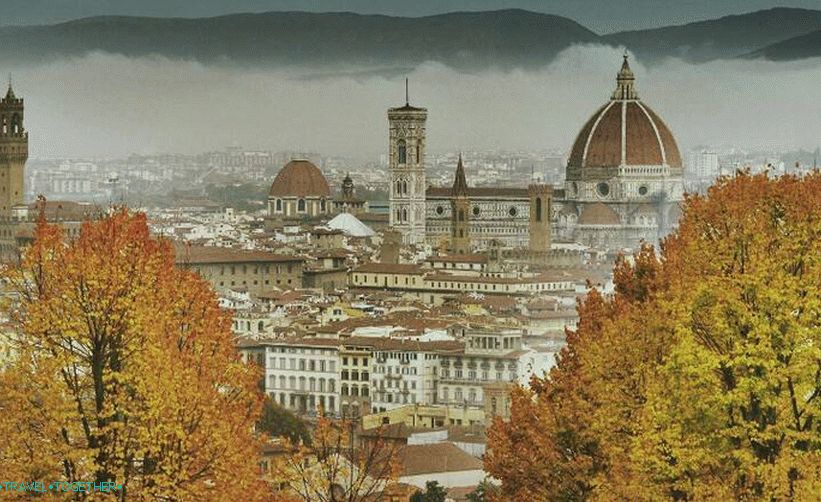 Florence in the autumn
How to get there
Florence has an airport named Amerigo Vespucci, which takes flights from Paris, Lyon, Vienna, Brussels, Copenhagen, Geneva, Frankfurt am Main, Munich, Stuttgart, Amsterdam, Barcelona, London, Madrid, Prague, Budapest, Zurich. You can get to Florence from other cities of Italy by train and bus ride. A high-speed train from Rome will take you to the capital of Tuscany for 1.5-2 hours. You can find out the schedule and buy tickets here. -http: //www.trenitalia.com
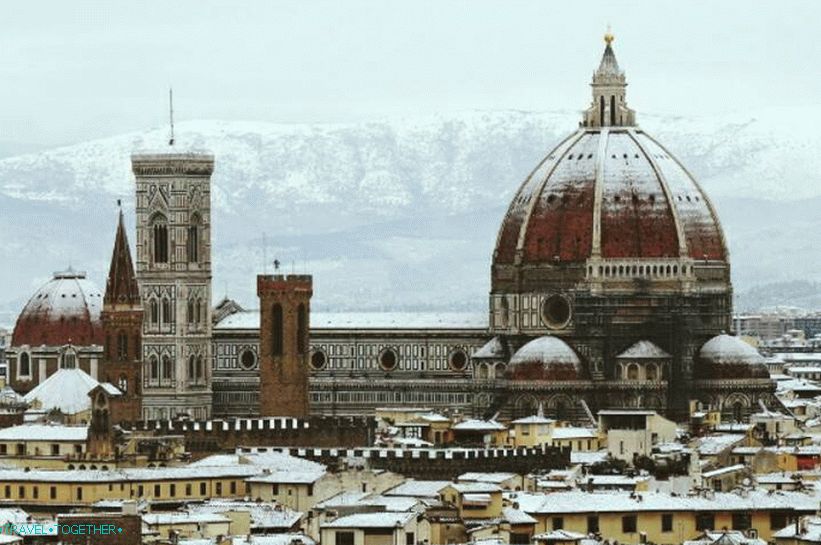 Winter in Florence
Shopping and shopping
One of the main shopping areas of Florence is the area Oltrarno just beyond the bridge of Vecchio. In the square of Piazza dei Ciompi there is an interesting flea market. In the central market San Lorenzo can be purchased souvenir, ceramics, leather goods, food and much more. A large number of stores located on the streets: Via Tornabuoni, Via della Vigna Nuova, Via dei Fossi, Via Maggio.
Florence is famous for the production of leather goods: bags, shoes, clothes. Shops with these goods are concentrated in the area Santa Croce.
30 km from Florence is the outlet Designer Outlet. Barberino, which collected more than 100 brand Stores: Prada, Dolce & Gabbana, Cavalli, Patrizia Pepe, Micheal Kors, Pinko, Furla, Guess, Twin Set, Desigual, Hugo Boss, Nike and Adidas with discounts from 30 to 70%.
Museums
Florence is a city-museum. Here are collected genuine treasures. art, science and culture. See article – Museums of Florence
Uffizi Gallery
The Uffizi Gallery is the oldest and most famous gallery in Florence, not inferior to the Paris Louvre. It exhibits over 2,000 works of art, and the number of visitors exceeds 2 000 000 person. You can find out the cost of tickets and buy them online. here -http: //www.florence-tickets.com/it/biglietti-galleria-degli-uffizi-firenze.html
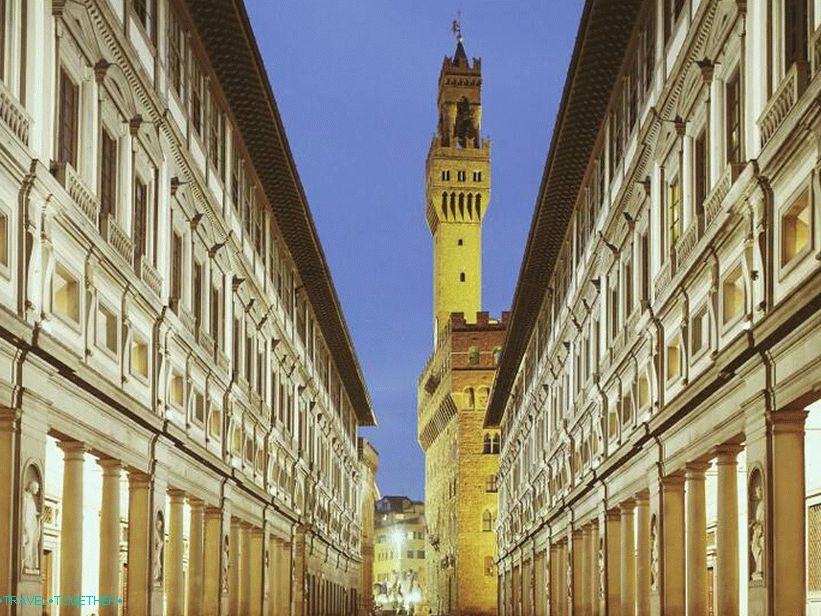 Gallery Uffizi
Ufizzi is the earliest museum of painting in modern Europe, in which exhibits masterpieces of different historical eras. In him classical sculptures from the collections of the Medici family and a large collection of Italian and European painting from XIII to XVIII century with a focus on the school of Tuscany, the late Middle Ages and Renaissance.
The Uffizi Gallery is located in a historic building of the 16th century, built for the Medici family. The appearance of the gallery was largely owes this legendary Florentine dynasty. In 1581 with Francesco Medici here were exhibited the first collections that then continuously replenished.
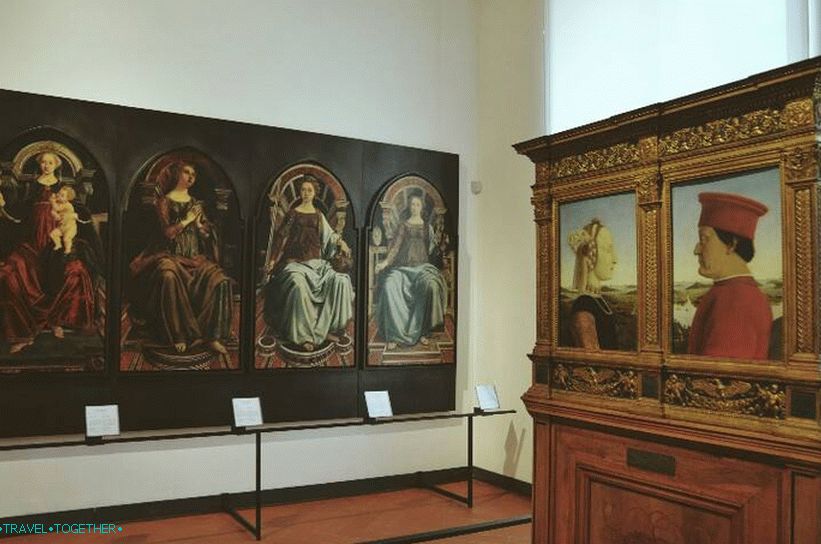 Masterpieces Uffizi galleries
Masterpieces:
- Among the works of the Florentine school are pictures Giotto, Masaccio, Botticelli, Leonardo da Vinci, Michelangelo.
- Among the works of Italian painting stand out paintings Duccio, Perugino, Raphael, Titian, Caravaggio, Canaletto.
- Among the works of European painters attract attention works by Hugo van der Goes, Hans Memling, Lucas Cranach, Albrecht Durer, El Greco, Rubens, Rembrandt.
The main masterpieces:
- Botticelli, Birth of Venus, 1484
- Botticelli, Spring, 1482.
- Leonardo da Vinci, Annunciation, 1475.
- Michelangelo, Tondo Doni, 1506
- Raphael, Portrait of Leo X, 1518
- Titian, Venus of Urbinsk, 1538
- Caravaggio, Bacchus, 1597
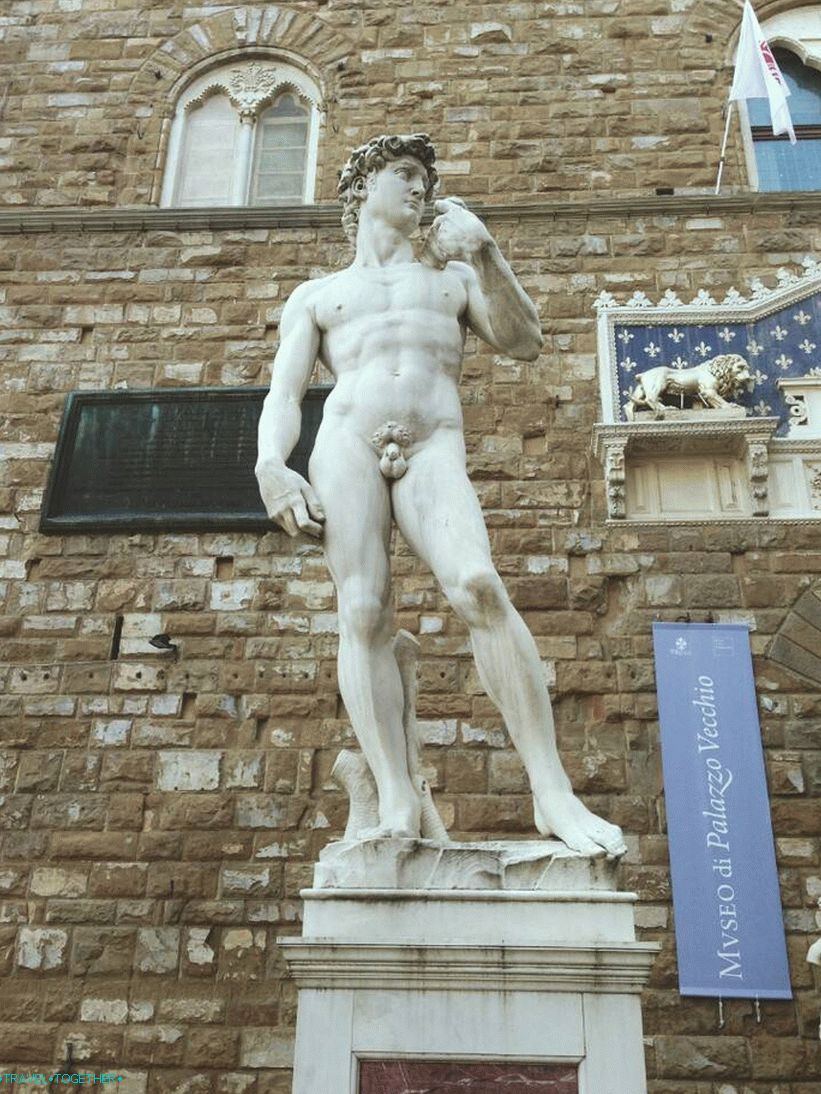 Copy Michelangelo’s most famous sculpture “David” near the entrance to Ufizzi
Gallery della Academy
Della Accademia is another famous museum in Florence, the main masterpieces of which is the statue of David and other works the genius of Michelangelo. Also here are works Florentine painting, including the masterpieces of Botticelli, Perugino and many others. You can find out the cost of tickets and buy them online. here -http: //www.florence-tickets.com/it/biglietti-galleria-dell-accademia-firenze.html
Bargello Museum
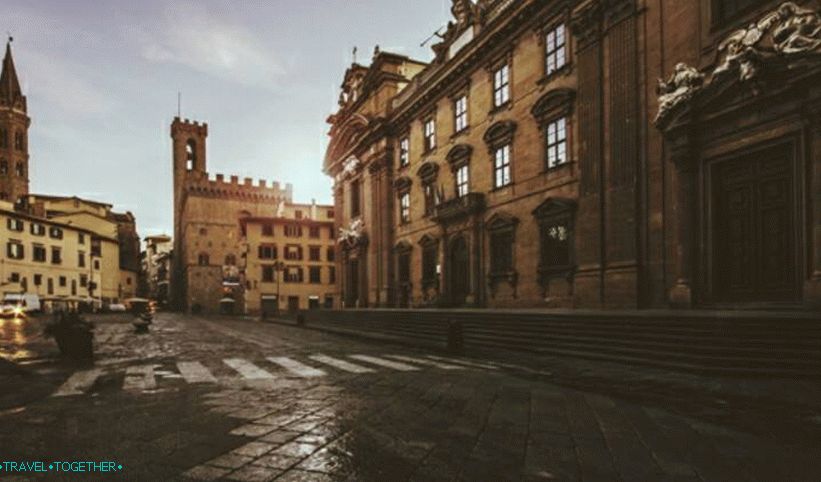 The museum Bargello
The Bargello Museum is another gallery gallery from the TOP category. In him is the largest collection of Tuscan sculptors of the era Renaissance in the world, including the masterpieces of Donatello, Della Robbia, Verrocchio, Michelangelo. The museum is located in a historic building 13 Century – Palazzo del Capitan del Popolo. The Bargello Museum was opened in 1865. Find out the cost of tickets and buy them online. can be here -http: //www.florence-tickets.com/it/biglietti-museo-del-bargello-firenze.html
Gallery Palatina
Palatina Gallery is another museum gallery located in the building of the Palazzo Pitti. There are many masterpieceRafael, Caravaggio, the richest collection works of the Venetian school, including many masterpiece titian. Ticket prices here -http: //www.florence-tickets.com/it/biglietti-galleria-palatina-firenze.html
Archaeological Museum
Archaeological Museum – for lovers of history and antiquities. Is one of the most famous archaeological museums Italy with a collection of antiquities from the Etruscan period and the Ancient Of Egypt. Buy tickets online -http: //www.florence-tickets.com/it/biglietti-museo-archeologico-firenze.html
Food and drink
In the food we recommend to give preference to traditional dishes. Florentine and Italian cuisine. There are a lot of different Places from cozy street trattoria to luxurious restaurants. Attention: Florence is one of the most expensive cities in Italy. Therefore, the food in small restaurants (especially in the city center) is quite expensive. On two for lunch you can easily leave 100 euros. To save you can have a snack on florentine street food or order a pizza in inexpensive pizzerias away from the hiking trails. Should also Note that Florentine pizza is cooked on thin dough. If a You like pizza on a thick dough. Neapolitano must be ordered.
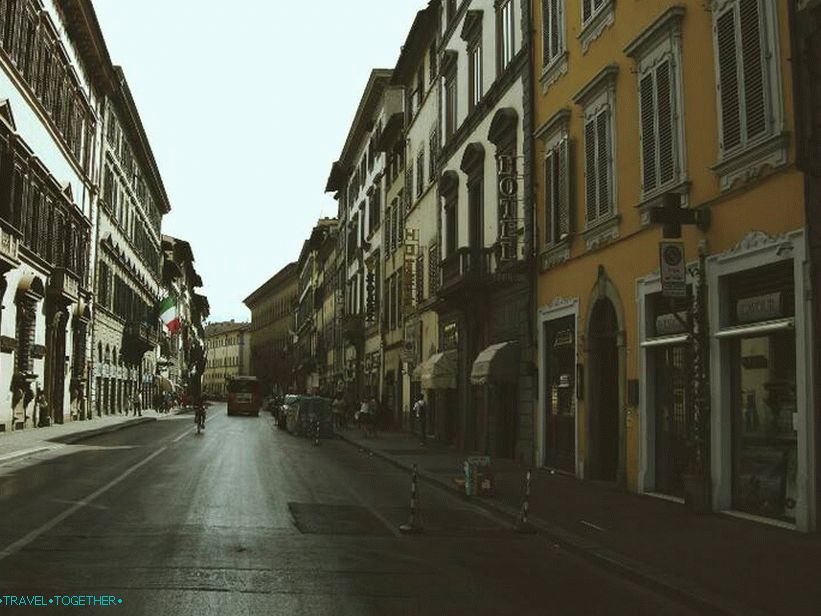 Streets Florence
From traditional dishes we recommend to try:
- Crostini Neri – appetizer, croutons with chicken pate
- Crespelle alla Fiorentina – pancakes stuffed with ricotta and spinach with cream sauce. Ancient Florentine dish.
- Bistecca alla Fiorentina – bone steak cooked on grill
- Trippa & Lampredotto – minced meat that is served as The main dish is used in street food.
- Peposo – meat with pepper.
- Baccalà alla fiorentina – cod with tomato, onion and rosemary
- All’in zimino – cuttlefish with vegetables.
- Fagiuoli (Fagioli) all’uccelletto – beans with chicken
- Piselli “alla fiorentina” – peas with parsley, bacon, garlic
- Zuccotto – dessert.
- Schiacciata Fiorentina – a quiche cake.
- Gelato – ice cream
From alcoholic beverages we recommend to try the Tuscan the wine.
The most delicious street food in Florence in places marked on map below.
Story
Florence was founded in 59 BC. roman veterans. Former soldiers called the new settlement Florence, which translates as “blooming”. Already by the 4th century, the settlement turned into a city and the residence of the bishop.
Further, the development of the city slowed down, because after the wreck of roman Empire Florence was first ruled by Byzantium, then Ostrogoths, Lombards and even Franks.
The revival of the city began in the 10th century, and at the beginning of the 12th century Florence became an independent commune. In the 11-12 century erected Baptistery and the church of San Miniato. The main cathedral was built in the 13th century. Florence Santa Maria del Fiore and Palazzo Vecchio. At the same time the city was drawn into the struggle between Guelphs and Gibbelins. Although it is did not prevent further prosperity. In the middle of the 13th century Florence begins to mint its own coin – florin, which became the benchmark in Europe.
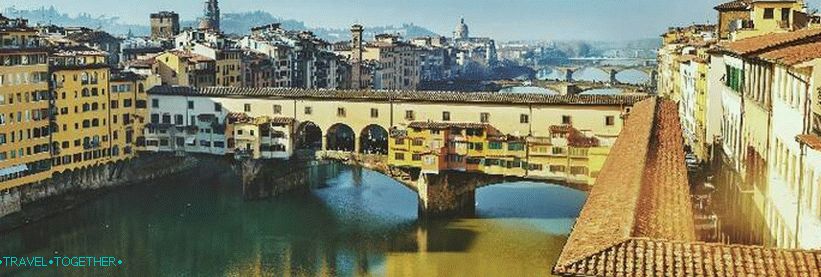 Arno River
The 14th century in Florence is marked by the following important events. At the beginning of the century, Dante writes the legendary “Divine comedy “. This work played a crucial role in the formation modern Italian language, which became the basis Tuscan dialect.
Also in 1334 dynasty came to power in Florence Medici. However, at the end of the 14th century, they were expelled by the people and proclaimed the Florentine Republic.
It was at the time of the Republic of Florence that became the cradle of the era Renaissance. Here lived and worked a brilliant Leonardo da Vinci, the great Michelangelo and many other geniuses of creativity and thought.
The Medici family managed to regain their power only in the 16th century. Again The Grand Duchy of Tuscany was established, which existed until the unification of Italy in the second half of the 19th century.
It should also be noted that Florence suffered greatly during the the time of the bombing of World War II.
Sights of Florence
The sights of Florence are known all over the world: the legendary and astounding Santa Maria del Fiore, Ponte Vecchio, Santa Maria Novella and many other historical and architectural monuments attract millions of tourists. And the special atmosphere of the Old Town, in which walked and worked Leonardo, Michelangelo, Donatello, Giotto, gives the pearl of Tuscany a special charm and charm.
Santa Maria del Fiore
The main attraction and the most recognizable symbol Florence – the Cathedral of Santa Maria del Fiore or simply the Duomo. it a beautiful and impressive cathedral with pink decorations, white and green and gothic style. The Duomo is built on the site where once stood ancient Florence Cathedral – Santa Reparata, the remains of which are visible in crypt.
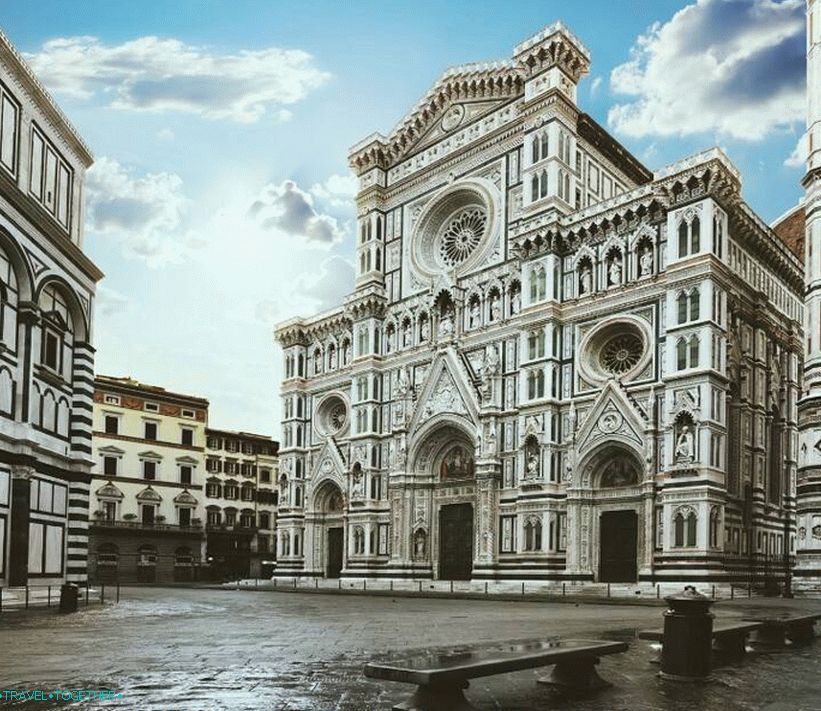 Santa Maria del Fiore
Construction of the cathedral began in the late thirteenth century. The architect was Arnolfo di Cambio. The beautiful dome was completed in the fifteenth century. The architect was Filippo Brunelleschi, who won the competition for its construction 1418 The dome has a characteristic egg shape and was built without the use of scaffolding.
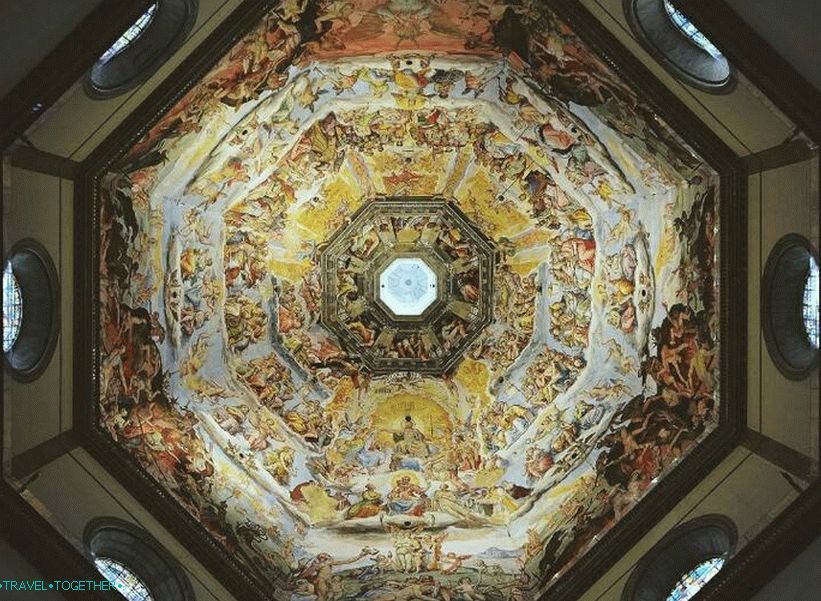 Dome of the cathedral
Inside the cathedral is also magnificent – marble and beautiful the frescoes of Giorgio Vasari, completed after his death as a pupil Federico Zaccari. Entrance to the church of Santa Maria del Fiore free. To get inside the dome and appreciate the frescoes with more close-ups need to overcome 463 steps.
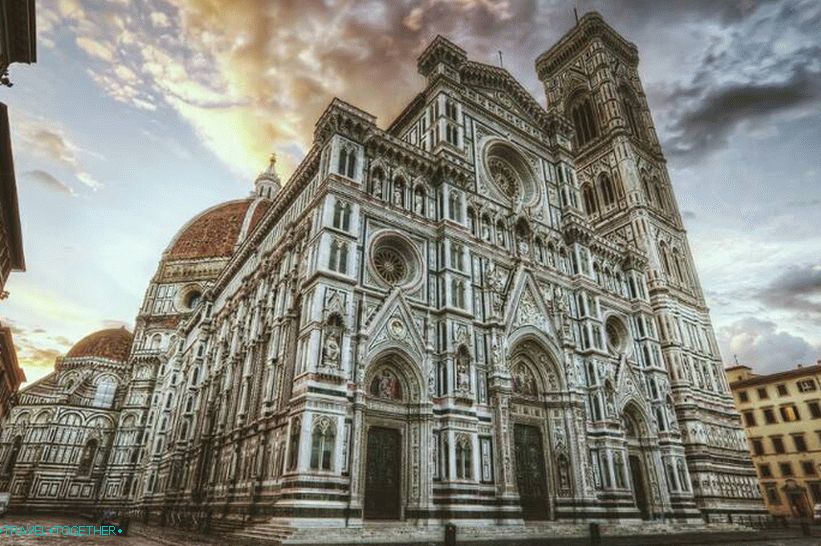 Santa Maria del Fiore and Giotto’s bell tower
Very close to Santa Maria del Fiore, making up one with him architectural ensemble, the Giotto bell tower is located. Performed in the style of a majestic cathedral, the bell tower is a beautiful An example of the Florentine Gothic architecture of the fourteenth century. The structure has a square base about 15 meters wide. and is directed up to 84.70 meters. Began to build a bell tower in 1334, the brilliant Giotto, continued Andrea Pisano, finished building Talenti. The bell tower has seven bells. The biggest bell is called Santa Reparatav the honor of the saint to whom the first ancient cathedral was dedicated on this place To climb up and enjoy the stunning panorama Florence needs to overcome 414 steps.
Basilica of Santa Maria Novella
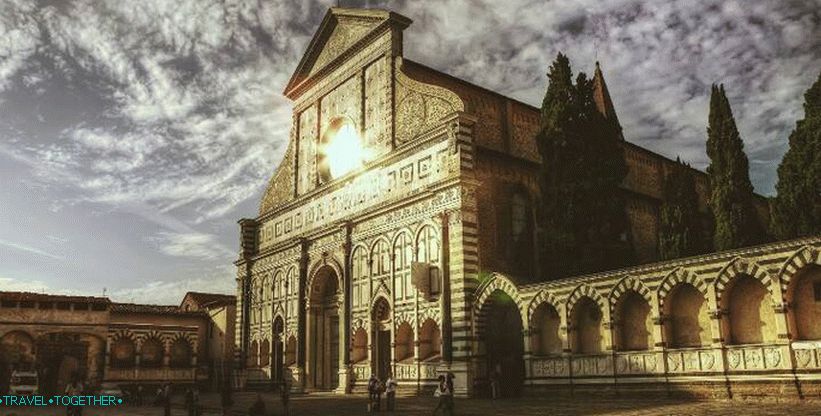 Basilica Santa Maria Novella
The Basilica of Santa Maria Novella, as a rule, is not included in the number the most popular of Florence and this is real not fair. Architecturally it is one of the most important churches in Gothic style in Tuscany. Worked on the front of the famous architects Talenti and Alberti. Interior contains extraordinary masterpieces, including: “Trinity” from Masaxio, fresco “Crucifixion” by Giotto. Attached to the creation of the dome hands a famous engineer and architect Brunelleschi. Church built on the romance foundation, traces of which can be seen in bottom of the marble facade.
Baptistery of San Giovanni
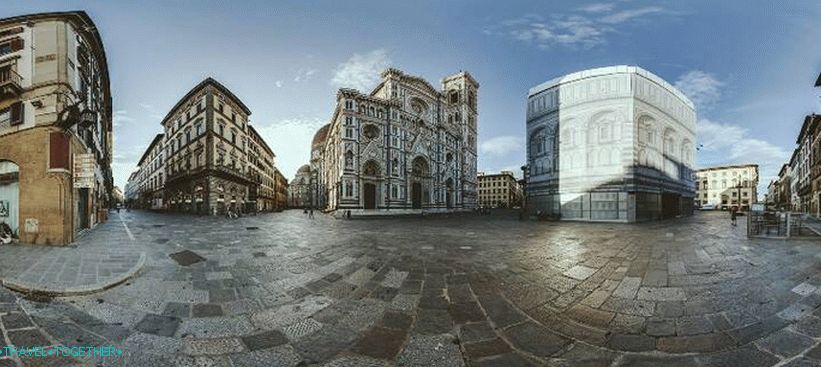 Baptistery San Giovanni (right)
The baptistery of San Giovanni, located in the Piazza Duomo, right across the cathedral of santa maria del fiore, is one of The most important monuments of Florence. Origin of this The building is uncertain. Believed to have been built on the ruins of an ancient Roman temple, most likely dedicated to God Mars in the 4-5 century AD. The first mention of him is dated the end of the 9th century, when it is referred to as the basilica. The Baptistery, named after the patron saint of the city. Giovanni, is an octagonal building covered with a dome with eight segments with a pyramidal roof. The facade of the building is decorated white and green marble typical of the florentine architecture of the Romanesque period. Be sure to pay attention to entrance doors that are made in the first half of the 15th century and present scenes from the Old Testament.
Basilica of Santa Croce
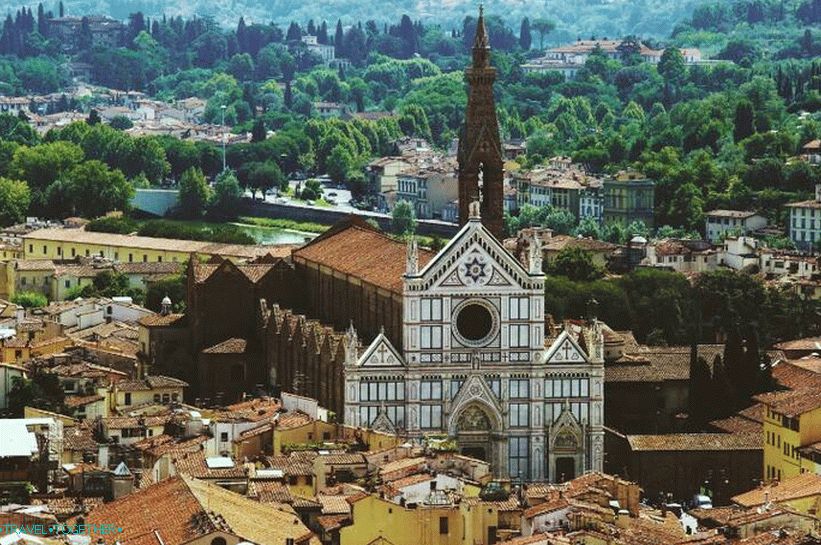 Basilica Santa croce
The Basilica of Santa Croce was built for the Franciscan Order in 1294 according to the project of Arnolfo di Cambio. In it lie the legendary the sons of the city are Michelangelo, Machiavelli and Galileo Galilei, who never been baptized. Here is also installed Dante’s tomb but it is empty. The facade of the church is made of multicolor marble. Inside you can admire the Gaddi frescoes (1380) in the main chapel, beautiful frescoes by Giotto and other masters. Also do not miss tomb of Italian playwright Giovanni Battista Niccolini (left from the entrance), which inspired the authors of the Statue Freedom.
Church of Sant Trinita
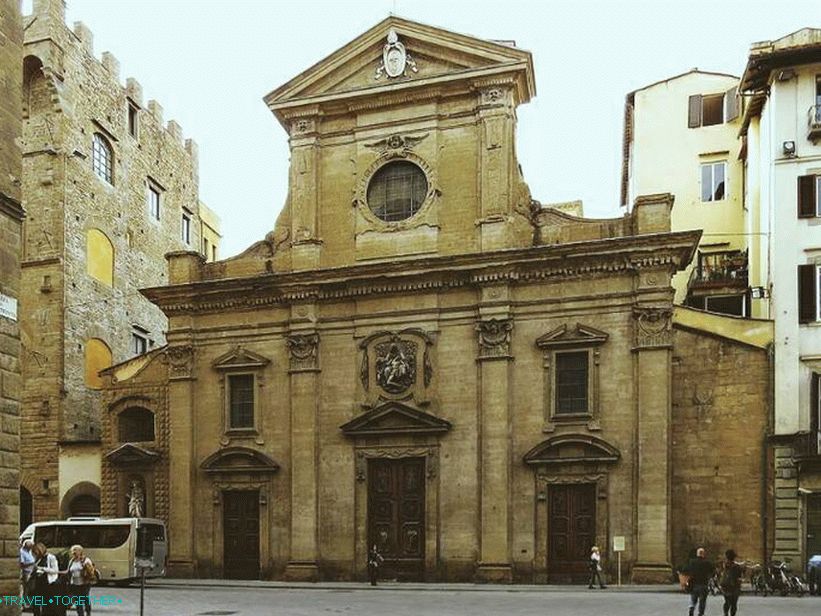 Church Sant Trinita
Church of Sant Trinita – Romanesque church founded in the middle of the eleventh century. Located in the immediate proximity to the ancient city walls of Florence, she was later rebuilt in gothic style. The facade of the building was made by projectBernardo Buontalenti (one of the main representatives Tuscan Mannerism) and decorated with sculpted Giovanni Caccini
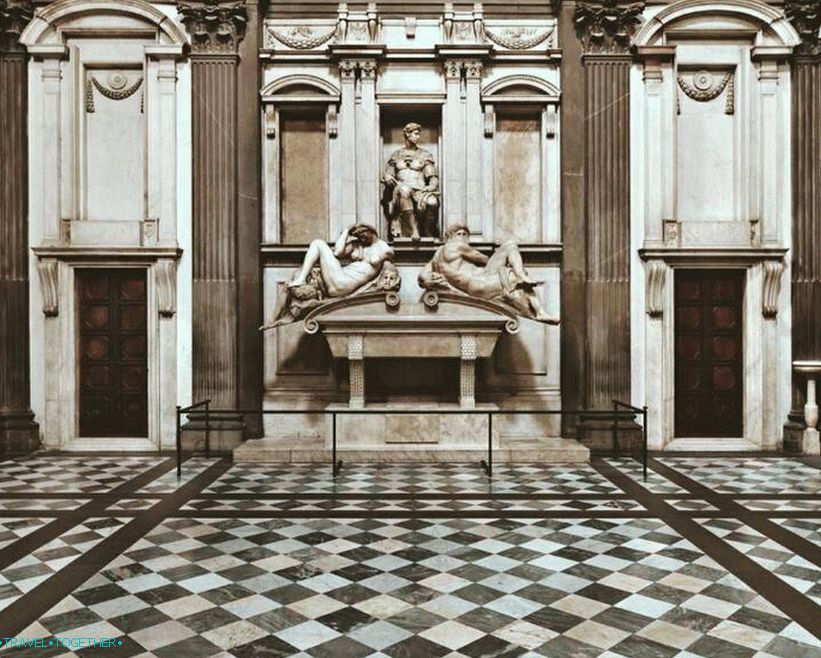 Chapel Medici
Medici Chapel – the pearl of the monumental complex San Lorenzo. This mausoleum is a rare example of Florentine baroque. Large dome and luxurious interiors have been designed as symbol of the greatness of the Medici family. And to create some sculptures Michelangelo himself had a hand.
Palazzo Vecchio
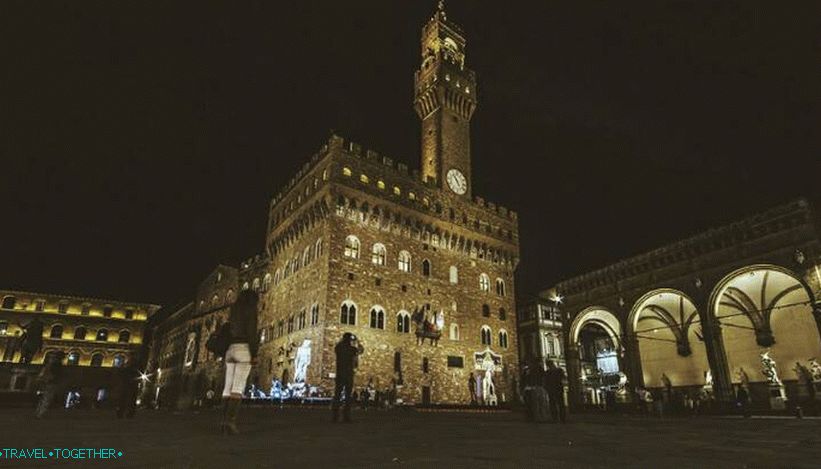 Palazzo Vecchio and Arnolfo Tower
The Palazzo Vecchio and the Arnolfo Tower – is a political symbol of florence. The original design of the structure is attributed Arnolfo di Cambio. The fortress building was built in 1299 Godna the ruins of the Ghibelling Uberti towers, conquered guelphs. Impressive palaces on ancient ruins of the roman theater. The Palazzo Vecchio was created for accommodation board of the Florentine Republic.
Ponte vecchio
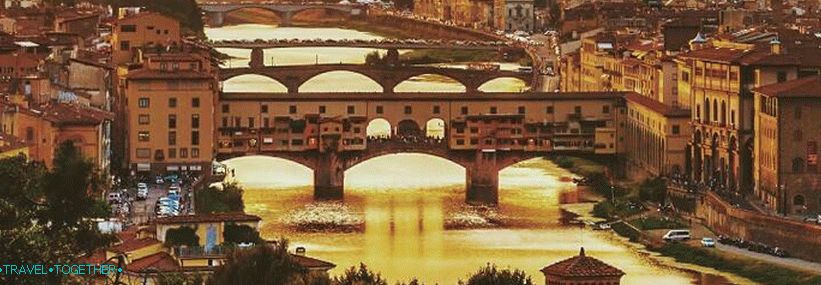 Ponte vecchio
Ponte Vecchio – the eternal symbol of Florence. Once the only The bridge over the Arno River was built in 1218. Damaged after severe flooding was restored in 1345. Bridge survived floods, World War II (the Nazis destroyed all bridges except of this) and became one of the most popular and famous places of the capital Tuscany.
Signoria Square
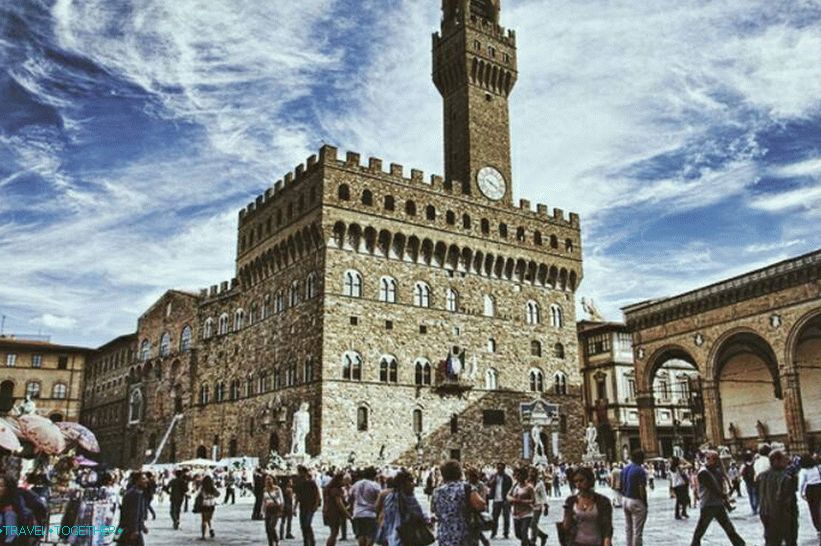 Square Signoria
Piazza della Signoria is the center of the political life of Florence with fourteenth century. Square square saw all the biggest historical events of the city, it took all the most important historical decisions. Here are the Palazzo Vecchio Gallery Ufitsi, the fountain of Neptune, a copy of the sculpture by Michelangelo “David”, Loggia de Lanzi.
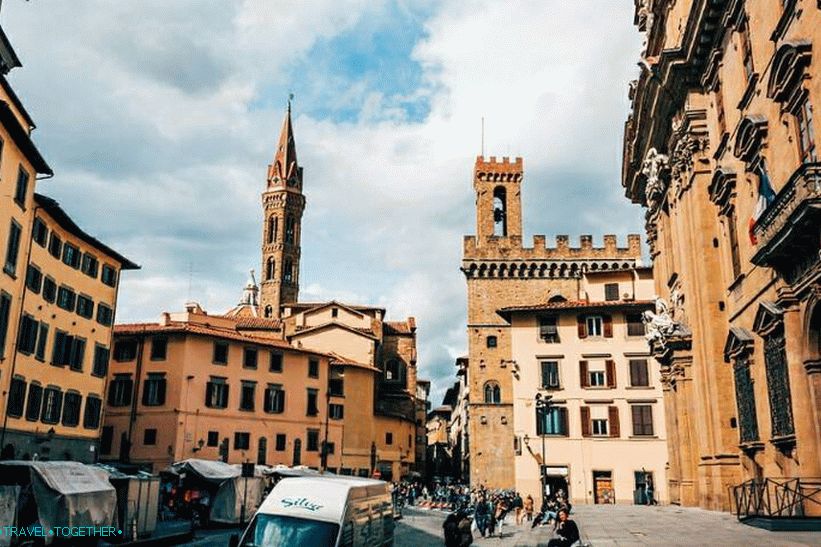 Bell tower Florentine Abbey
Florence Abbey is an ancient monastery located in the historic center of Florence opposite the Bargello Gallery. Based in late 10th century Benedictine monks. This architectural The complex is made mainly in the Gothic style. In his The architecture is particularly notable for the high bell tower.
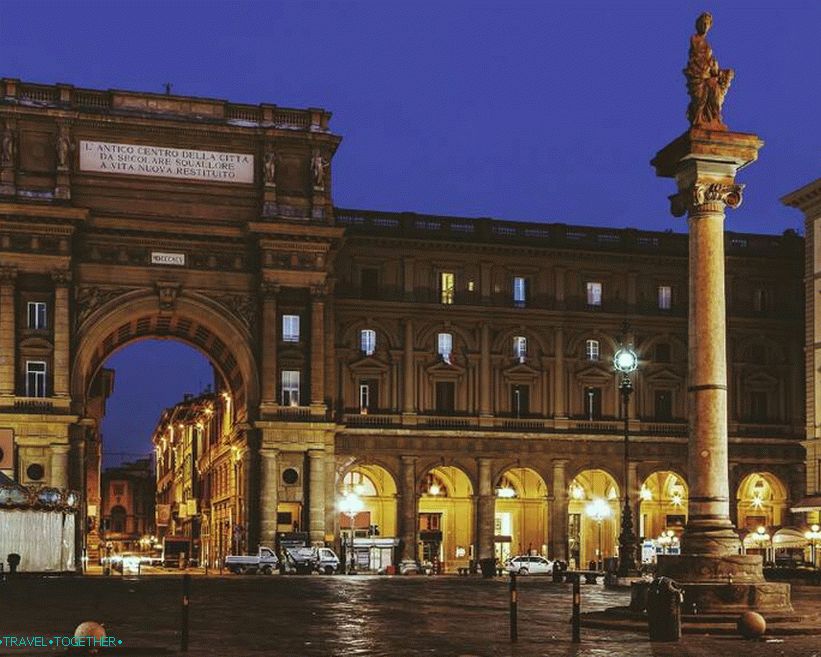 Square Republic
Republic Square is one of the main squares of Florence, since Roman times. Modern rectangular shape with nineteenth century luxury buildings are the result urban modernization when Florence was the capital of Italy. TO huge regrets were demolished old The walls of the thirteenth century, which surrounded the city. In the center The square is set impressive column, which marks the place where the ancient roman forum was.
Piazzale Michelangelo offers a beautiful panoramic view of the Florence and Arno, and certainly highly recommended to visit. The square was designed in 1869 by the Florentine architect Giuseppe Poggi.
Pitti Palace and Boboli Gardens
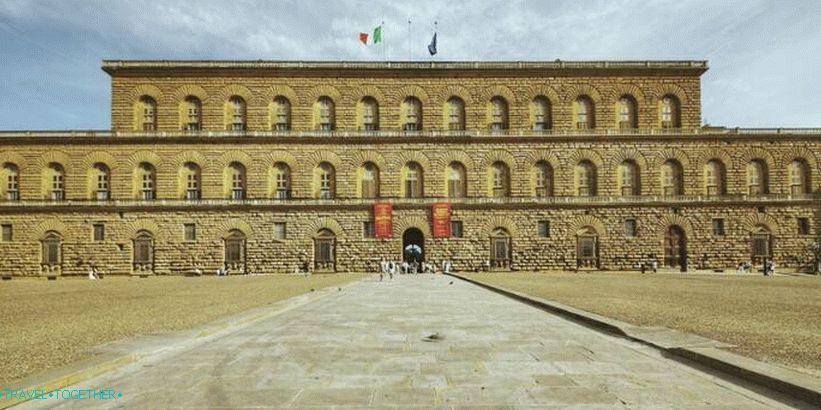
Pitti Palace and the Boboli Gardens – a huge palace and park complex which is one of the greatest examples Florentine architecture. The palace was originally built by the family. Pitti in 1457 according to the design of Filippo Brunelleschi and his pupil Luca Fanselli. In 1549 the building was bought by Medici, becoming residence of the grand-ducal family. Later the palazzo was significantly expanded and rebuilt. In 1560 Bartolomeo Ammannati designed and built a large, magnificent courtyard and added two wing. Cosimo II Medici Palace not only enlarged, but also organized palace square. The facade remained virtually unchanged, for except for the two wings covering the area. At present Here are galleries and museums.
Boboli Gardens – the largest park in Florence. Their story has more than four centuries.
The route to the main attractions of Florence on map
Florence, with its museums, palaces and churches, has some of the richest cultural and artistic treasures in the world.
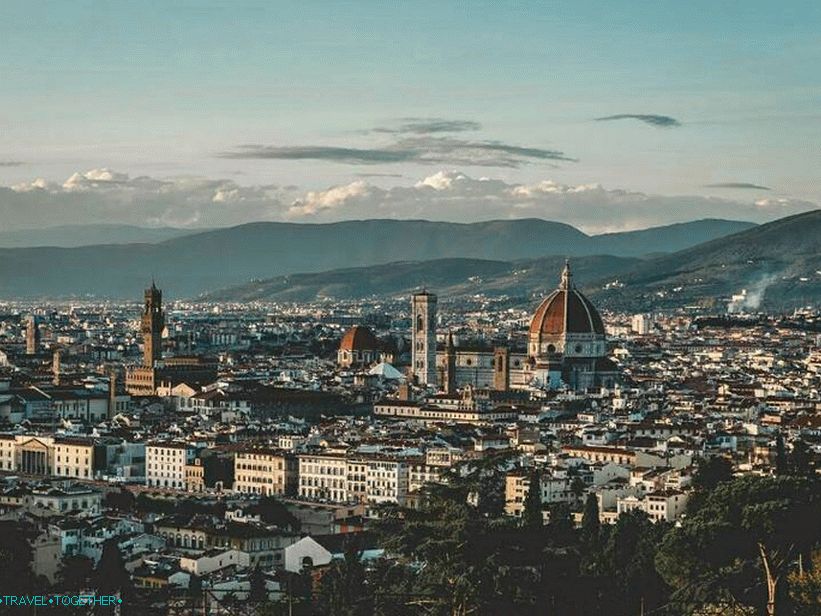 Panorama Florence. Photo – @ lore2984
Among the huge number of interesting places you must visit and to look:
- The main cathedral of Florence and one of the largest and most beautiful Temples of Italy – Santa Maria del Fiore
- Enjoy the masterpieces of art in the Uffizi Gallery, della Academy and Bargello.
- Visit the church of Santa Maria NovelaSanta Croce
- See the architectural genius of Michelangelo in the library building Medici and his most important creation – the statue of David
- Rate the collection of the Palazzo Pitti.
- Tired of the masterpieces of art, take a stroll through Florence. Walk to the romantic Old Bridge over the Arno River, go to Piazzale Michelangelo and the church of San Miniato al Monte to see a stunning panorama of the city.
Story
Florence was founded in 59 BC. roman veterans. Former soldiers called the new settlement Florence, which translates as “blooming”. Already by the 4th century, the settlement turned into a city and the residence of the bishop.
Further, the development of the city slowed down, because after the wreck of roman Empire Florence was first ruled by Byzantium, then Ostrogoths, Lombards and even Franks.
The revival of the city began in the 10th century, and at the beginning of the 12th century Florence became an independent commune. In the 11-12 century erected Baptistery and the church of San Miniato. The main cathedral was built in the 13th century. Florence Santa Maria del Fiore and Palazzo Vecchio. At the same time the city was drawn into the struggle between Guelphs and Gibbelins. Although it is did not prevent further prosperity. In the middle of the 13th century Florence begins to mint its own coin – florin, which became the benchmark in Europe.
Arno River
The 14th century in Florence is marked by the following important events. At the beginning of the century, Dante writes the legendary “Divine comedy “. This work played a crucial role in the formation modern Italian language, which became the basis Tuscan dialect.
Also in 1334 dynasty came to power in Florence Medici. However, at the end of the 14th century, they were expelled by the people and proclaimed the Florentine Republic.
It was at the time of the Republic of Florence that became the cradle of the era Renaissance. Here lived and worked a brilliant Leonardo da Vinci, the great Michelangelo and many other geniuses of creativity and thought.
The Medici family managed to regain their power only in the 16th century. Again The Grand Duchy of Tuscany was established, which existed until the unification of Italy in the second half of the 19th century.
It should also be noted that Florence suffered greatly during the the time of the bombing of World War II.
Sights of Florence
The sights of Florence are known all over the world: the legendary and astounding Santa Maria del Fiore, Ponte Vecchio, Santa Maria Novella and many other historical and architectural monuments attract millions of tourists. And the special atmosphere of the Old Town, in which walked and worked Leonardo, Michelangelo, Donatello, Giotto, gives the pearl of Tuscany a special charm and charm.
Santa Maria del Fiore
The main attraction and the most recognizable symbol Florence – the Cathedral of Santa Maria del Fiore or simply the Duomo. it a beautiful and impressive cathedral with pink decorations, white and green and gothic style. The Duomo is built on the site where once stood ancient Florence Cathedral – Santa Reparata, the remains of which are visible in crypt.
Santa Maria del Fiore
Construction of the cathedral began in the late thirteenth century. The architect was Arnolfo di Cambio. The beautiful dome was completed in the fifteenth century. The architect was Filippo Brunelleschi, who won the competition for its construction 1418 The dome has a characteristic egg shape and was built without the use of scaffolding.
Dome of the cathedral
Inside the cathedral is also magnificent – marble and beautiful the frescoes of Giorgio Vasari, completed after his death as a pupil Federico Zaccari. Entrance to the church of Santa Maria del Fiore free. To get inside the dome and appreciate the frescoes with more close-ups need to overcome 463 steps.
Santa Maria del Fiore and Giotto’s bell tower
Very close to Santa Maria del Fiore, making up one with him architectural ensemble, the Giotto bell tower is located. Performed in the style of a majestic cathedral, the bell tower is a beautiful An example of the Florentine Gothic architecture of the fourteenth century. The structure has a square base about 15 meters wide. and is directed up to 84.70 meters. Began to build a bell tower in 1334, the brilliant Giotto, continued Andrea Pisano, finished building Talenti. The bell tower has seven bells. The biggest bell is called Santa Reparatav the honor of the saint to whom the first ancient cathedral was dedicated on this place To climb up and enjoy the stunning panorama Florence needs to overcome 414 steps.
Basilica of Santa Maria Novella
Basilica Santa Maria Novella
The Basilica of Santa Maria Novella, as a rule, is not included in the number the most popular of Florence and this is real not fair. Architecturally it is one of the most important churches in Gothic style in Tuscany. Worked on the front of the famous architects Talenti and Alberti. Interior contains extraordinary masterpieces, including: “Trinity” from Masaxio, fresco “Crucifixion” by Giotto. Attached to the creation of the dome hands a famous engineer and architect Brunelleschi. Church built on the romance foundation, traces of which can be seen in bottom of the marble facade.
Baptistery of San Giovanni
Baptistery San Giovanni (right)
The baptistery of San Giovanni, located in the Piazza Duomo, right across the cathedral of santa maria del fiore, is one of The most important monuments of Florence. Origin of this The building is uncertain. Believed to have been built on the ruins of an ancient Roman temple, most likely dedicated to God Mars in the 4-5 century AD. The first mention of him is dated the end of the 9th century, when it is referred to as the basilica. The Baptistery, named after the patron saint of the city. Giovanni, is an octagonal building covered with a dome with eight segments with a pyramidal roof. The facade of the building is decorated white and green marble typical of the florentine architecture of the Romanesque period. Be sure to pay attention to entrance doors that are made in the first half of the 15th century and present scenes from the Old Testament.
Basilica of Santa Croce
Basilica Santa croce
The Basilica of Santa Croce was built for the Franciscan Order in 1294 according to the project of Arnolfo di Cambio. In it lie the legendary the sons of the city are Michelangelo, Machiavelli and Galileo Galilei, who never been baptized. Here is also installed Dante’s tomb but it is empty. The facade of the church is made of multicolor marble. Inside you can admire the Gaddi frescoes (1380) in the main chapel, beautiful frescoes by Giotto and other masters. Also do not miss tomb of Italian playwright Giovanni Battista Niccolini (left from the entrance), which inspired the authors of the Statue Freedom.
Church of Sant Trinita
Church Sant Trinita
Church of Sant Trinita – Romanesque church founded in the middle of the eleventh century. Located in the immediate proximity to the ancient city walls of Florence, she was later rebuilt in gothic style. The facade of the building was made by projectBernardo Buontalenti (one of the main representatives Tuscan Mannerism) and decorated with sculpted Giovanni Caccini
Chapel Medici
Medici Chapel – the pearl of the monumental complex San Lorenzo. This mausoleum is a rare example of Florentine baroque. Large dome and luxurious interiors have been designed as symbol of the greatness of the Medici family. And to create some sculptures Michelangelo himself had a hand.
Palazzo Vecchio
Palazzo Vecchio and Arnolfo Tower
The Palazzo Vecchio and the Arnolfo Tower – is a political symbol of florence. The original design of the structure is attributed Arnolfo di Cambio. The fortress building was built in 1299 Godna the ruins of the Ghibelling Uberti towers, conquered guelphs. Impressive palaces on ancient ruins of the roman theater. The Palazzo Vecchio was created for accommodation board of the Florentine Republic.
Ponte vecchio
Ponte vecchio
Ponte Vecchio – the eternal symbol of Florence. Once the only The bridge over the Arno River was built in 1218. Damaged after severe flooding was restored in 1345. Bridge survived floods, World War II (the Nazis destroyed all bridges except of this) and became one of the most popular and famous places of the capital Tuscany.
Signoria Square
Square Signoria
Piazza della Signoria is the center of the political life of Florence with fourteenth century. Square square saw all the biggest historical events of the city, it took all the most important historical decisions. Here are the Palazzo Vecchio Gallery Ufitsi, the fountain of Neptune, a copy of the sculpture by Michelangelo “David”, Loggia de Lanzi.
Bell tower Florentine Abbey
Florence Abbey is an ancient monastery located in the historic center of Florence opposite the Bargello Gallery. Based in late 10th century Benedictine monks. This architectural The complex is made mainly in the Gothic style. In his The architecture is particularly notable for the high bell tower.
Square Republic
Republic Square is one of the main squares of Florence, since Roman times. Modern rectangular shape with nineteenth century luxury buildings are the result urban modernization when Florence was the capital of Italy. TO huge regrets were demolished old The walls of the thirteenth century, which surrounded the city. In the center The square is set impressive column, which marks the place where the ancient roman forum was.
Piazzale Michelangelo offers a beautiful panoramic view of the Florence and Arno, and certainly highly recommended to visit. The square was designed in 1869 by the Florentine architect Giuseppe Poggi.
Pitti Palace and Boboli Gardens
Pitti Palace and the Boboli Gardens – a huge palace and park complex which is one of the greatest examples Florentine architecture. The palace was originally built by the family. Pitti in 1457 according to the design of Filippo Brunelleschi and his pupil Luca Fanselli. In 1549 the building was bought by Medici, becoming residence of the grand-ducal family. Later the palazzo was significantly expanded and rebuilt. In 1560 Bartolomeo Ammannati designed and built a large, magnificent courtyard and added two wing. Cosimo II Medici Palace not only enlarged, but also organized palace square. The facade remained virtually unchanged, for except for the two wings covering the area. At present Here are galleries and museums.
Boboli Gardens – the largest park in Florence. Their story has more than four centuries.
The route to the main attractions of Florence on map
Florence, with its museums, palaces and churches, has some of the richest cultural and artistic treasures in the world.
Panorama Florence. Photo – @ lore2984
Among the huge number of interesting places you must visit and to look:
- The main cathedral of Florence and one of the largest and most beautiful Temples of Italy – Santa Maria del Fiore
- Enjoy the masterpieces of art in the Uffizi Gallery, della Academy and Bargello.
- Visit the church of Santa Maria NovelaSanta Croce
- See the architectural genius of Michelangelo in the library building Medici and his most important creation – the statue of David
- Rate the collection of the Palazzo Pitti.
- Tired of the masterpieces of art, take a stroll through Florence. Walk to the romantic Old Bridge over the Arno River, go to Piazzale Michelangelo and the church of San Miniato al Monte to see a stunning panorama of the city.
A short video about Florence
Maps and guides
Detailed map of Florence