Ferrara (Italy) – the most detailed information about the city with photos. The main attractions of Ferrara with a description, guides and cards.
Contents
City of Ferrara (Italy)
Ferrara is a city in the northeast of Italy in the region Emilia-Romagna, the capital of the province of the same name. Located on the territory of a large plain in the valley of the Po River, 50 km from the sea. Ferrara is a magnificent city of art and one of the capital of the era Renaissance, the historical center of which is included in the list of objects UNESCO World Heritage Site.
Ferrara is a great place for those who want to move a little. from the traditional tourist route Venice – Florence – Rimi to touch the culture and traditions of Northern Italy. Here among the winding medieval streets lurked masterpieces art, architecture and culture. The brightest page of the story Ferrara is associated with the dukes d’Este, who for 3 centuries ruled the city.
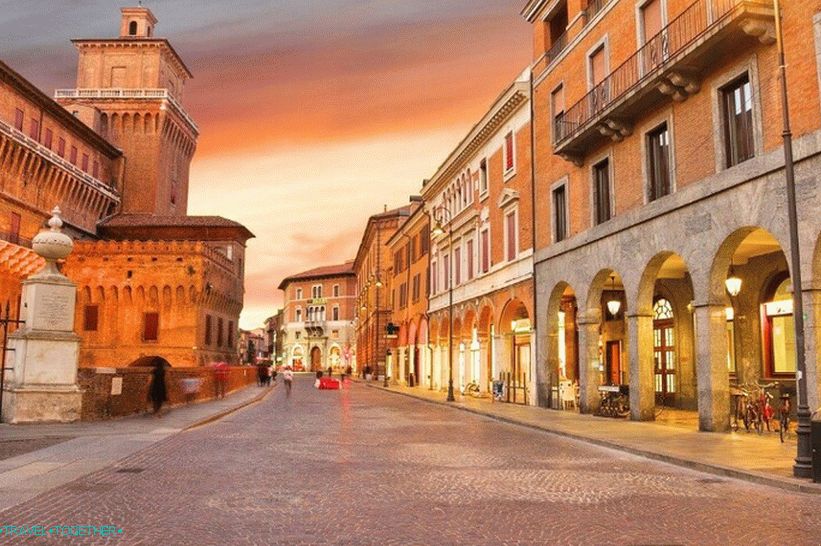 Streets of Ferrara
Ferrara is an interesting example of urban planning, in which half of the city is medieval, and the other part is the renaissance. At the same time, all this is successfully combined and intersects. At that time, Ferrara was considered the most modern city of italy. It is best to visit this wonderful place in the spring and in the fall.
- Practical information
- Story
- How to get there
- sights
- Video
- Maps and guides
- Comments and reviews
Geography and climate
Ferrara is located on the Padansky plain in the valley of the river Po. On in the north it borders on the Veneto region, in the south – on Bologna. City located in the marshland. Summer is hot and stuffy. Winter and autumn is cool and rainy. In the cold season in Ferrara frequent fogs
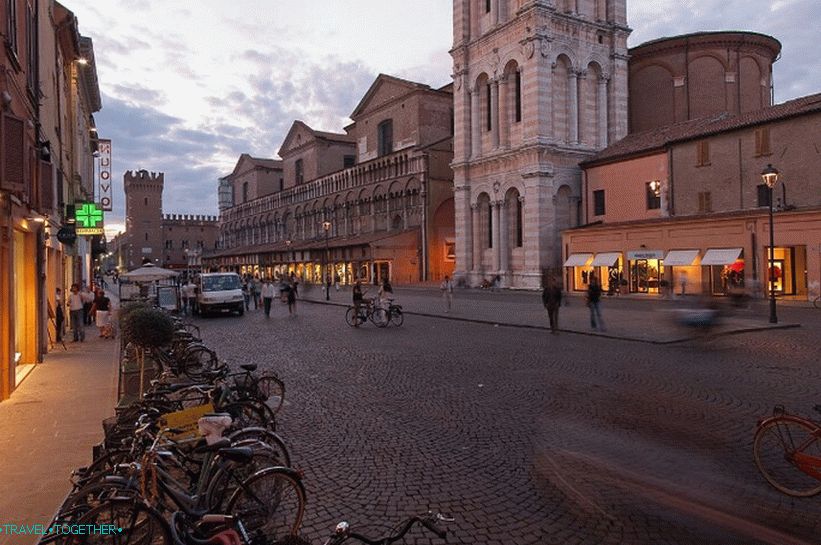 Streets of Ferrara
Practical information
- The population is 132.5 thousand people.
- The area is 404.4 square kilometers.
- The language is Italian.
- Currency – Euro.
- Visa – Schengen.
- Time – Central European UTC +1 summer +2.
- The tourist office is located in the castle d’Este.
- Ferrara is a rich Italian city. Therefore here you can find A lot of shops from budget to expensive boutiques. Main shopping districts are via Mazzini (street leading from piazza Trento-Trieste) and via Garibaldi (street leading from Palazzo Municipio), as well as the entire city center around Castello d’Este.
- Be sure to try cappellacci di zucca in Ferrara (pasta with pumpkin), al burro e salvia (pasta with butter and sage), al ragu (pasta with meat sauce) and other Italian dishes.
- In the evenings on the main square is going to a large number young people who noisily communicate, drink beer and cocktails.
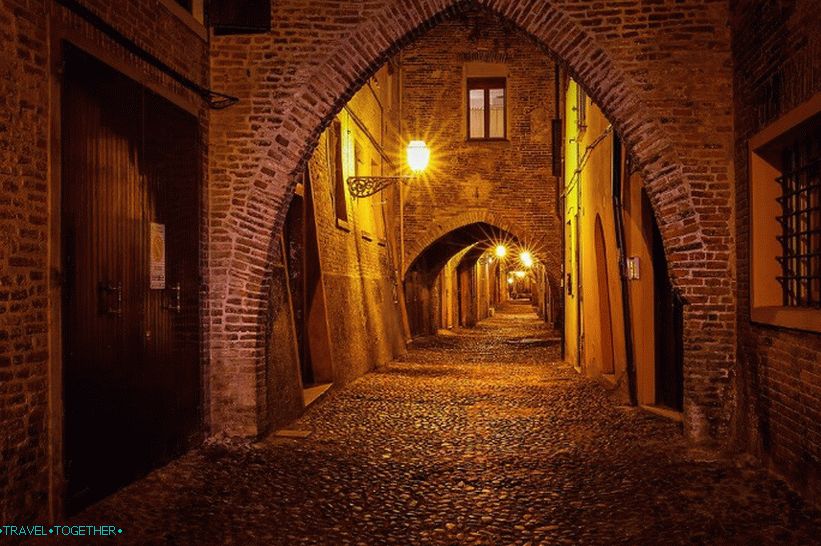 Ferrara at night
Story
The history of Ferrara begins in the 5th century, when they began to settle here refugees during the invasion of the barbarians. During the reign Langobard fortress was built here. In the 8th century, the king Langobards donated the city to the Pope. But already in the 10th century Ferrara was given to the nobles of Tuscany.
In the 10-13 centuries, the city grew rapidly and flourished, becoming one of the most important and largest cities of northern Italy, on a par with Venice, Florence and Milan.
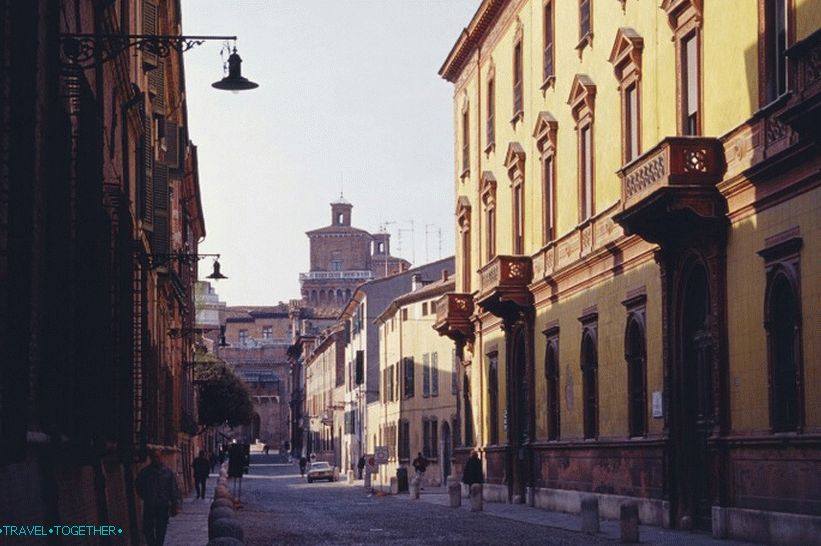 Ferrara
In the 13th century, the D’Este family came to power in the city, during which Ferrara has become one of the cultural and scientific centers of Italy. Este determined the appearance of Ferrara for two centuries, and their yard was one of the most beautiful and luxurious in Europe.
At the end of the 16th century, after the fall of the power of d’Este, Ferrara lost independence and became part of the Papal States. After Napoleonic Wars the city was occupied by the Austrians. And in 1860 he entered in the composition of Italy.
How to get there
The easiest way to get to Ferrara is by train. City located on the line on which trains run from Florence, Bologna and Venice. In the same cities are located airports.
sights
The main attractions of Ferrara are located in the old a city that is on the list of World Heritage sites UNESCO. The historical center has largely retained its medieval appearance and layout in the style of the Renaissance. All the most famous monuments of architecture and culture of Ferrara has a family seal d’Este.
 Castello Estense (Este Castle)
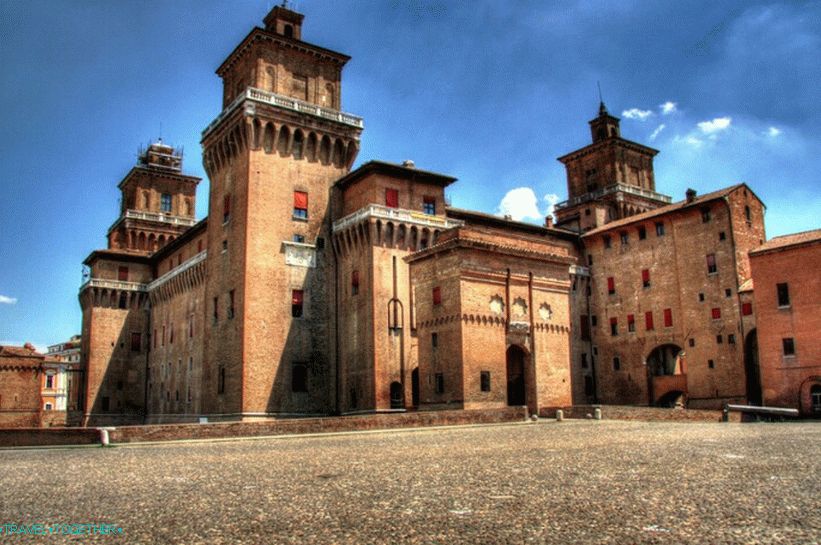
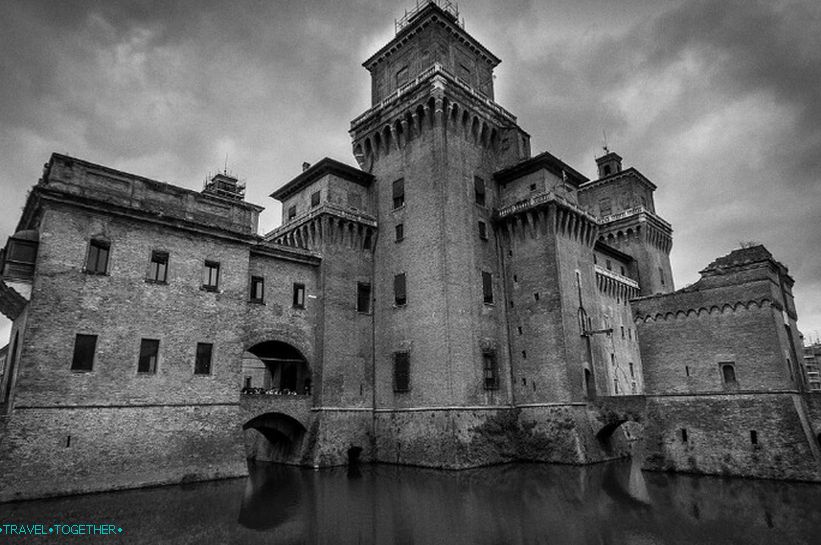
Castello Estense (Este Castle) – one of the main symbols Ferrara. This mighty stronghold was built in the 14th century on the site small fortress. The reason for the construction of the uprising citizens. The castle stands out for its impressive proportions, towers, drawbridges and moat.
 Castle Este
Subsequently, its protective role was transformed into representative. Thus, the castle became a magnificent ducal residence and was decorated with roof terraces at the top of the towers, marble balconies, the courtyard of the Renaissance (at that time fully painted with frescoes) and luxury apartments. AT the four corners of the castle stand out impressive towers, symbols of power family d’este.
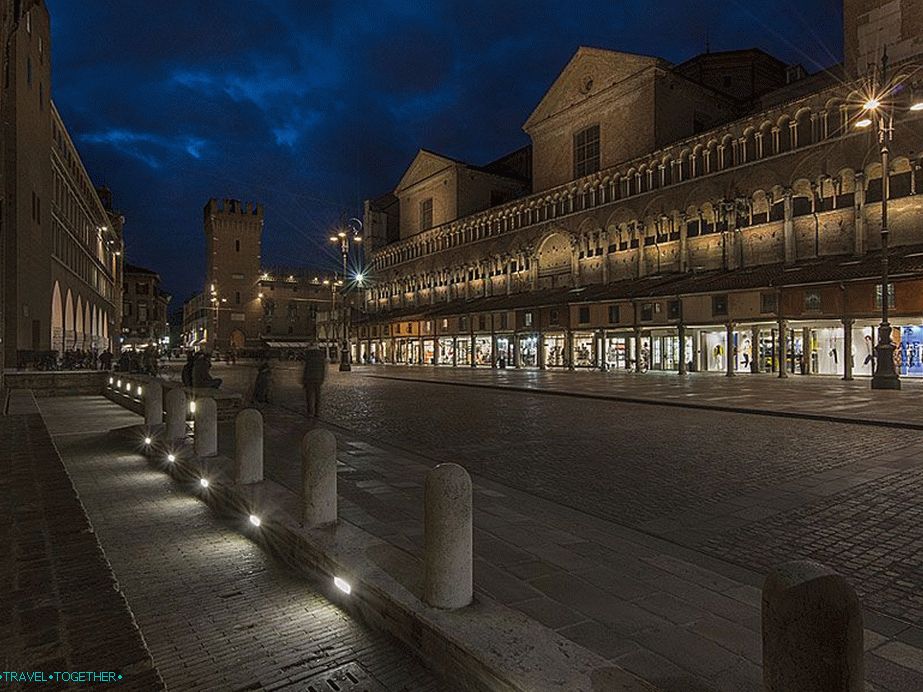
Most of the most popular attractions are located. in Centro Storico, which, of course, is not at all surprising. In the Middle century old town was surrounded by walls. Central the area of Ferrara is the piazza Trento and Trieste with a lock on one the end and the cathedral on the other.
 Piazza Trento and Trieste
The area is free of cars and often filled with market. tents. Here were located the main centers of power: the ducal Lord Este’s Palace; Palace of the Bishops and the Palazzo della Ragione – residence of civil authorities.
 Cathedral of sv. George
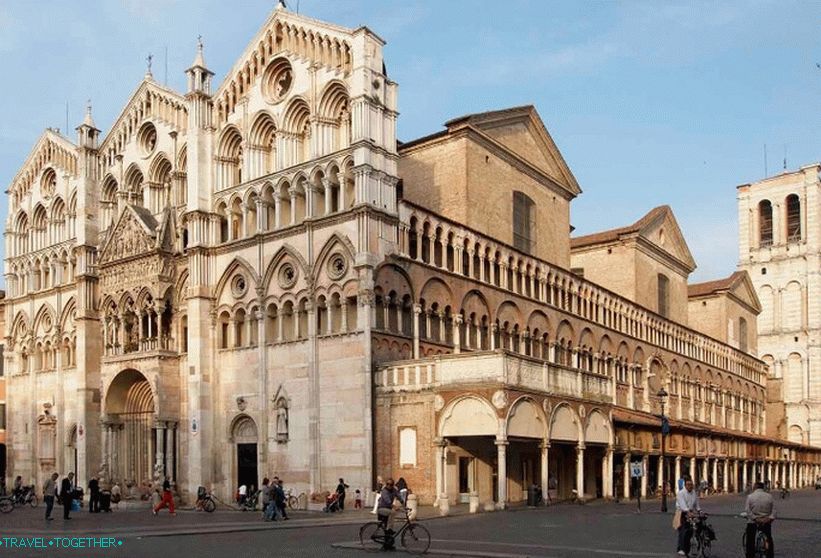
Cathedral of sv. George – Cathedral with a beautiful facade. Its appearance is a peculiar evolution of architecture from the Roman the lower tier, built at the beginning of the 12th century, up to the beautiful early gothic loggia of the 16th century. Near built impressive The bell tower with pink and white marble in the Renaissance style. Side, which overlooks the square of Trento and Trieste, represents arcade gallery with small shops and is called the loggia merchants. Sculpture carved in stone above the central loggia The Last Judgment.
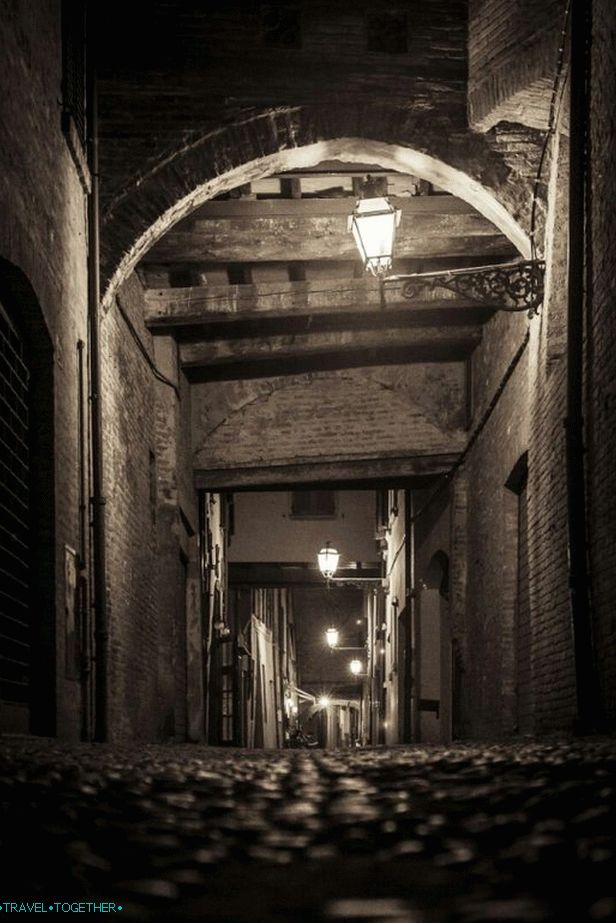 Delle street Volta
One of the highlights of Ferrara is its architecture and layout, which froze between the ages of the Middle Ages and the Renaissance. To Feel the past, just walk along the long Via street delle Volta or other old streets of the old city. Here under feet with old cobblestones, and above the head – the passages between buildings that form a series of arched tunnels. Delle wolte, in unlike many such picturesque medieval streets, not oversaturated with shops and other tourist attractions.
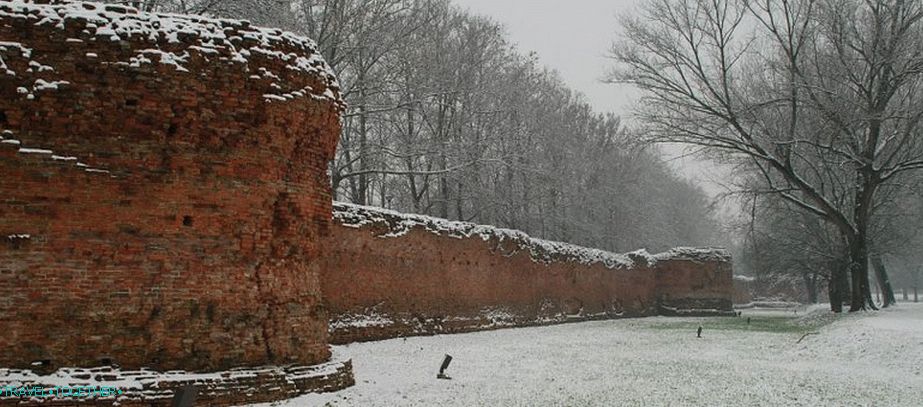 Urban walls
Eight kilometers of brick walls surrounding the historic center Ferrara, are among the oldest and most advanced medieval and renaissance defensive systems in Italy. Here You can look at all the elements that in the past of the city used for their defense: moats, city gates, bastions, towers and shelters for archers. Now this is a great place to walks.
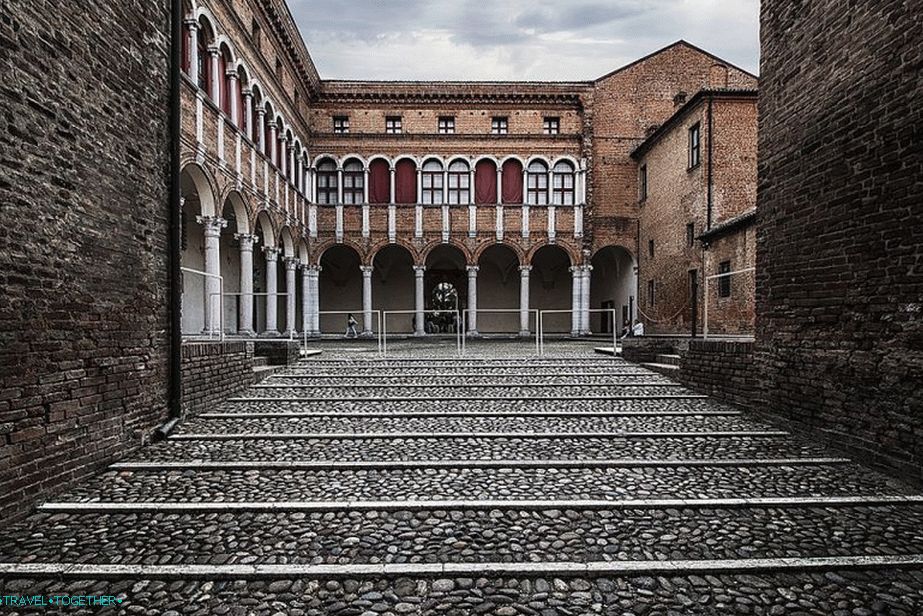 Archaeological Museum in Palazzo Costabilis
The Archaeological Museum is located in the historic Palazzo di Ludovico il Moro, commissioned by Antonio Kostabili. it 15th century beautiful renaissance palace with courtyard and frescoes. The magnificent collections of the museum mainly contain artifacts of the Greek-Etruscan and Late Roman period.
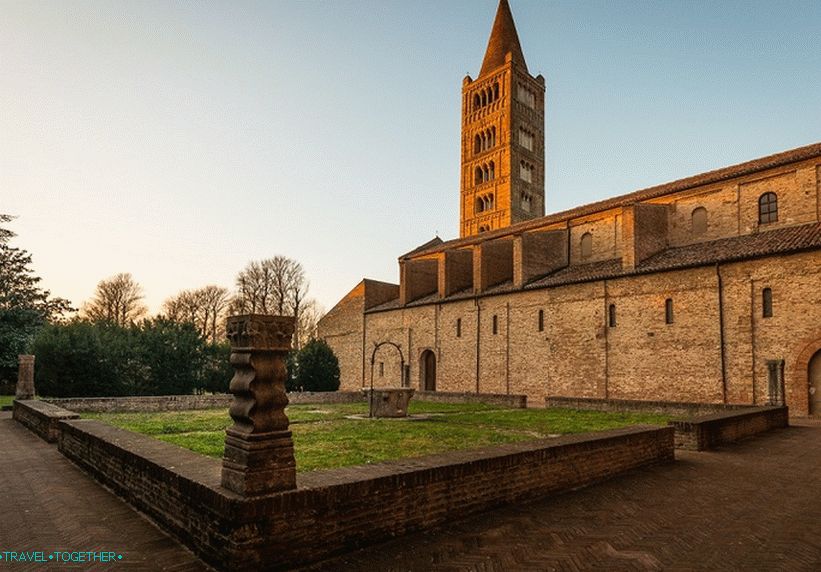 Abbey Pomposa
The Abbey of Pomposa is a masterpiece of Romanesque art with beautiful high bell tower. The church was founded in the 6th century and from the middle By the 9th century there was a community of Benedictine monks. Spiritual and the abbot’s political jurisdiction extended to all the village. The monastery had one of the most extensive libraries of that of time.
Video
Maps and guides
City Map with Landmarks Ferrara Guide Russian