Evora (Portugal) – the most detailed information about the city with photos. The main attractions of Évora with a description, guides and cards.
Contents
City Evora (Portugal)
Evora is a city in the south-east of Portugal and the center of the region Alto Alentejo This delightful historical gem founded by the Romans, fortified by the Moors and flourishing in the late Middle Ages. Evora is one of the oldest and most charming cities of the country that has a scattering of magnificent attractions: from the stunning Roman temple to numerous ancient churches and monasteries. This is the place of confluence. different cultures and styles of architecture saturated with charming historical atmosphere. The old town of Évora has many ancient monuments scattered around the ancient cobblestone streets, and included in the UNESCO World Heritage List.
- Geography and climate
- Practical information
- Story
- sights
- Video
- Maps and guides
- Comments and reviews
Geography and climate
Evora is located in the southeastern part of Portugal on the plains Alentejo, which borders the Tagus River in the north and region Algarve in the south. The city is located 140 km from Lisbon and 80 km from Spanish Badajoz. The climate is hot Mediterranean.
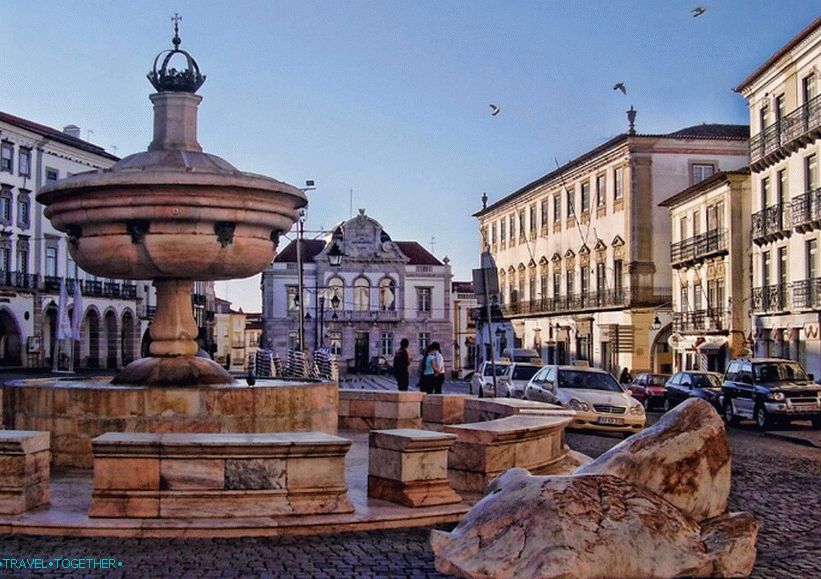 Evora. Square Giraldo
Practical information
- The population is more than 55 thousand people.
- The language is Portuguese.
- Currency – Euro.
- Visa – Schengen.
- Time – UTC 0, in the summer +1.
- Evora can be easily reached by train or bus from Of lisbon
Story
Evora is one of the most ancient cities of Portugal. Tribal settlement Luzitans existed here before the arrival of the Romans. In 57 to AD it was captured by the Roman Empire and renamed Liberalitas Julia. The Romans built a large city here and surrounded its fortified wall. Evora grew quickly thanks to profitable strategic position. In the 6th century (after the collapse of the Roman Empire) the city was captured by the Visigoths. In 715, Evora was captured the moors.
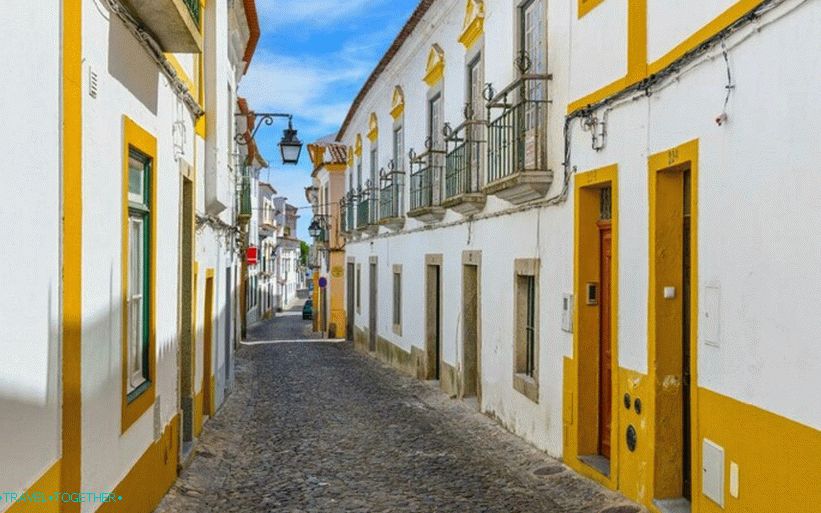 Streets of evora
Evora was conquered from the Moors in 1165 during the Reconquista period. AT 15th and 16th centuries – it was one of the most prosperous cities Portugal In 1540, Evora was chosen as the residence the archbishop. Two decades later, the Jesuits founded here. the university. In 1759 it was closed, and the city fell into disrepair. AT the university was subsequently reinstated only in 1973 year
sights
The main attraction of Évora is the charm of the old cities. And there is no better way to get to know him than just get lost in its ancient quarters. Evora is a maze immaculately groomed cobbled streets and traditionally painted houses, numerous monuments of history and culture. This is a city with an ancient and rich history, the echoes of which are scattered throughout his the old center: a Roman temple, sections of the medieval walls and ancient christian churches
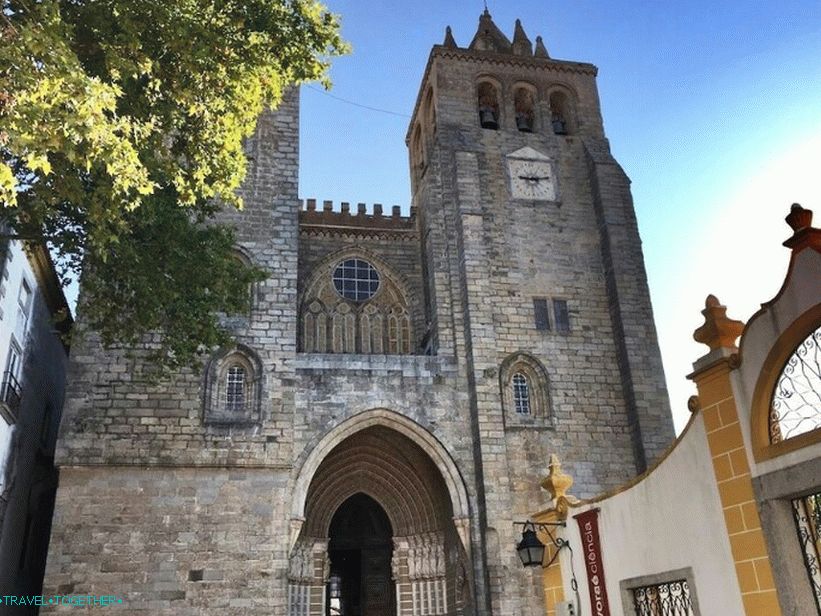 Cathedral
The Cathedral is a magnificent ancient monument of the 13th century, in whose architecture intertwined Romanesque architecture and Gothic. This church is more like a powerful fortress, whose image emphasized by a pair of impressive asymmetrical bell towers. The treasury of the cathedral is a museum of sacred art with rare and priceless artifacts.
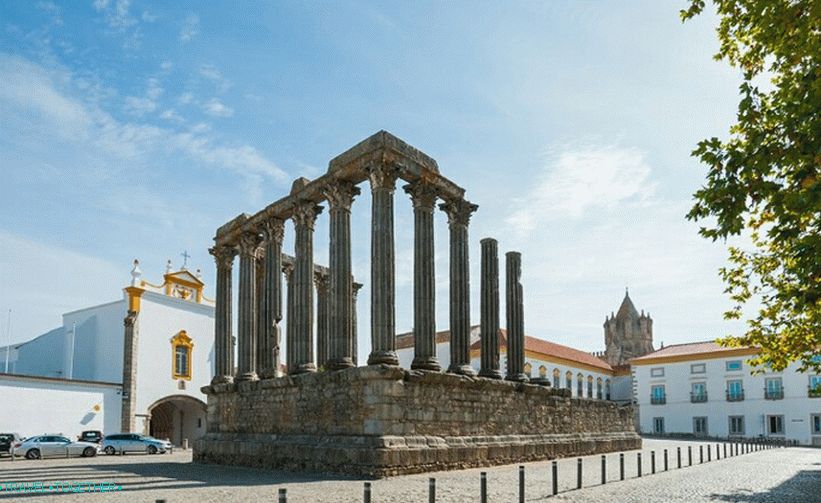 Temple of diana
The Temple of Diana is the most famous landmark of Évora. This the roman temple was built in the 2nd or 3rd century AD and is the best preserved ancient building on the territory of Portugal. Fourteen pillars crowned with Corinthian capitals, still stand firmly on a granite foundation. In the Middle Ages temple used as a gallows during the heyday of the Inquisition, then was turned into slaughter. This ancient monument was taken under protection only in the 19th century.
Another attraction of the Roman era – terms (baths), discovered in 1987 under the town hall.
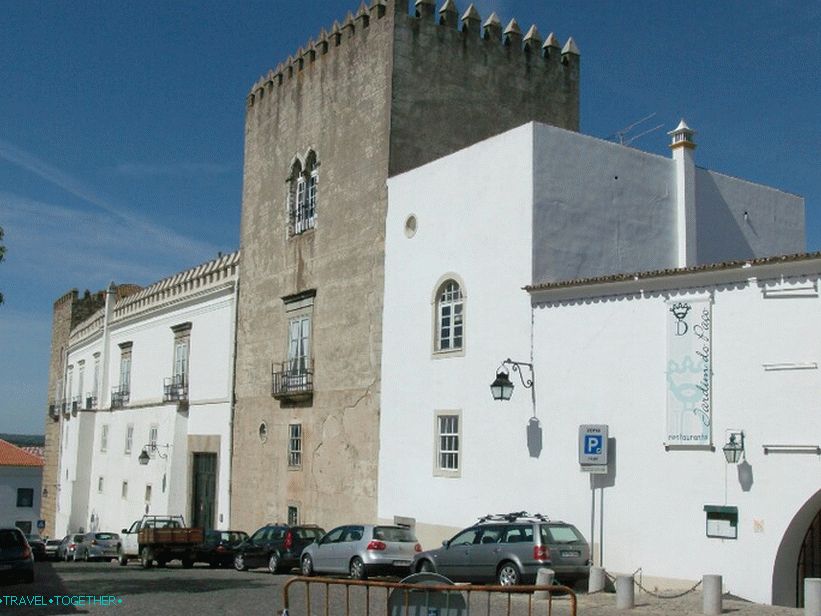 Duque Palace Cadaval
Palace Duque de Cadaval – the ancient ducal palace of the 14th century, which includes the remains of a long-lost castle. AT his several rooms display valuable illustrated manuscripts 15th century, 16th century armor and a variety of antique weapons, and also paintings and sculptures of the 17th and 18th centuries.
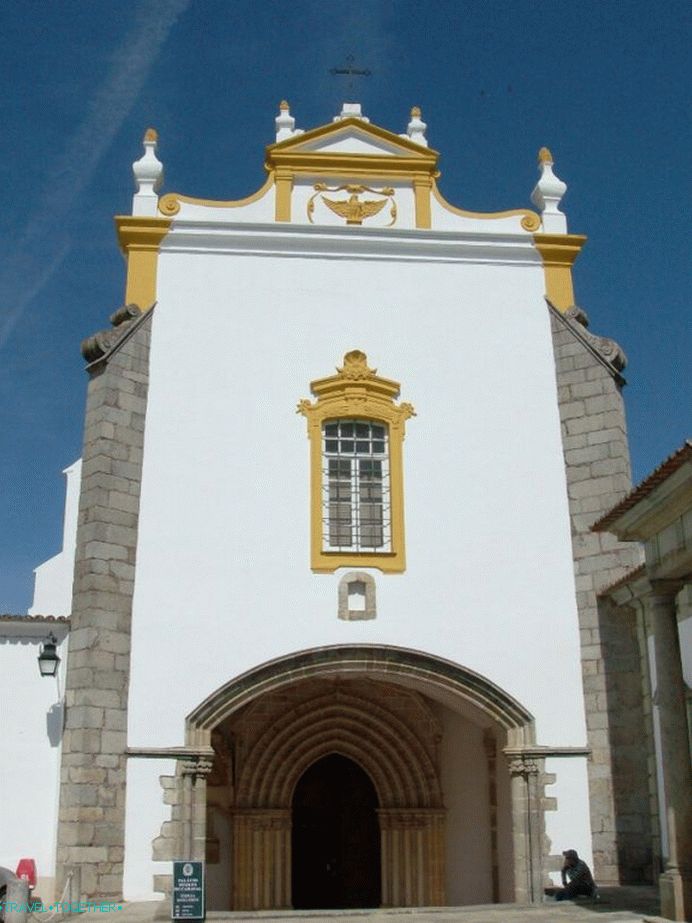
The Church of St. John the Theologian is a 15th century gothic building with a facade in Manueline style architecture. The church is built on the site Moorish castle and is part of the Cadaval Palace. It has magnificent interior in azulezhu style, gloomy crypt, full bones, and several ancient tombs of the local dukes.
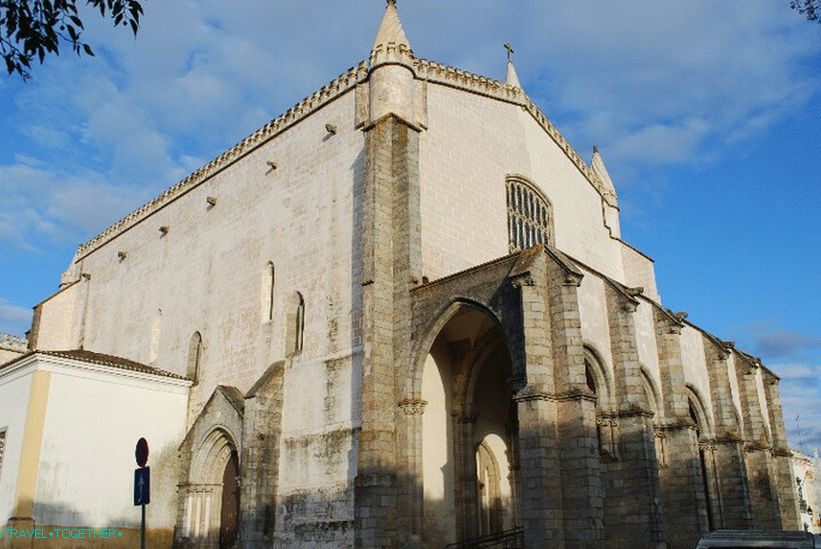 Church of sv. Francis
Church of sv. Francis – a huge church in the Gothic style with an admixture of Manueline architecture, built between 1475 and 1550 for years. The current building replaced the 1226 early Romanesque church. The church has a unique feature – the arcade, which represents is a typical blend of gothic and moorish elements.
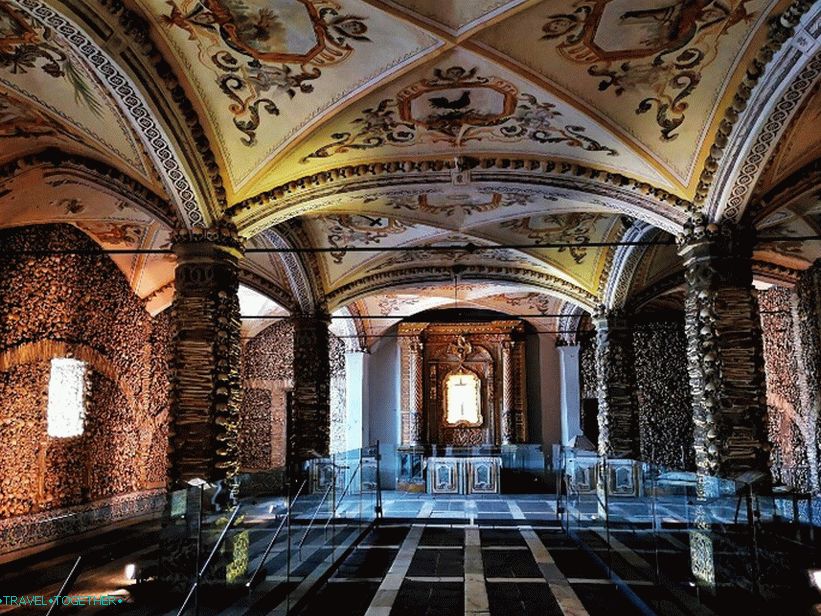 Chapel bones
Actually part of the church of sv. Francis is the chapel of the bones (Capela dos Ossos). This is one of the most famous. attractions of evora which is a small a building with a gloomy interior, almost completely decorated human bones. The chapel was created in the 16th century by the Franciscan a monk who used the remains of previously deceased people from crowded graveyard. Their bones were exhumed to make room for new burials.
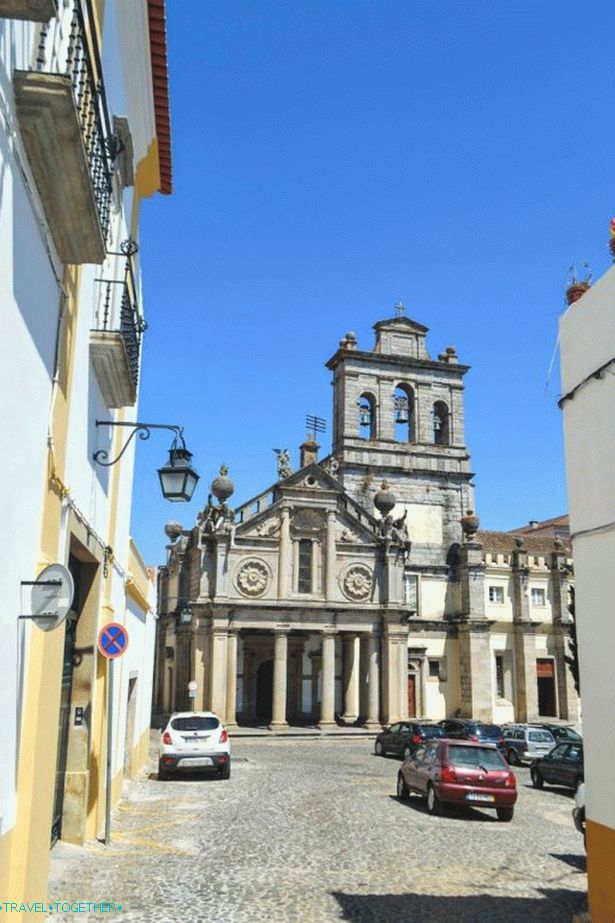 Nossa senhora yes Grasse
Nossa Senhora da Graça (Nossa Senhora da Graça) – church and Monastery, founded at the beginning of the 16th century. Are wonderful example of Renaissance architecture. Monastery was nationalized in 1834 and rebuilt in a residential area.
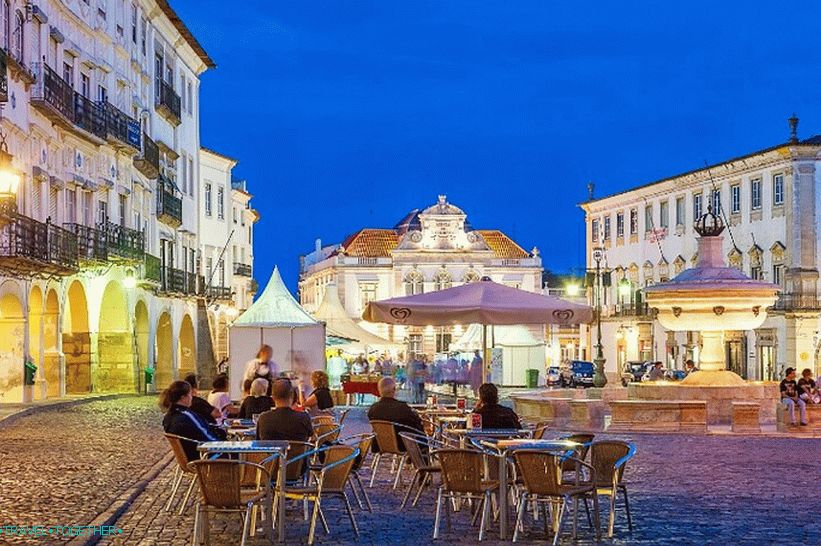 Giraldo
Giraldo Square (Praça do Giraldo) – the central square and the heart of the city, adorned with exquisite gothic patterns architecture. It is the most lively place of Évora and present center of gravity. But the modern relaxing atmosphere is quite does not reflect its history. In the Middle Ages on this square were held cruel courts of the Inquisition.
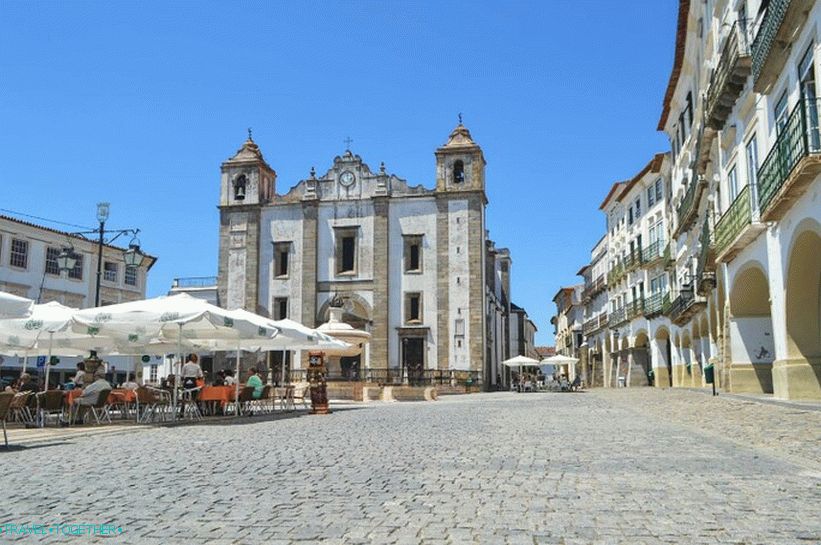 Santo antan
Santo Antan – architectural dominant of Giraldo Square, beautiful 16th century church in the Gothic style.
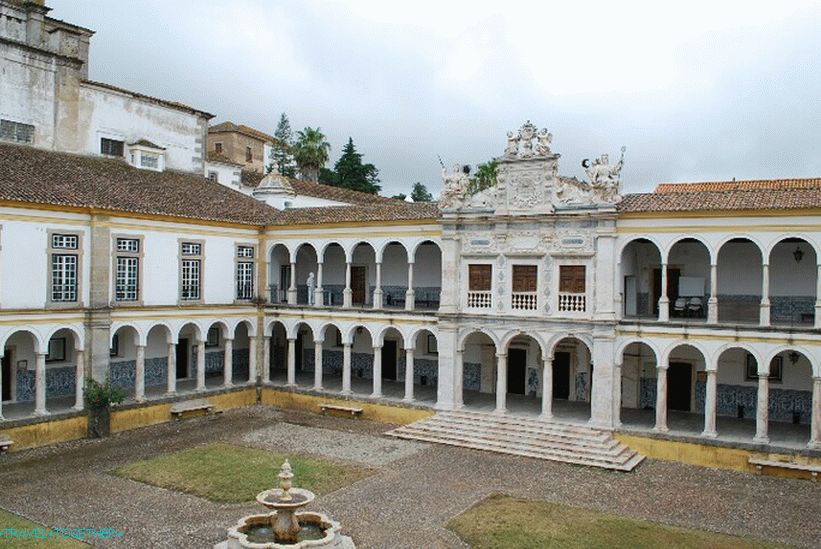 University
University of Évora – a complex of historic buildings in the style Renaissance. The school was founded in 1559, closed in 18th century and restored in the second half of the 20th century.
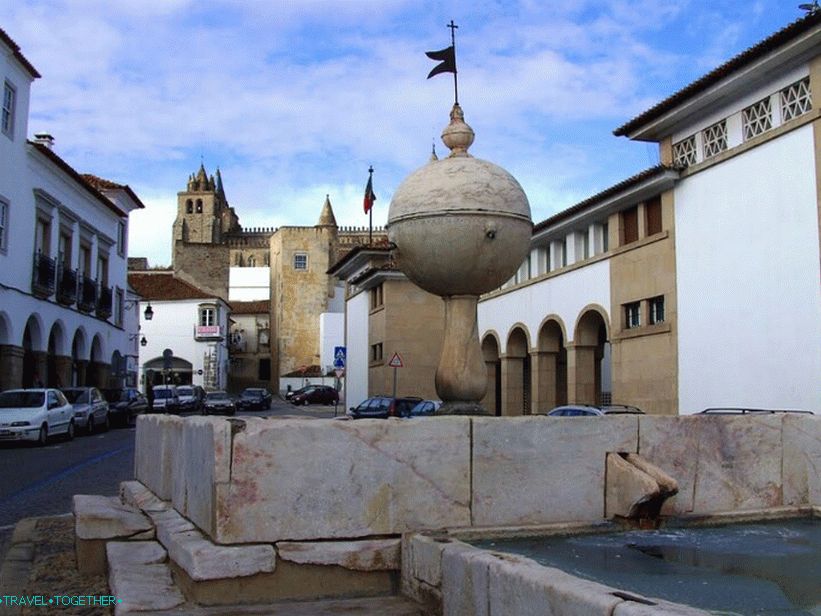 Largo da Porta de Moura
Largo da Porta de Moura – a picturesque square built on location of the western moorish gate. Her most interesting landmark is the Renaissance fountain with magnificent marble sphere of the 16th century.
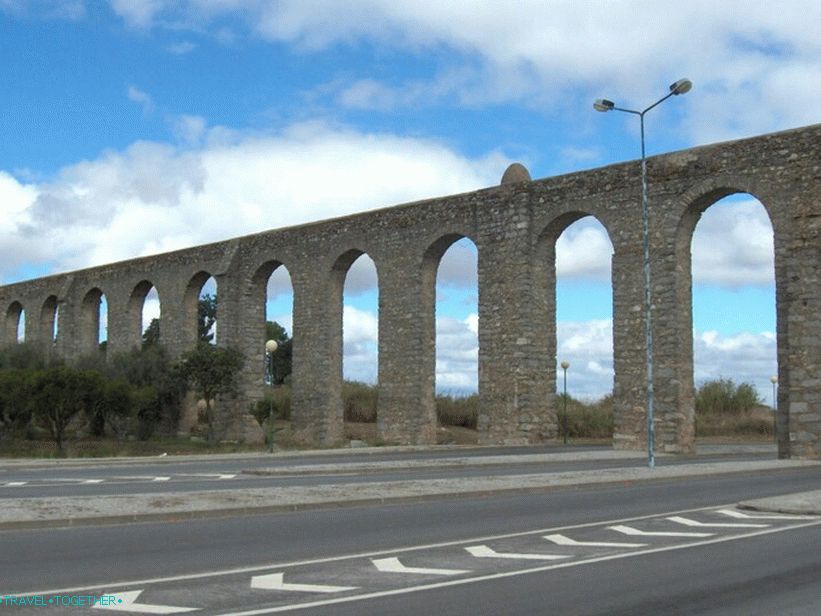 Agua de prata
Aqueduct Agua de Prata – a great example of medieval hydraulic engineering. It was built in the 16th century to supply Evora with water. Before of our time, a large nine-kilometer section has been preserved, which reaches a height of 26 meters at the highest point.
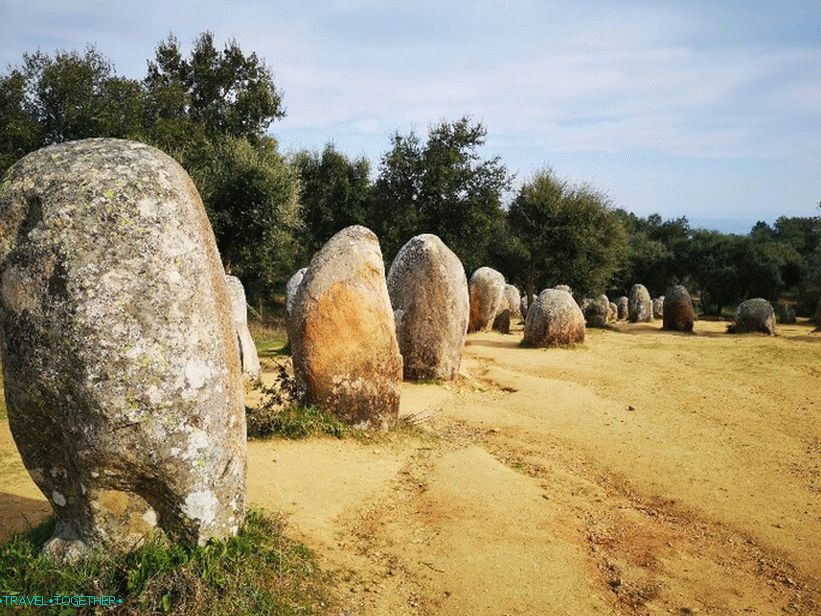 Megaliths
Megaliths – 95 granite stones, which date back to between 4000 and 2000 BC It is believed that this is an ancient temple of worship the sun.
Video
Maps and guides
City map