Edinburgh (United Kingdom) – detailed information about the city with photo. The main attractions of Edinburgh with a description, guides and maps.
Contents
City Edinburgh (United Kingdom)
Edinburgh is the capital of Scotland and one of the largest cities on North of Great Britain. It is a place that combines antiquity and modernity in a unique Scottish atmosphere. Edinburgh is one of the most beautiful cities in the United Kingdom with an impressive a medieval castle soaring above it on a high rocky peak, and the striking medieval gothic architecture with which Side by side magnificent samples of modern construction. it a real center of history, culture and art, which is recognized The most desirable place to live in the UK.
Edinburgh is divided into Old and New Towns, which are included in UNESCO World Heritage List.
- Geography and climate
- Practical information
- Story
- sights
- Video
- Maps and guides
- Comments and reviews
Geography and climate
Edinburgh is located in the northeastern part of the UK on east of Scotland, 650 km from London. The city is located on the coast Of the North Sea between the Leith River Valley and the slopes of low mountains Salisbury Craig. The climate is temperate sea with cool summer and mild winter. In the warm season, frequent showers are possible. also in October and March, the weather is formed by the Atlantic cyclones, which cause the rains.
Edinburgh is located in the Lowlands, the relief of which is formed by volcanic processes and glaciations.
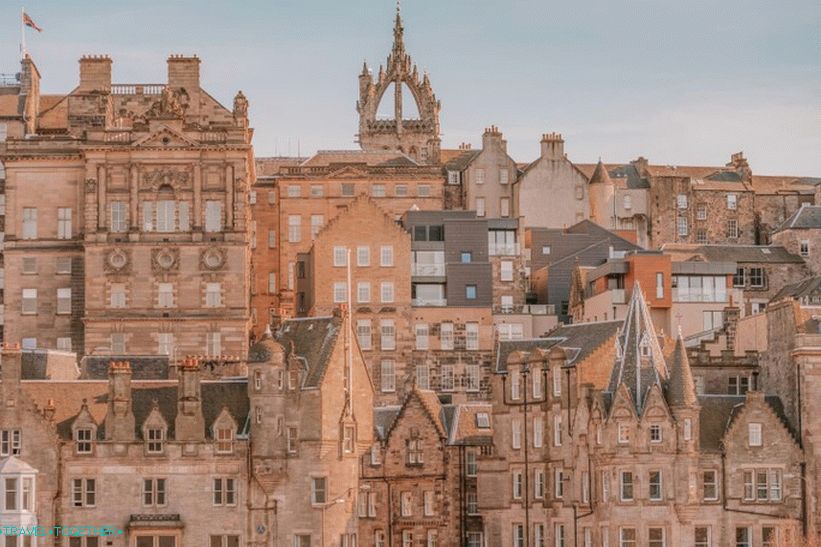 Edinburgh
Practical information
- The population is over 480 thousand people.
- An area of 118 km².
- Currency – pound sterling.
- Language – English, Gaelic, Scottish.
- Time – UTC 0, in the summer UTC +1.
- The UK is not a party to the Schengen Agreement. Visa can be obtained by personally visiting an accredited visa centers that are located in Moscow, Novosibirsk, St. Petersburg, Rostov-on-Don, Yekaterinburg.
- Edinburgh Airport is the largest in Scotland. He offers a wide range of domestic and international flights to Europe, Northern America and the Middle East. Daily flights to the capital of Scotland there are from Amsterdam, Milan, Budapest, Istanbul, Barcelona, Berlin, Krakow, Athens, Prague, Rome, Copenhagen, Stockholm, Hamburg.
- Popular shopping areas: Princes Street , Multrees Walk and Grassmarket in the Old Town.
- Traditional dishes: Haggis (national dish of Scotland), Black Pudding (blood sausage), Scotch Pie and Bridie (pie, filled with minced meat), Cranachan (light raspberry dessert, whipped cream, honey and toasted oats).
- Edinburgh is famous for its pubs. Most Popular Alcoholic Scotch Whiskey (Scotch whiskey) and beer.
- Edinburgh is one of the safest cities in the UK. Here, only Sighthill and Wester are dangerous. Hailes, as well as the suburbs.
Story
The first settlements on the site of the modern city was founded in 7 century. Edinburgh itself was first mentioned in the 12th century, when Scottish King David I founded a church here. A bit later A royal castle was also founded. After transfer to Edinburgh The castle of the royal residence of the city began to grow and develop rapidly. In the 13th century, Edinburgh officially became the capital of Scotland and remained most important city of the kingdom until the early 17th century.
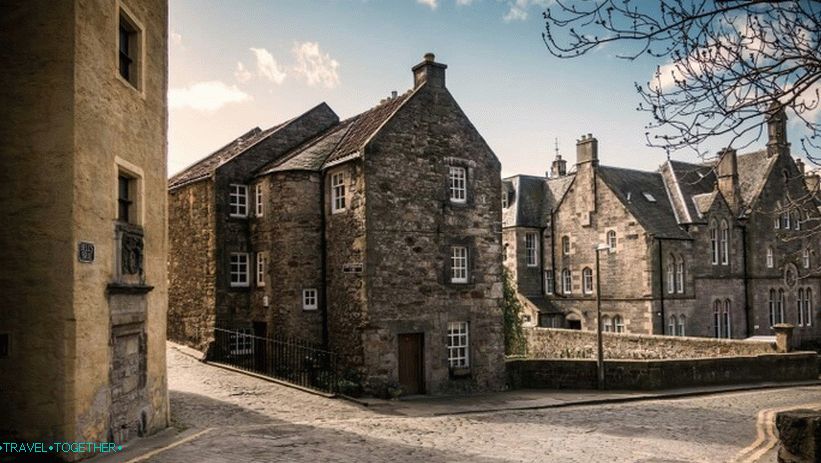 Edinburgh Streets
In 1544, the capital of Scotland was significantly damaged. British troops. In the 16th century, Edinburgh was in the middle of the action. Scottish Reformation. In 1603, the Scottish king Jacob VI entered the English throne, uniting the kingdoms of the English and Scots. After this, the political significance of Edinburgh became less but he remained an important cultural center Britain
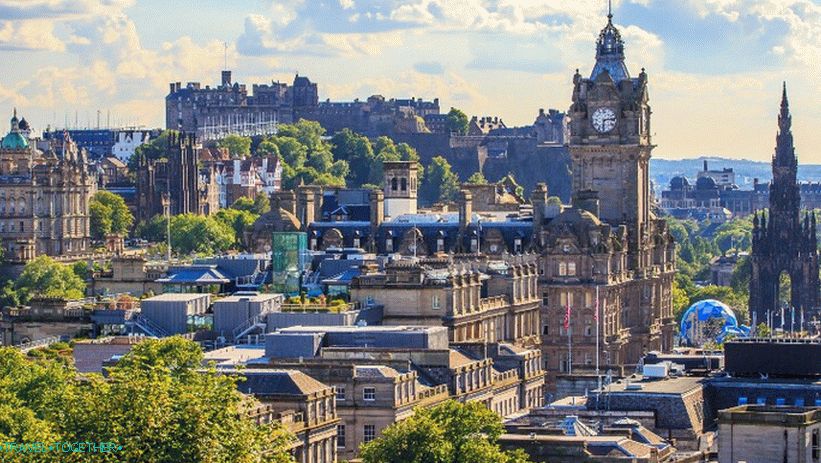 Panorama Edinburgh
In the 17th century, the borders of Edinburgh were still defined by medieval by walls. Of course, this was not enough for a growing city. Therefore, in the 18th century a new city was built in the Georgian style. AT 18th – 19th centuries Edinburgh became the center of the Scottish Enlightenment and earned the nickname “Athens of the North”. In the 19th century, Edinburgh ceded status The largest city of Scotland is Glasgow. Now the capital of Scotland – a thriving modern city that is famous for its high level life and low unemployment.
sights
The historic center of Edinburgh is divided into two parts park Princes Street Gardens. To the south is the castle located on top of an extinct volcanic rock and surrounded by medieval The streets of the Old Town. To the north lies the New City, built in 18th century Georgian style architecture.
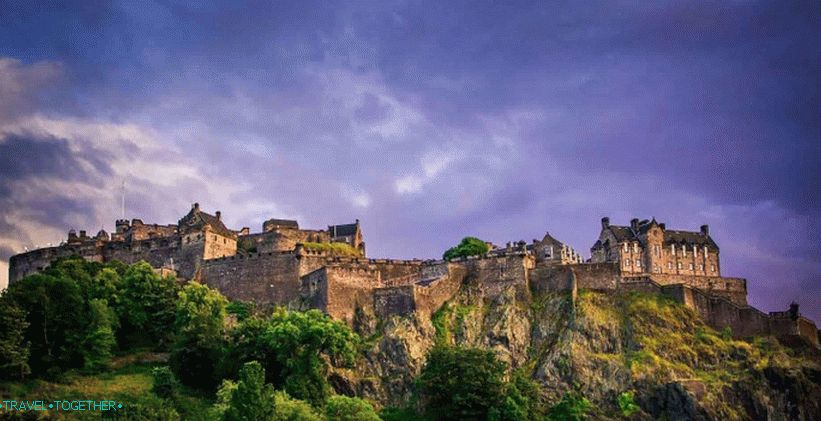 Edinburgh Castle
Edinburgh Castle is one of the most iconic attractions of Scotland and the symbol of Edinburgh. This ancient The fortress was founded in the 12th century and is one of the most important historical monuments in the UK. Castle located on a picturesque rock that is an extinct volcano. The oldest parts of this medieval fortress date back to the 12th century. Edinburgh Castle has a wonderful historical atmosphere. Also stored here are royal jewels and other important relics.
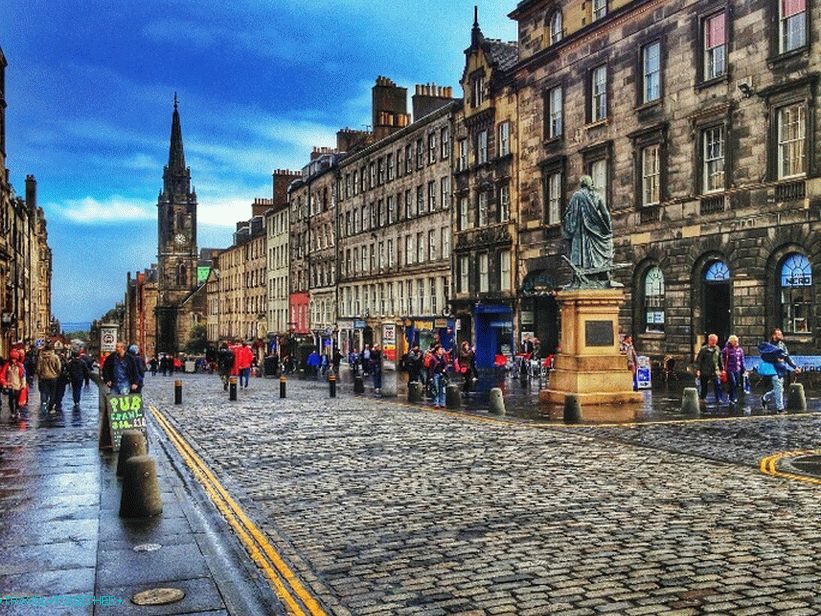 Royal mile
The Royal Mile is a wonderful historic street that connects Edinburgh Castle and Holyrood Palace. This is a place with charming architecture, tall old houses, churches and narrow small lanes.
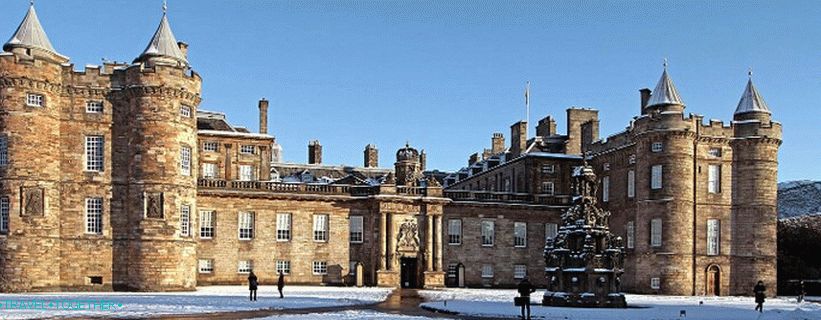 Holyrood palace
Holyrood Palace – the official Scottish residence of the Queen Great Britain and one of the most important historical buildings Edinburgh In the 11th century the Augustinian abbey was founded here, which at the end of the 15th century was transformed into the present royal palace.
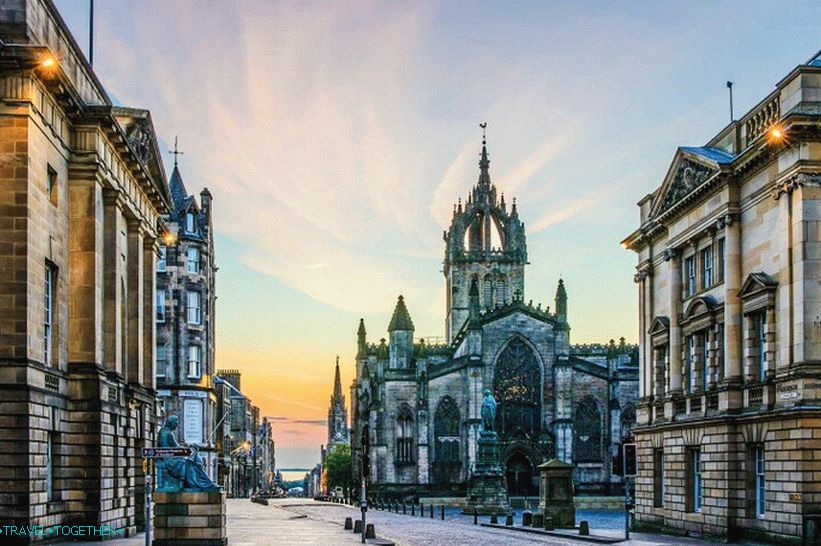 Cathedral of sv. John’s
Cathedral of sv. St John is a masterpiece of Gothic architecture, dating from 13 century. This cathedral is the most important religious edinburgh and has an interesting (slightly stern) facade. The most remarkable element of its structure is the central tower with eight arched pillars that form a semblance the crown.
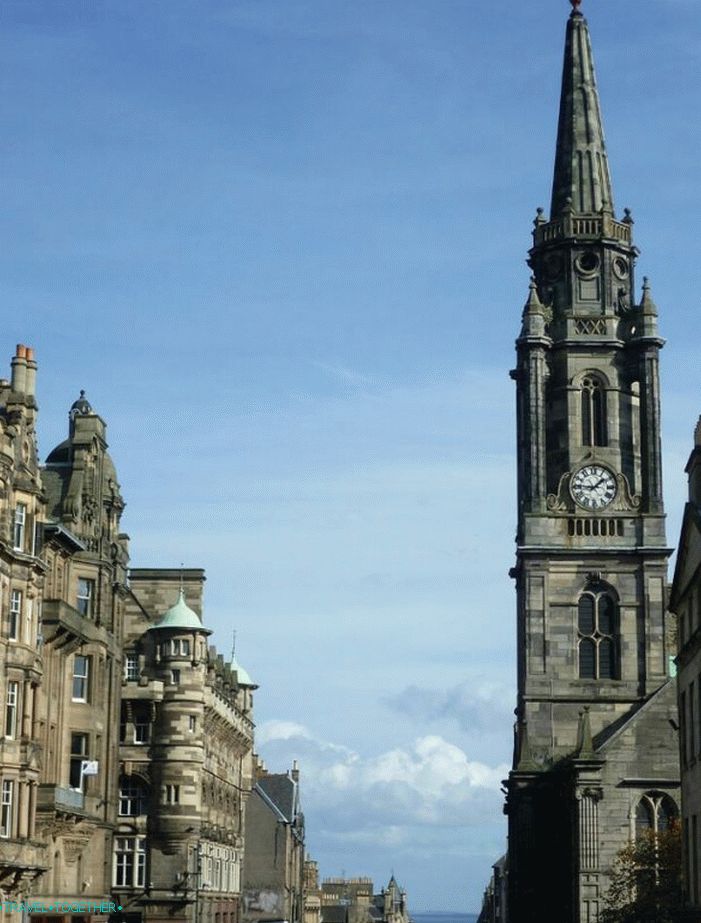 Tron Church (Tron Kirk)
Tron Kirk – former parish church, which is one of the most famous landmarks Royal Mile. This religious building was built in 17 century after the Scottish Reformation.
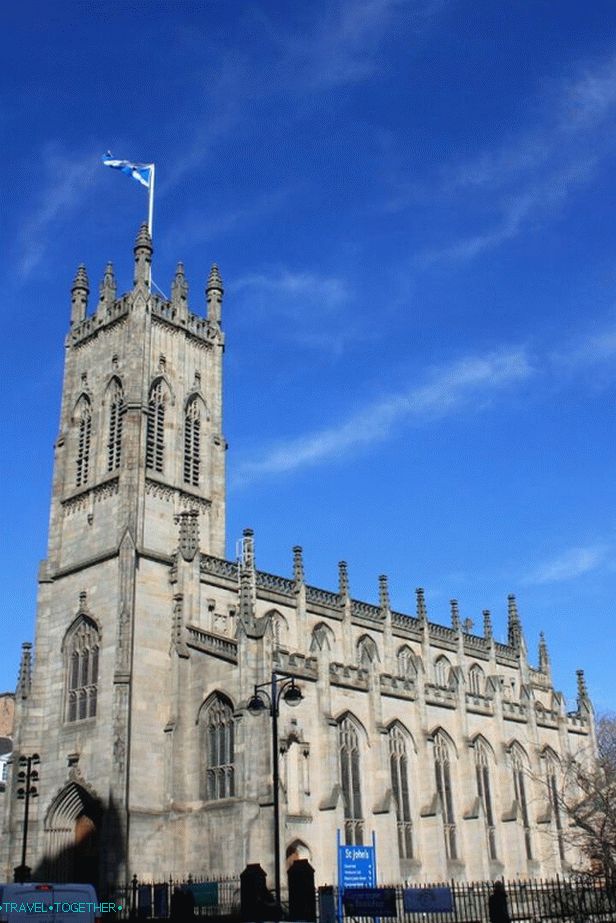 John’s Church The theologian
The Church of St. John the Theologian is a beautiful neo-Gothic church, built in the 19th century.
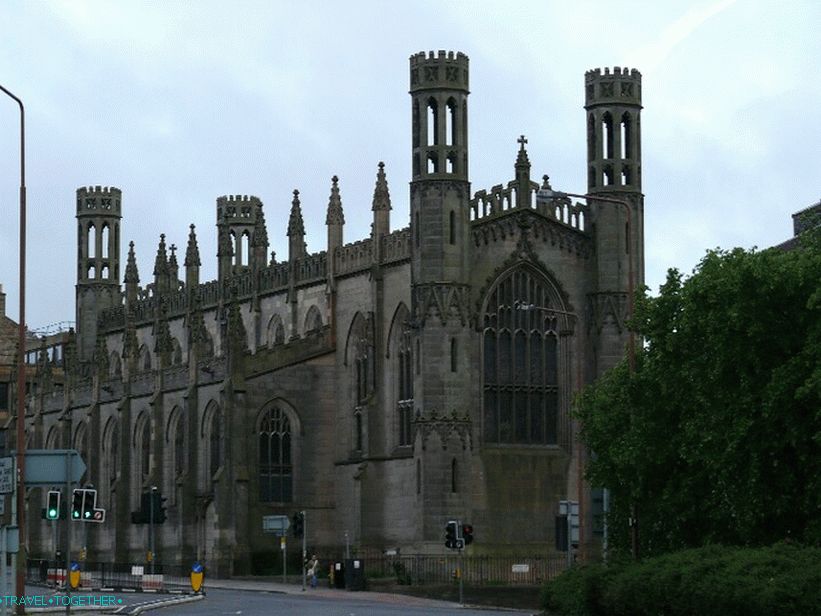 Church of the Saints Paul and George
Church of Saints Paul and George – another church in the style Gothic Renaissance, which was built in the 19th century.
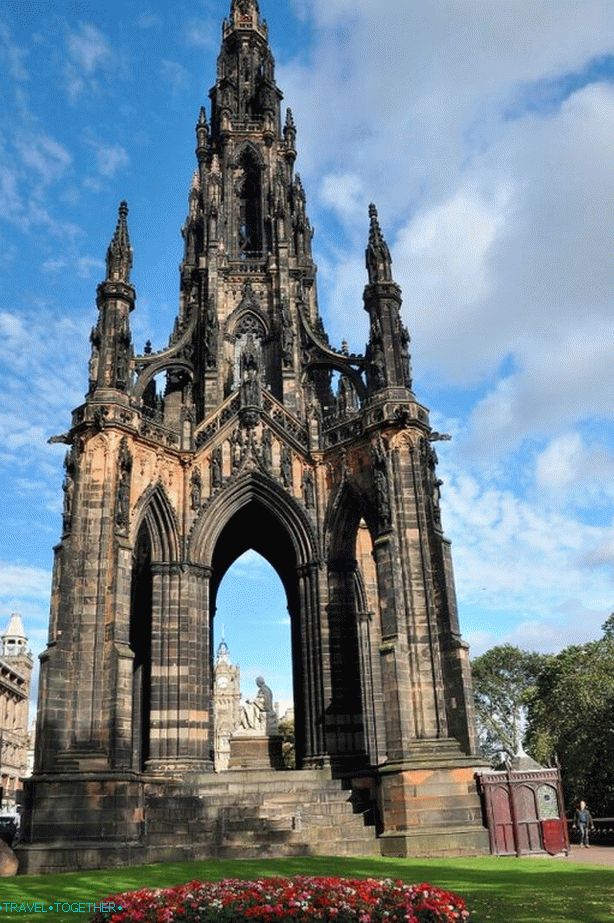 Scott Monument
The Scott Monument is one of the best examples of Victorian Gothic architecture dedicated to the famous Scottish to the writer. The construction has a height of 61 meters. To get to the top on the narrow spiral staircase you need to overcome 287 steps.
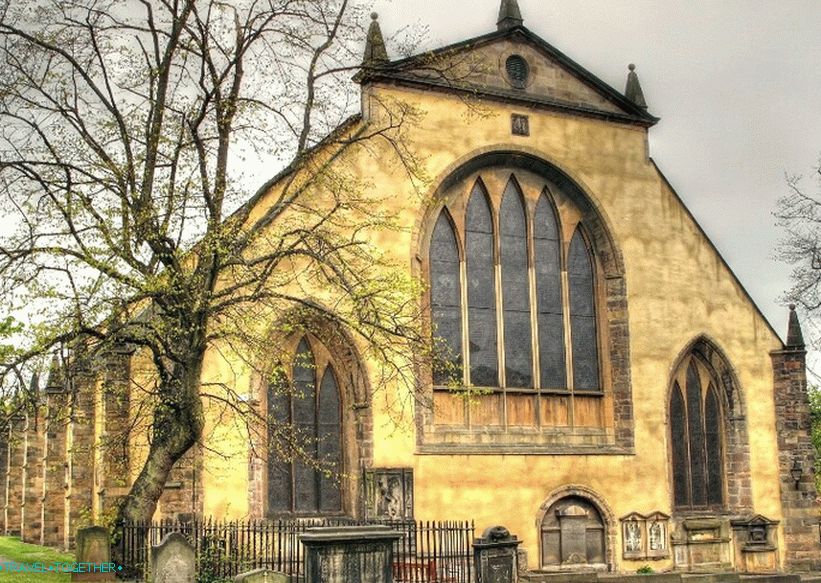 Greifraers
Greyfraers – the oldest city cemetery of Edinburgh, formed in the 16th century. The church was built in the 17th century.
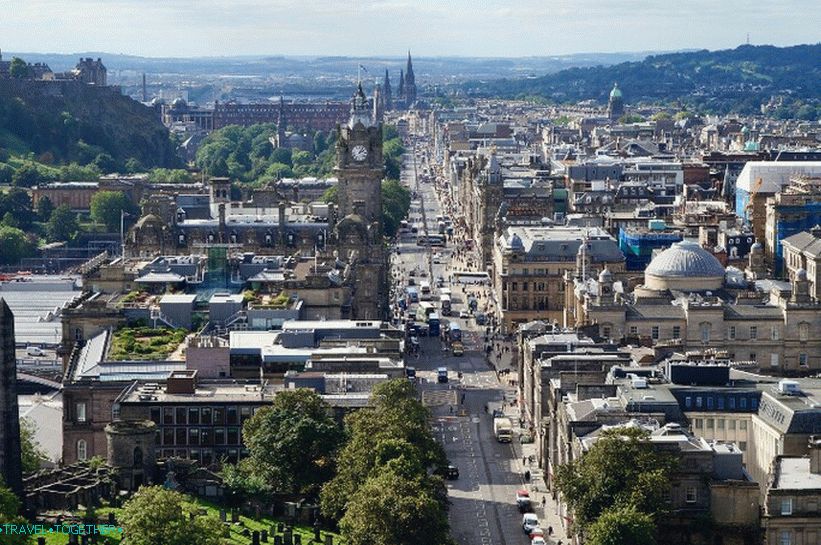 PrincesStreet
Princes Street is the main thoroughfare of the New City, which extends almost a mile and is surrounded by a park. This is one of the main shopping areas of Edinburgh with many shops and restaurants.
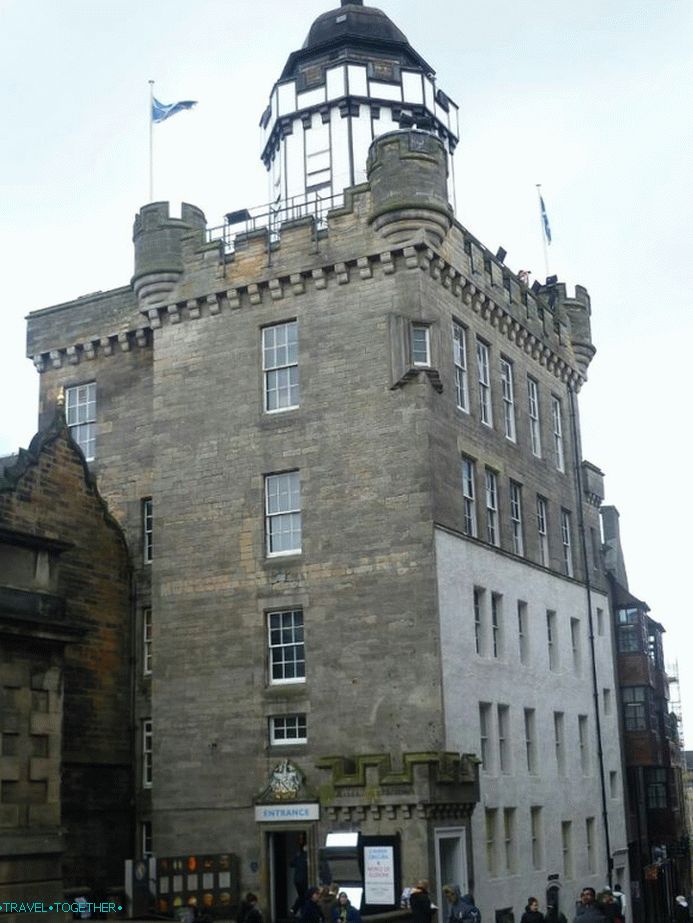 Pinhole camera
The camera obscura is an old optical museum. illusions.
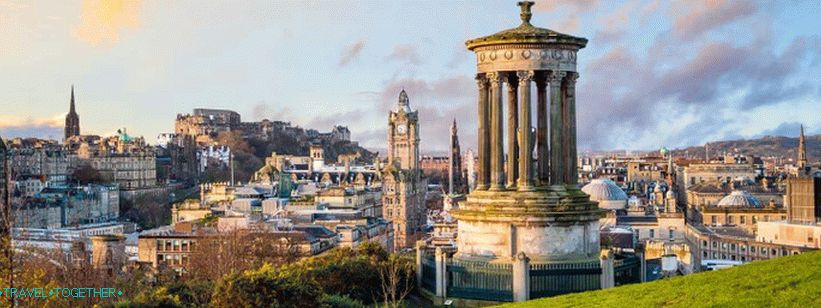 Calton hill
Calton Hill – a high hill and the best observation platform of Edinburgh. At the foot of the slope is the royal high school of the 13th century. The monument on the hill is dedicated to the fallen during the Napoleonic wars.
Edinburgh Museums:
- National Gallery of Scotland – a collection of European paintings and sculptures from the Renaissance to the present day.
- National Museum of Scotland – medieval artifacts and collections dedicated to history, geology, art, science and technologies.
Video
Maps and guides
Tourist Card