Dinkelsbühl (Germany) – detailed information about the city from a photo. The main attractions of Dinkelsbühl with description, guides and maps.
Contents
City Dinkelsbühl (Germany)
Dinkelsbühl is a small town in the south of Germany in the federal Bavaria in the historic region of Middle Franconia. Him Alderstadt has the magnificent spirit of the Middle Ages and is considered one of best preserved throughout the country. Dinkelsbühl is a place frozen history and wonderful old architecture. This the tiny town is one of the most beautiful historical places in all of Bavaria (not yielding to the magnificent Rotenburg-on-Tauberei no less bright Nördlingen), in which preserved medieval fortifications, gates and towers, ancient churches and half-timbered houses.
- Geography and climate
- Practical information
- Story
- How to get there
- sights
- Video
- Comments and reviews
- Maps and guides
Geography and climate
Dinkelsbühl is located in the west of Bavaria in the northern part famous Romantic Road. The city is located on the hills of Middle Franconia at an altitude of 442 meters above sea level. Dinkelsbühl has mild climate with warm summers and cool winters.
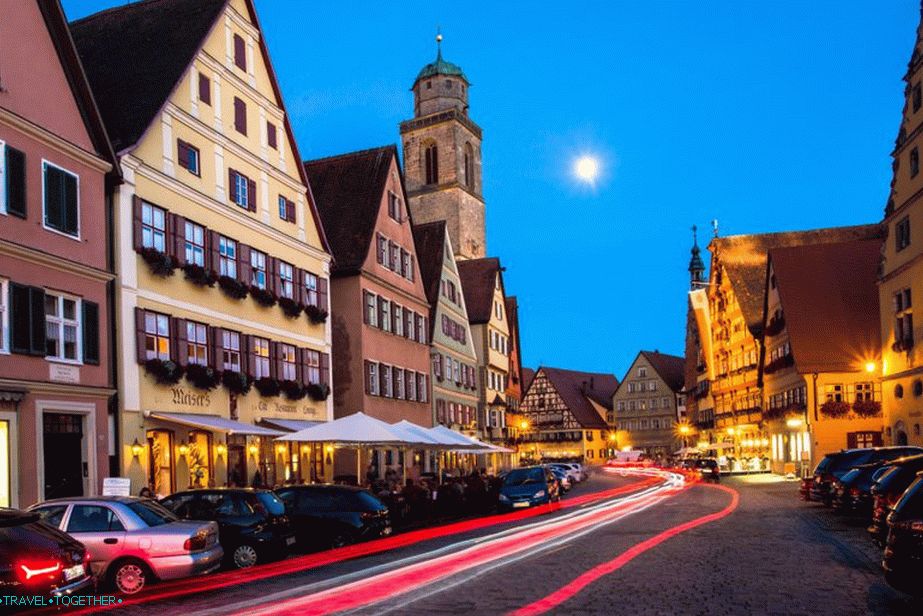 Evening in Dinkelsbühle
Practical information
- The population is about 12 thousand people.
- The area is 75.19 km².
- Currency – Euro.
- The language is German.
- Visa – Schengen.
- Time – Central European (UTC +1, summer +2).
Story
Dinkelsbühl was founded in the 12th century. In 1351 the settlement was granted the rights of a free imperial city. Flourishing Dinkelsbühl fell on the 15th and 16th centuries. During this period, the city was one of the richest cities of Bavaria, thriving on trade and craftsmen. This period left the richest legacy in the form medieval fortifications with towers and gates, as well as many beautiful old houses of rich merchants and artisans.
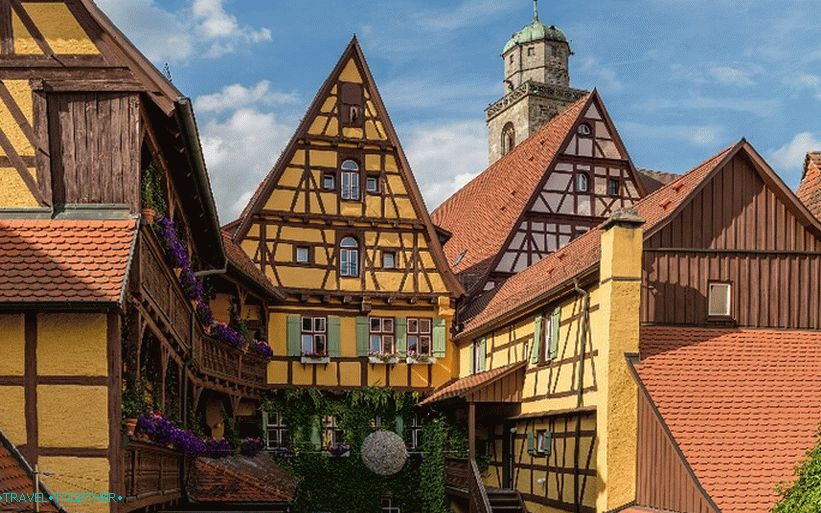 Old architecture of Dinkelsbühl
The prosperity of Dinkelsbühl was halted by the Thirty Years War. The once proud imperial city fell into a deep sleep. In 1802 year, Dinkelsbühl lost his status and was included in the Bavarian kingdom. In 1826, Louis I forbade the destruction medieval houses and walls, which allowed to preserve the historical the core of the city is in such excellent condition.
How to get there
Dinkelsbühl is located near the A7 motorway between Würzburg and Ulm, so it’s easy to get here car and bus.
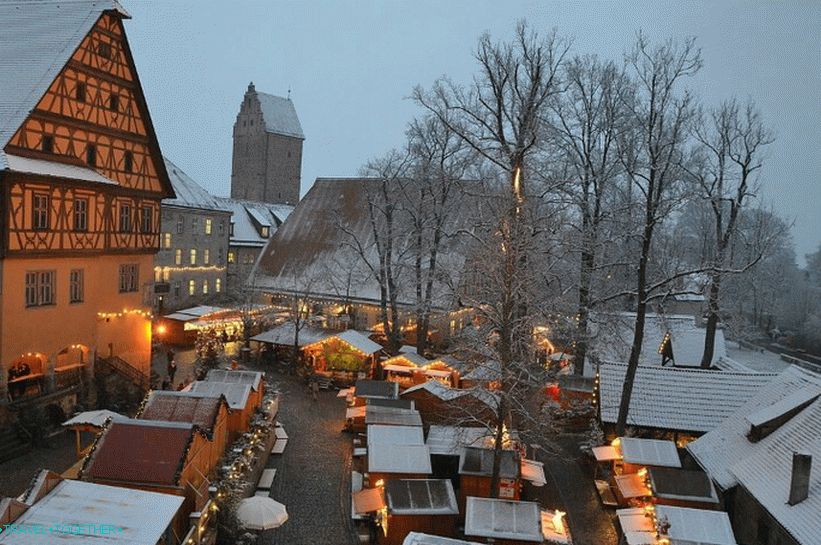 Christmas market in Dinkelsbühl
sights
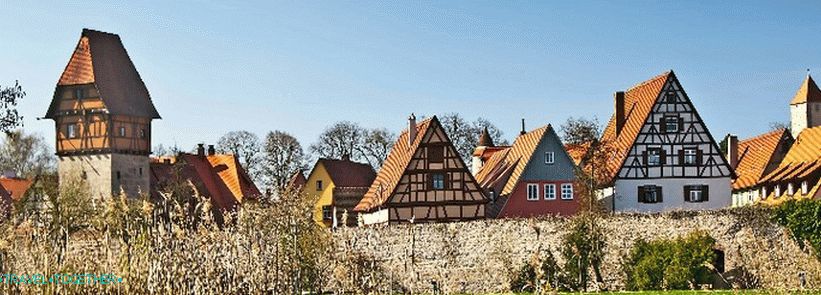 Historical the core of Dinkelsbühl is still walled
Dinkelsbühl is considered one of the most beautiful small towns. Germany. Its main attraction is superb. preserved medieval old town (Altstadt), which includes the original medieval fortifications, towers and gates, and also narrow old streets with half-timbered architecture.
Sacred architecture
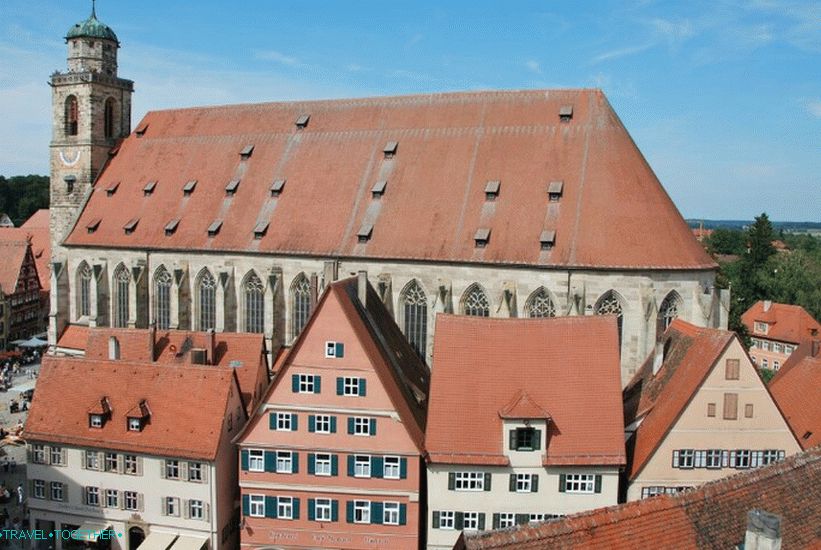 Munster (St. George’s Cathedral)
Münster (Cathedral of St. George) – the main sacred monument Dinkelsbühl and one of the most beautiful late Gothic churches style in southern Germany. The current building of the cathedral was built between 1448-1499 years. Romanesque tower dates back to the 13th century.
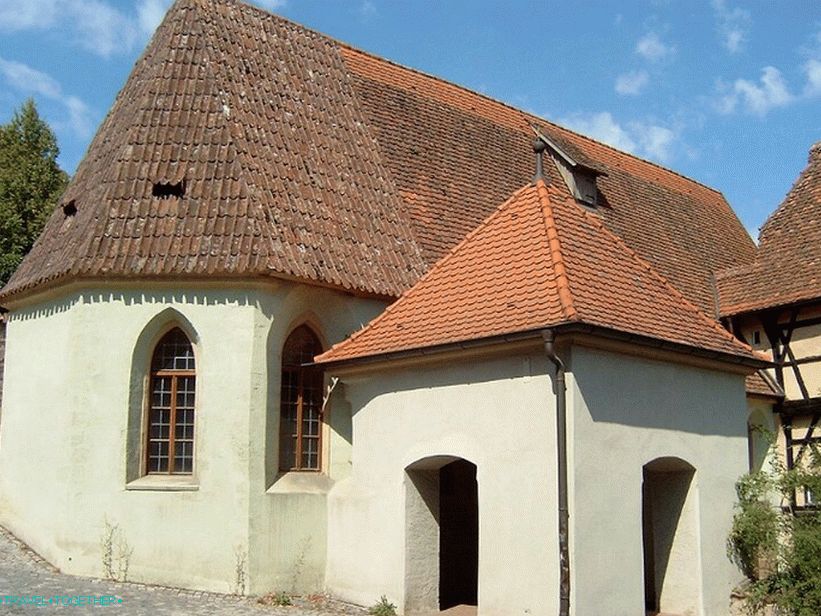 Chapel of the Three of kings
The Chapel of the Three Kings is a one-story building with gabled arched windows, first mentioned in documents in 1378.
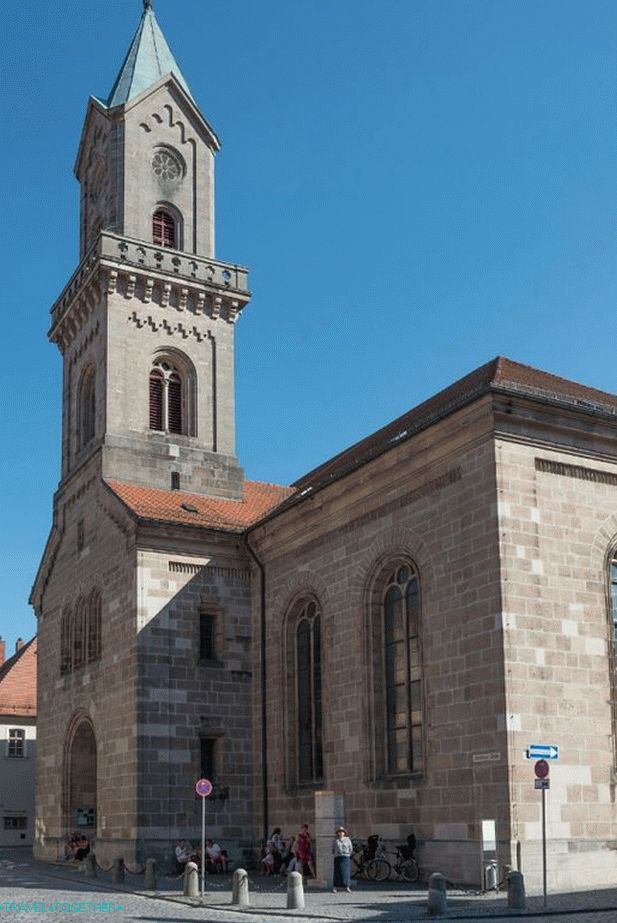 Church of sv. Paul’s
Church of sv. Pavla – Protestant religious building, built in neo-gothic style in the years 1840-1843 the former Carmelite convent, founded in the 13th century and demolished in 19th century.
Interesting historic buildings and places
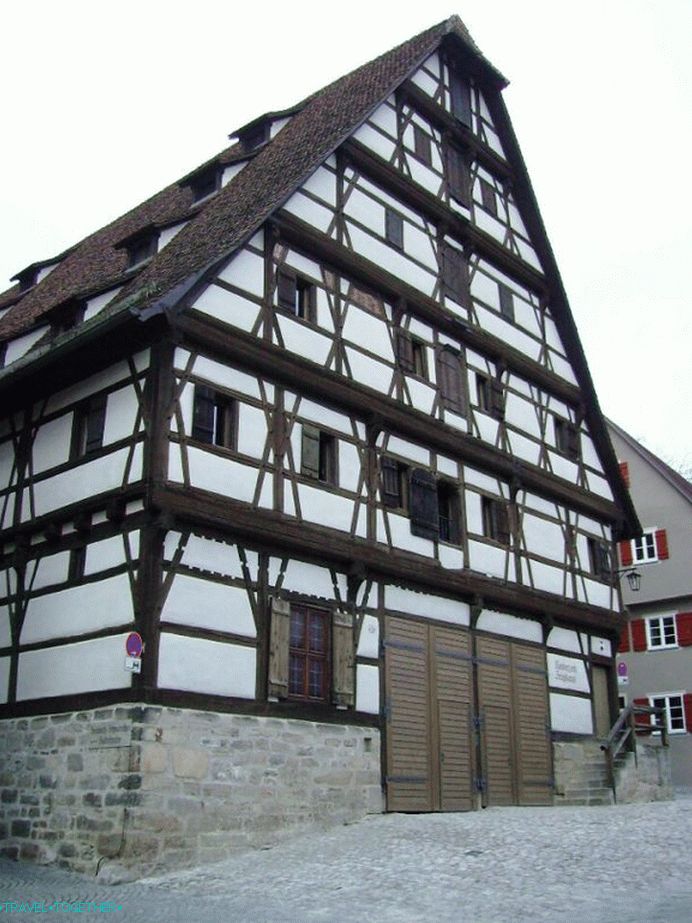 Arsenal
Arsenal – a massive half-timbered building built at the beginning of 16 century.
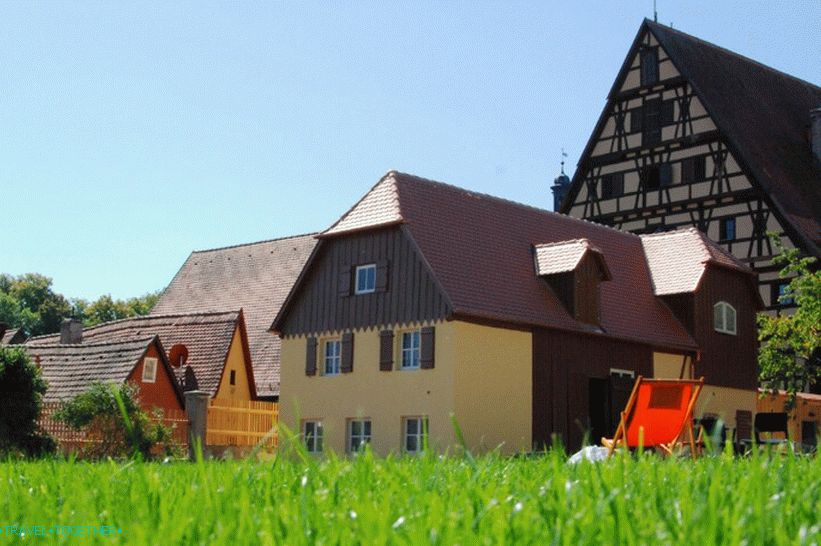 Youth hostel
Another powerful half-timbered building built in 1508 as barn. Today it is used as a youth hostel.
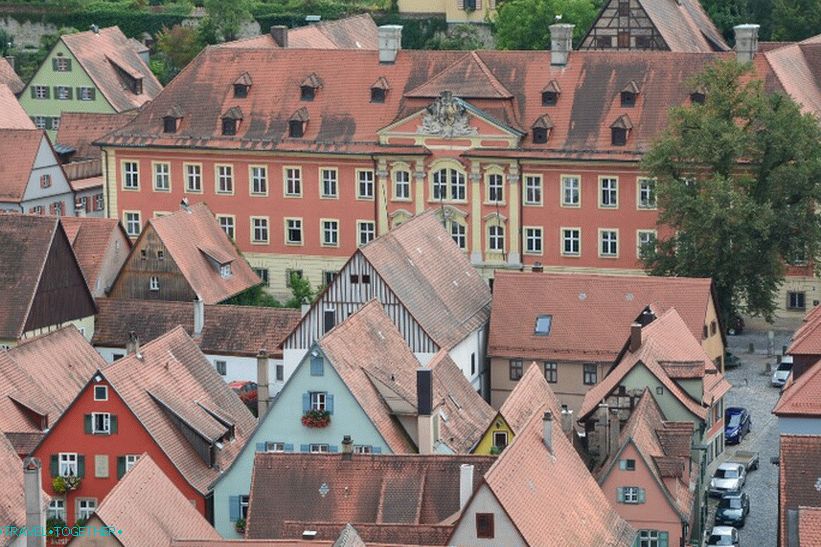 Deutsch order castle
The German Order Castle is a historic building of the 14th century, which stands out baroque architecture acquired in the process rebuilding and reconstruction.
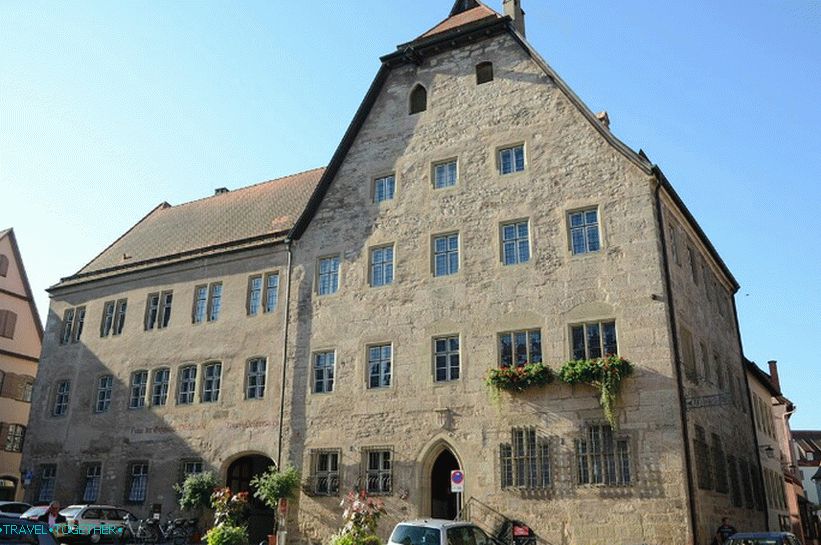 The old town hall
The Old Town Hall is one of the important historical buildings of Dinkelsbühl, built in the 14th century on the foundation of a more ancient residential tower. Now here is the historical museum of the city.
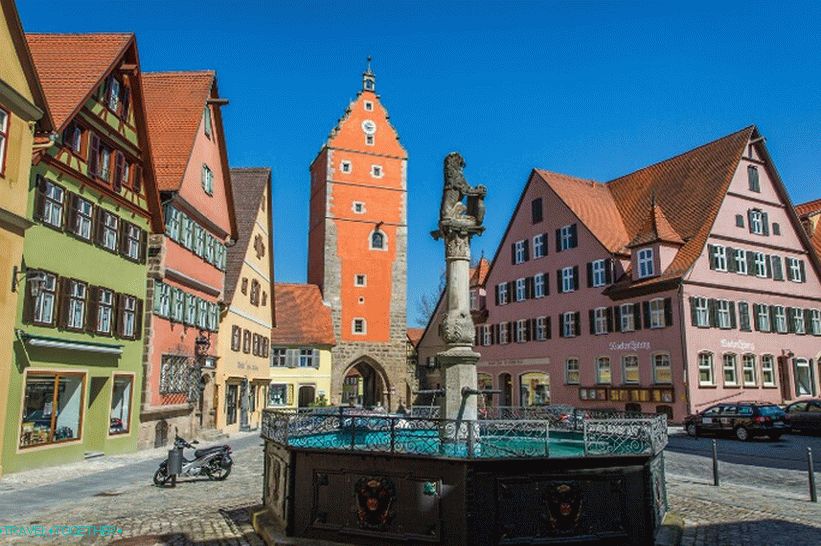 Market square
The market square is one of the central squares of the old city with fountain and beautiful burgher houses.
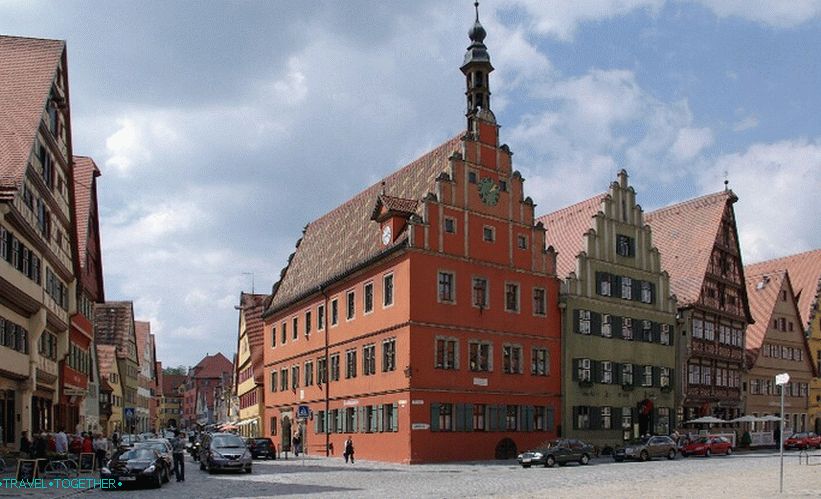 Wine market
The wine market is another magnificent historic square with beautiful old houses that adorn its western part. The corner house with a thin steeple is called the Ratstrinkstube. This building It was intended for distinguished guests of the city.
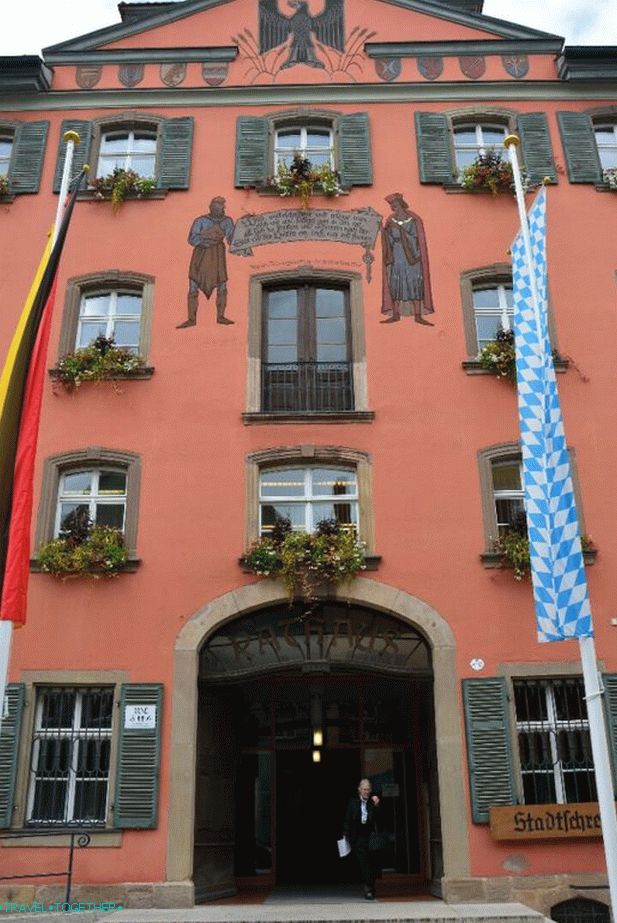 New Town Hall
New Town Hall – a building built in 1733 as a residential building. Is a town hall since 1855.
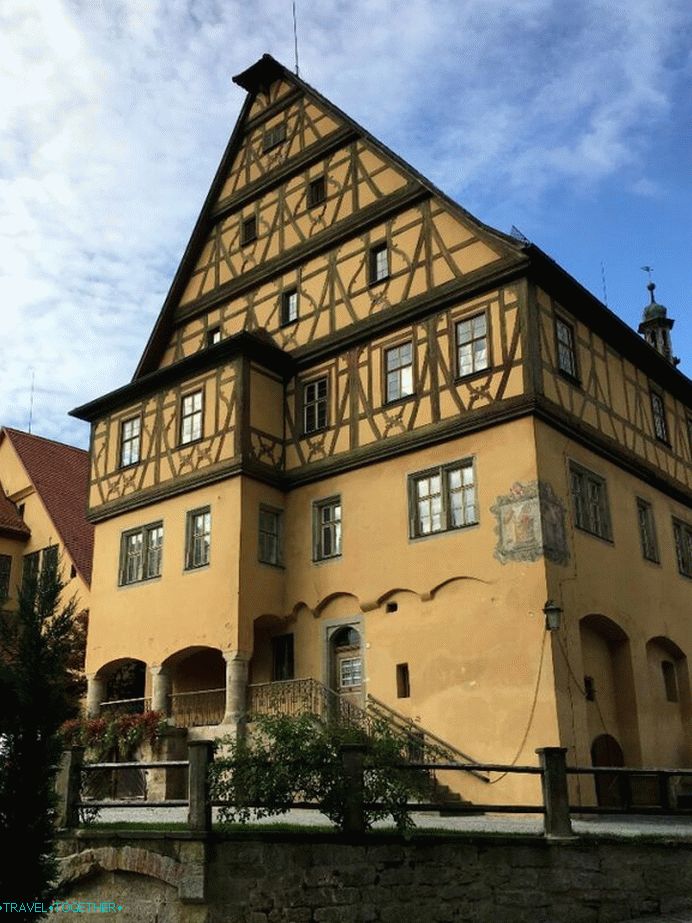 Hospital of sv. Of the spirit
Hospital of sv. Ghost – a building with richly decorated half-timbered pediment built at the end of the 14th century. This former shelter used to be part of the church of the same name.
Medieval gates and towers of Dinkelsbühl
 Rothenburg Gate
Rothenburg Gate with a tower dates from the end of the 14th century. On the second floor houses former prison rooms and a torture chamber.
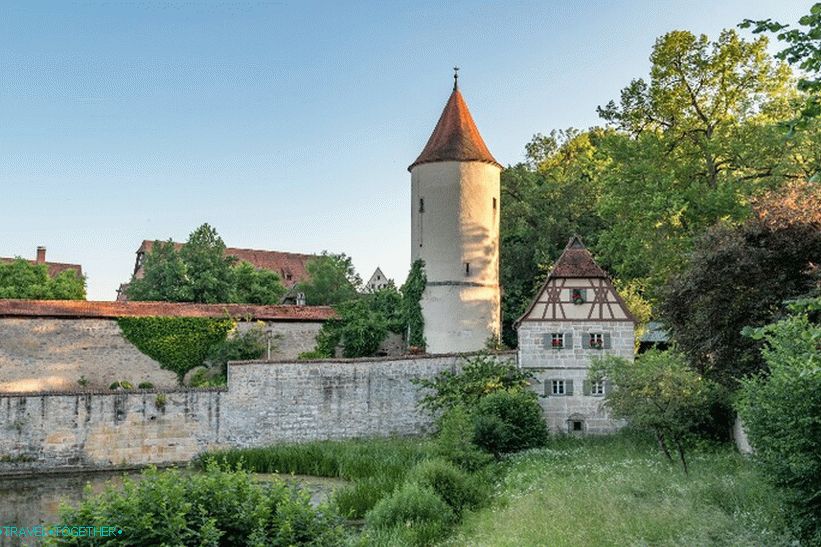 Tower of Guilt
The Vina Tower is a medieval tower that is part of northwestern fortifications. This is a great place to enjoy. overlooking the old Dinkelsbühl and make a beautiful photo.
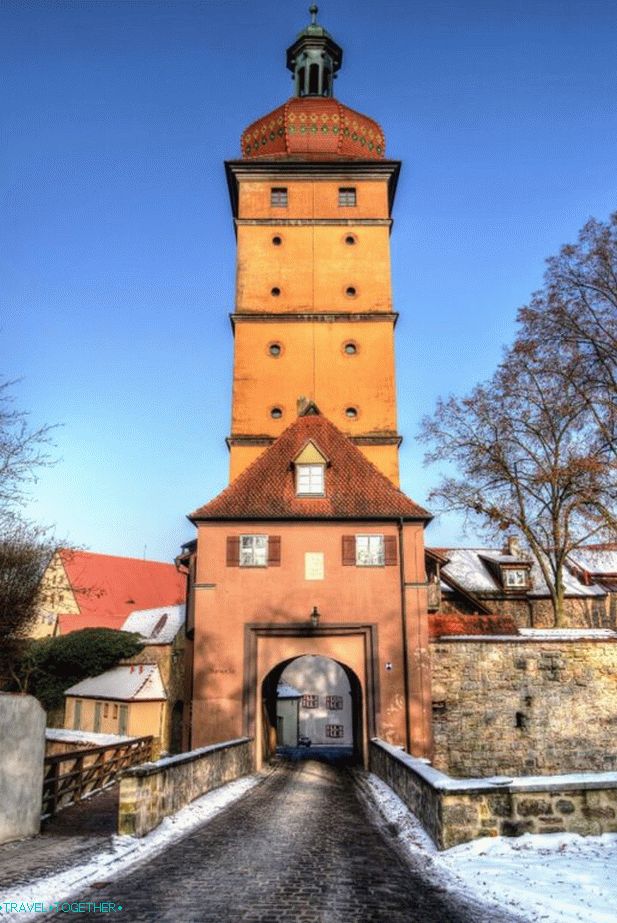 Segringer
Segringer – a medieval tower, destroyed during the siege of the city by the Swedes and restored in Baroque style in 1655.
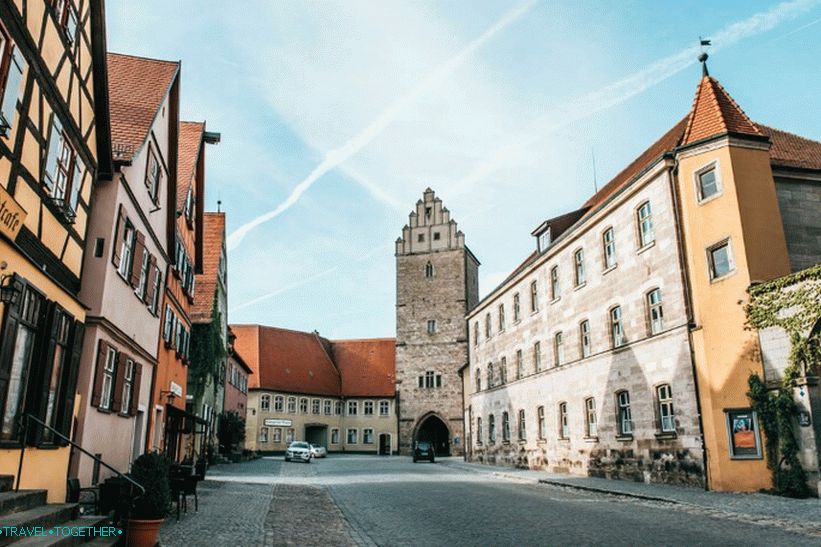
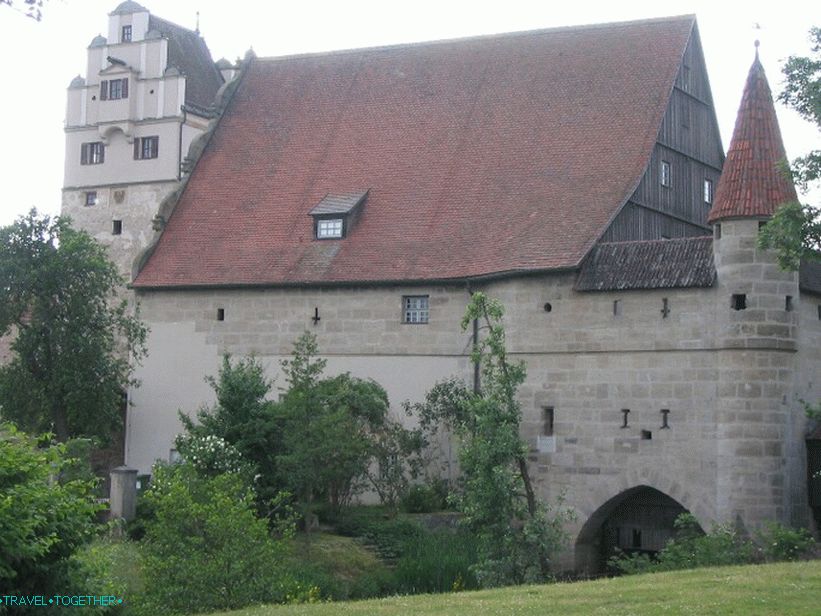 Nordlingen Gate
Nördlingen Gate was built at the beginning of the 15th century. Gable The tower was decorated in the 16th century. Near the gate is located city mill – a 14th century building, like a fortress, with a moat, battlements and battlements.
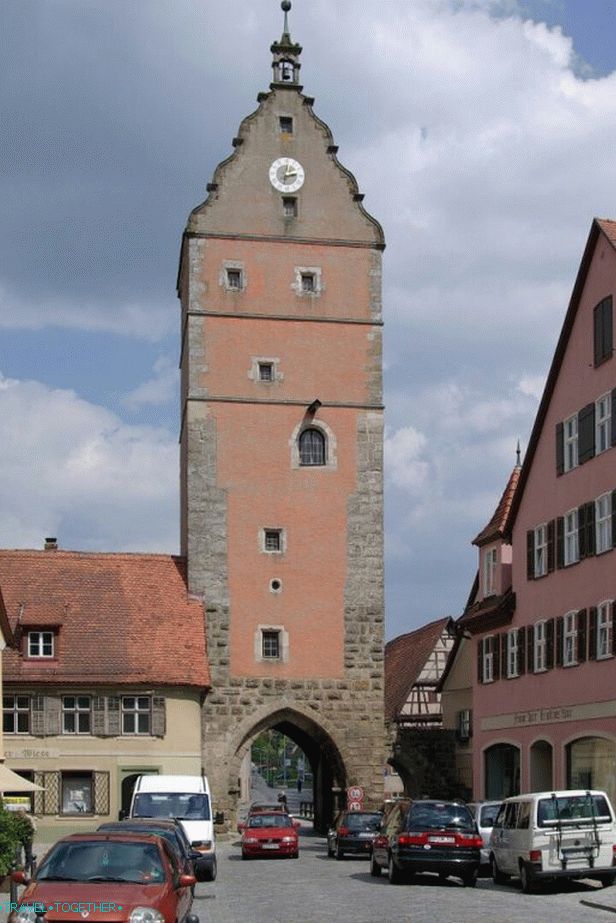 Vernetztor
Vernitztor – the oldest city gate Dinkelsbühl, built in the 14th century. Renaissance pediment with a bell tower dates back to the 16th century. On the facade, like all four urban gate, is the emblem of the imperial city.
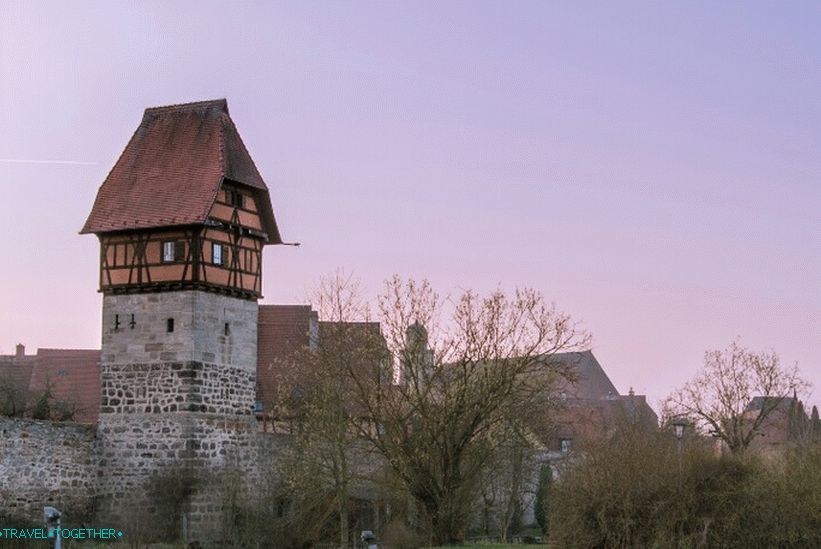 Peasant tower
Peasant Tower – a medieval structure with a characteristic half-timbered upper floor and a steep sloping roof 16 century.
Video
Maps and guides
Tourist Card