Czech Republic – the most detailed information about the country with a photo. Attractions, cities of the Czech Republic, climate, geography, population and culture
Contents
Czech Republic (Česká republika)
The Czech Republic is a small state in Central Europe. This is one of the most distinctive and attractive for tourists EU countries with rich in history, many interesting sights, castles and cultural monuments. The Czech Republic is bordered in the north by Poland, in the west and north-west – with Germany, in the east – with Slovakia, in the south – with Austria. It is a parliamentary republic. The official language is Czech.
What comes to mind when we talk about the Czech Republic? This is gothic Prague’s spiers and Prague streets, this is the ancient Charles Bridge over the Vltava, these are hundreds of castles and churches in the cozy old towns, this great beer and delicious food. All this is true, but there is something else. The Czech Republic is an atmosphere of calm and calm, hospitality and unhurriedness. local residents, measured life, beautiful natural landscapes: leisurely rivers, fields and picturesque wooded hills. Interesting that the country is also one of the safest in Europe and here one of the lowest levels of corruption.
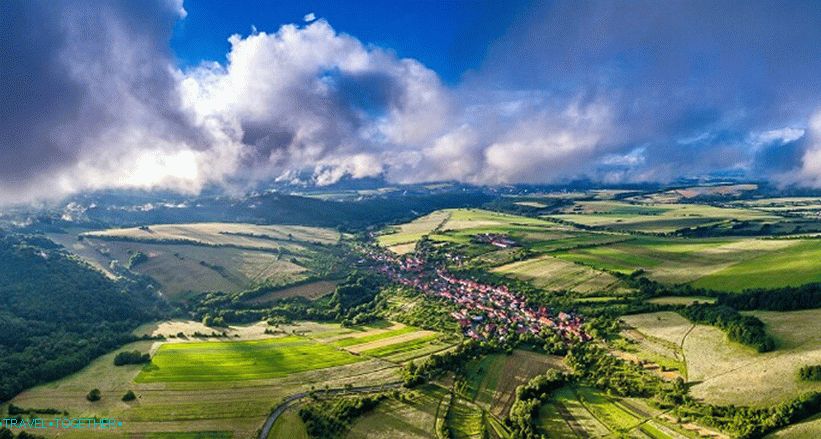 Czech spaces
The country is located almost in the center of the former Austria-Hungary – in the past it is one of the largest and most powerful states Europe. The Czech Republic occupies historical areas – Moravia, Bohemia and part of silesia. The turbulent past has left a colossal historical heritage, and low prices for food and hotels make the Czech Republic one of the cheapest for tourists countries of Europe.
- Useful information
- Geography and nature
- Best time to visit
- Climate
- Story
- Administrative division
- Population
- Transport
- Accommodation
- Kitchen
- Czech Cities
- Sights of the Czech Republic
Useful information
- The official language is Czech.
- Currency – Czech crown.
- Visa – Schengen.
- The capital is Prague.
- The population is 10.5 million people.
- Area – 78.9 thousand square meters. km
- The standard of living is high.
- On the territory of the Czech Republic, the Central European Time UTC +1
- The movement in the Czech Republic is right-sided. Movement speed in populated points is limited to 50 km, outside the city – 90 km, on motorways – 130 km When driving on highways need to buy a vignette. Driving alcohol is strictly prohibited. Automotive headlights must always be turned on. From November to the end of March all cars should move on winter tires.
- High season – May, July, August. Low – January, February.
- Shops are open from 9.00 to 17.00 on weekdays. In large cities shops are open until 20.00 and even on weekends. Trading centers and large supermarkets work from 9.00 to 21.00. Museums and attractions are often closed on Sundays.
- The kitchen in restaurants and cafes usually works until 21.00 – 22.00. Tips are not included in the bill and make up 5-10% of the bill.
Geography and nature
Despite its small size, the Czech Republic is a country geographically varied. Here you can find mountains and hills covered with forests fields and plains. The country is landlocked. Western and Eastern the part is mostly hilly and mountainous. Central – predominantly hilly plain. The highest peak – Mount Snowball (1602 m).
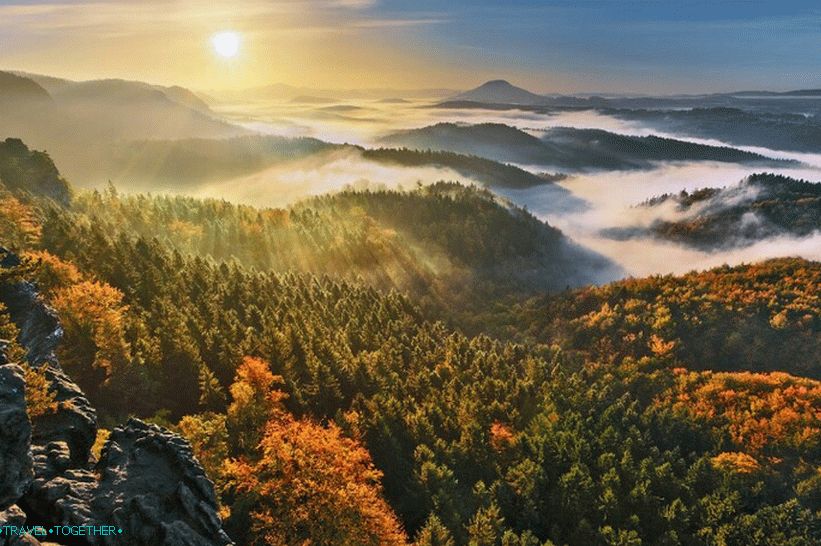 Fog in the mountains Czech Republic
Several fairly large rivers flow through the territory of the Czech Republic – Vltava, Audra, Laba, Morava. The nature of the Czech Republic is very picturesque – hills and low mountains covered with deciduous and coniferous forests interspersed with agricultural land. On high hills and cliffs rise castles and fortresses – a legacy of the past. Roes and deer grazing in the fields, running away only stops.
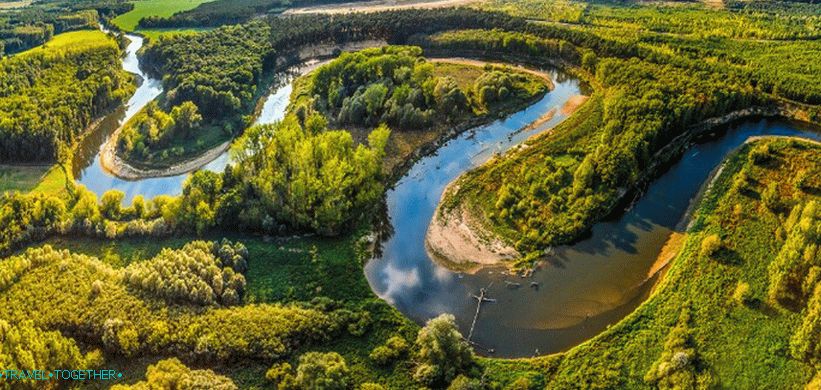 Morava River
Best time to visit
The Czech Republic can be visited all year round. Most comfortable time is the period from May to September. Atmospheric in the Czech Republic on Christmas holidays. The lowest season lasts from January to March.
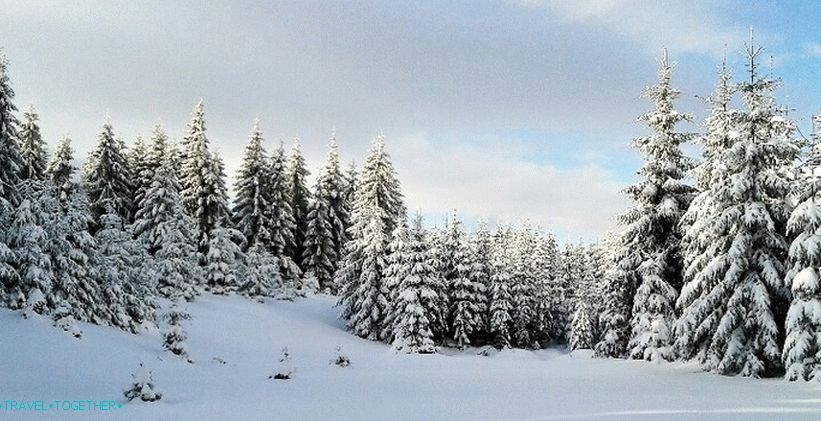 Winter forest in Czech Republic
Climate
The climate of the Czech Republic is temperate, with a warm, but not hot summer and fairly mild in winter. Four seasons are clearly distinguished. Spring is cool with an average temperature of 8-12 degrees. Precipitation 150-200 mm falls out. Summer is warm with a rather comfortable temperature of 15-20 degrees. Heat does not happen often. But often happens coolly. Therefore, when visiting the Czech Republic in the summer We recommend to bring light jackets. Precipitation falls in summer most. Autumn is warm enough with an average temperature of about 10 degrees. Winter lasts from December to February. Temperature holds within zero degrees. There are both thaws and frosts.
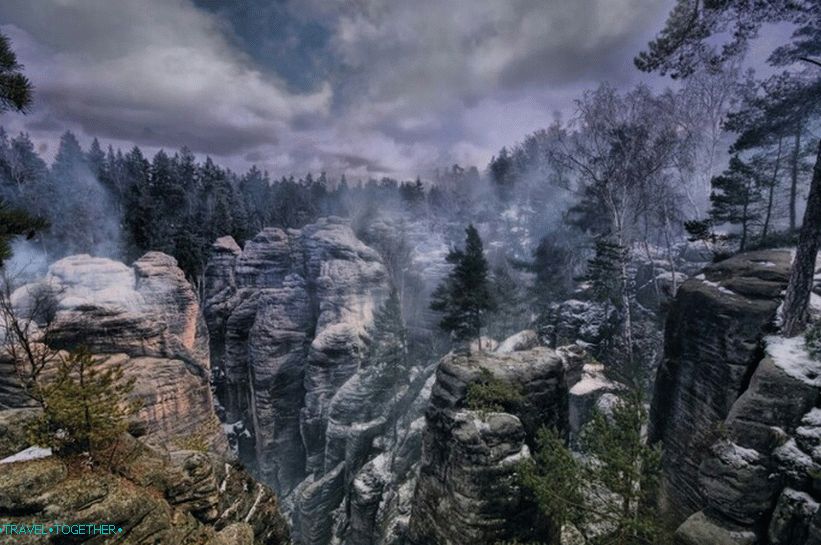 Winter in the mountains Czech Republic
Story
The historical name of the Czech Republic – Bohemia. This territory includes several historical regions – Bohemia, Moravia and part Silesia.
Human settlements in the Czech Republic existed still in the stone age. At the beginning of our era, Germanic lived here tribes. Slavs came to this land in the 6th century. Well-known legend about the three Slavic leaders-brothers – Ruse, Lyakha and Chekha. Each of them became the founder of the people. Although the etymology of the name of the country and people still controversial among scientists.
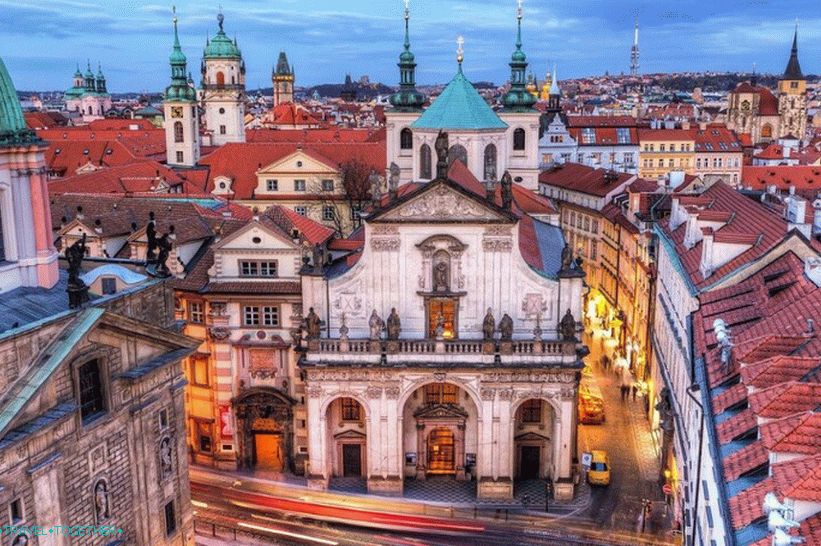 Prague
Association of Czech Slavs and the creation of the Czech state attributed to the 9-10 century. Originally the center was Budech. In the 10th century the center of the state moves towards modern Prague. In it time based Vyšehrad and Prague Castle. Czechs were baptized in the 9th century.
The Czech principality gained its independence at the first Přemyslovichah. From the 11th to the 14th century, the Czech Republic was ruled by Frankish emperors. In 1241, the combined Czech army successfully repelled the Mongol invasion.
The main flowering of the Czech Republic and Prague in the Middle Ages came at a time the legendary king Charles IV. Carl not only expanded the Czech land, but also developed agriculture and winemaking, began construction of the famous bridge over the Vltava in Prague, founded University, Karlstejn Castle, Cathedral of Sts. Vita Karl also issued the law of succession is when the eldest son inherits the throne. A woman can become the head of state only in the absence of male descendants.
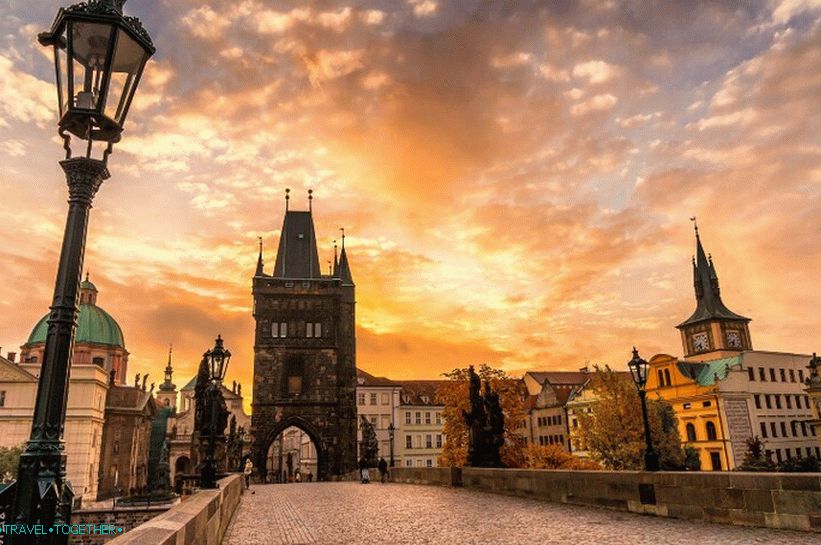 Charles Bridge in Prague
The development of the Czech Republic was suspended in the 15th century. It is a process and loss of independence was provoked by the Hussite movement, which arose in early 15th century. Despite the fact that Jan Hus (one of their leaders) was burned as a heretic, the Hussite war broke out. After her first the time has come for monarchless rule. Later Czech state lost independence and became part of the possessions of the Habsburgs. Under their Czech control remained until 1918.
After the end of World War I, the country gains independence. A new state is being formed – Czechoslovakia. Masaryk becomes the first president. Czechoslovakia existed until 1993.
In 1939, the country was occupied by German troops. Released in 1945 by the Red Army. After the war, the Czech Republic was part of the socialist camp under the influence THE USSR.
In 1989, after the Velvet Revolution, Soviet troops left Czech Republic. In 1993, Czechoslovakia peacefully divided into two independent states. Since 1999, the Czech Republic became part of NATO, and with 2004 – in the EU.
Administrative division
The Czech Republic consists of the capital and 13 edges. Edges are divided into areas (okresy) and statutory cities (regional centers).
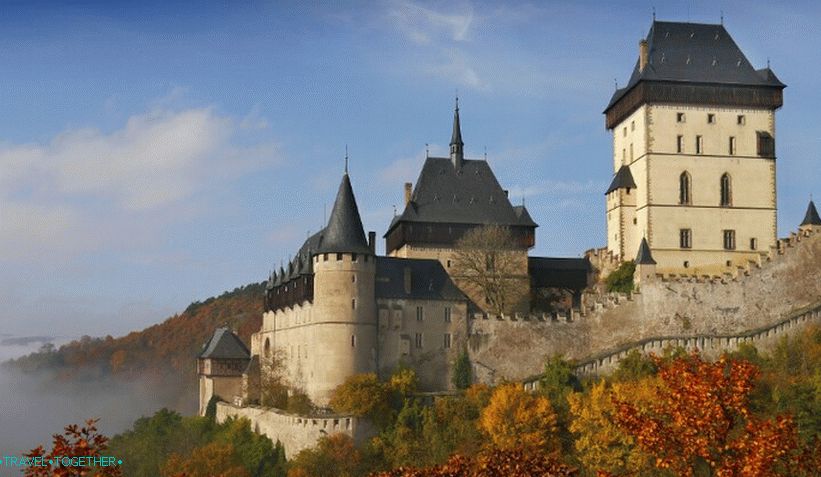 Karlstejn Castle
Regions:
- Central Bohemia – includes the capital – Prague, Kutna Hora.
- West Bohemia (Plze и and Karlovy Vary) – wooded and mountainous, picturesque nature, resorts and great beer.
- Northern Bohemia (Liberec and Usti nad Labem) – mountainous and industrial region.
- Eastern Bohemia (Hradec Kralove and Pardubice) – mountain range The Krkonoše Mountains and the highest peak of the Czech Republic – Mount Snowball.
- South Bohemia (Ceske Budejovice) – hills and forests, headwaters Vltava.
- North Moravia (Ostrava and Olomouc) is an industrial region. Although here you can find beautiful nature and interesting attractions.
- South Moravia (Brno) – hills and forests, agricultural land and winemaking. These are the warmest parts of the Czech Republic.
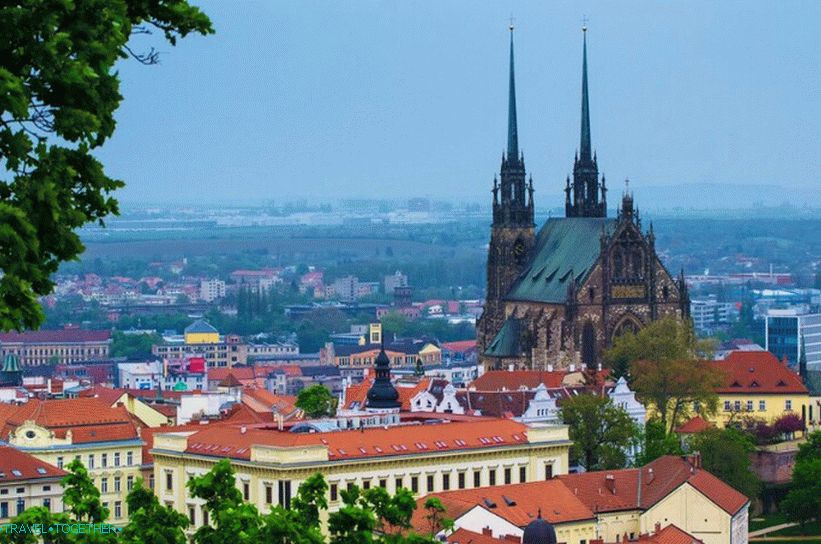 Brno – the second Czech city
Population
The population of the Czech Republic is more than 10 million people. Considering area of the country, it can be attributed to the densely populated. About 95% population – ethnic Czechs. Large diasporas – Ukrainians, Russians, Slovaks, Vietnamese, Germans.
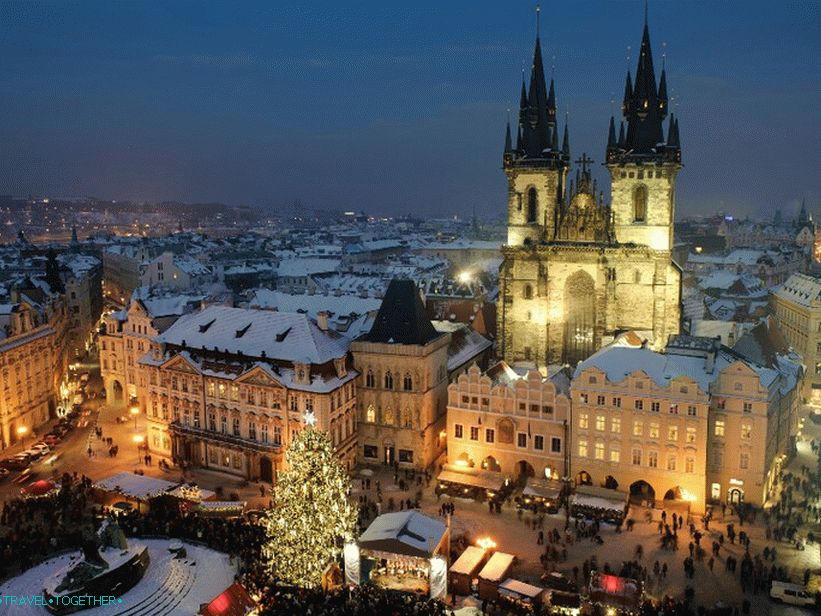 Old Town square in Prague
The official language is Czech, which belongs to West Slavic group of languages. Czechs can easily understand the Slovaks and vice versa. Czech also has common roots and words with others. Slavic languages - Russian, Polish, Ukrainian. Czech has a large number of colorful words: lepidlo – glue, Letushka – stewardess, letadlo – plane. The stress is almost always done on the first syllable.
The Czechs themselves are calm, cordial and polite people. They respect traditions, reasonable and unhurried.
Transport
Located almost in the center of Europe, the Czech Republic has a good transport accessibility.
International airports are located in Prague (the largest in Brno, Ostrava, Karlovy Vary and Pardubice.
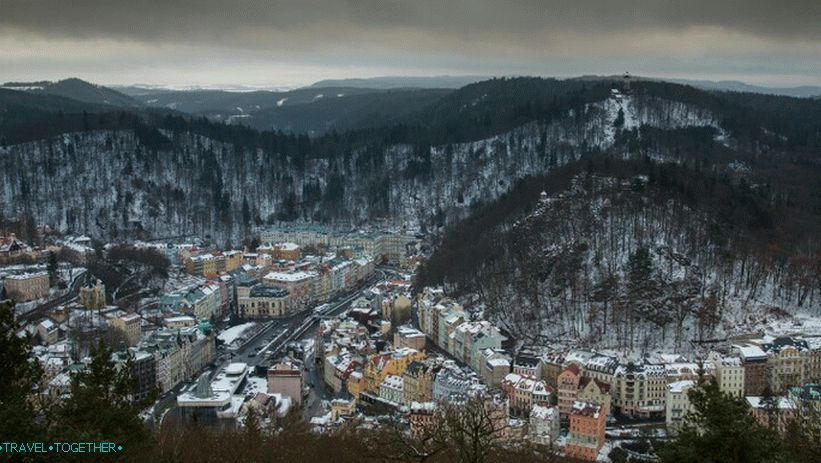 Karlovy Vary
There is a railway connection with Slovakia, Germany, Poland, Austria, Hungary, Ukraine, Russia, Belarus. Tickets and schedule see here -https: //www.cd.cz/en/default.htm
The main means of transportation in the country are trains buses and cars. Worth noting that the condition and quality roads in the Czech Republic lags behind neighboring Austria and Germany. Although the country has highways that connect major cities and neighboring countries and pass near Prague, Plzen, Brno and Ostrava.
Accommodation
Accommodation in the Czech Republic is much cheaper than, for example, in Germany, Austria. A double room in a hotel with three stars and breakfast can be find for 30-50 euros even in Prague. Of course, it all depends the location of the hotel (it is logical that the closer to the center, the more expensive), season, etc. Big cities usually have a large selection. options for staying from a hostel to expensive hotels. About accommodation in high season it is better to take care in advance. Rooms in Czech hotels usually fairly clean and very simple.
Kitchen
Czech cuisine is very high in calories. Traditional dishes: voles (various soups), garlic (garlic soup), boar knee (pork), meat dishes (mainly pork, beef, chicken, duck) with dumplings, fish dishes (carp), fried cheese (Hermelin), seasonal vegetables (greens), potatoes (brambborik) and, of course, beer. In restaurants, food is usually prepared until 21.00-22.00. Tips are not included. score. If you liked the food and service, you can leave 5-10% from the invoice amount.
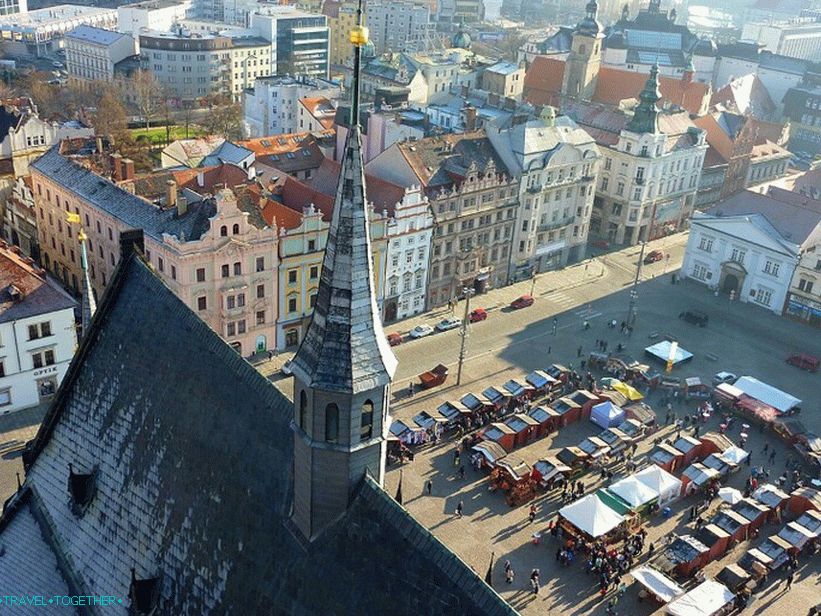 Pilsen – beerhouse capital of the Czech Republic
Beer is a separate pride of the Czech Republic and its main drink. It’s here one of the best in the world. However, beer is often the cheapest. a drink and often cheaper than the same Coca-Cola. Beer is brewed here brands such as Krušovice, Budweiser, Pilsner, Radegast, Bernard, Gambrinus There is also a huge number of small breweries. Beer usually differs in light (lighter) and dark (tmave). Dark beer has a richer flavor.
Czech Cities
The most popular and beautiful city of the Czech Republic is the capital – Prague. Often it is called the “city of a hundred steeples” and “golden.” Prague located almost in the center of the Czech Republic. Is the largest city country. The historic center of the city is listed in the World UNESCO heritage sites, and attractions such as Charles Bridge, Prague Castle, Old Town Square and Tyn Church, Vysehrad are real symbols of the country.
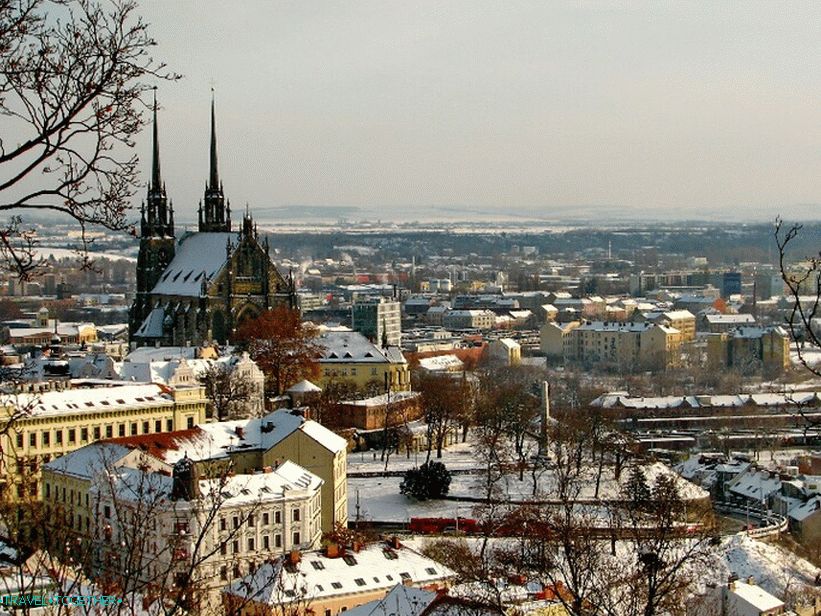 Brno
Brno
The second largest and largest is the capital of Moravia – Brno, which has a compact and beautiful old town and long It competes with Prague economically and culturally.
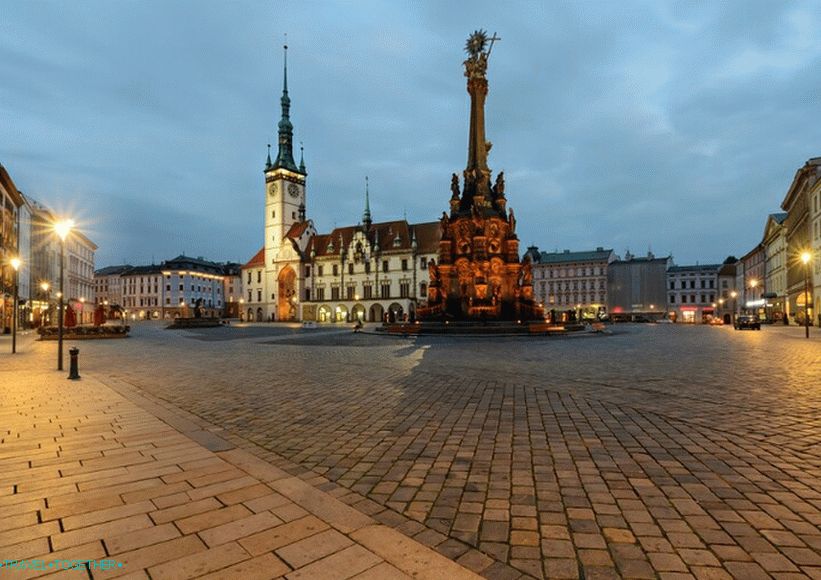 Olomouc
Located near the student city of Olomouc, which is often called “little Prague.” The city has a wonderful architecture. and many interesting sights (one of them included in the UNESCO list).
North is the industrial capital of the Czech Republic and one of its largest cities – Ostrava.
Not far from Prague is a small town Kutna Hora with several famous landmarks (Kostnitsa, the cathedral of sv. Barbarians).
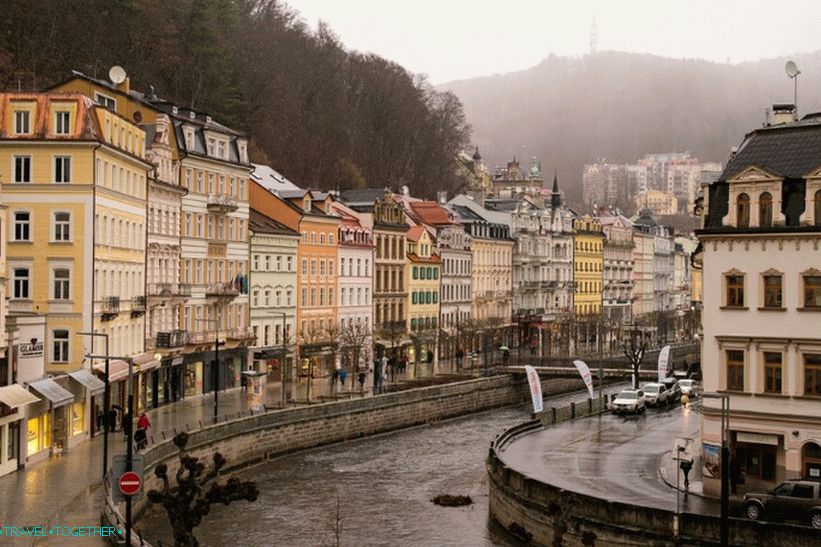 Karlovy Vary
In the west stands out the famous Czech resort – Karlovy Vary. BUT in the northwest – Liberec.
The main city of the south is České Budějovice with a remarkable old center. Nearby is one of the most beautiful towns of the Czech Republic – Cesky Krumlov, the old town of which is included in UNESCO World Heritage List.
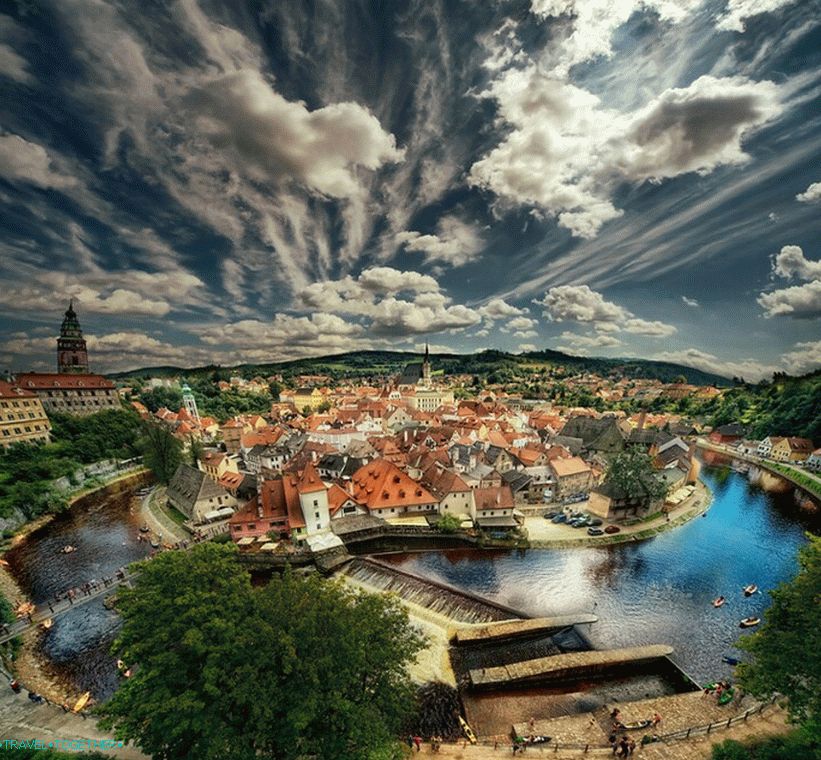 Cesky Krumlov
Beautiful cities are also Znojmo, Pisek, Pardubice, Jihlava
Sights of the Czech Republic
Czech Republic – a country rich in sights and monuments history and culture. Despite the turbulent past, the Czechs managed preserve your historical heritage.
Listing interesting sights of the Czech Republic may take a whole book, so we limit ourselves to the most iconic.
In Prague, the most famous landmarks are Charles Bridge, Prague Castle, Old Town Square and Vysehrad.
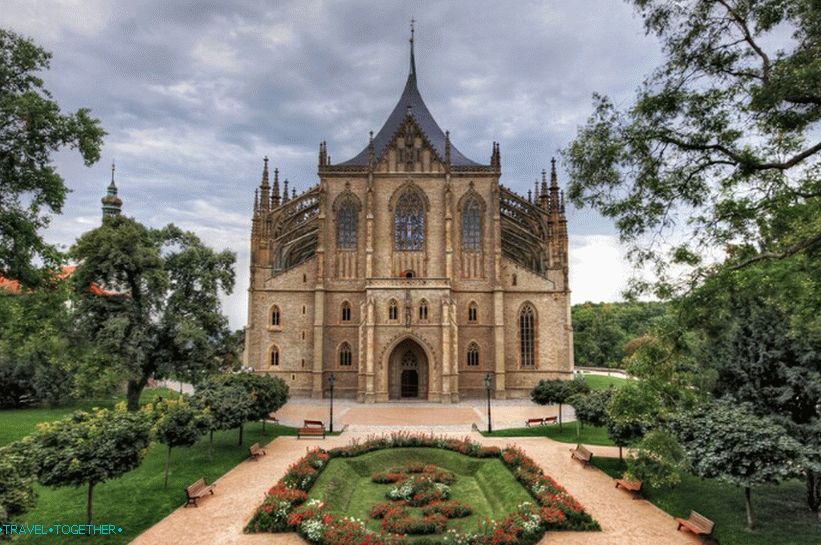 Cathedral of sv. Barbarians in Kutna Hora
UNESCO World Heritage Site in Kutna Hora: the beautiful Gothic cathedral of Sts. Barbarians and gloomy Kostnitsa.
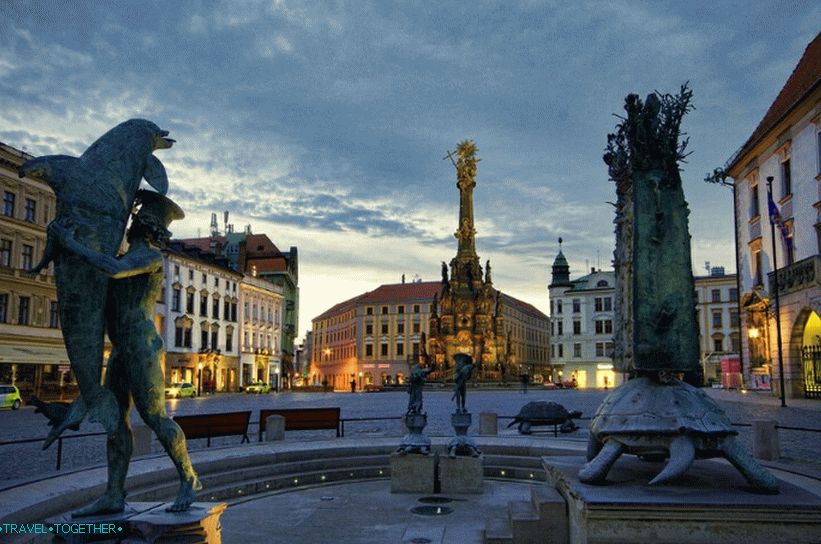 Column Holy Trinity in Olomouc
Olomouc is one of the most significant monuments of Czech Baroque, Holy Trinity Column.
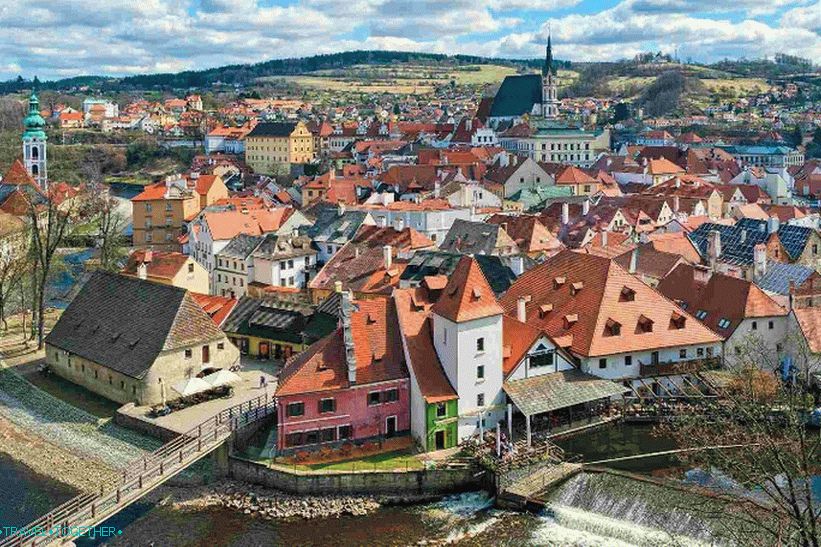 Cesky Krumlov
One big attraction is the town Cesky Krumlov in the south of the Czech Republic.
From the natural beauty of a prominent place belongs to the Czech reserve Paradise, Krkonoše National Park and Šumava, Macocha Gorge.
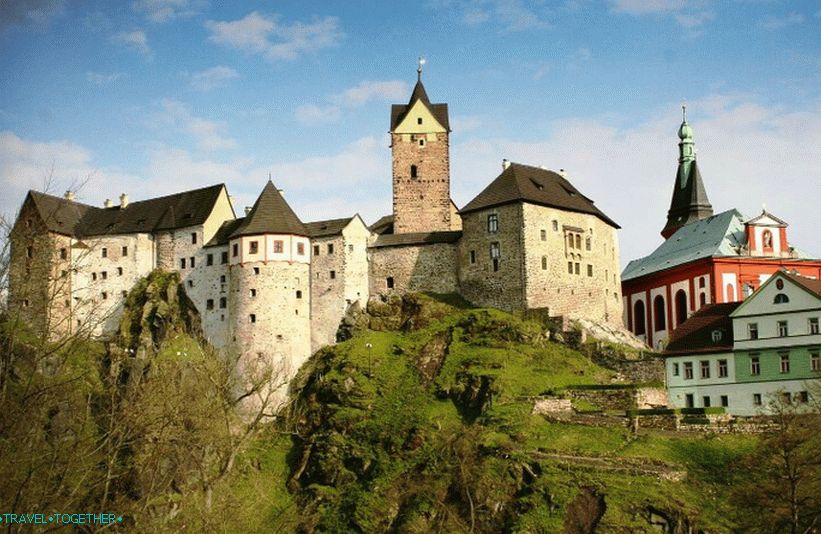 Castle Loket
On the territory of Chekhov there are many beautiful castles. Here almost every old town towers mighty fortresses or romantic ruins. Many castles are perfectly preserved and can tell us a lot about the history and culture of the past.
The largest and most beautiful castles of the Czech Republic:
- Prague Castle
- Cesky Krumlov
- Karlštejn
- Pernstein
- Loket
- Deep nad vltavou
- Blatna
- Bozov
- Orlik nad Vltavou
- Zvikov
- Kokorzhin
- Costa
- Krivoklat
- Miller
- Mikulov