Croatia – the most detailed information about the country with a photo. Attractions, cities of Croatia, climate, geography, population and culture.
Contents
Croatia (Hrvatska)
Croatia is a state in the south of Central Europe in northern parts of the Mediterranean. This small country is washed warm the waters of the Adriatic Sea and is bordered in the northwest by Slovenia, in the northeast – with Serbia and Hungary, in the south – with Montenegro and Bosnia, in the west has a maritime border with Italy. Croatia is divided into 20 counties and is parliamentary republic. Most of the population professes Catholicism.
Croatia is a small southern country with a rich cultural heritage, beautiful nature and delicious cuisine. This is real the pearl of the Adriatic with beautiful beaches of Istria and Dalmatia, warm emerald sea, charming ancient seaside cities, olive groves and tops of the Dinar mountains. Croatia is one of the most popular destinations in Europe, a country of amazing of contrasts, where ancient Roman heritage is built Old Slavic buildings, and Venetian architecture is facing with monumental Austrian and buildings of the times of socialism.
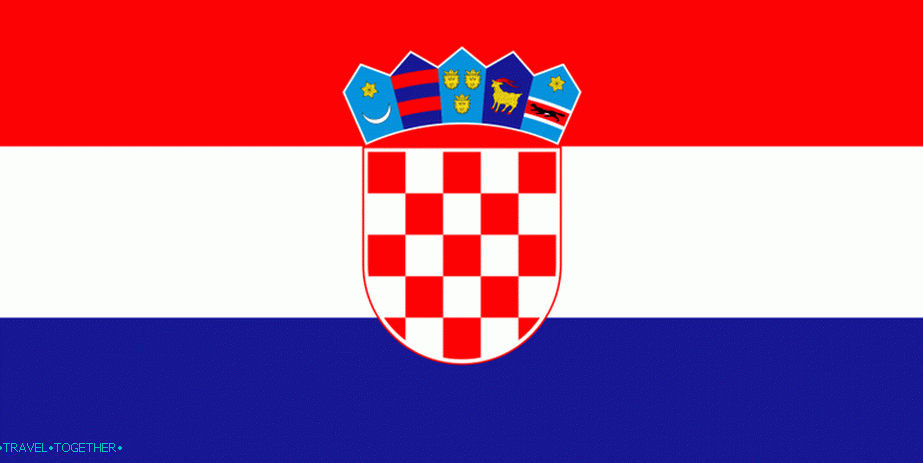 Croatia flag
- Useful information
- Geography and nature
- Climate
- Best time to visit
- Story
- Administrative division
- Population
- Transport
- Cities of Croatia
- sights
- Accommodation
- Kitchen
Useful information about Croatia
- The official language is Croatian.
- Currency – Kuna. Kuna consists of 100 limes.
- Visa – Croatia since 2013 is part of the European Union. For her visit enough Schengen visa.
- The standard of living is high.
- The population is more than 4 million people.
- The area is 56 594 sq. M. m
- The capital is Zagreb.
- The time zone is +1. Relative to Moscow time -1 in summer and -2 in the winter.
- Croatia is famous for its beaches and clear sea. Many beaches have a prestigious blue flag. The best beaches in Croatia: Spiaca on the island of Susak, Nin near Zadar, Bacvice in Split, beaches Brac and Hvar islands, Cupari south of Dubrovnik.
- Tax-Free can be returned from the purchase of more than 740 kuna.
Geography and nature
Geographically, Croatia is located in the south of Central Europe and occupies part of the Balkan Peninsula. The territory of the country can divided on the Adriatic coast, the Middle Danube lowland and Dinar Highlands. In terms of relief, most of Croatia is plains and lowlands. The Danube, the Drava, Sava, Mura. Interestingly, about 60 percent of the rivers belong to Black Sea basin. The largest lake is Vranskoe. Very picturesque Plitvice lakes.
Due to its geographical position, terrain and climate, nature Croatia is diverse and rich. Here you can see mixed forests Mediterranean landscapes and alpine meadows.
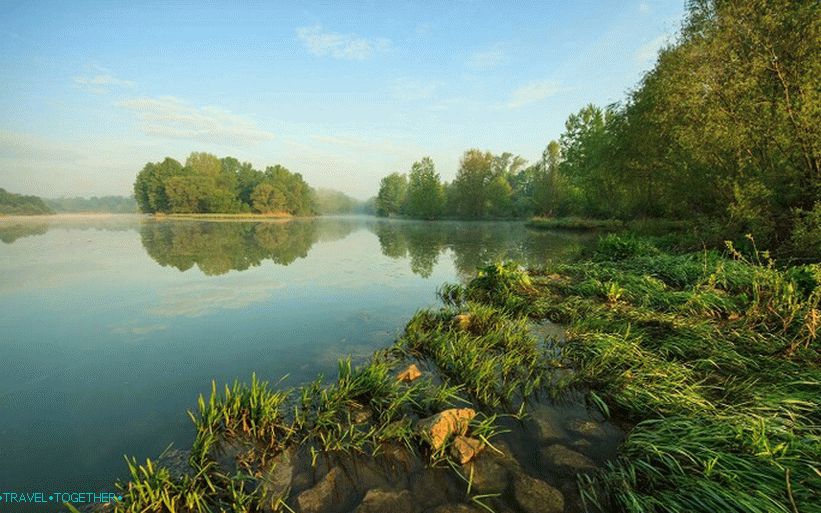 River drava
The Adriatic coast has a length of more than 1700 km. In his The water area has many islands, the largest of which are Cres and Krk. The sea in Croatia is clean and warm. Thereby Croatian resorts are a very popular holiday destination. The greatest Istria and Dalmatia are popular.
Regionally, Croatia is divided into:
- Istria – a peninsula in the north-west of the country on the Adriatic coast bordering Slovenia.
- Kvarner – the neighborhood of the bay of the same name between Istria and mainland Croatia.
- Dalmatia – the southern part of the Croatian Adriatic to the border with Bosnia.
- Slavonia – northeastern part of Croatia, a region of fields and forests.
- Central Croatia – the continental part of the country with Zagreb
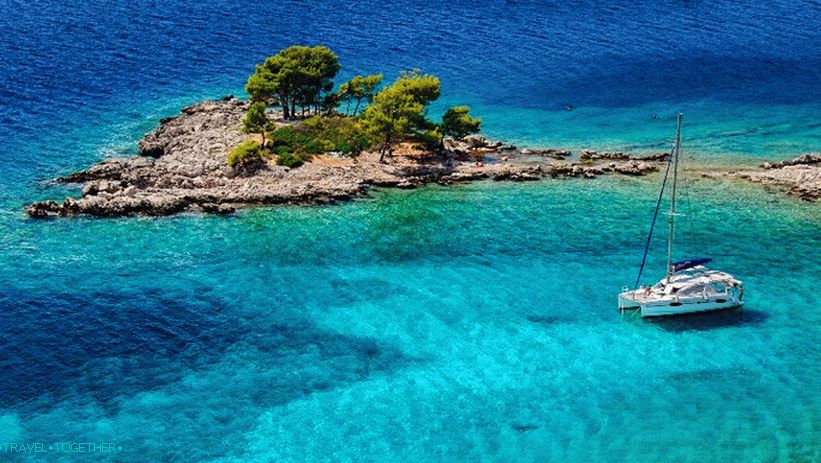 Sea in Dubrovnik surroundings
Climate
The climate of Croatia is very diverse. The north of the country has temperate continental climate, coast – warm Mediterranean, and Dinar Highlands – mountain. In the central and mountainous winter can be quite cold and snowy, then as the coast is warm and wet. Summer is almost always warm, and Adriatic coast – hot.
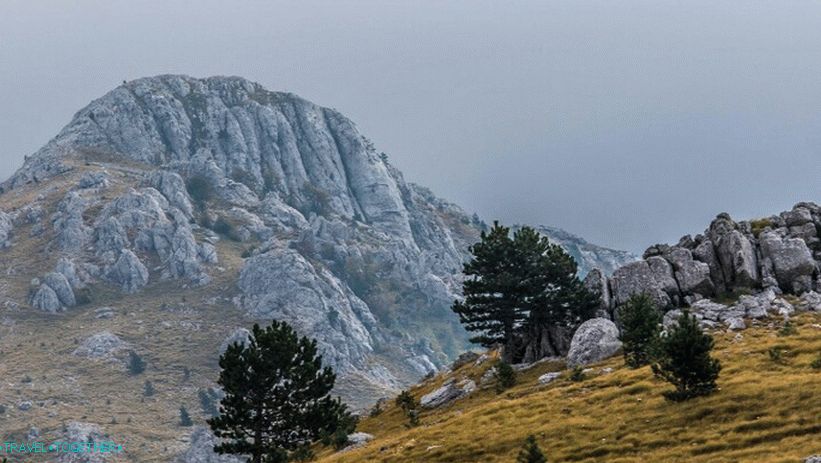 Dinar highlands
Best time to visit
The best time to visit depends on the purpose of the trip. If you want to focus on the culture and the sights, then the ideal time is spring and autumn (until November). If the main goal Beach vacation, the best time is July-September (although the beach The season lasts from May to October).
Story
BC, the territory of Croatia was inhabited by descendants of culture “Impresso”. By the beginning of our era, the entire territory of the country was conquered by the Romans. Croatian tribes came to this land in the 7th century. They formed two principalities: Croatia and Pannonia. Dynasty Trpimirovichey united two principalities into a single Croatian kingdom.
In 1102, the Croatian kingdom lost its independence after Union with Hungary. The Hungarians ruled Croatia until the early sixteen th century. Later, the north of the country occupied the Turks, Istria and Dalmatia seized Venice. Only the republic led by Dubrovnik.
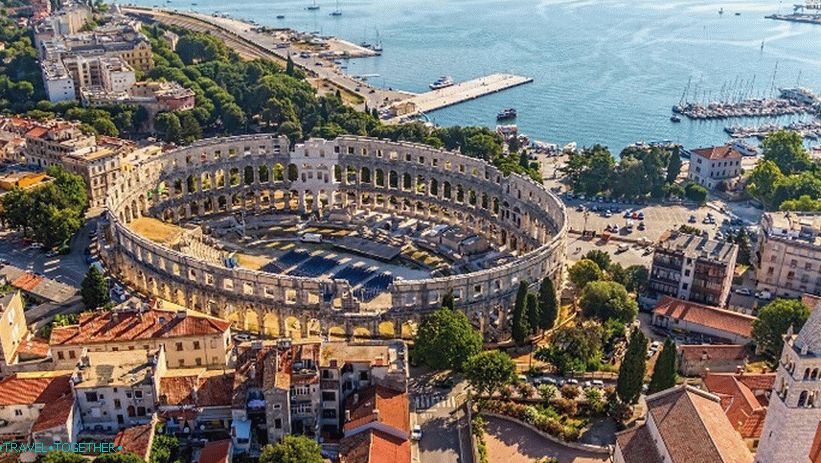 Roman Amphitheater in Pula
In 1526, most of Croatia became owned Habsburg. After the fall of the Venetian Republic to their possessions Istria and Dalmatia were added. After the First World War, Croatia became part of the Kingdom of Serbs, Croats and Slovenes, which It was later renamed Yugoslavia.
In 1939, Croatia gained autonomy. In 1941 it was formed a pro-Nazi Croatian state under the leadership of Pavelic After World War II, the regime of Pavelich fell and Croatia again became part of Yugoslavia until 1991. In 1991, the Croatian The state declared independence. This led to war, which went until 1995. Finally, the borders of Croatia were established in 1998.
Administrative division
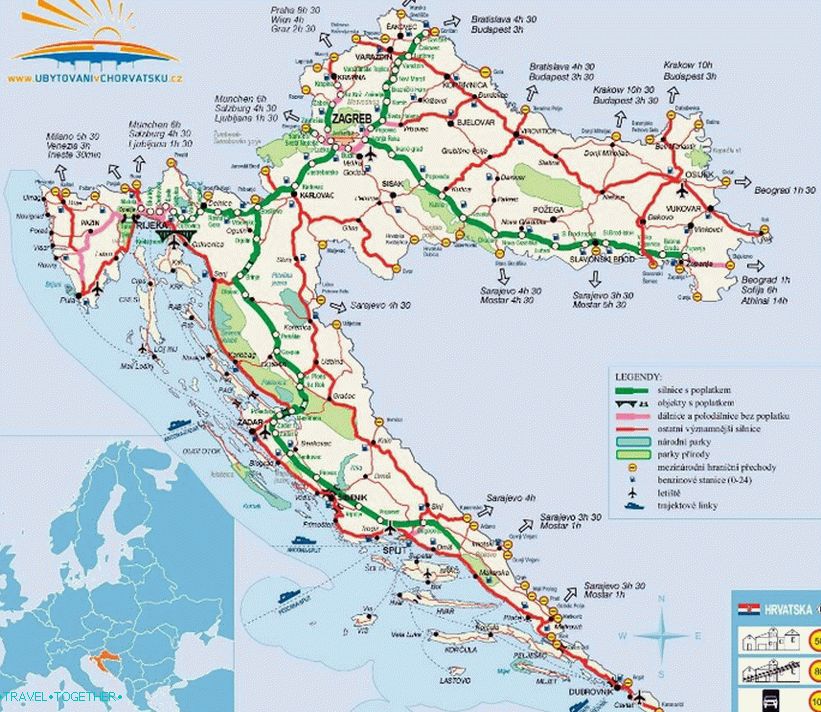 Map of Croatia
Croatia is divided into 20 counties:
- Zagrebak with center in Zagreb.
- Krapinsko-Zagorsk – Krapina.
- Sisachko-Moslavachka – Sisak
- Karlovachka – Karlovac
- Varaždinska – Varaždin
- Koprivnichko-Krizhavachka – Koprivnitsa
- Bielovarsko-Bilogorsk – Bielovar
- Primorsko-Goranska – Rijeka
- Lichko-Senjska – Gospich
- Virovichko-Podravska – Virovitica
- Pozheshko-Slavonska – Pozhega
- Zadarska – Zadar
- Osiechko-Baranska – Osijek
- Šibensko-Kninska – Šibenik
- Vukovarsko-Sriemsk – Vukovar
- Split-Dalmatian – Split
- Istarska – Pazin
- Dubrovnik-Neretvanska – Dubrovnik
- Medzhimurska
- Zagreb
Population
About 90% of the population is ethnic Croats. Croats belong to the group of South Slavic peoples. They speak Croatian language and profess Catholicism. Croats very hardworking, patriotic and independent. Respect their traditions and culture, and avoid those related to Yugoslavia and Serbia.
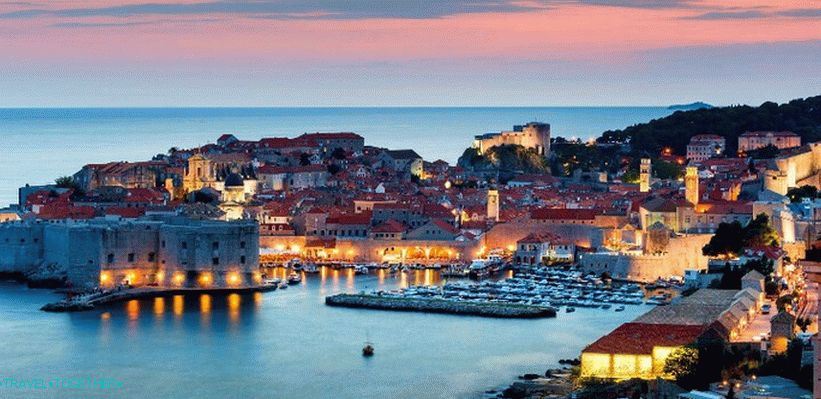 Dubrovnik
Transport
The largest airports are located in Zagreb, Split, Dubrovnik and Poole. You can get to Croatia by plane from London, Istanbul, Prague, Madrid, Dusseldorf, Frankfurt, Hamburg, Munich, Paris, Vienna, Moscow, Kiev, Milan, Copenhagen, Stockholm, Oslo, Tokyo, Seoul.
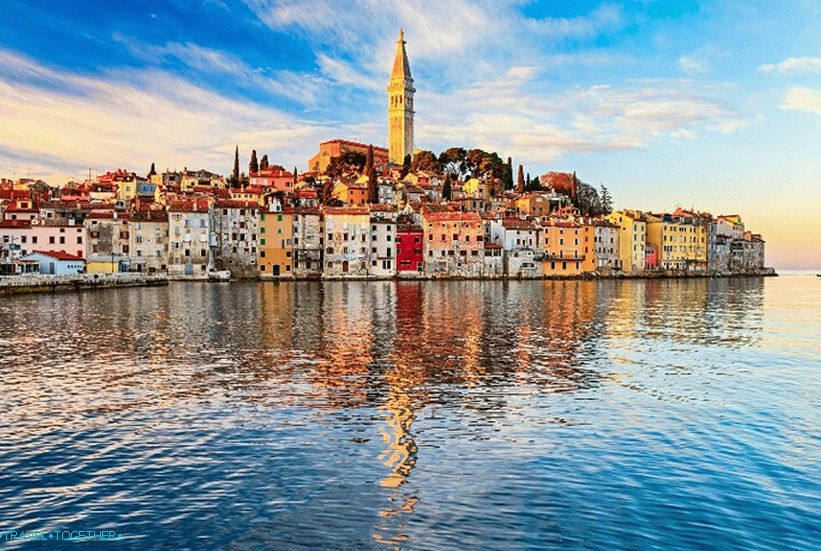 Rovinj
The railway network connects all major cities of the country (for with the exception of Dubrovnik). In Croatia there are direct rail routes from Austria, Slovenia, Czech Republic, Hungary, Italy, Germany, Switzerland and Greece.
The fastest and most economical way to move within the country are buses. The main points of international transport are split and dubrovnik. The Adriatic coast of Croatia has Regular ferry service with Italian cities (Bari, Ancona, Venice).
Croatia has a fairly good road network, therefore the car is also a great way to get around. Speed limits: 50 km / h – in settlements, 90 km / h – outside settlements, 130 km / h – on the highways. Headlights on cars must be turned on at any time of the day, and all passengers wearing seat belts.
Croatian cities and popular destinations
The most popular cities in Croatia:
- Zagreb is the capital of Croatia and the largest city in the country.
- Dubrovnik is one of the most picturesque Croatian cities, listed as a UNESCO World Heritage Site.
- Split is an ancient port city with Roman ruins.
- Pula – the largest city of Istria with the ancient Roman amphitheater.
- Osijek is the capital of Slavonia.
- Rijeka is the largest port in the country.
- Varaždin is the baroque pearl of Croatia.
- Zadar is one of the most beautiful cities in Dalmatia.
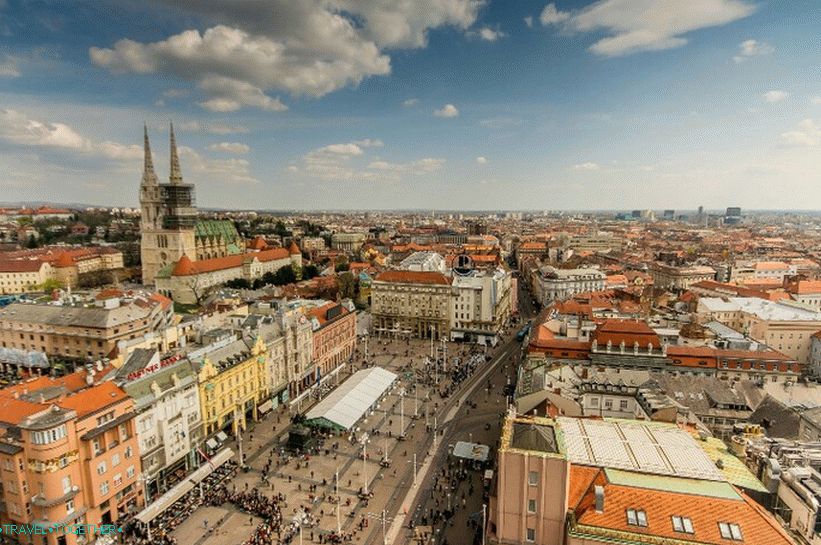 Zagreb – capital of croatia
Popular destinations:
- Istria – a peninsula on the Adriatic coast, one of the most famous and popular places of Croatia. Famous for its picturesque coastal resort towns with Venetian architecture and Italian flavor – Porec, Pula, Umag, Rovinj, Medulin, good wines and olive oil.
- Kvarner is a stretch of coast between Istria and the continental Croatia around Rijeka. The most popular resort are Opatija and Crikvenica.
- North Dalmatia is the region between Kvarner and Split. Here is located the beautiful seaside town of Zadar, the fascinating Sibenik and magnificent Trogir.
- Makarska Riviera – is one of the most famous tourist places on the Croatian coast with many beautiful beaches, pine forests and sparkling emerald sea water
- South Dalmatia – famous for its beautiful wines and beautiful in places. The brightest city in the region is Dubrovnik.
- The Croatian Adriatic includes more than 1000 islands. Most Popular ones: Cres, Krk, Rab, Brac, Hvar.
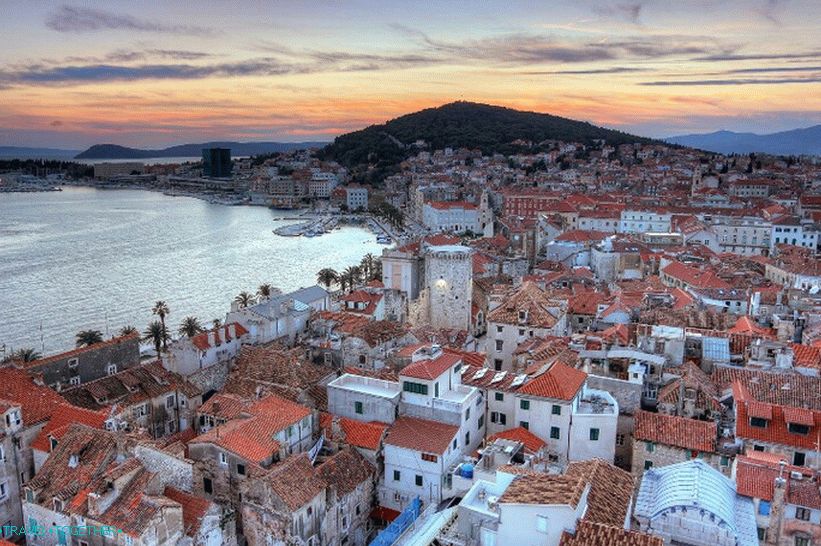 Split city
sights
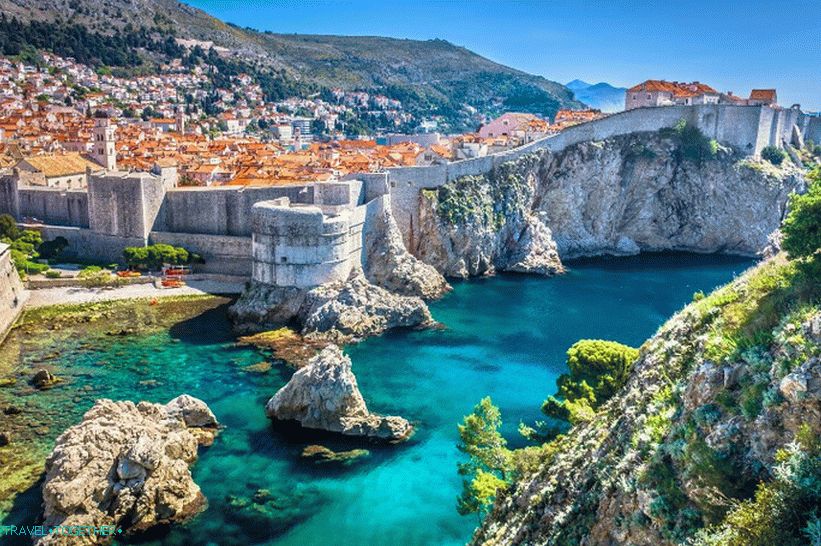 Dubrovnik
Dubrovnik is the most popular city in Croatia. Known magnificent old town enclosed in a ring of powerful medieval walls, old houses with red tiled roofs, charming streets and beautiful views of the emerald Adriatic waters.
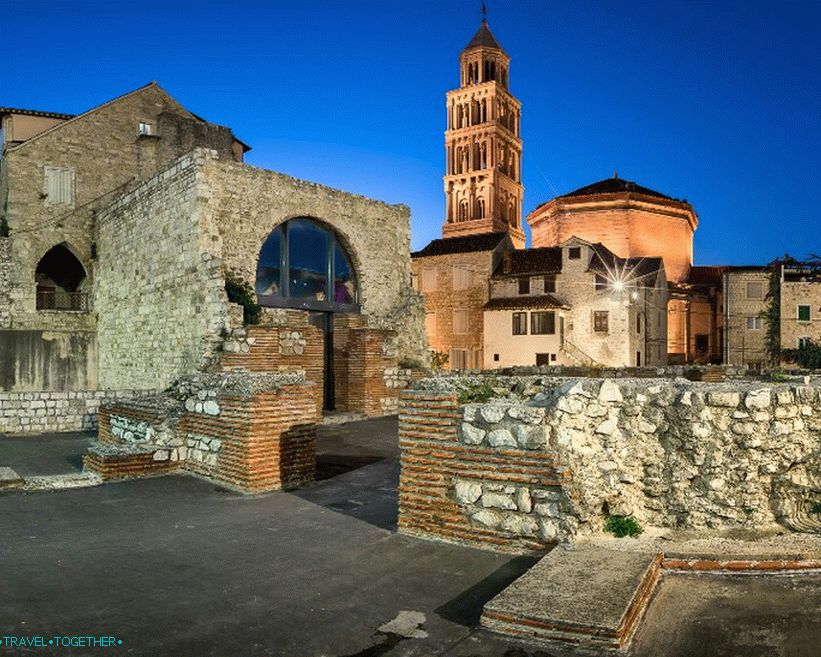 Palace Diocletian
Diocletian’s Palace in Split – one of the most famous Roman structures on the territory of Croatia. Was built by the roman emperor Diocletian overlooking the Adriatic Sea. Inside the walls is preserved magnificent arcade courtyard, a cathedral with a beautiful bell tower. Old Split city is also very interesting and is included in the list. UNESCO World Heritage sites.
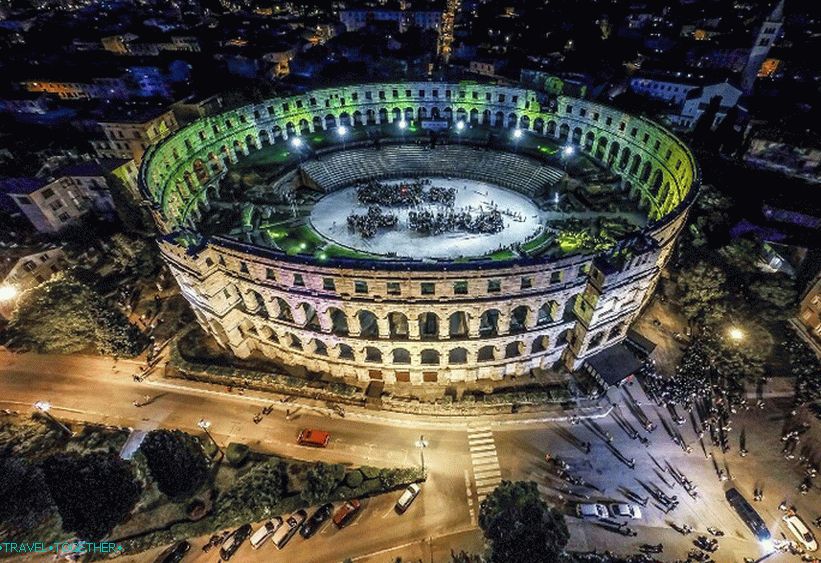 Amphitheater in Pula or Arena
Arena – the main attraction of Pula and the symbol of the city. it a large amphitheater built in the 1st century in the time of Vespasian for gladiator fights simultaneously with the Colosseum. Considered one of the 6 The largest amphitheater of the period of antiquity. Pula Arena accommodates more than 20 thousand spectators. This is a large oval building with a length of 130 meters and a width of 100 meters, built of limestone.
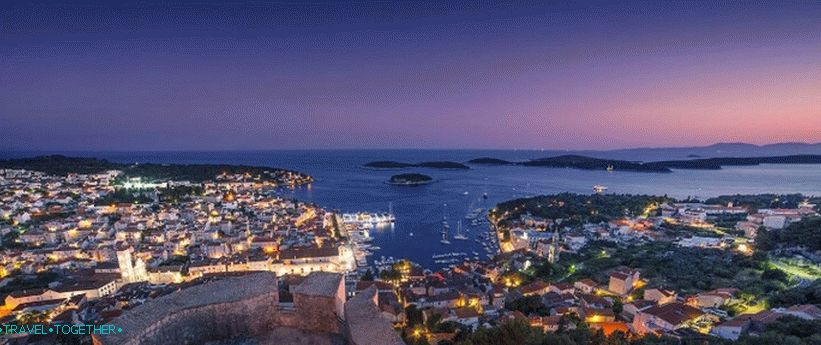 Hvar
Hvar
Hvar is an ancient city on an island in the Dalmatia region, free from cars. The historic center consists of a spacious main The square overlooking the 16th-century cathedral, the beautiful fishing harbor and fortress on top of the hill.
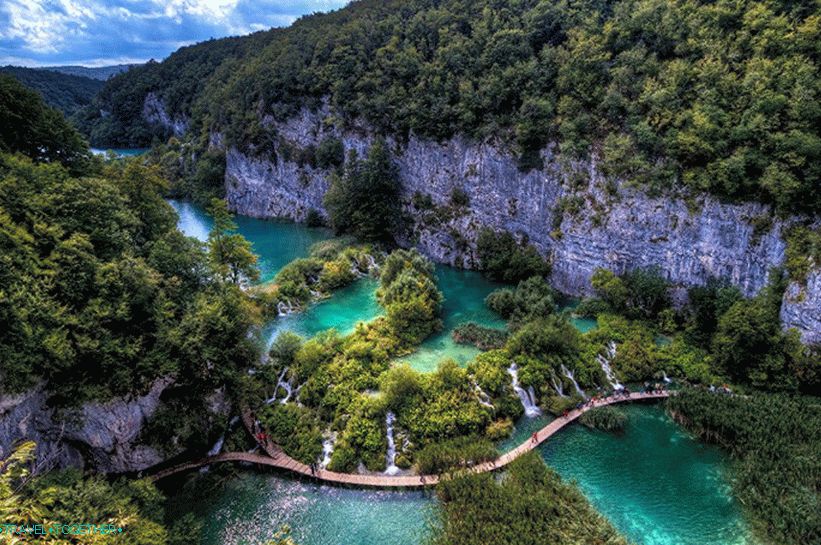 Plitvice
Plitvice is one of the most beautiful places in Croatia. 16emerald blue lakes connected by a series of waterfalls surrounded by hills and forests.
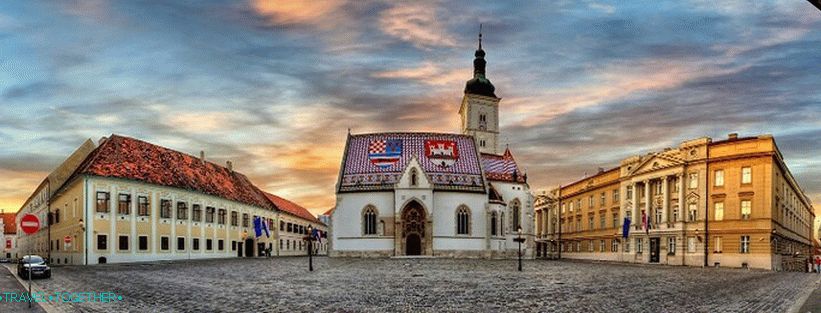 Upper Town in Zagreb
Upper Town in Zagreb – Medieval Town with Old attractions: the cathedral with neo-gothic facade and double spiers, church of sv. Stamp with colored tiled roof building Parliament and the tower of the 13th century.
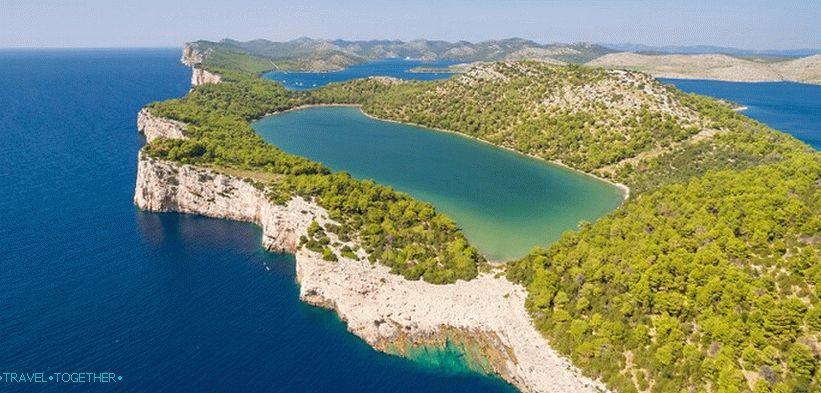 Kornati
Kornati is an archipelago of 80 picturesque islands.
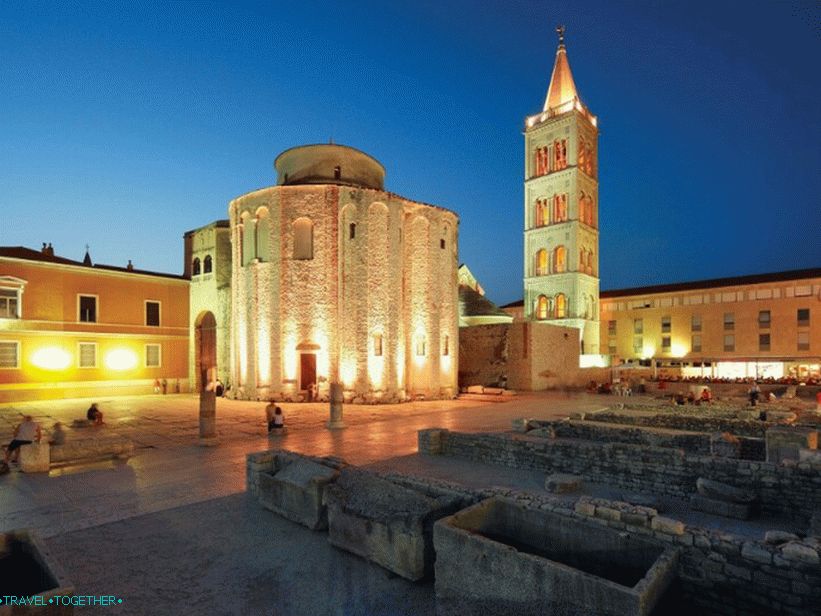 Romance churches of zadar
The ancient city of Zadar is famous for the Romanesque churches built between the 9th and 13th centuries.
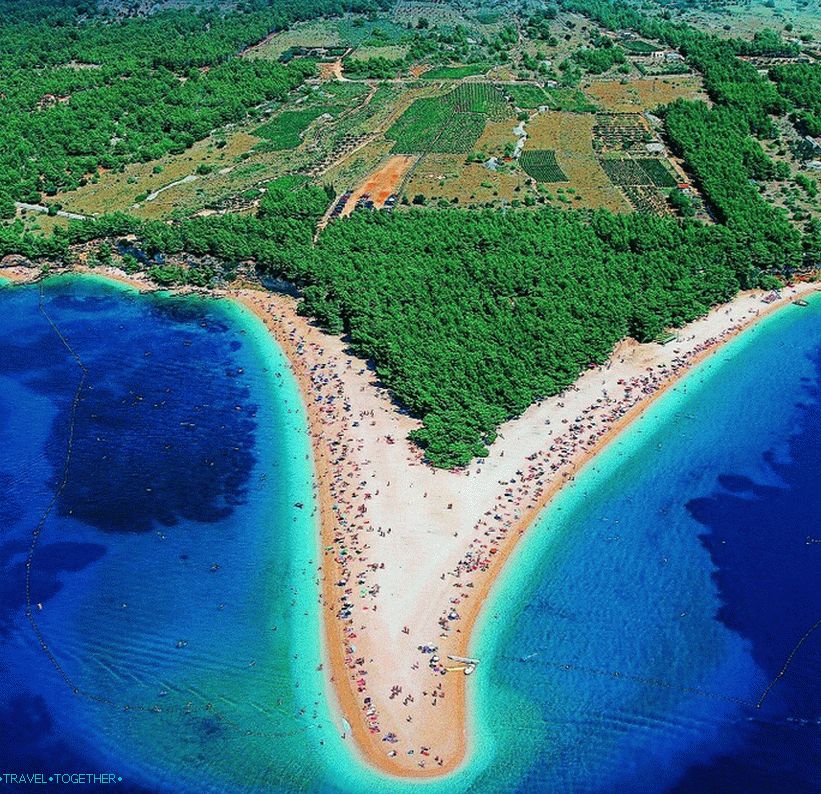 Golden Horn
Golden Horn – one of the most famous beaches of Croatia in the south coast of the island of Brac. Depending on the winds and currents he moves and changes shape from season to season. The sea is very here warm and transparent.
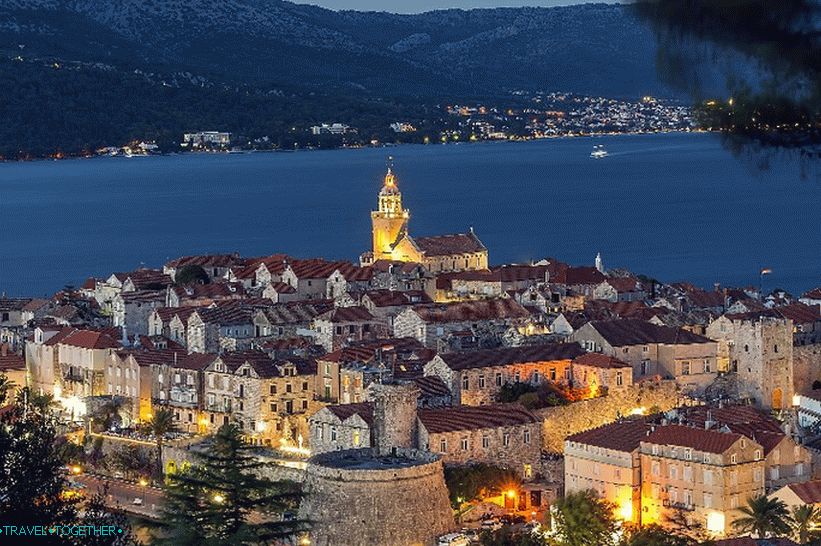 Korcula
Korcula is an ancient city in Dalmatia on the island of the same name. It is considered the birthplace of Marco Polo and is known for its medieval walls and towers.
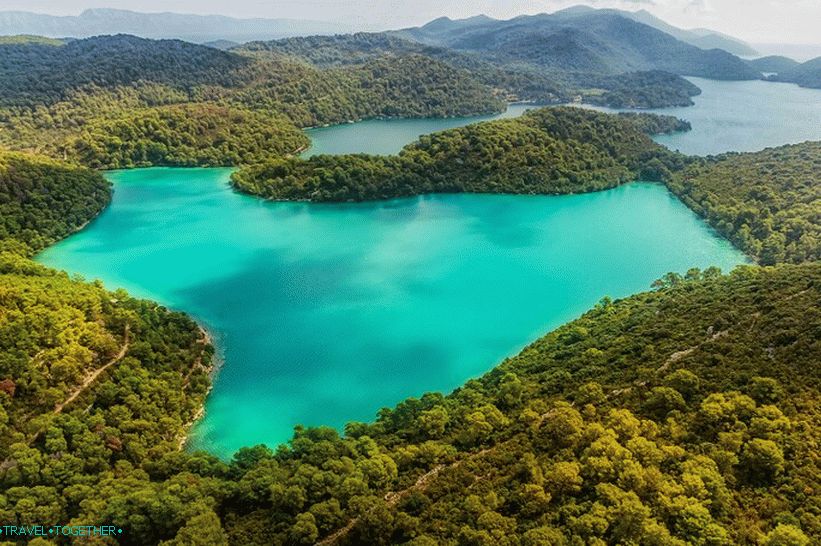 Mljet
Mljet
Mljet is a national park in the west of the island of the same name with beautiful nature and two salt lakes with turquoise water
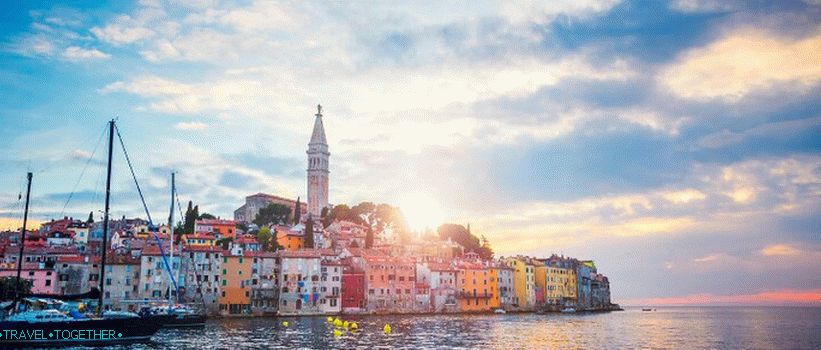 Rovinj
Rovinj is one of the most picturesque cities of Istria. His old the city is famous for its Venetian architecture and bright houses at the very water.
Accommodation
Thanks to the tourist popularity of Croatia find accommodation here no problem if you start searching in advance. It offers a large choice of hotels, villas, apartments, the concentration of which increases near resorts. In general, prices for accommodation in Croatia is close to European and slightly lower than, for example, in neighboring Italy.
Kitchen
Croatian cuisine is very rich and diverse. She represents a mixture of Mediterranean (Italian) and Eastern European the kitchen. The most strongly Italian influence on the Adriatic the coast which is mixed with a lot of fish and seafood. In Istria, you can try dishes with truffles. Eastern Croatia is famous for stews, soups, goulash and meat dishes. From traditional products it is known: olive oil, wine and cheese.
Traditional dishes:
- Brodet – stewed fish with polenta or rice. Is very popular in Dalmatia.
- Hvarska gregada – a typical fishing dish with potatoes, greens and white wine.
- Pasticada – Gnocchi stew.
- Fuzi s tartufima – truffle pasta.
- Omelet with asparagus.
- Istarska jota – stewed pork with beans and potatoes.
- Čobanac – a mixture of different types of meat with red sauce paprika.
- Pršut – ham.
- Purica s mlincima – turkey.
- štrukli – Croatian pasta with cheese.
(function (d, sc, u) {var s = d.createElement (sc), p = d.getElementsByTagName (sc) [0]; s.type = ‘text / javascript’; s.async = true; s.src = u + ‘? v =’ + (+ new Date ()); p.parentNode.insertBefore (s, p)}) (document, ‘script’, ‘// aff.bstatic.com/static/affiliate_base/js/flexiproduct.js’);