Cremona (Italy) – the most detailed information about the city with photos. The main attractions of Cremona with a description, guides and cards.
Contents
Cremona (Italy)
Cremona is a city in northern Italy in the Lombardy region. First the queue is known for having worked here Stradivari and Guarneri – great masters of string instruments. This ancient city is an architectural gem of Lombardy and has a rich history. Cremona – these are outstanding sacral monuments and medieval attractions. This is the place where the craft turned into real art.
- Geography and climate
- Practical information
- Story
- How to get there
- sights
- Video
- Maps and guides
- Comments and reviews
Geography and climate
Cremona is located on the plains of southern Lombardy, southeast from Milan. The city is located on the left bank of the river Po, between the rivers Adda and Oglio. Cremona has a subtropical climate with warm summers and in the cool winter.
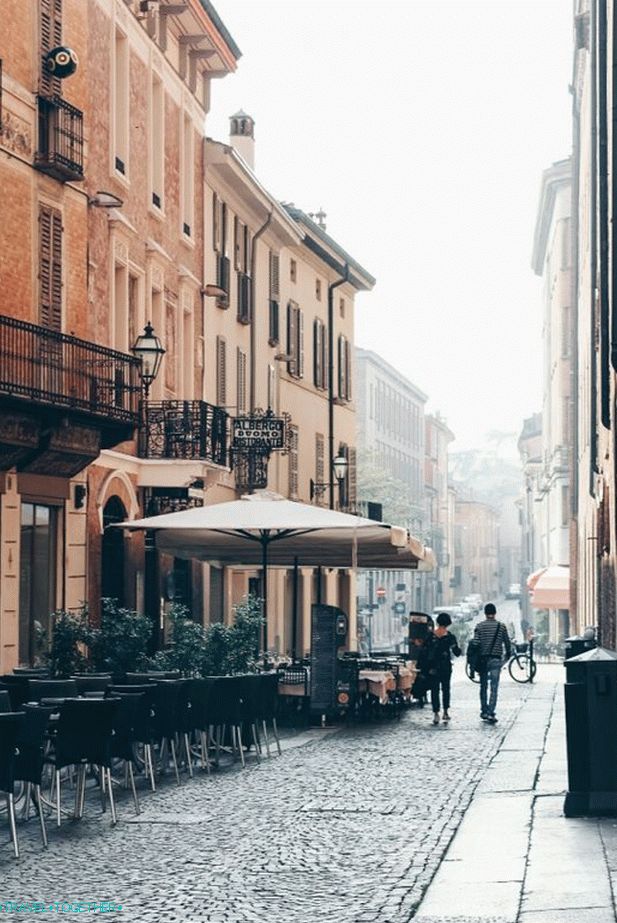 Cremona Streets
Practical information
- The population is 72.5 thousand people.
- Area – 69.7 km².
- The language is Italian.
- Currency – Euro.
- Visa – Schengen.
- Time – Central European (UTC +1, summer +2).
Story
In the pre-Roman era, a settlement was located on the site of Cremona. Etruscans, which was then conquered by the Celtic tribe tsenomanov. In 217 BC the Romans founded a fortress here, which to the Second Punic War grew into a thriving city. IN 1 century AD Cremona was burned by the troops of Mark Antony Prima and restored under Vespasian.
After the collapse of the Roman Empire, these lands occupied the Lombards. AT 7 century they conquered and destroyed the city. Then cremona was restored and became an important center for river trade. In the 8th century The city was conquered by the Franks. During this period there was founded bishopric Bishops ruled the city until the 13th century.
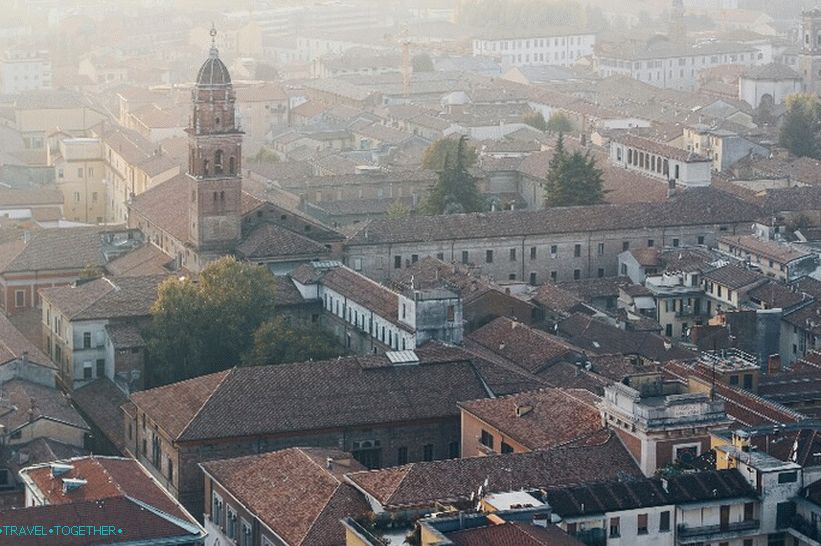 Panorama of Cremona
In the 12th century, Cremona joined the Lombard League. In the first half of the 14th century, the city fell under the influence of the Visconti family, which in fact, they ruled it for a century and a half. In this period Cremona has an intense and cultural development that is reflected in monuments of sacral and civil architecture.
In the 15th century, Cremona falls under the authority of Venice, then becomes part of the duchy of Milan. In the 16th century and until the beginning of the 18th century, the city was dominated by the Spanish Habsburgs. In the 17th and 18th centuries Cremona famous throughout Europe for string musical instruments (especially violins). During this period great masters worked here including Stradivari and Guarneri. Cremona became part of Italy 1859
How to get there
Cremona has a regular train service to Milan and other major cities of Italy.
Cremona is located 75 km from Bergamo, 85 km from Milan, 30 km from Piacenza, 50 km from Brescia and 56 km from Parma.
sights
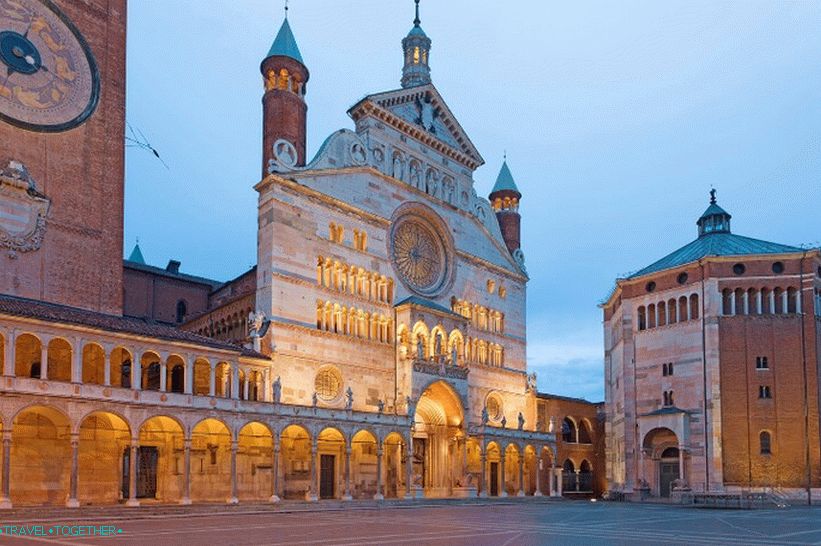 Piazza del Komune
Piazza del Comune – historic square in the heart Cremona. This urban space is considered a masterpiece. medieval urban planning. Here are sacral monuments blend in with the old buildings, creating a delightful architectural ensemble. Piazza del Comune was formed in 12 century.
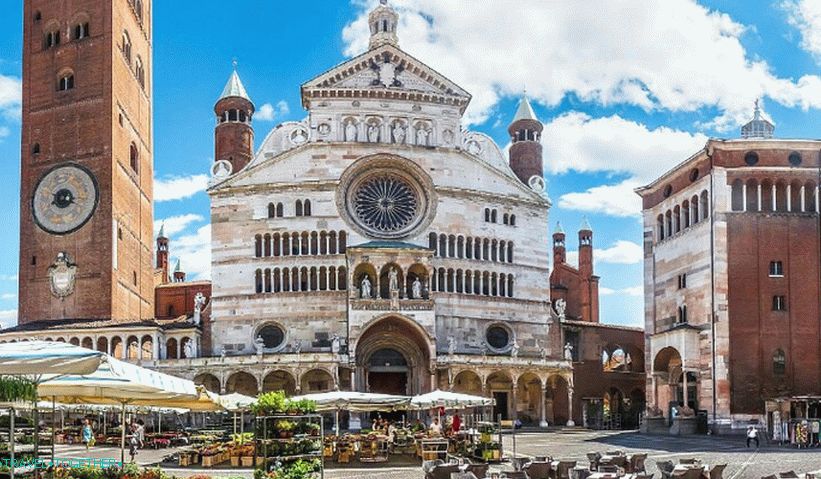 Duomo
Duomo
The Duomo is a terrific religious building that is one of the most beautiful sacred monuments of Lombardy. Church displays various architectural styles, including gothic, renaissance and baroque. The facade of the building is considered a masterpiece of the Romanesque style. architecture. The Cathedral of Cremona was built in the 12th century and boasts a beautiful interior decorated with medieval frescoes.
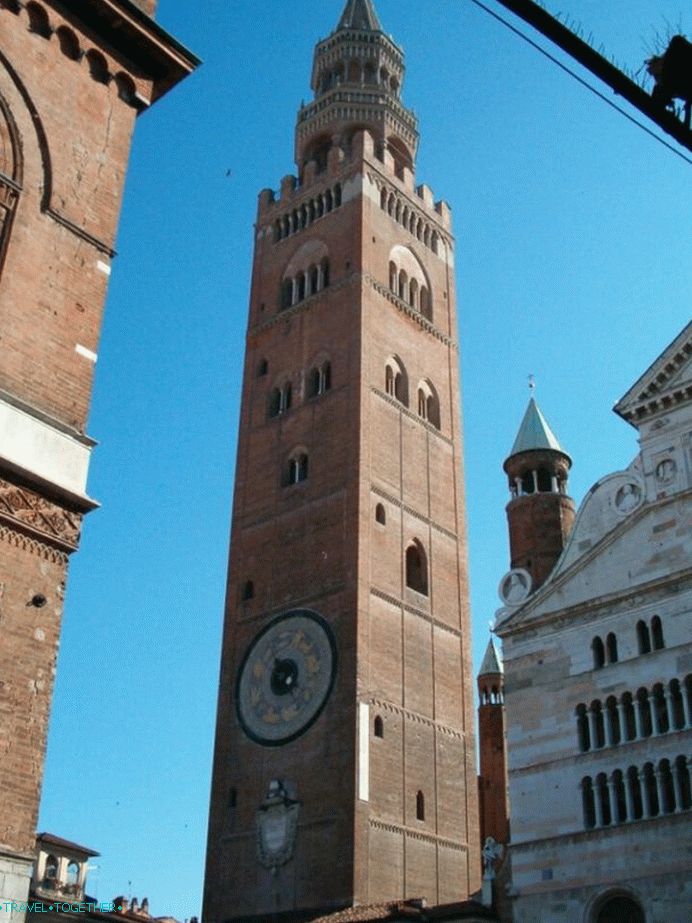 Torrazzo
Torrazzo – a medieval 112-meter-high bell tower, which is one of the highest in Italy. It was built in 1309 year, and in the 16th century on the facade were installed beautiful astronomical clock.
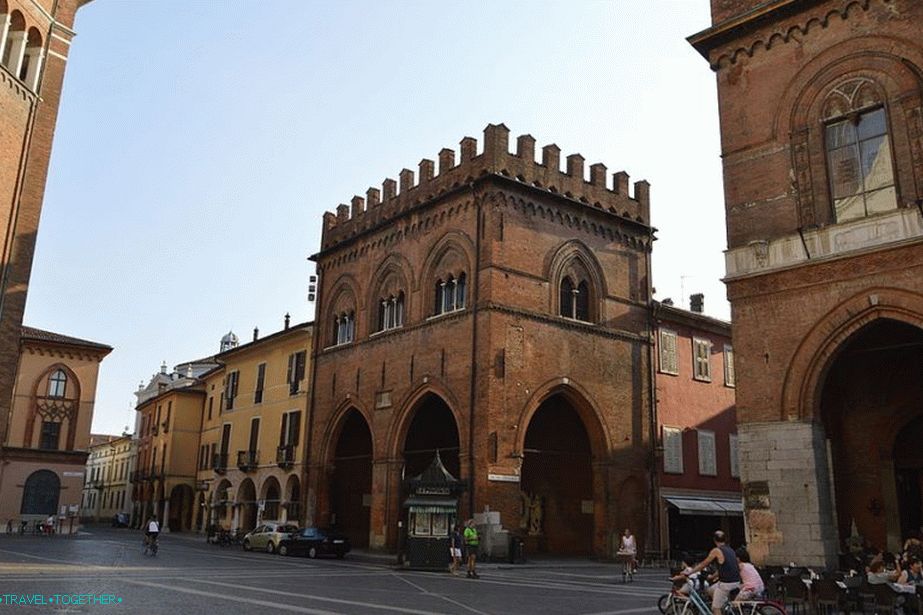 Loggia dei Militi
Loggia dei Militi – a medieval gothic building built in 1292. Located on piazza del comune, on the opposite side of the Duomo.
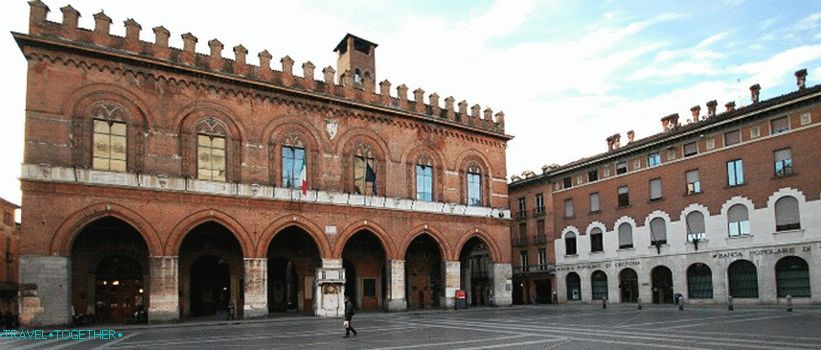 Palazzo Comunale
Palazzo Comunale (Town Hall) – a magnificent Gothic building 13 century with beautiful frescoes from the Middle Ages to the Renaissance. Now here is the famous collection of stringed musical tools.
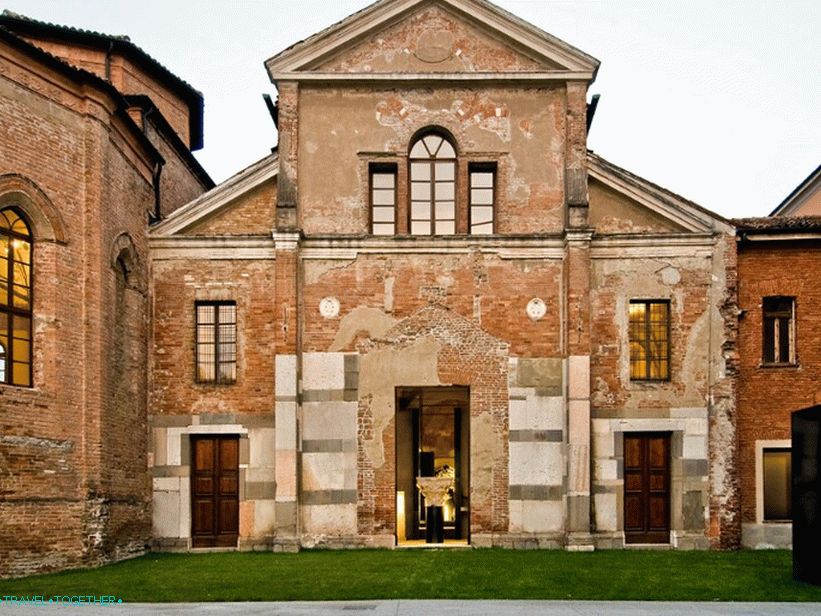 Archaeological the museum
The archaeological museum in the former church of San Lorenzo is an interesting a collection of antiquities dating back to antiquity. Here you can see the many artifacts of the Roman Empire period.
 Art the museum
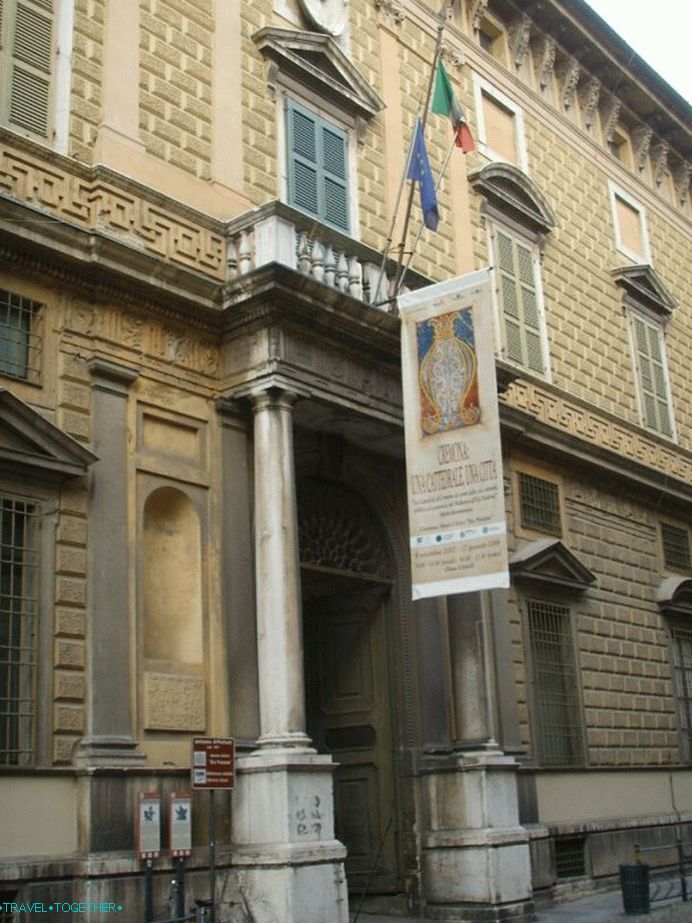
Art Museum “Ala Ponzone” – a collection of works Art, located in the historic palazzo of the 16th century. The museum contains galleries of precious religious icons and paintings, as well as 16th century drawings and prints.
 Battistero
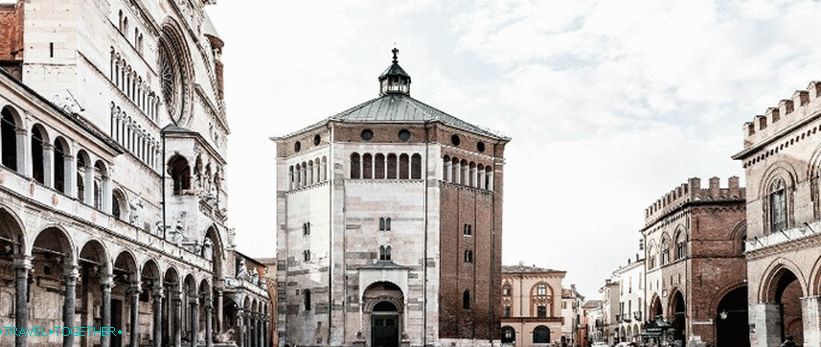
Battistero (Baptistery) – a unique octagonal structure, which combines elements of romance and lombard architecture, as well as Gothic. This marble structure was built in 1167 Marble facade finish has been added to later renovations.
 Church of sv. Sigismodon
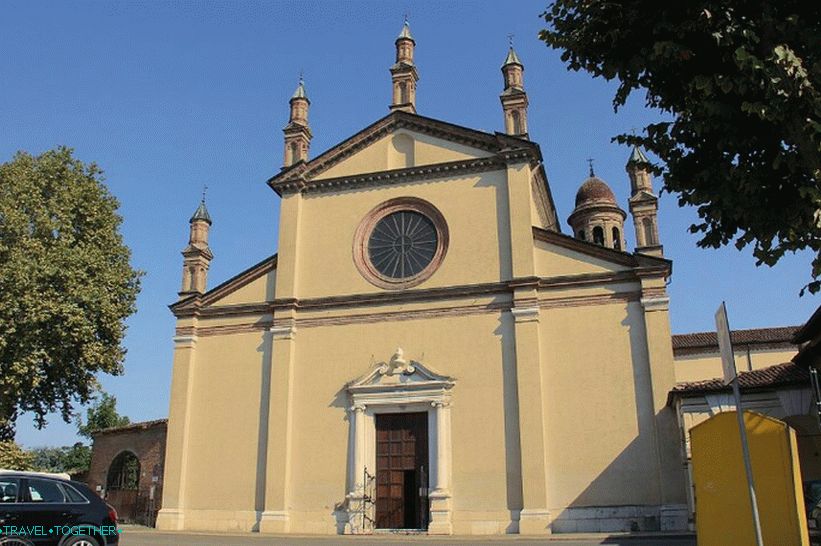
Church of sv. Sigismodus – Dominican monastery church, located slightly outside the historic center of Cremona. This religious building was built in the 15th century and has stunning frescoes of the 16th century.
 Church of sv. Michael
Other sacral monuments of Cremona:
- Church of San Luca with a facade of the 15th century.
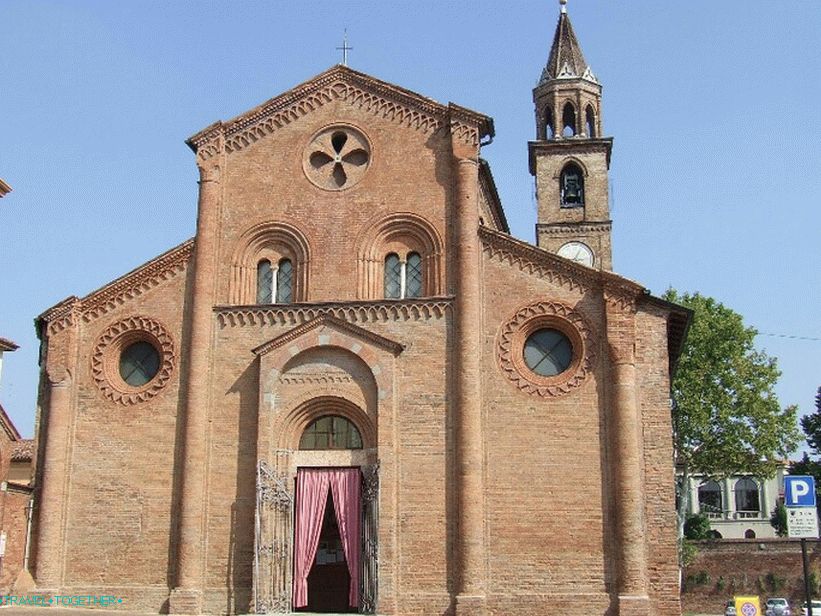
- Church of sv. Michael of the 11th century.
- Church of sv. Augustine 14th century.
- Church of San Vincenzo, 13th century.
Video
Maps and guides
Tourist Card