Cartagena (Spain) – the most detailed information about the city with a photo. The main attractions of Cartagena with a description, guides and maps.
Contents
- 1 City of Cartagena (Spain)
- 2 Geography and climate
- 3 Beaches of Cartagena
- 4 Best time to visit
- 5 Practical information
- 6 Story
- 7 How to get there
- 8 Shopping and shopping
- 9 Food and drink
- 10 sights
- 11 The most interesting museums of Cartagena:
- 12 Video
- 13 Maps and guides
- 14 Cartagena on the map of Spain
City of Cartagena (Spain)
Cartagena is a city in the south-east of Spain in the autonomy of Murcia. It is one of the oldest ports in Europe, founded Carthaginians. Cartagena is an amazing mix of several cultures: from ancient Romans and Phoenicians to Arabs and Spaniards. WITH one of the best natural harbors in Spain and surroundings rich in mineral ores the city played an important over the millennia. Here you can see the ruins of ancient Roman theater, medieval Moorish fortifications and interesting buildings of modernism.
Like many ancient cities, Cartagena can be divided into two parts: historic center and Puerta del Cartagena (coast). The historic center contains major attractions and monuments of architecture. On the coast is a marina, On the waterfront there are many cafes, restaurants and bars.
- Geography and climate
- Best time to visit
- Practical information
- Story
- How to get there
- Shopping and shopping
- Food and drink
- sights
- Video
- Maps and guides
- Comments and reviews
Geography and climate
Cartagena is located on the Costa Calida in the southeast Of Spain and is surrounded by the mountain ranges of the Sierra de Almenara and Sierra de Algarrobo. Climate – arid or Mediterranean semiarid For the year about 300 mm of precipitation falls. Annual average The temperature is about 20 degrees. The coldest month is January, the average temperature of which is 13.7 degrees with a plus sign. Summer is dry and hot.
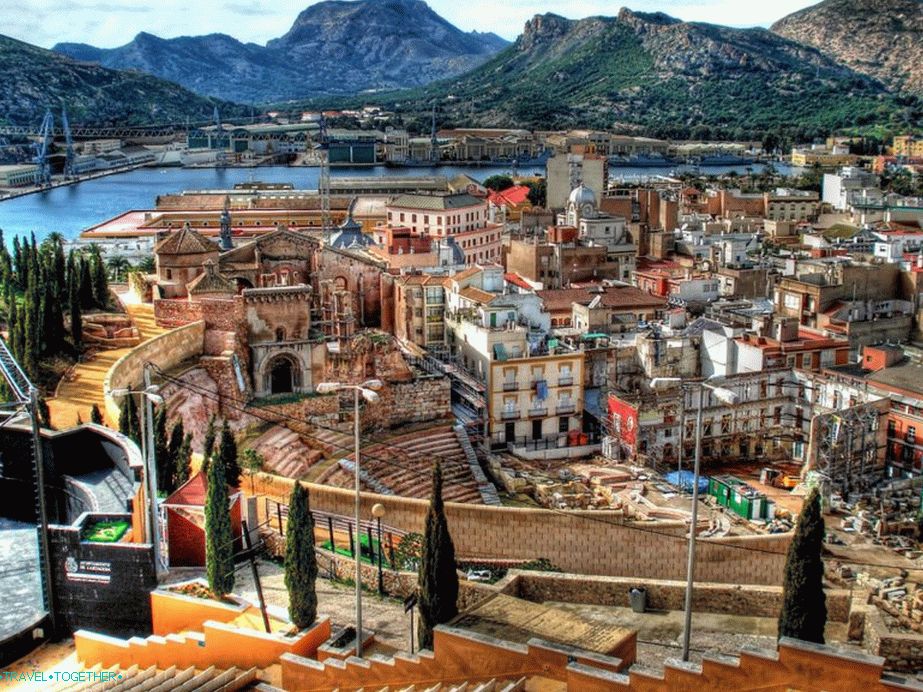 Panorama Cartagena
Beaches of Cartagena
The coastline of Cartagena has a length of more than 30 km. Here There are many excellent sandy beaches: Cala Cortina, Islas Menores, El Galua Beach, Playa del Casteller, Playa de Bahia, Playa de Nares.
Best time to visit
The best time to visit is April-June and September-November.
Practical information
- The population is 214.2 thousand people.
- The area is 558.08 square kilometers.
- The language is Spanish.
- Currency – Euro.
- Visa – Schengen.
- Time – Central European UTC +1, in summer +2.
- The tourist information center is located at: Palacio Consistorial. Plaza del Ayuntamiento.
Story
The first settlement on the site of Cartagena was founded by the Iberian tribes. The first mention of the city dates back to 227 BC, when The Carthaginians founded here the city of Quart Hadashst, which provided them control over the deposits of the south-eastern part of the Iberian the peninsula. Later, the new city turned into one of the main naval bases of the Phoenician state. Around the year 209 Cartagena was incorporated into the Roman Empire. The city was renamed to Cartago Nova, which means New Carthage. Cartagena has become one of most important Roman colonies in the Pyrenees, second only to Cordoba and Tarragona (Tarraco). In the 5th century AD, the city was plundered vandals.
After the fall of the Western Roman Empire and the establishment of the territory of Spain, the power of the Visigoths, Cartagena was conquered emperor of Byzantium Justinian I. The city became the capital of the Byzantine province and renamed Cartago Spartaria. In 662, the Visigoths captured and completely destroyed the city. Cartagena later conquered the moors.
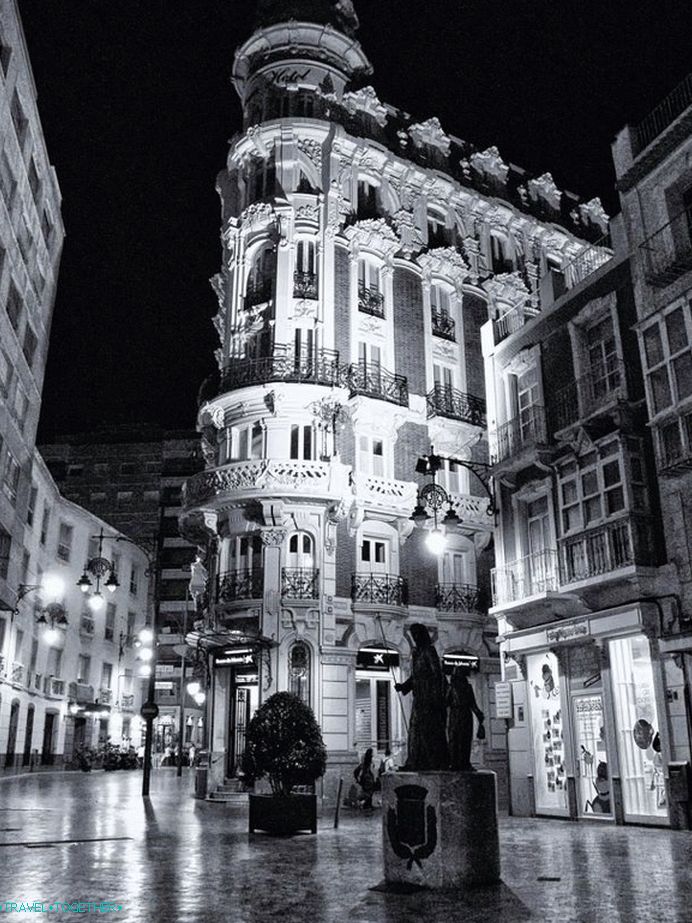 On the streets Cartagena
In 1245, Cartagena was conquered by the King of Castile. In 1296 year the city became part of the kingdom of Aragon, but after 9 years returned to the Castilian crown, becoming an important trading and military port. In the 16th century, the strategic and military importance of Cartagena is increasing. The city is becoming one of the largest and most important Spanish naval bases. In the 18-19 century, many are built here. industrial and military facilities. In the 20th century in Cartagena develops energy and shipbuilding.
How to get there
The nearest airports are located in Murcia and Alicante. Between Cartagena and Murcia have regular train connections. Murcia is easily accessible from Madrid, Barcelona, Seville.
Shopping and shopping
Most shops and shopping center El Corte Inglés is located on a pedestrian mall that starts from the harbor.
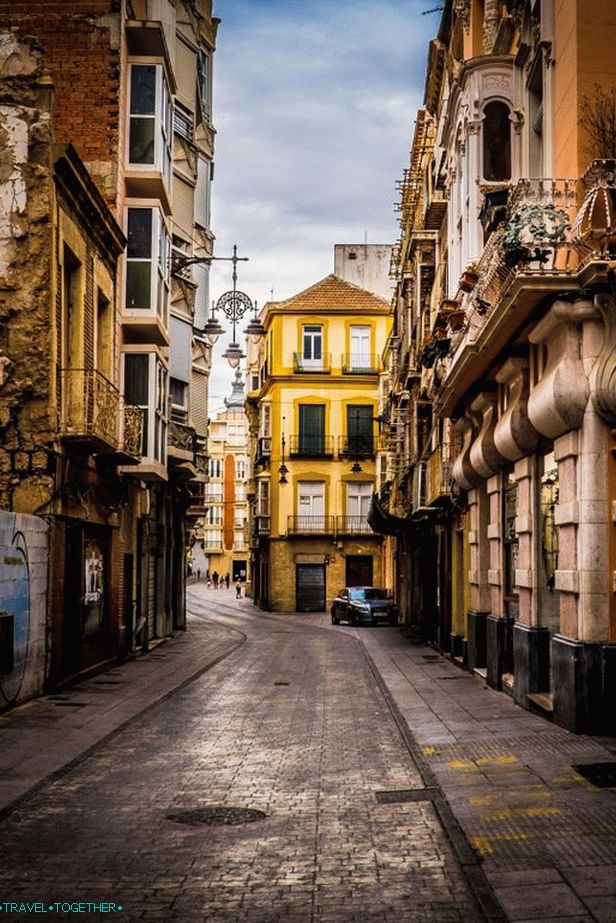 Streets of Cartagena
Food and drink
The region’s gastronomy is rich and diverse. which is due to the proximity of the sea and a large number agricultural land. Typical local cuisine: paella, fish and seafood (fried, baked and salted), figured bread, gazpacho seasoned with bread crumbs, vegetables with sausages and meat, rice with snails, stewed turkey with celery, rabbit with chestnut.
sights
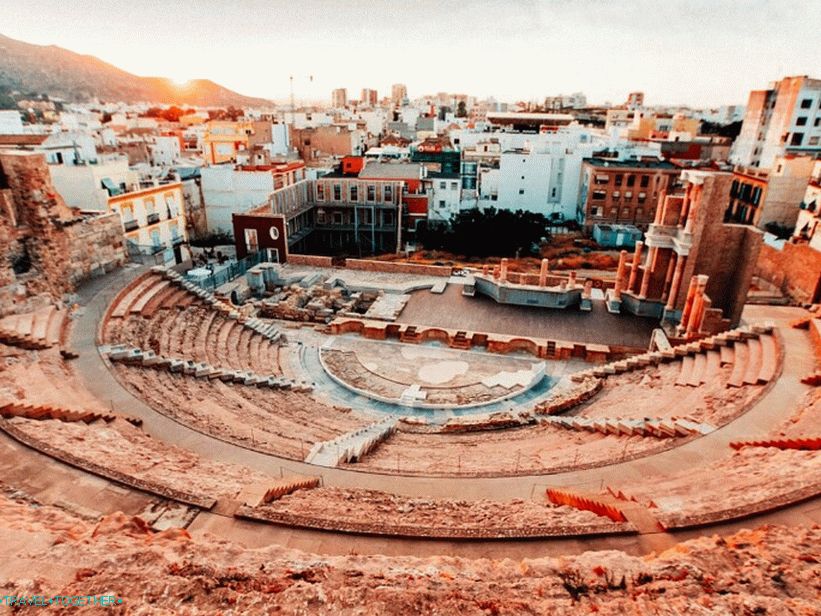 Roman theater
The Roman theater is an ancient building, which is about two years old. thousands of years. The ruins of Roman buildings were discovered in 1988 under the old cathedral, destroyed during the civil war. Theater preserved at 2/3, which allowed him to perform a very detailed recovery. During the excavation, amazing artifacts were found. past: the altar of Jupiter, the statue of Apollo, the medieval Arab ceramics. All this is now stored in the museum of the Roman theater.
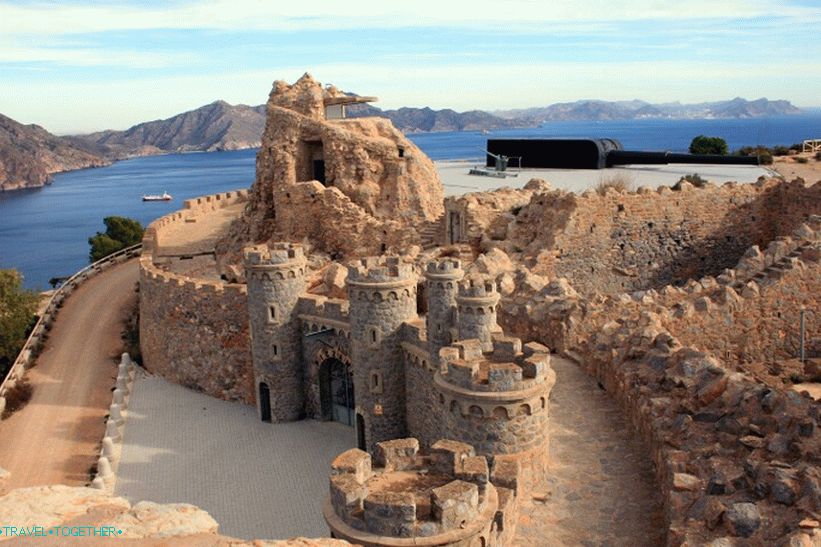 Battery Castillitos
The Castillitos battery is located on Cape Tinso in 30 minutes drive. from Cartagena. It was built in the 30s of the 20th century to protect coast. The quaint towers of medieval style are combined with mountains and look strange next to threatening black batteries.
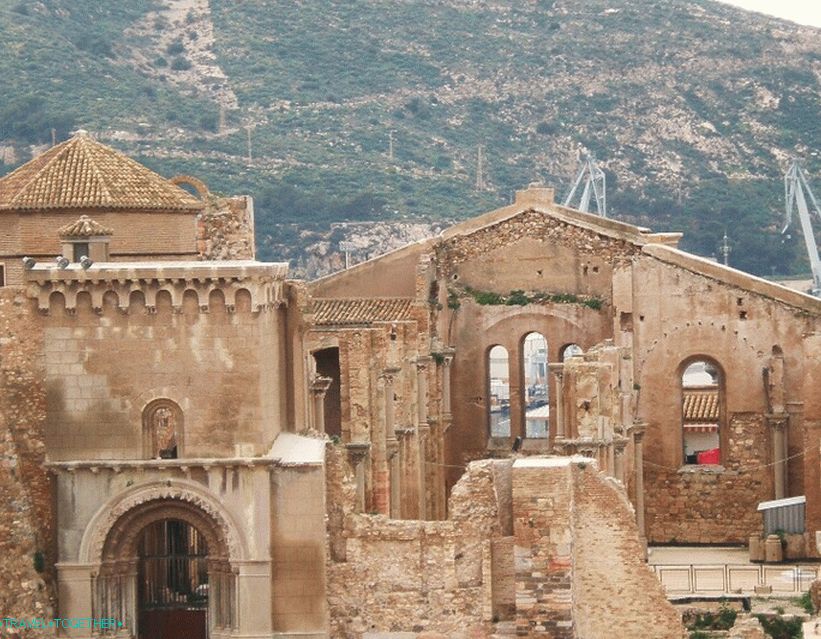 Former Cathedral
The former cathedral of Cartagena is located next to the Roman the theater. The building was destroyed during the civil war, but no less considered a national monument. The Cathedral itself is known from 13 century and built in neo-romanesque style.
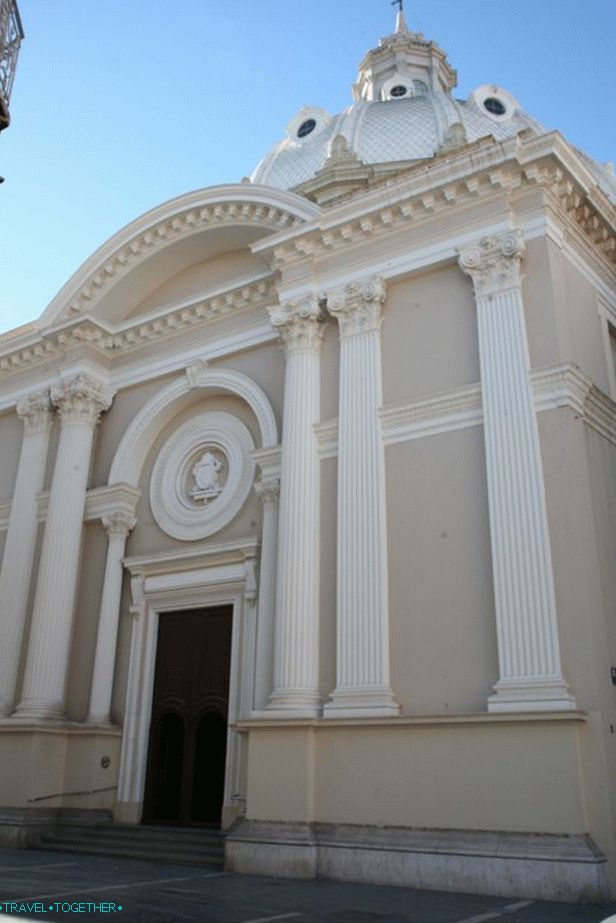 Royal Basilica of Our Lady of Mercy
Royal Basilica of Our Lady of Mercy or Nuestra Señora de la Caridad is a neoclassical Catholic church. Refers to the period from the 18th to the 19th century. The basilica is built on the site of the hospital 17 century on the model of the Pantheon in Rome.
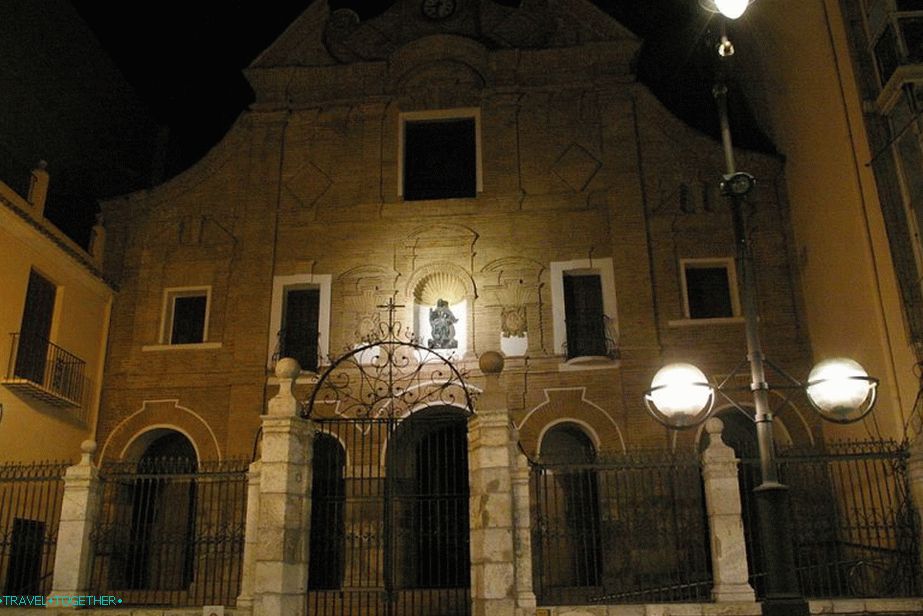 Church del Carmen
Del Carmen – Baroque Catholic Church of the 18th Century, located in the historic center of Cartagena. Was part of Carmelite monastery until the 19th century.
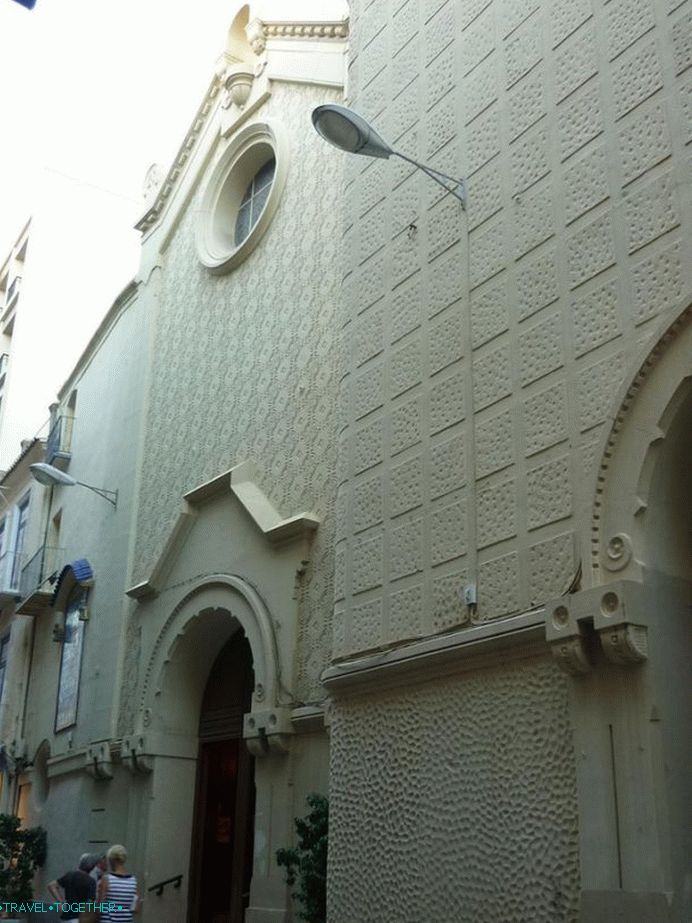 San Domingo
San Domingo is a 17th century catholic church in baroque and eclecticism. Was built as an addition to the monastery San Isidoro Dominican Order. The church consists of a rectangular nave with brick walls. The most prominent part of the temple is rich decorated brown chapel built in 1690 and rebuilt in the 18th century.
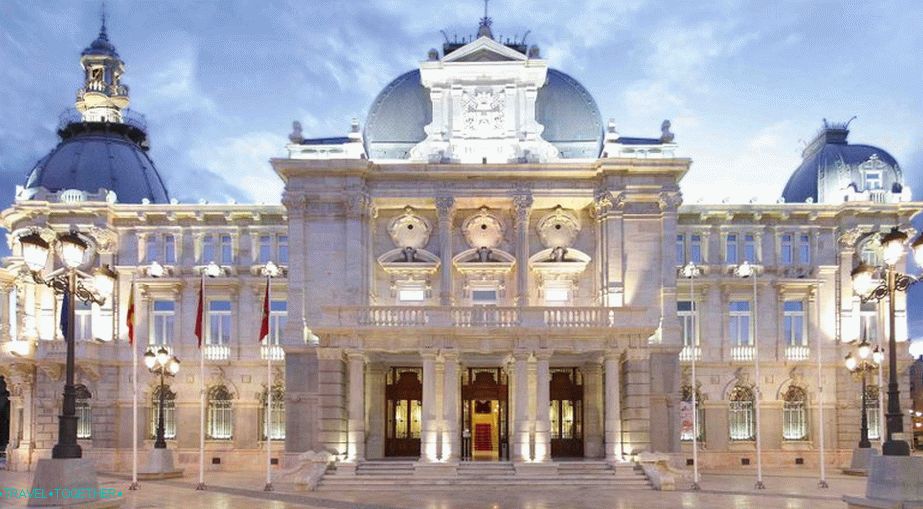 Consistory
The center of Cartagena is famous for its Art Nouveau architecture. Most beautiful buildings of modernism: Palacio Pedreño, Casa Cervantes, Palacio de Aguirre and Gran Hotel. The most outstanding and beautiful building This style in Cartagena is the Consistory palace, built in late 19th century. The facade of the building consists entirely of white marble and crowned with domes, which are covered with local zinc.
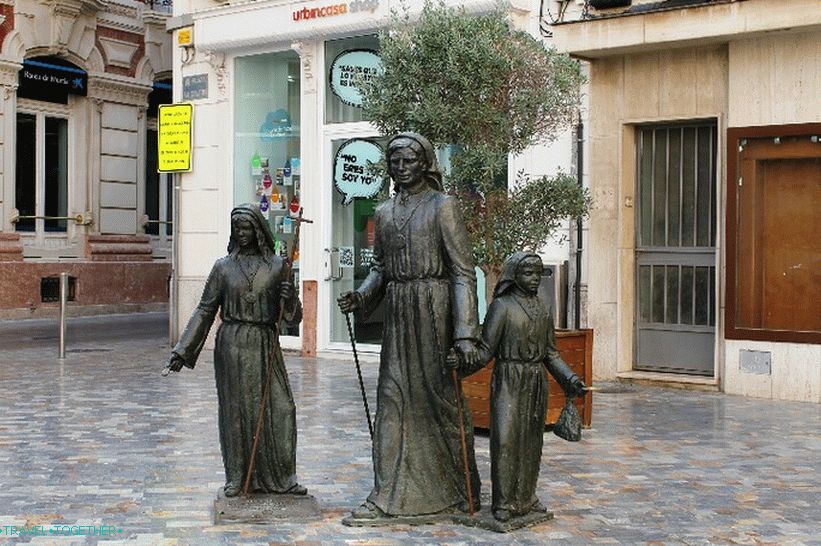 Calle mayor
Calle Mayor – the main pedestrian boulevard of the city, laid out bright marble tiles with many shops and restaurants.
The most interesting museums of Cartagena:
In addition to the museum of the Roman theater, we recommend to visit:
- Municipal Archaeological Museum – has collections from remains of Neanderthals and Phoenician ceramics before the tools found in the Roman mines in the mountains on the outskirts of the city.
- ARQUA – Maritime Archaeological Museum. This is the place where you can see the wonderful historical artifacts that got the seabed, as well as a research center for experts and scientists in this area.
Video
Maps and guides
Tourist City Map