Budapest, Hungary: the most detailed and complete guide to the city, the main attractions of Budapest with photos and descriptions, location on the map.
Contents
City Budapest (Hungary)
Budapest – the capital of Hungary, one of the largest and most beautiful European cities located in the northern part of the country on the shores Danube. Known for its magnificent architecture, alone in which stands out the magnificent neo-gothic Hungarian building Parliament, many interesting sights and monuments of architecture, wide and beautiful avenues with shops and restaurants, a special atmosphere of romance and freedom. Budapest lies on both sides of the full-flowing Danube bridges, the most beautiful of which is the chain bridge Széchenyi. Interesting, that the capital of Hungary arose from the union of the three Hungarian cities: Budy, Obuda and Pest. That is why Budapest so unique, diverse and a bit like a patchwork quilt.
Budapest is one of the youngest European capitals. City was officially formed in 1873. This is a unique synthesis of three old Hungarian cities – Buda, Obuda and Pest, which are over the centuries have lived and developed in the neighborhood on the shores Danube. More modern pest with metropolitan gloss, wide avenues and beautiful architecture of the 19-20th century located on the eastern bank of the Danube, and Buda and Obuda with atmospheric old The streets, monuments of history and culture – on the west.
- Story
- Useful information for tourists
- How to get there?
- Shopping and shopping
- Kitchen and food
- Sights of Budapest
- Budapest Travel Guide – Top Attractions on map
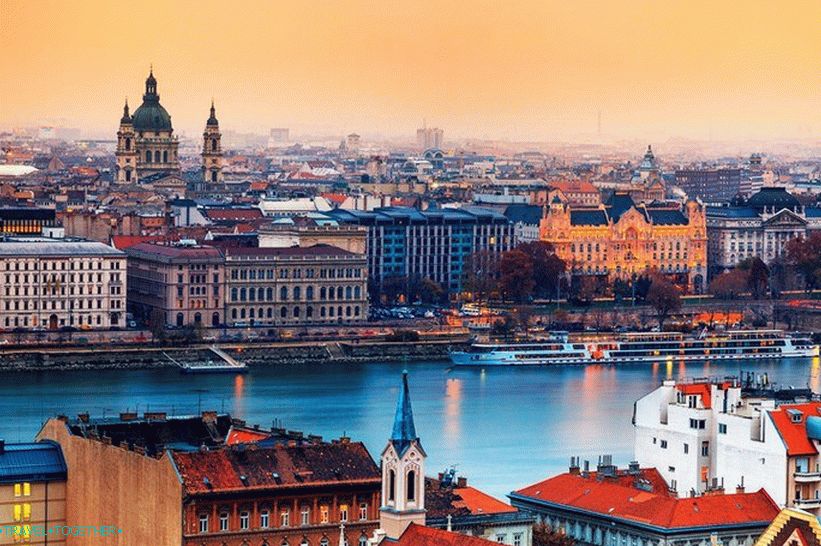 Panorama Budapest
Story
Already in the 1st century BC. in Budapest existed Celtic settlement, which at the end of the 1st century AD was included in The composition of the Roman province. The city was named Aquincum. In him housed the Roman garrison, and the population reached almost 20 thousand person.
In the 5th century, the Romans were ousted by the Huns and Ostrogoths, who made here the center of his empire. Modern Pest was small settlement called Contra Aquincum.
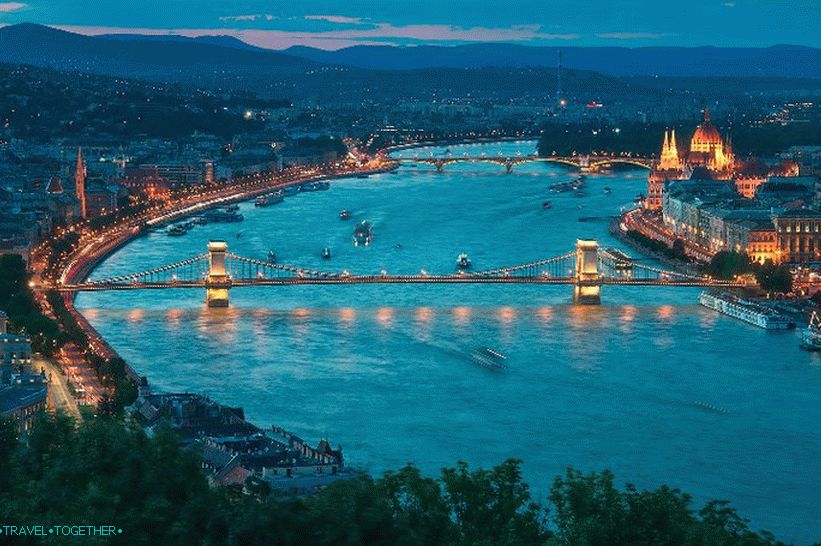 Budapest, divided by the Danube. Right – Pest, left – Buda
After the Huns, the province first came under the rule of the Avars, and then Moravia. Until in 895 Hungarian tribes came here. Aquincum was renamed Buda, which became the first center formed through the centuries of the Hungarian state. Pest same chosen by immigrants from Germany and France.
In 1241, during the Mongol invasion, Buda and Pest were badly damaged. After the invasion, the king of Hungary decided build on the Castle Hill in Budekorolevsky castle.
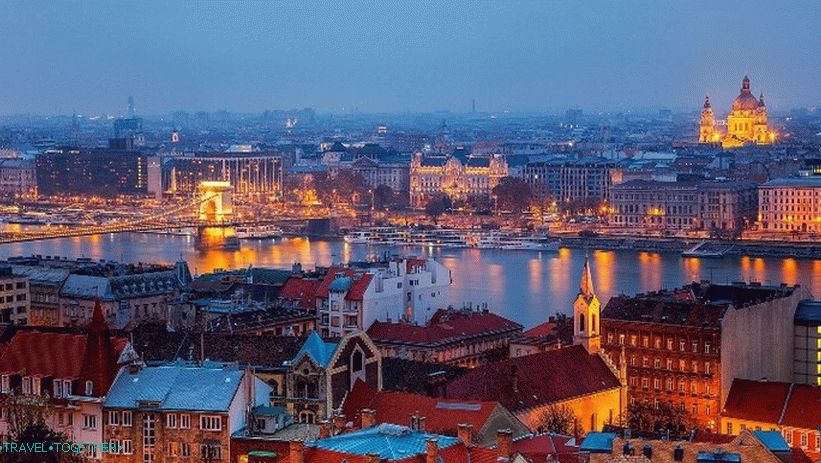 Panorama of Buda and Pest
In 1361, Buda became the capital of Hungary. In 1541, Hungary was captured by the Ottoman Empire, and decadence came to I. Later the city was liberated by the Austrians and attached to the possessions Habsburg The 18th century was a turning point for Pest. It was at this time that he comes to the fore. Rapid development as a shopping center led to rapid population growth. In pest this the population time was longer than in Buda and Obud together taken.
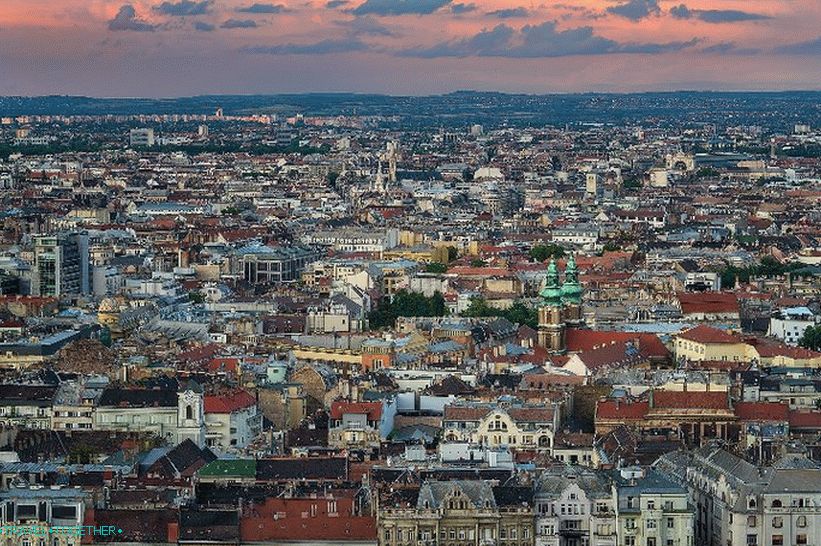 Panorama of Pest
The first unification of the three cities was undertaken in the middle of 19 century, but it was unfortunate. Therefore, the birth of Budapest can be full right to name the year 1873. In the 19th century, railways tied Budapest with the rest of Europe, the streets began to be covered electric lights, appeared tram traffic and telephone connection Interestingly, the first metro in Europe appeared precisely in Budapest.
In 1918, Hungary became a Republic, and in 1919 – Socialist Republic. In 1944, Budapest was occupied German troops. During World War II, the central part the city turned into ruins. The restoration of the city continued until 60s of the 20th century.
Useful information
- The monetary unit of Hungary is the forint. Do not change the currency on the streets. For these purposes, specialized exchange points or ATMs.
- Public transport in the capital of Hungary is represented by 4 lines. metro, 15 trolleybus routes, 32 tram lines and more than 200 bus. Therefore, to reach anywhere in Budapest will not be labor. The transport works from 4.30 to 23.30. Night run several night bus routes and tram number 6. Tickets can be to get both at stops (stations), and in special kiosks. Tickets can be used in all types of public transport. In the bus, tram and trolley bus they need to compost.
- As with any popular tourist destination, Budapest has pickpockets, so watch your stuff in transport, shopping centers and other busy places.
- Tobacco products can only be purchased at licensed tobacco kiosks. Smoking is not allowed to closed public locations and bus stops.
- Alcohol is prohibited in public places.
- Tips are not required, but in a good form (unless, of course, you liked the food and service) will leave for tea 10% of the amount accounts.
- In the summer in Budapest (especially July-August) is quite hot, so be sure to keep this in mind.
- The coldest months are December and January. At this time possible small frosts.
- Some shops and cafes may not work on Sunday.
- When paying for parking, leave a check under the windshield.
- TAX Free can be returned from the purchase of 50000 forints.
- The average bill in restaurants and cafes of Budapest is 20-30 euros for 1 person, if you snack on Asian cuisine or fast food you can keep within 3-5 euros.
How to get there?
The best and cheapest way to get to Budapest is aircraft. Many flights can take you to the capital of Hungary. from almost all major cities. Also Budapest is associated with other major cities of Europe and neighboring countries by rail and bus service.
Shopping and shopping
Budapest can rightly be said to be one of the centers of the European shopping There are many branded stores here. Special worth noting such street trading centers as: Váci utca, Fashion Street, Nagykörút, Andrássy út. Also almost in the center there are several shopping centers (all marked on the map below).
From souvenirs among tourists are popular: jewelry, porcelain, folk art.
Kitchen and food
Budapest is a great place for gastronomic tourism – chic restaurants, street cafes, global fast food chains will not leave you hungry. Cuisine: Hungarian, Italian, Asian, etc.
Of particular note is the Hungarian national a kitchen that boasts a variety and unique by taste. National Hungarian cuisine based on the following Ingredients: Meat, Fresh Vegetables, Fruits, Bread, Milk and honey.
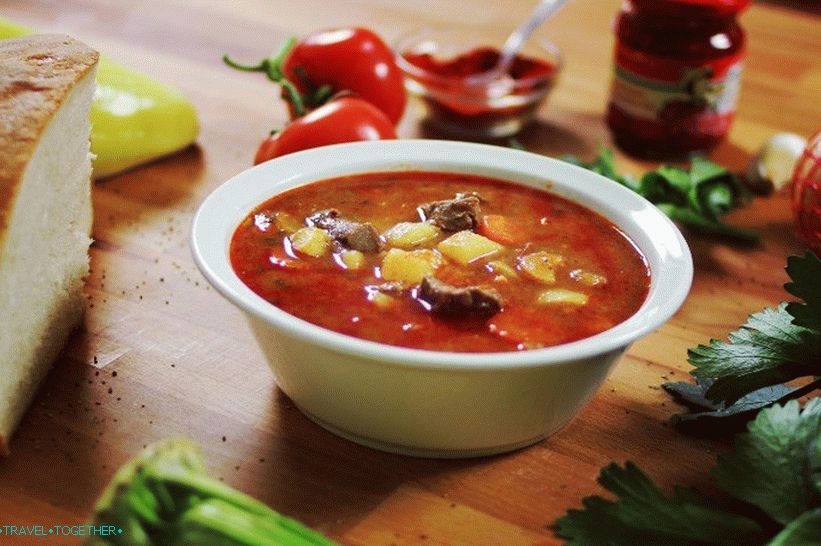 Goulash
The most famous national dishes:
- pörkölt – stew dishes
- a gulyás – goulash
- a halászlé – soup
- a töltött káposzta – stuffed cabbage
- a paprikás csirke – chicken with paprika
- a paprikás krumpli – potatoes with paprika
- a disznótoros – pork
- a bableves és – soup
- a túrós csusza – curd macaroni
Where to try the national cuisine – see the map.
Kitchen and food
Budapest is a great place for gastronomic tourism – chic restaurants, street cafes, global fast food chains will not leave you hungry. Cuisine: Hungarian, Italian, Asian, etc.
Of particular note is the Hungarian national a kitchen that boasts a variety and unique by taste. National Hungarian cuisine based on the following Ingredients: Meat, Fresh Vegetables, Fruits, Bread, Milk and honey.
Goulash
The most famous national dishes:
- pörkölt – stew dishes
- a gulyás – goulash
- a halászlé – soup
- a töltött káposzta – stuffed cabbage
- a paprikás csirke – chicken with paprika
- a paprikás krumpli – potatoes with paprika
- a disznótoros – pork
- a bableves és – soup
- a túrós csusza – curd macaroni
Where to try the national cuisine – see the map.
We warn that in these institutions prices may be higher. If there is a goal to save on nutrition – pay attention to Asian cuisine.
Sights of Budapest
The main attractions of Budapest with a detailed description and a photo.
Sights of Pest
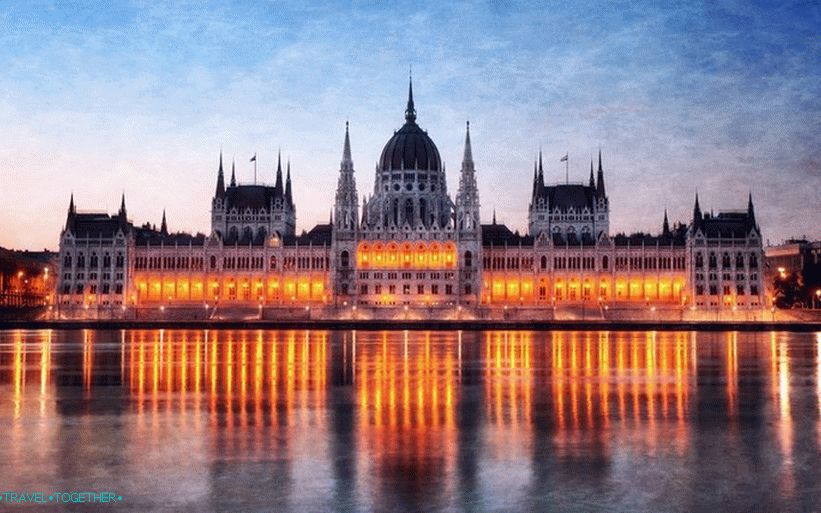 Parliament in Budapest
Parliament is a true symbol of Budapest, one of the most beautiful. buildings of Europe, completed in 1904. This is gorgeous neo-gothic structure located on the banks of the Danube and symbolizing a pest. The dimensions of the building are valid impressive: 691 rooms, 29 stairs, 18 000 sq. m. meters area.The length of the parliament building – 268m, and width— 123m, height – 96 meters. This is one of the architectural dominant historical center. Its construction took 40 million. bricks and 40 kg. gold.Facade decorated sculptures of the Hungarian kings and leaders in the amount of 88 pieces. Parliament was built by the architect Steindl – famous neogothic fan.
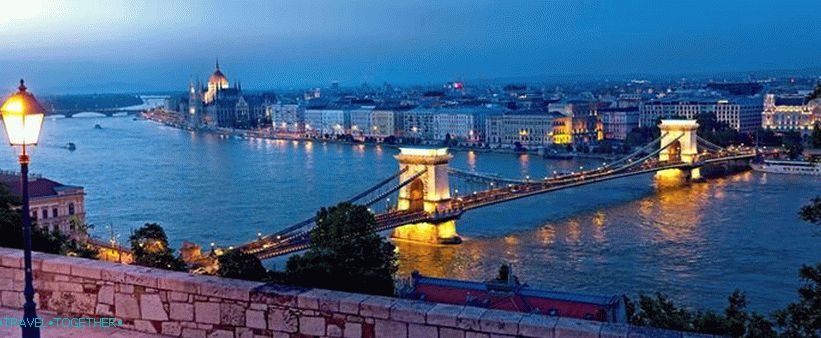 Chain bridge Budapest
Chain Bridge – a beautiful suspension bridge across the Danube, which connects Buda and Pest. Located near the Parliament building and is the first permanent bridge over the Danube. The bridge is named after well-known politician of the Sichagny building. The construction of the bridge played the colossal role in the life of two cities, becoming an incentive for the birth of Budapest. Bridge designed by British engineer Clark.
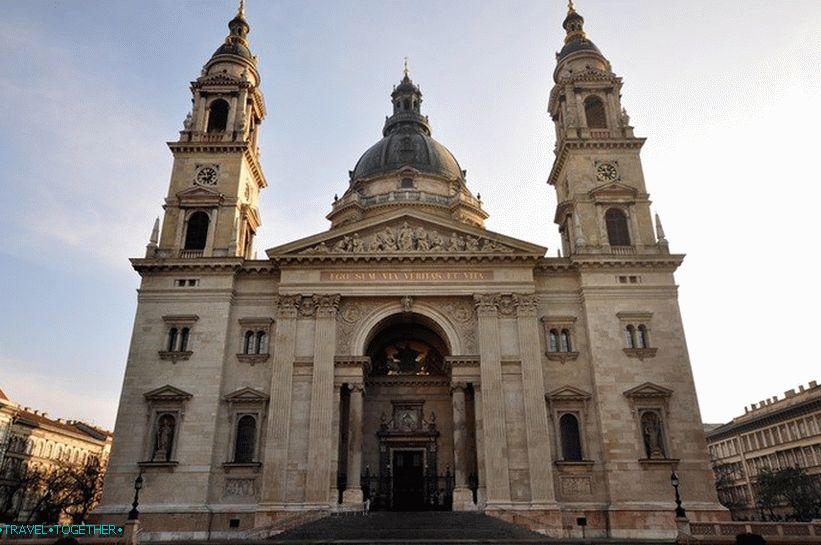 Basilica of sv. István (Stefan) – the main cathedral of Pest
Basilica of sv. István (Stephen) – the main cathedral of Pest and The largest temple of the capital of Hungary. This is a beautiful high (96 meters) neo-renaissance building constructed in the form of an equilateral of the cross. Construction of the basilica lasted more than 50 years from 1851 of the year. This, along with the Parliament, is one of the highest historical Pest buildings. If you can definitely visit this Basilica – a beautiful interior, decorated with mosaics and marble columns will not leave you indifferent.
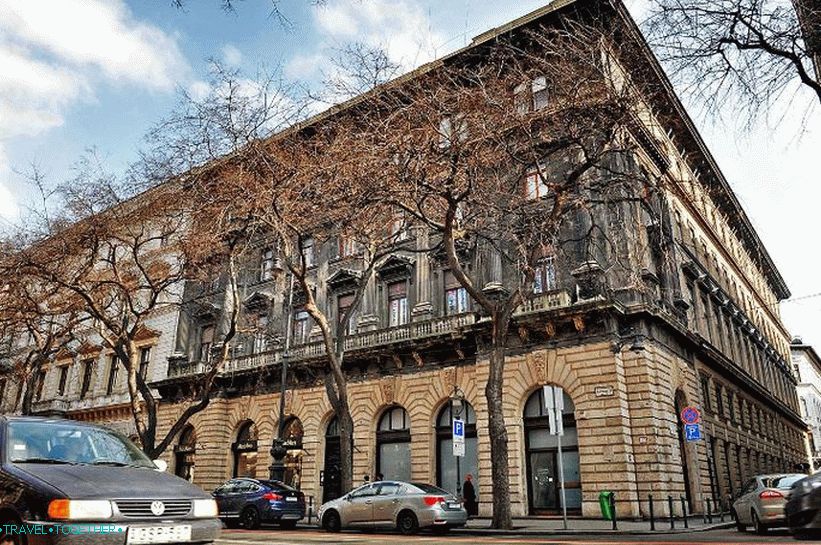 Avenue Andrassy
Andrassy Avenue – the ceremonial avenue of Budapest, nicknamed Hungarian “Champs Elysees”. And, really, those who were in Paris may find some similarities between these two streets. This is one of the most pompous streets of Europe, built at the end of 19 century. The buildings and facilities of Andrassy Avenue were built in pseudohistorical style famous architects. AT 2002 The prospectus was listed as a World Heritage Site. UNESCO.
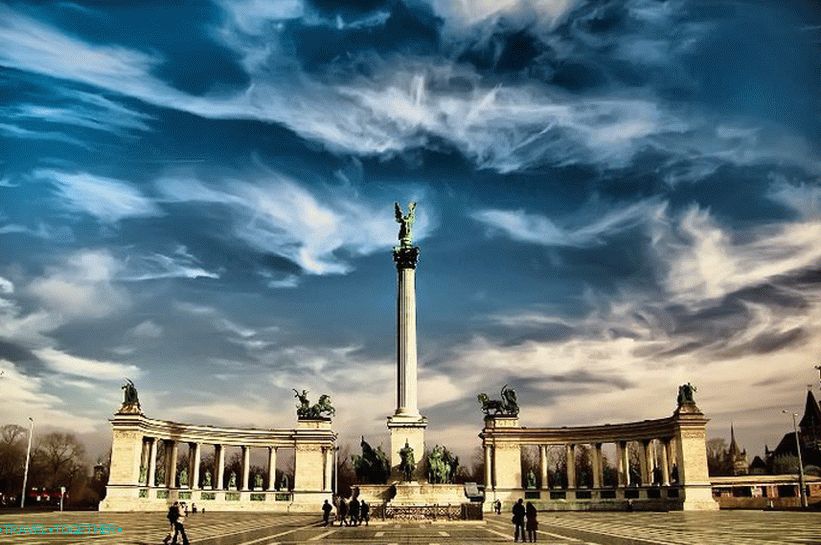 Heroes Square
Heroes Square is one of the most famous squares in Budapest, which rests Andrassy Avenue. In the center of the square is located monument dedicated to the 1000 anniversary of the transition of the Hungarians through the Carpathians. The monument is a high column, on top of which is the figure of the archangel Gabriel, standing on earth the ball in whose hands is the crown of King Stephen and apostolic cross. Right and left of the column there are semi-circular colonnades, a monument to the heroes of Hungary. The length of these colonnades is 85 m. Between the columns from left to right installed bronze statues of famous historical figures Of Hungary. There are also two beautiful buildings on the square, Neoclassical style – Museum of Fine Arts and a museum of modern art.
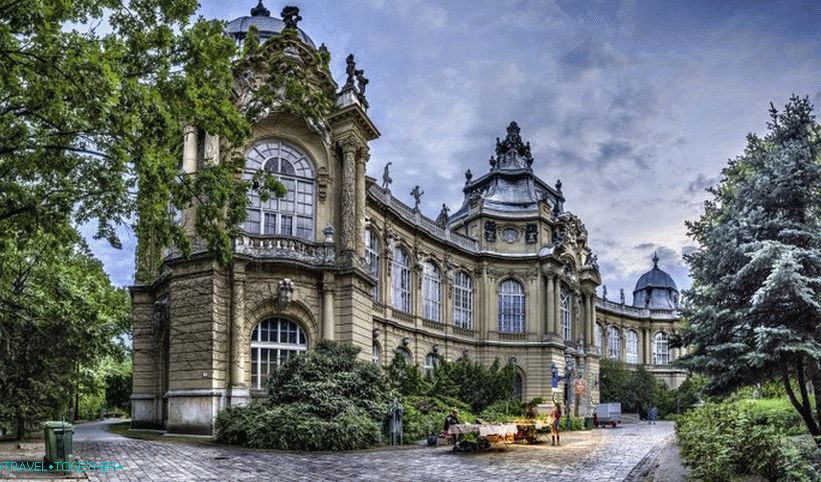 City Park or varoshliget
City Park or Varoshliget is one of the favorite walking places. residents and visitors. Located just outside Heroes Square, This park complex includes not only natural landscapes, but also such interesting sights and places like: Vajdahunyad castle, Szecheny swimming pool, capital circus, zoo, museum of transport, restaurant “Gundel”. Separately follows tell about the castle with funny for our ear titledWajdahunyad. This castle complex was built to 1000 anniversary of the acquisition by the Hungarians of their homeland and represents “hodgepodge” styles from Romanesque motifs to Gothic and Baroque. It includes elements of 21 famous buildings of Hungary. At first It was built as a pavilion for celebrations, but the Hungarians loved it so much what they decided to do in stone.
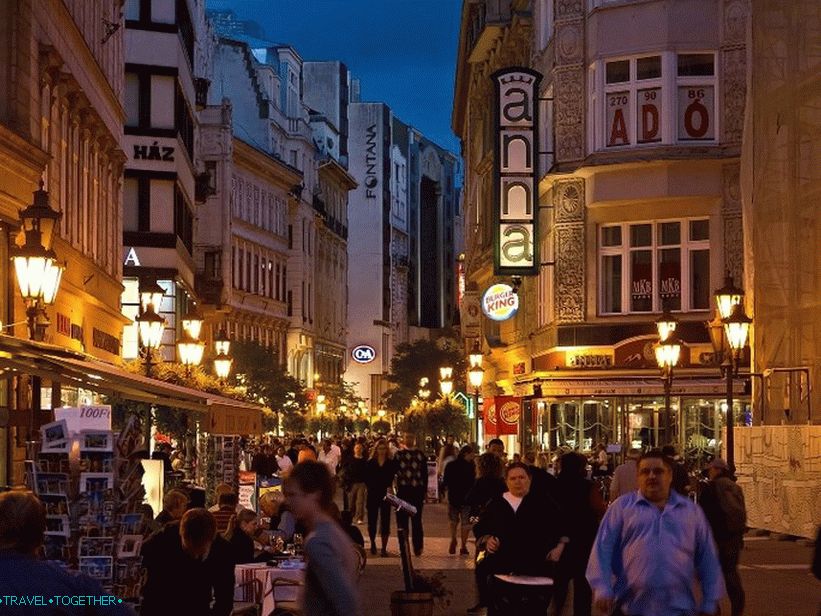 Váci street
Vatsi Street – the heart of Pest and the main shopping street of the capital Hungary with beautiful architecture. If you walk down Vaci you can to get to the Central Market – the largest market of the city. Here you can buy fresh fruits, vegetables, cheeses, meats and various souvenirs. Nearby is another famous bridge over the Danube – the bridge Freedom. Built at the end of the 19th century, it connects Pest and Buda and goes straight to the mountain Gellert.
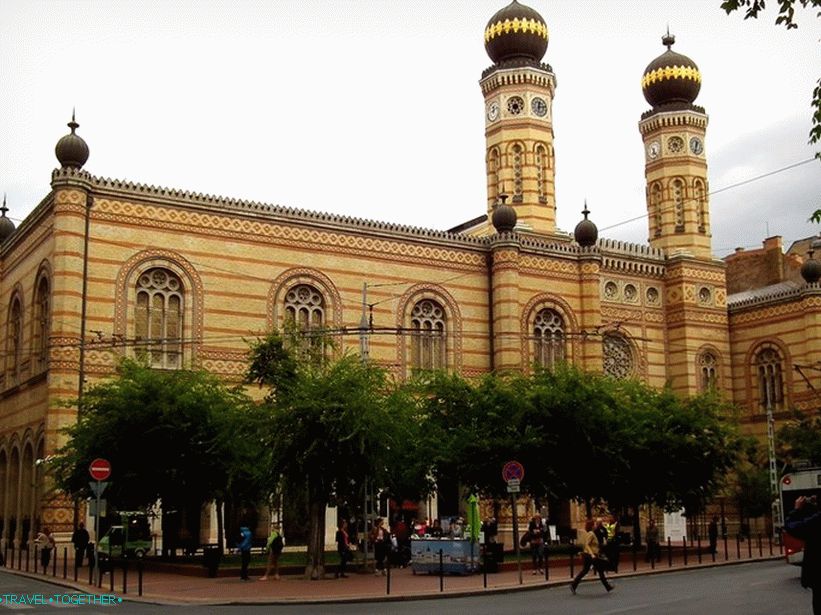 Large synagogue
The Great Synagogue is the largest synagogue in Europe, located on Dohany street. Located in the distinctive Jewish quarter. Pest
Sights of Buda and Obuda
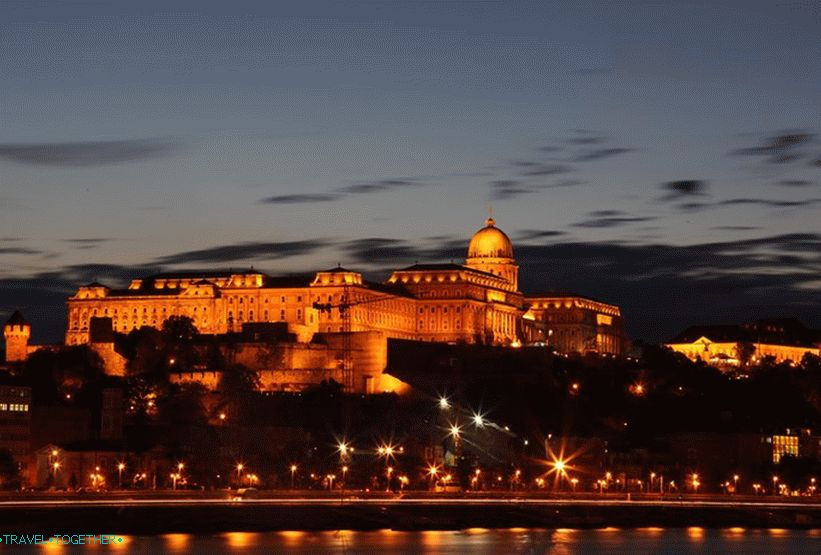 Buda Castle
Buda Castle is one of the main attractions of Buda, listed as a UNESCO World Heritage Site. This is a castle fortress, which was the residence of the kings of Hungary. You can get here on the famous funicular of Siclo or bus number 16. History of the castle Begins in the middle of the 13th century, when King Bela IV began to build here is a fortress after the invasion of the Mongols. Most interesting Sights of the Buda Castle:
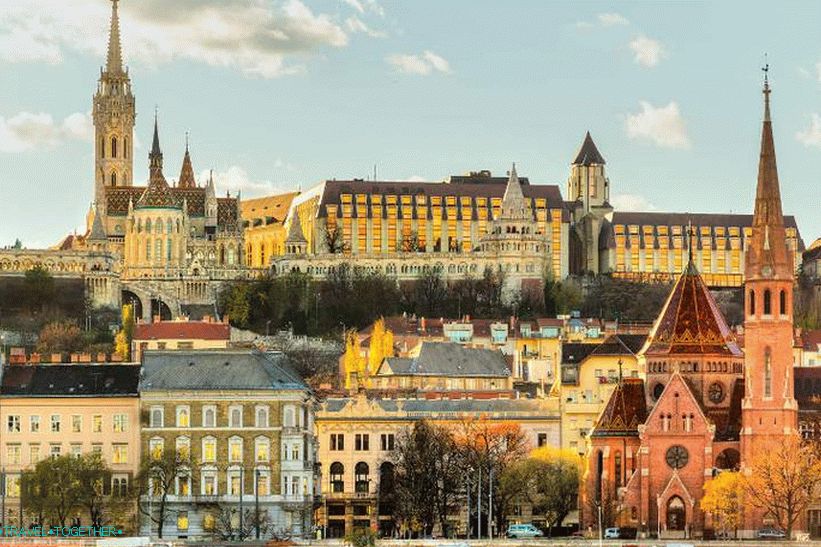 Top left – church of sv. Matthias, bottom right – Calvinist Church
The Matthias Church is one of the main churches of Buda, built late gothic style in the second half of the 14th century and significantly rebuilt in the 19th century. The church is decorated with 80 meter high bell tower, which is the tallest structure castle complex.
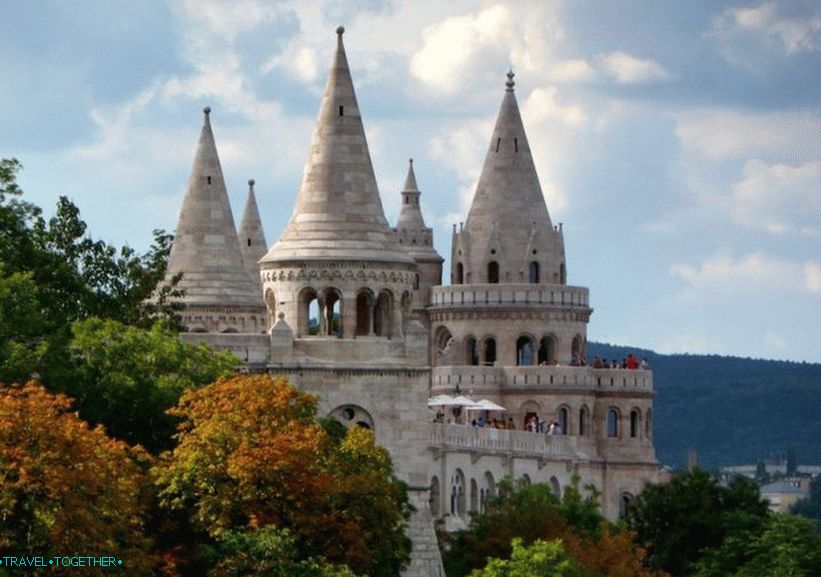 Fishing bastion
Fisherman’s Bastion – one of the famous sights Budapest. It is an architectural structure representing square surrounded by a gallery with conic towers (6 small and one central, which symbolize the seven tribes, founded Hungary), arcades and balustrades. From here it opens stunning views of the city and the Danube. In the center of the square is located equestrian statue of sv. István – the first king of Hungary.
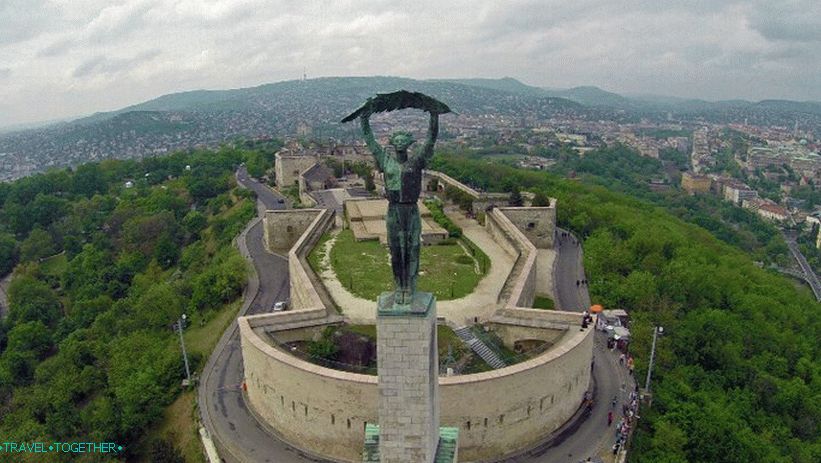 Mountain Gellert
Gellert Hill is a famous place in Budapest. High Hill (235 meters), on the west bank of the Danube, on which the famous the baths of the hotel “Gellert”, a monument to Gellert, a chapel in a cave, Citadel and Freedom Monument.
Interesting places
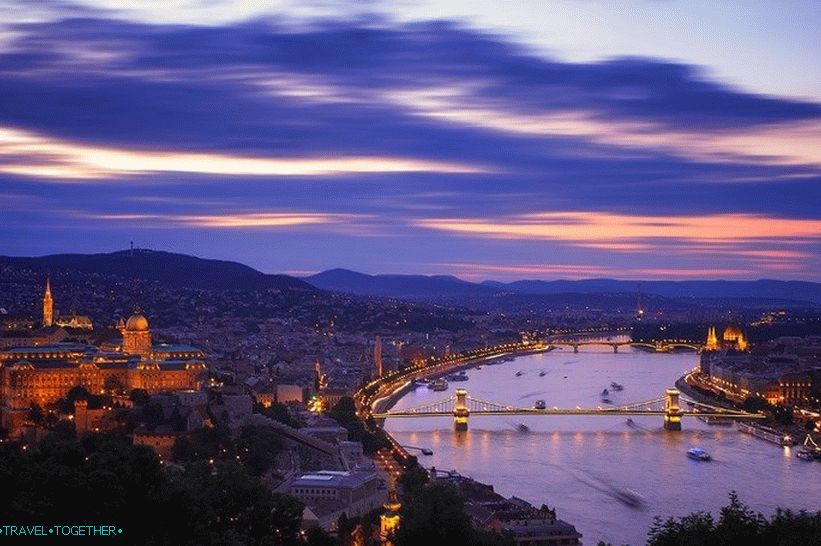 Embankment Danube
Danube promenade – a cult place Budapestas beautiful panoramas of Buda or Pest. On the embankment are located many famous historical buildings and structures. Not far from Parliament there is an interesting monument to the victims of the Holocaust – a sculptural composition of 60 pairs of cast-iron shoes.
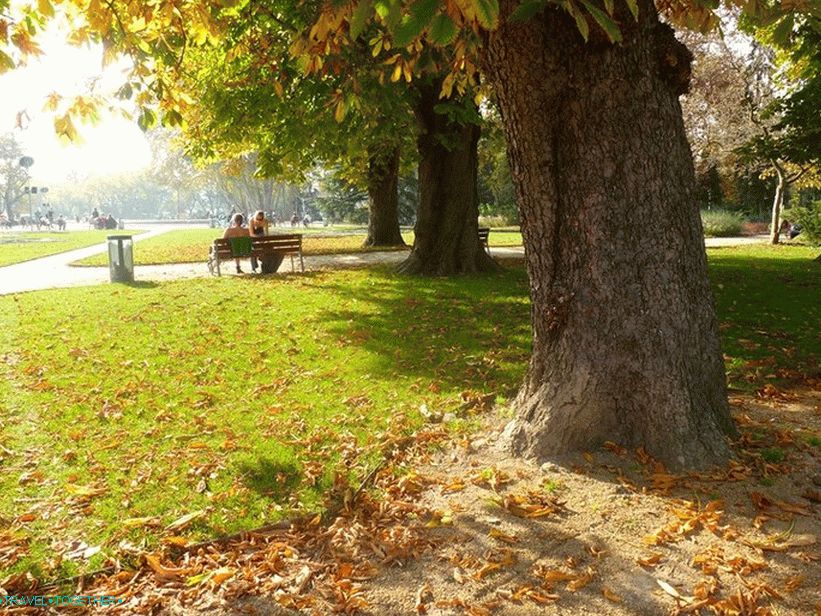 Margit Island
Margit Island – an island in the bend of the Danube, as well as the central natural park complex of the city and one of the most popular places for walks among residents and guests of Budapest. Main sights: memorial “hundred years to budapest”, japanese garden, small zoo, musical fountain and octagonal water tower.
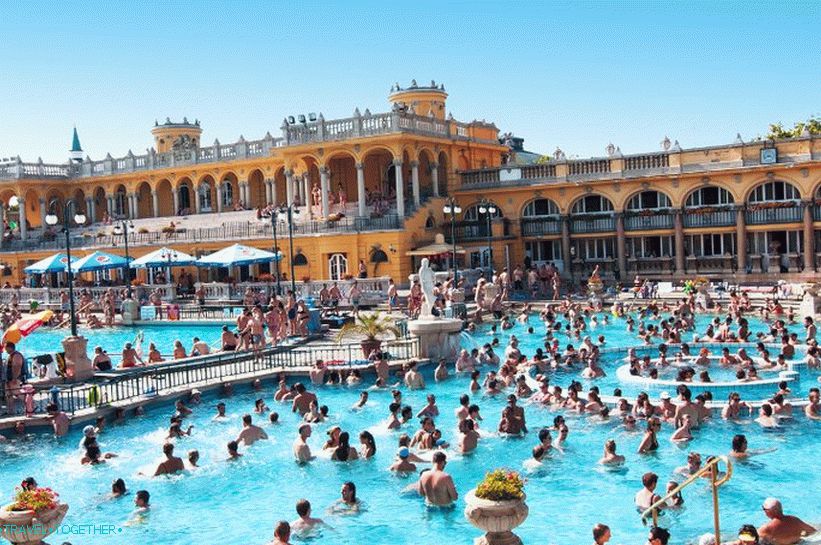 Baths in Budapest
Budapest is not only interesting sights, history, entertainment and architecture. This is a resort town (the only European capital) in which There are many hot mineral springs (26 bath)
Budapest Travel Guide
Guide to the capital of Hungary – the most important attractions on a detailed interactive map.
Budapest Travel Guide
Guide to the capital of Hungary – the most important attractions on a detailed interactive map.
Maps and guides
Detailed map of Budapest (download) Detailed map of Budapest with sights (download) Transport scheme