Bucharest (Romania) – the most detailed information about the city with photos. The main attractions of Bucharest with a description, guides and cards.
Contents
City Bucharest (Romania)
Bucharest is the capital and largest city of Romania. Situated on the country’s southeast and is its most important industrial, economic and commercial center. Bucharest is a city with rich history and diverse architecture that in the past often called “little Paris”. Now the capital of Romania dynamically developing, changing its appearance in the direction of modernity, but retains a unique identity.
Bucharest is known for the interesting fusion of various architectural styles and historical monuments: from medieval buildings and ancient churches to neoclassical mansions and monumental buildings of the socialist era. This is a charming picturesque city parks, excellent museums and wonderful cultural events, which is a symbol of modern Romania.
- Geography and climate
- Best time to visit
- Practical information
- Story
- How to get there
- Shopping and shopping
- Food and drink
- sights
- Video
- Maps and guides
- Comments and reviews
Geography and climate
Bucharest is located in the southeastern part of Romania in the center Lower Danube lowland. The city is located on the river Dymbovice about 50 km from the Danube. Bucharest is built on low hills (usually 7 major hills are distinguished by analogy with Rome) and from the north limited by a chain of lakes. The city has a temperate climate with hot in summer and cool (often snowy) in winter.
 Streets of Bucharest
Best time to visit
The best time to visit Bucharest is from May to September.
Practical information
- The population is more than 1.8 million people (more than 2 million people are estimated person). Bucharest is the sixth largest city in the EU population, second only to London, Berlin, Madrid, Rome and To paris.
- The area is 238 km2.
- The language is Romanian.
- The currency is leu.
- Time – UTC +2, in summer +3.
- Bucharest has one of the most extensive public systems transport in Europe, which is a bit confusing. City It has four metro lines, as well as trams, trolley buses and buses.
Story
The first settlements on the site of modern Bucharest were founded still in antiquity by the Dacian tribes. In the early Middle Ages here there were several Slavic villages. The first mention of Bucharest date back to the year 1459. The city is referred to as a residence. Vladislav Prince Vlad Tepes. Later, the whole place was placed princely court. At the end of the 16th century, Bucharest was burned by the Turks.
The name of the capital of Romania is derived from the Romanian word Bucurie, which means “joy.” There is also a suggestion that the name “Bucharest” is derived from the Dacian (Albanian) word bukur, which translates as “beautiful.”
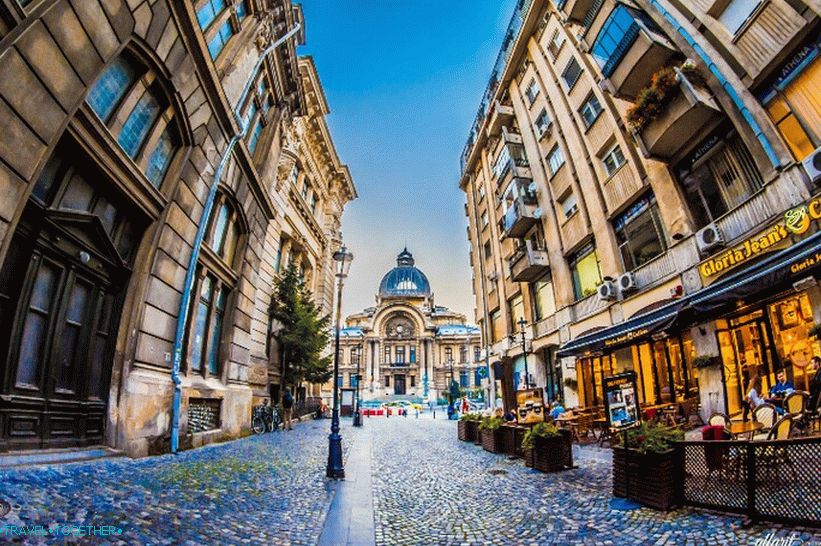 Streets of Bucharest
At the end of the 17th century, Bucharest became the capital of Wallachia. In the 18th century the city was occupied by Turkish, Russian and Austrian by the troops. In 1859, Bucharest became the capital of the united Romania. During the First World War, the city was occupied by German by the troops. After that, the capital of Romania was moved to Iasi. In World War II Bucharest was reoccupied by Germans troops and liberated in 1944 during a popular uprising. AT In 1977, the city suffered from the strongest earthquake.
How to get there
Bucharest is one of the largest transport hubs Southeast Europe. The capital of Romania can be reached by a large the number of cheap flights from the cities of Italy, Spain, Germany, UK, France, Turkey, Austria. Bucharest is also connected direct daily trains with Istanbul, Budapest, Vienna, Venice, Thessaloniki, Moscow, Kiev and bus service to cities of Serbia, Bulgaria, Moldova, Turkey, Greece.
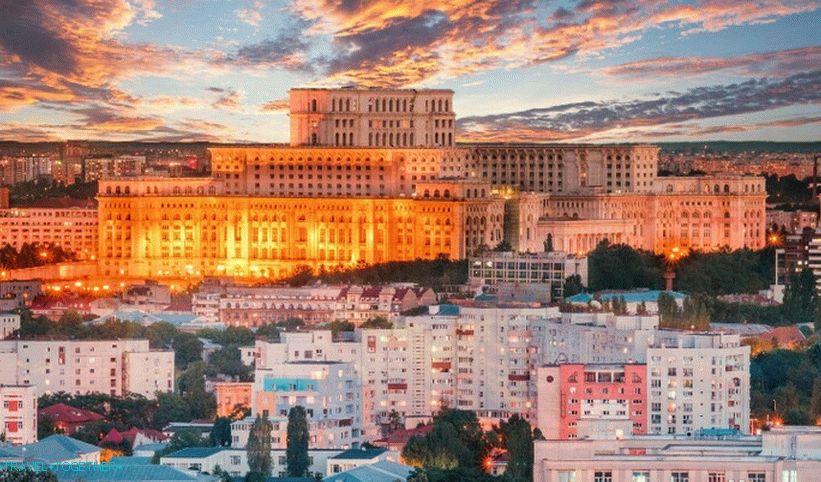 Panorama Bucharest
Shopping and shopping
Numerous shops and brand boutiques are concentrated along the main boulevard from Piaţa Romană to Piaţa Unirii, as well as on small streets adjacent to the area. Many shops can be found in the area of Calea Victoriei and Calea Dorobanţilor.
 Streets of Bucharest
Shopping centers Bucharest:
- Băneasa, Soseaua București-Ploiești 42D.
- AFI Palace Cotroceni, Bulevardul Vasile Milea 4.
- Promenada, Calea Floreasca 246B.
- Plaza Romania, Bd. Timişoara nr. 26
- Unirea Shopping Center, Piaţa Unirii.
- Sun Plaza, Calea Vacaresti, No. 391.
- Bucharest Mall, Calea Vitan 55-59.
Food and drink
Bucharest is famous for its gastronomy from cheap eateries to expensive restaurants. The most popular fast food is Shaorma. In addition to Romanian cuisine is also represented Asian (Chinese, Japanese), Italian, French and Turkish.
 Old city. Bucharest
Traditional Romanian cuisine:
- mamaliga – corn porridge (analogue of Italian polenta).
- bulz – corn porridge with cheese, bacon and sour cream.
- zacusca – does not require translation :).
- tochitura is a type of stew.
- mici – fried meat (traditional sausages) in sauce with corn porridge.
- ciorba de burta – white sour chopped soup meat.
- ciorba taraneasca – soup, similar to borscht.
- pasca – chocolate or cheese cake.
- saratele – salty sticks.
- pandispan – cake with sour cherries.
- cozonac – christmas or easter cake
- covrigi – hot pretzels.
- langoşi – hot dough stuffed with cheese.
- gogoşi – donut.
sights
 Old city Bucharest
Old Town or Romanian Lipscani – the oldest part Bucharest, significantly rebuilt during the reign of Ceausescu. It is a collection of buildings from different historical periods from 19th century neoclassical mansions to the medieval courtyard ruins Princes of Wallachia. Old Town occupies the area between the river Dymbovice in the south, Calea Victoriei in the west, Calea Moşilor in the east and Regina Elisabeta Boulevard to the north. In recent decades the historical center of Bucharest has been significantly restored and has many charming old streets.
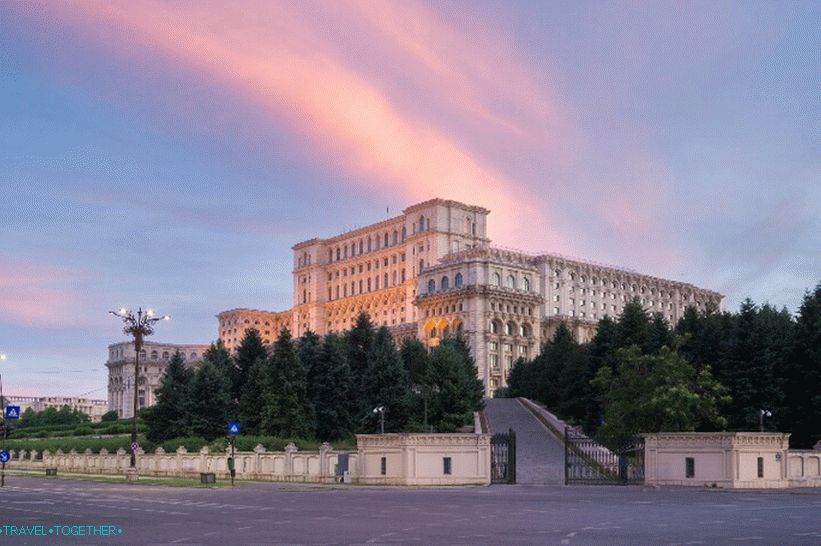 Palace Parliament
The Palace of Parliament is a huge neoclassical building, built during the reign of Nicholas Ceausescu. This architectural The giant is one of the main symbols of Bucharest. Parliament – the second largest administrative building in the world (after Pentagon), which contains more than 3000 rooms and has an area more than 300 thousand square meters. It is built of marble and steel, therefore, it is considered the heaviest building on the planet.
 Romanian House philharmonic
The House of the Romanian Philharmonic – a magnificent neoclassical building 19th century, designed by French architect Albert Galleron. The building resembles an ancient Greek temple with a dome 41 meters high and peristyle from six Ionic columns. Philharmonic has a beautiful interior with painted gilded ceilings, cascading balconies and spiral marble staircases.
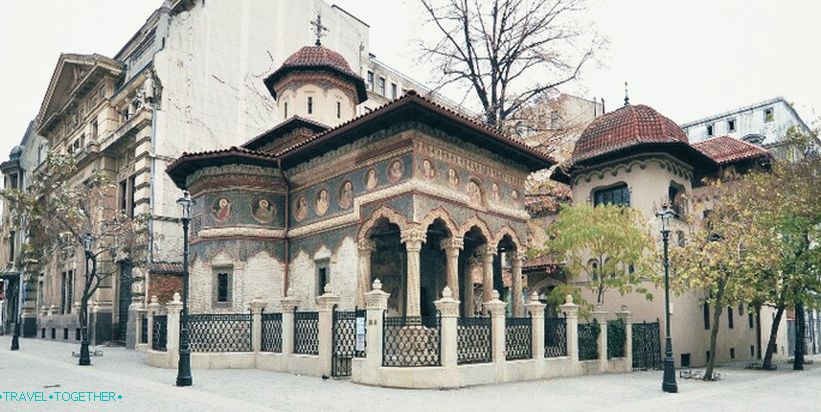 Stavropol church
Stavropol Church – a beautiful religious building of the 18th century with a wonderful combination of Romanian and Byzantine elements. it a small building with fancy pillars was once part of monastery. The church is Orthodox and contains beautiful frescoes. and icons.
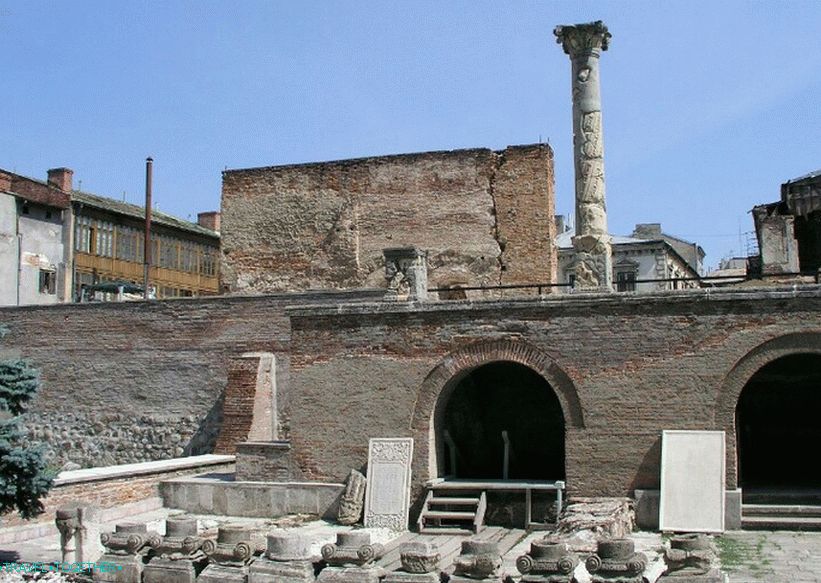 Old prince’s court
The old princely court – the ruins of the medieval court of princes Wallachia, founded by Vlad Tepes. This building dates from 15 – 16 centuries and for two centuries was the site of the coronation of the Romanian princes. The old courtyard museum contains artifacts found during archaeological site.
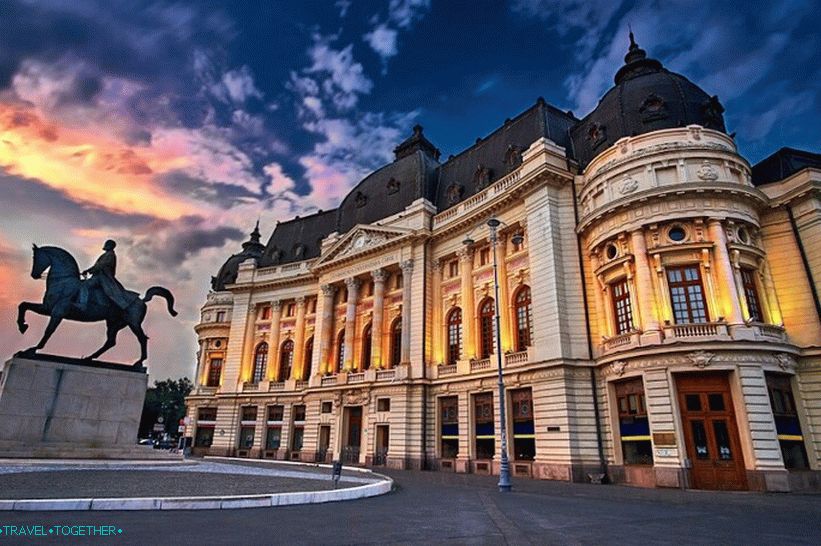 Square Revolutions
Revolution Square is the central square of Budapest and one of characters of modern Romania.
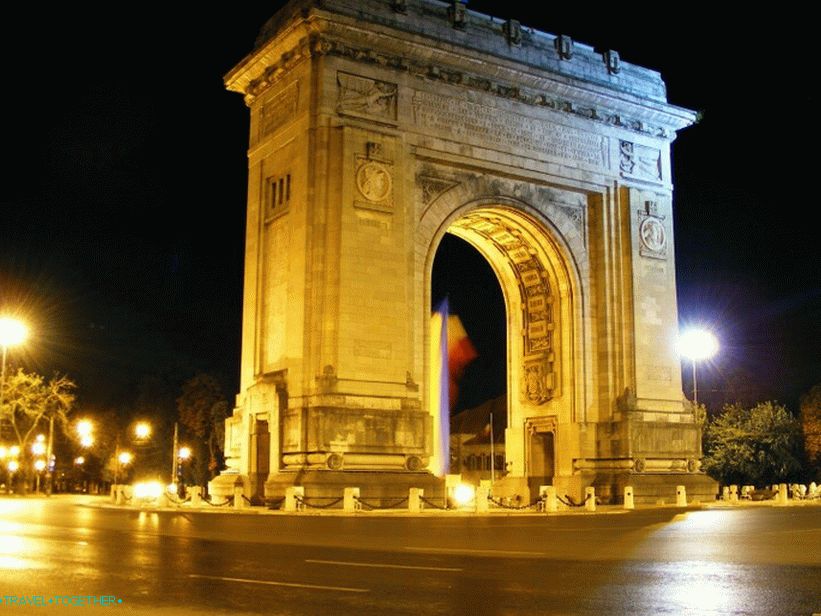 Triumphal arch
The Triumphal Arch is a granite building of 1936, replacing wooden arch of 1922, which was dedicated to the Romanian soldiers who fought in the First World War.
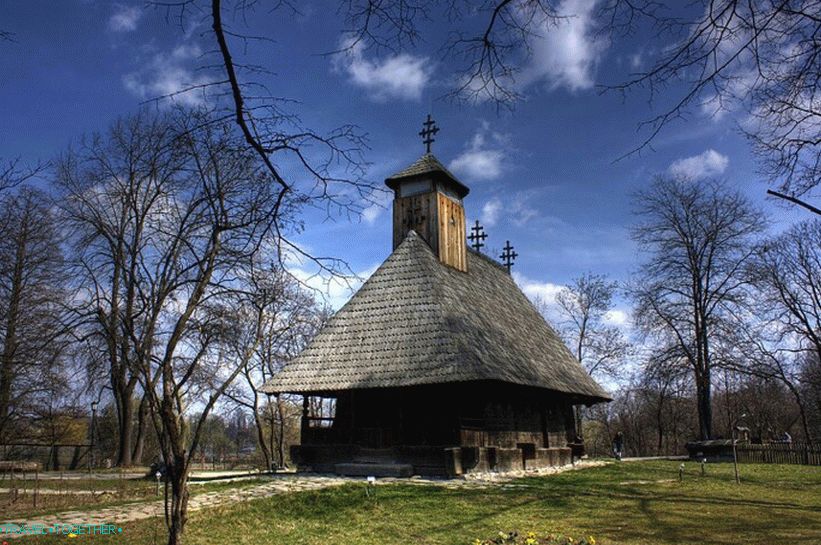 National Museum of Dimitri Gusti
National Museum of Dimitri Gusti – a unique ethnographic open-air museum, founded in 1936. Reflects Romania’s traditional lifestyle and contains 300 different structures, including peasant houses, thatch sheds, log cabins, churches, workshops and mills.
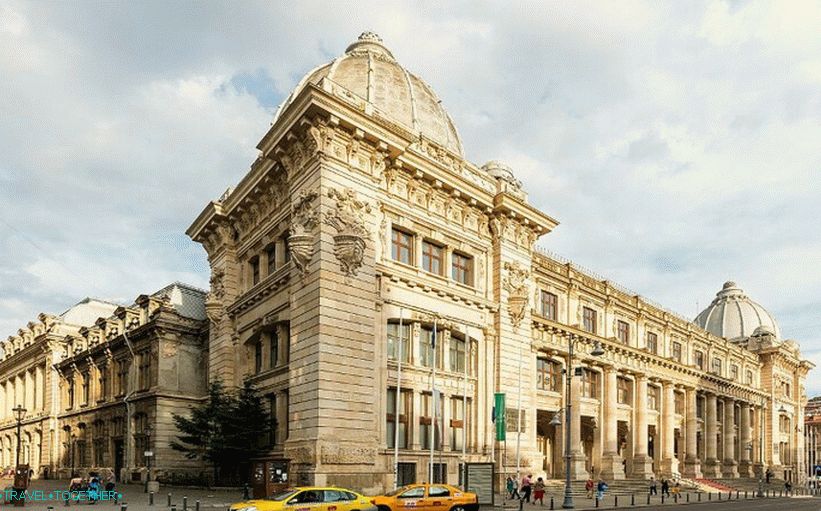 National history museum
The National Museum of History is a magnificent museum located in beautiful neoclassical building of the former Romanian Post. Contains a huge number of unique exhibits on the history of Romania from antiquity to modernity.
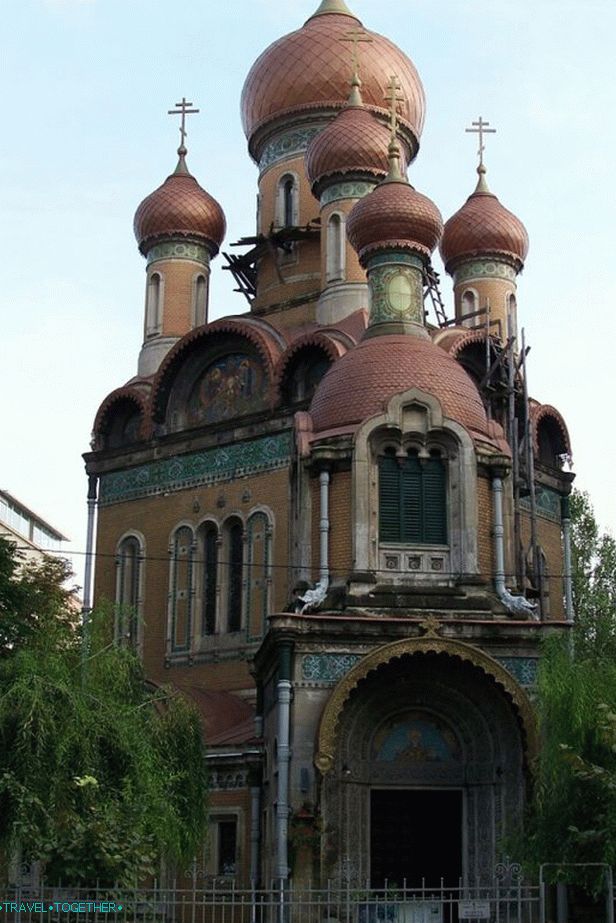 Russian church
Russian Church – Orthodox Church of the early 20th century dedicated to sv. Nicholas. Was built for the Russian diaspora in during the reign of Emperor Nicholas II.
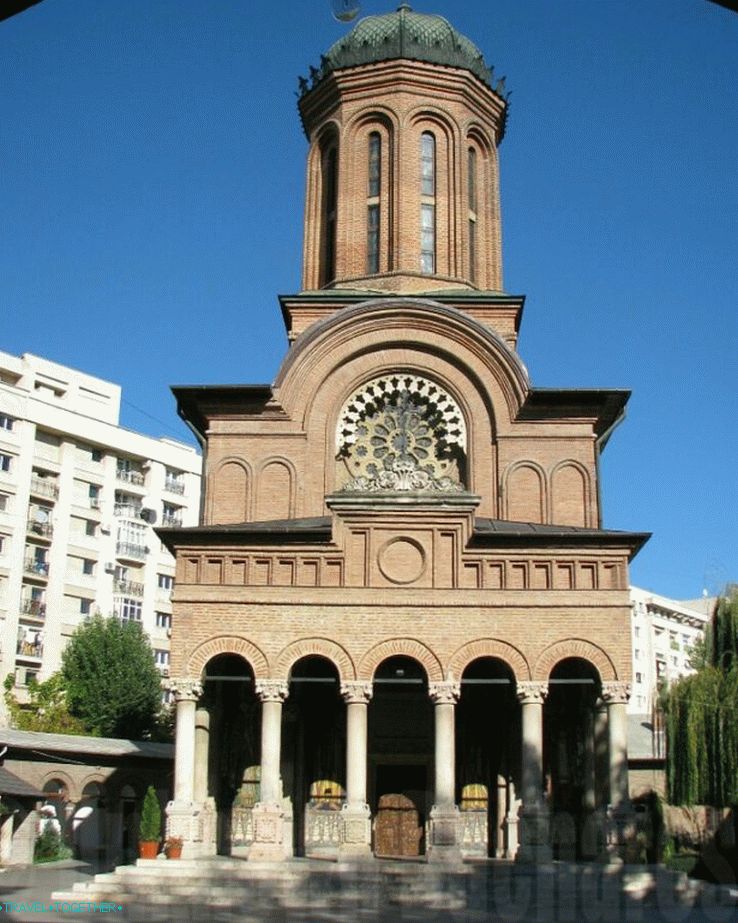 Antim monastery
Antima Monastery – a functioning monastery built between 1713 and 1715 years.
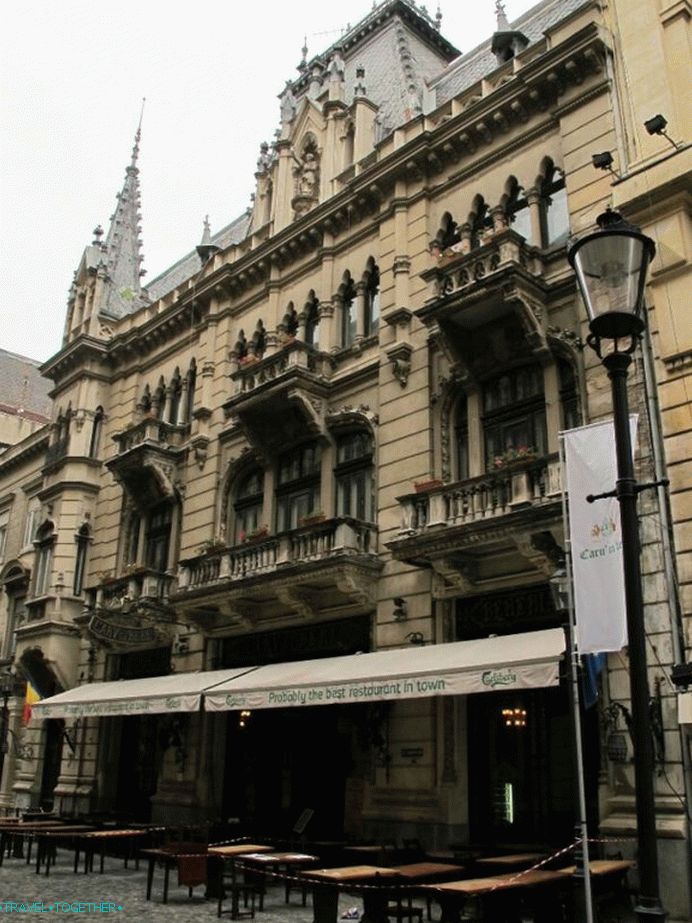 Charu Q Bern (Caru ‘cu Bere)
Charu Kew Bern (Caru ‘cu Bere) – a magnificent neo-gothic building with interior in Art Nouveau style, built in the late 19th century. AT its walls is one of the most famous restaurants Bucharest.
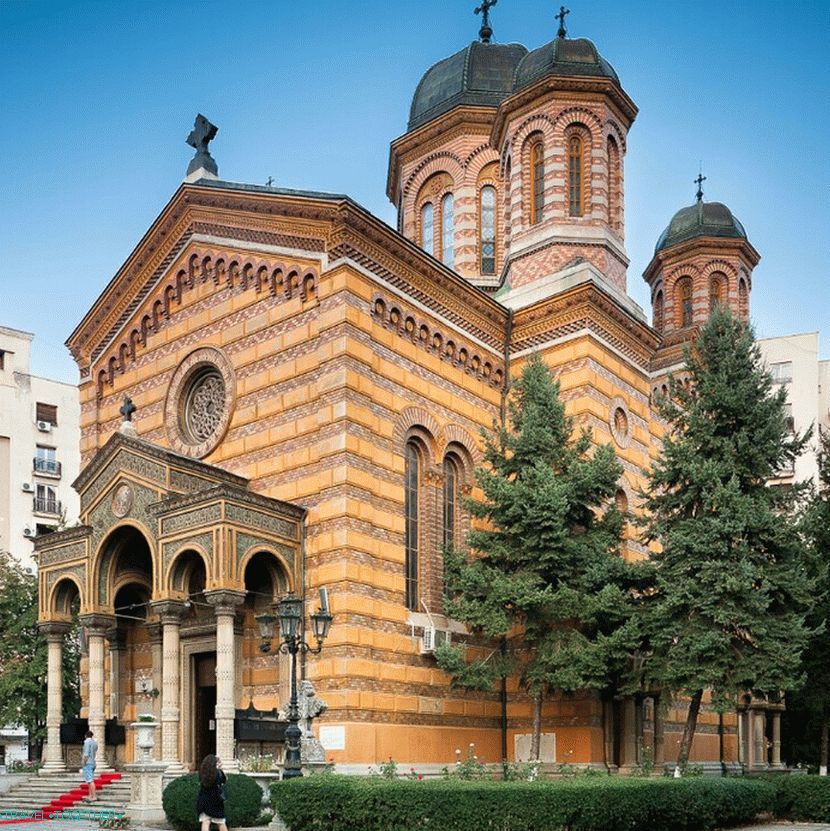 Domnica Balasa
Domnica Balasa is a beautiful church of the 19th century, known for its exceptional acoustics, oil paintings by Viennese artists, German stained glass and marble statues.
Video
Maps and guides
Metro map Tram map