Bruges (Belgium) – the most detailed information about the city with photos. The main attractions of Bruges with a description, guides and cards.
Contents
- 1 Bruges (Belgium)
- 2 general information
- 3 Climate and best time to visit
- 4 Practical tourist information
- 5 How to get there?
- 6 Public transport
- 7 Food and drink in Bruges
- 8 Saving money in Bruges
- 9 Shopping and shopping
- 10 Hotels and Accommodation
- 11 Museums Bruges
- 12 Story
- 13 Sights of Bruges
- 14 Maps and guides
- 15 Bruges on the map of Belgium
Bruges (Belgium)
Bruges is a city in Belgium in the historical region of West Flanders This is a city of amazing architecture and charm, one of most scenic in Europe. Bruges is located 20 km from the coast North Sea near the border with the Netherlands, which is why The Dutch influence here is felt especially strongly in the language, the kitchen, architecture. The heyday of the city in the Middle Ages left wonderful architecture and many attractions. City as if frozen on the border of past and present. Walking on it you catch yourself thinking that you got into some kind of historical film or ended up in the present Middle Ages. Speaking of the movie, here there is an action of the famous picture – “To lie low on the Bruges”, which only added to the popularity of the city!
Bruges is located between the cities of Ghent (the capital of the East Flanders) and Ostend (the largest Belgian city on the coast North Sea) on the plain. Often Bruges is called “Northern Venice “because there are three large canals connecting here so deep that even some marine can walk on them court The origin of the city is associated with the German word “Brücke”, which means bridge. In the Middle Ages, near the bridge was carried out trade fairs. This name quickly passed to the educated settlement.
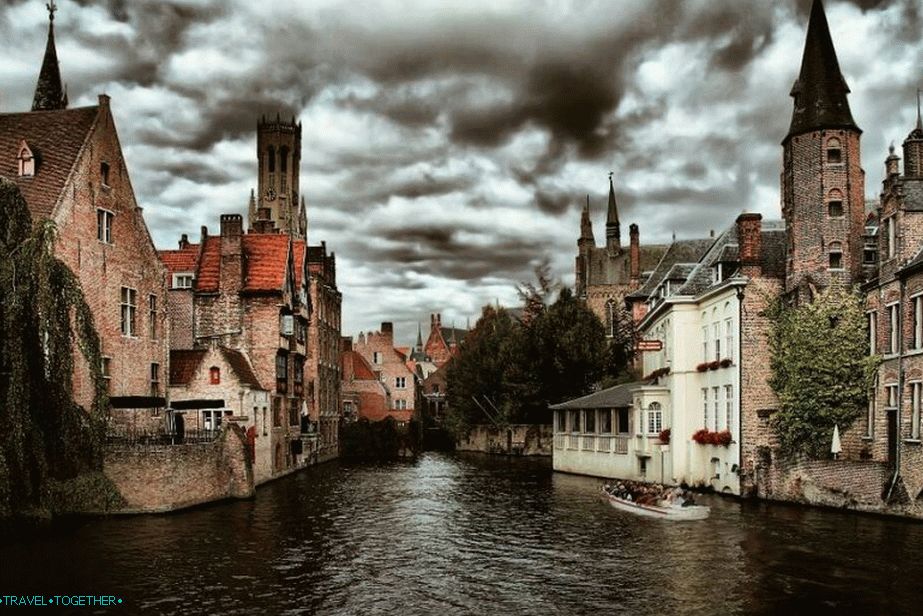 Bruges. Old city
- general information
- Climate and best time to visit
- Practical tourist information
- How to get there?
- Public transport
- Food and drink in Bruges
- Shopping and shopping
- Hotels and Accommodation
- Saving money
- Museums
- Story
- Sights of Bruges
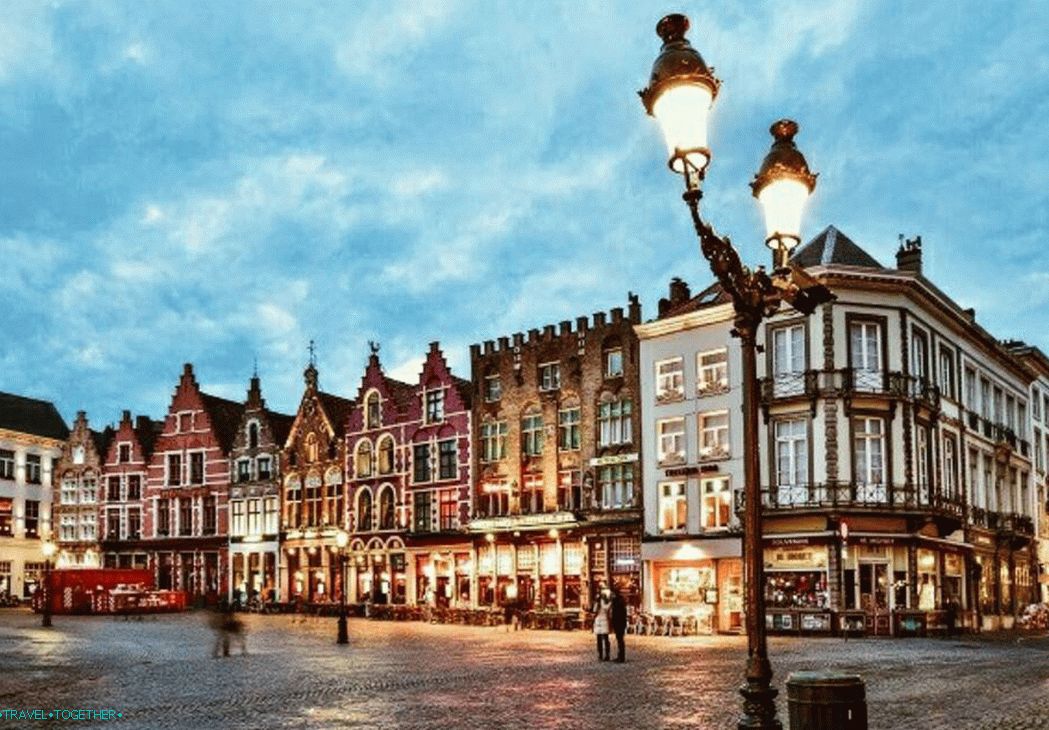 Historical center bruges
general information
General information about Bruges
- The population is more than 110 thousand people.
- The city has 54 bridges, 12 of which are made of wood.
- Language – Dutch, French, German
- Area – 138 square meters. km
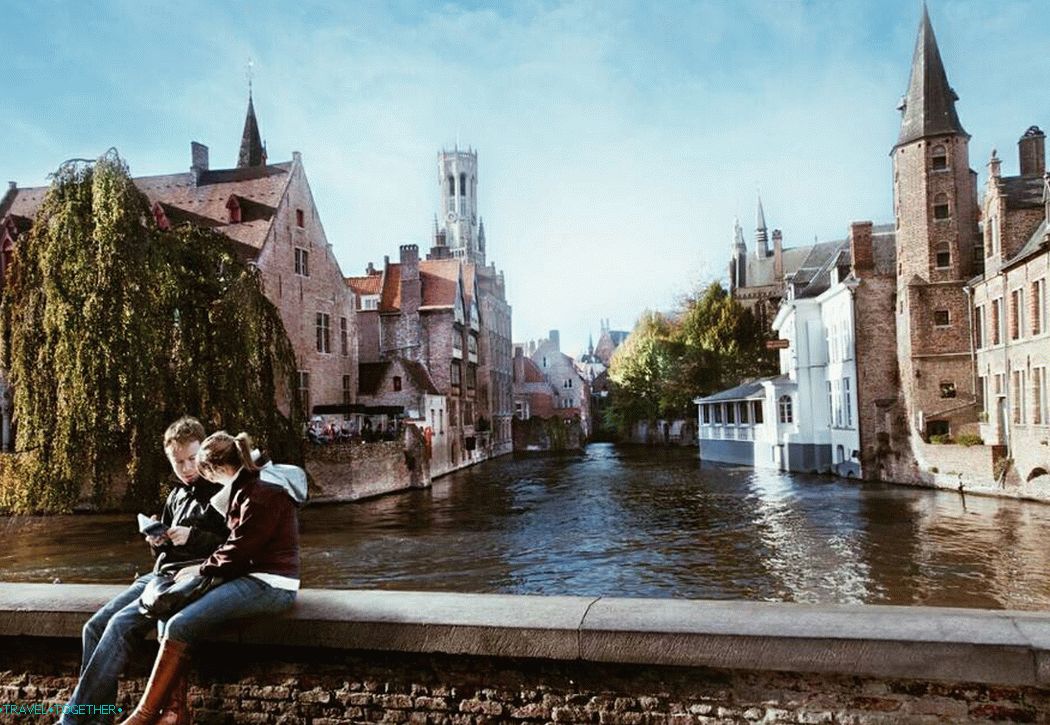 Bruges summer
Climate and best time to visit
The climate in Bruges is temperate. Distance from the North Sea is about fifteen kilometers. It is therefore not surprising that the city is located heavily influenced by the sea. There are usually quite mild winters and moderate (not hot) summer. The weather is determined by western and eastern front. The western front, which prevails most of the year, brings clouds and rain. The Eastern Front gives the summer a dry and warm weather, and in winter – cold, but not excessive, usually without snowfall.
In Bruges, it often rains, so be sure to take umbrellas or raincoats (jackets). The driest months are February and April. The rainiest are October and November.
When is it better to go to Bruges? Probably at any time of the year. City beautiful in any season and weather. But especially Bruggekrasiv in Christmas holidays. Great time visiting the end of spring and summer.
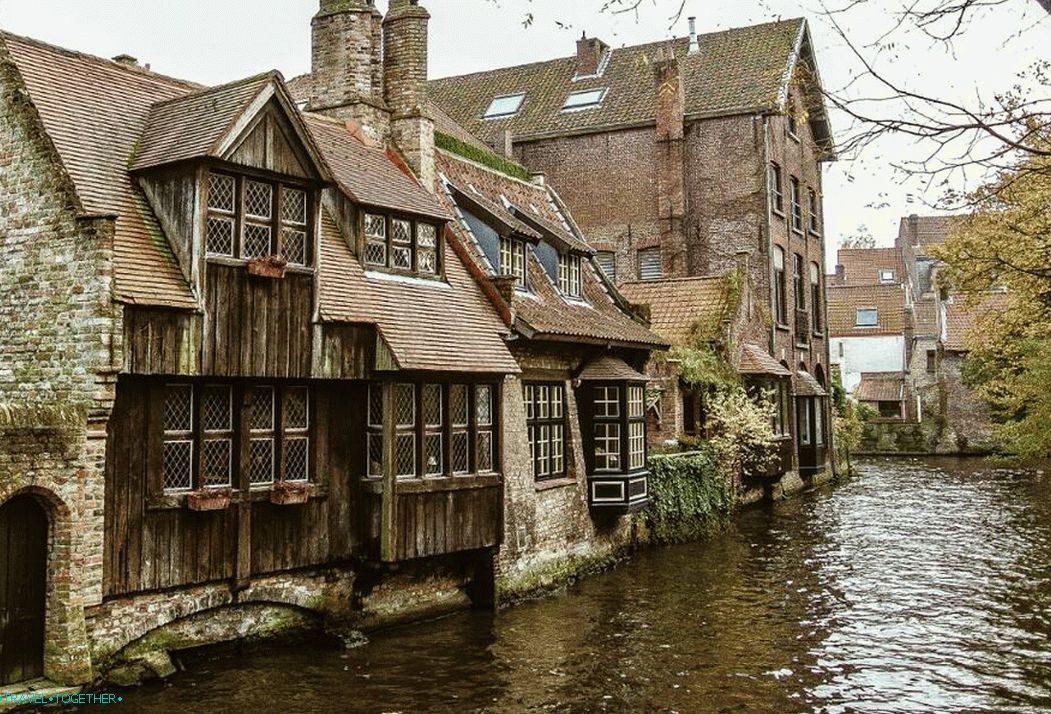 Canals Brugge
Practical tourist information
- In Bruges, you can drink tap water.
- Not all museums allow photo and video. also in Some places can not shoot with flash.
- Tips are usually included in the bill. If you are satisfied service, you can leave an additional tip. Enough round up the score.
- The language in Bruges is Dutch with a Flemish dialect.
- The main currency is the euro.
- Payment by card is possible in shops and restaurants. For withdrawal cash can take a commission. Also in some places (especially markets and small shops) do not accept cards, so it’s better to have a bit of cash.
- Bruges is a safe city. The only thing you really need wary of pickpockets. Be alert and do not leave valuables. without supervision!
- Markets usually operate from 8.00-13.30.
- Tourist tax in Bruges – 2 euros per person per night.
- To go to the toilet, you can go to any cafe / bar and buy something. In the historic center there are several public toilets that are free.
- In Belgium, there is a ban on smoking in public places.
- Alcohol is not sold to persons under 18 years of age.
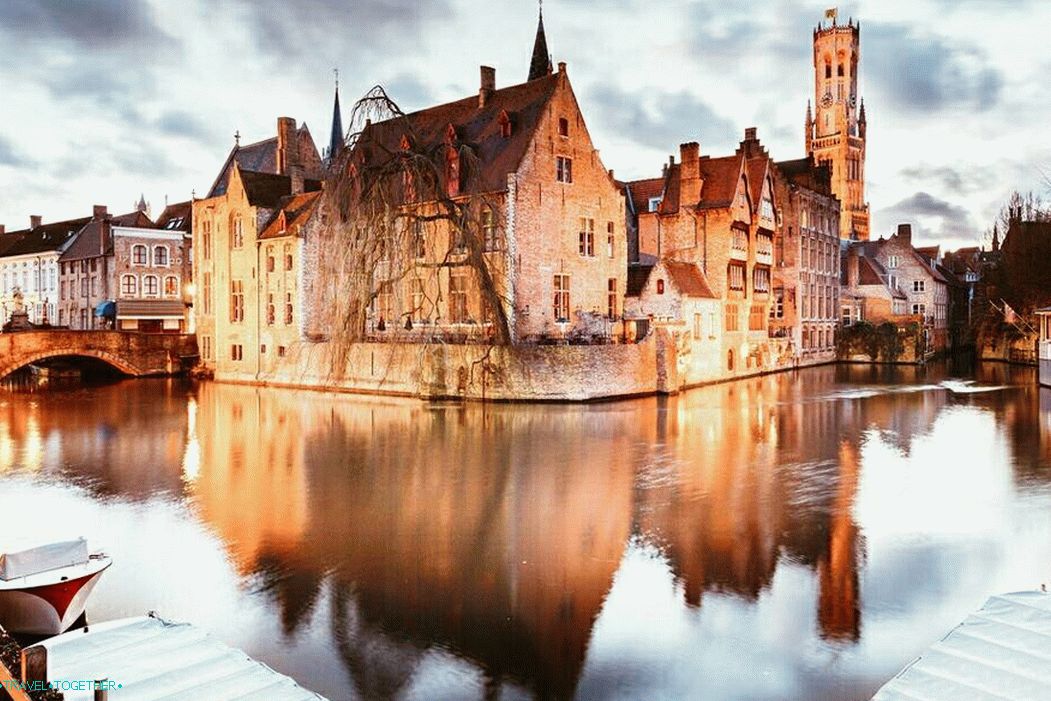 Bruges evening
How to get there?
Brussels International Airport is located one hour from Bruges. by train or car. It is also quite easy to get to Bruges. any major city of Belgium and the Netherlands. Unfortunately, from Holland has no direct flight. Need to do transplant in Antwerp.
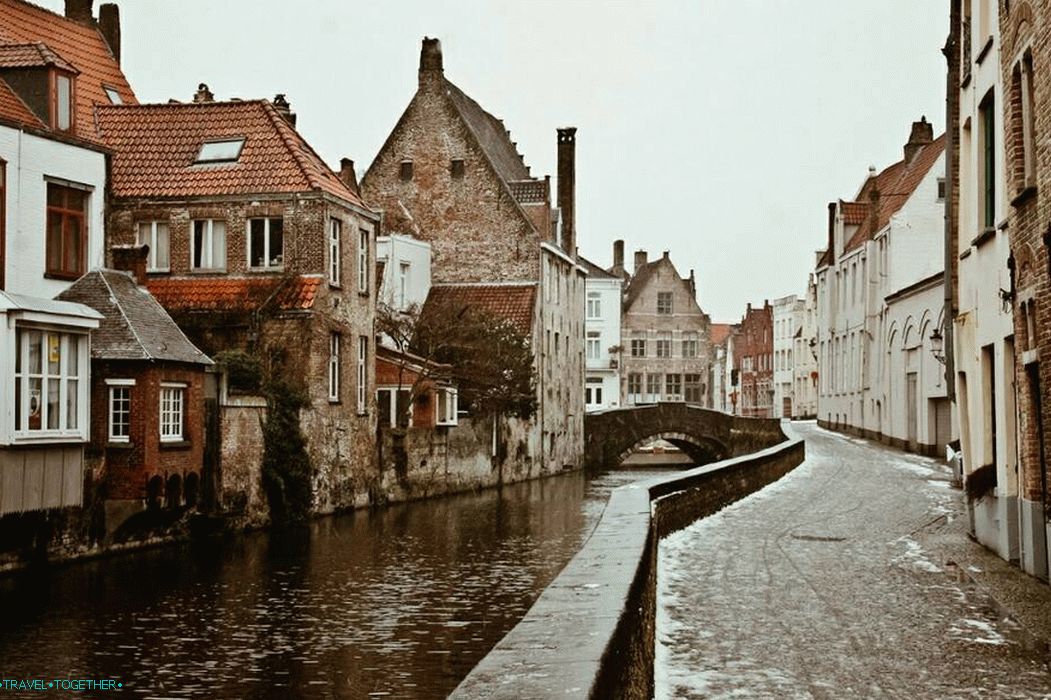 Historical center bruges
Public transport
In Bruges there is no tram line, and even more so the subway. Main the means of transportation, except for bicycles, are buses and trams. Conveniently and topically to move rent a bicycle or horse a cart
Food and drink in Bruges
In Bruges presented a lot of restaurants with dishes. traditional and European cuisine as well as famous fast food. Be sure to try Flemish dishes cuisines: stews, seafood, mussels. For beer lovers worth pay attention to the Brotherse Zot and Kwak. The city has fine dining restaurants with Michelin stars as well as pretty inexpensive pubs and cafes. It is clear that eat in the historic center will be more expensive than away from the hiking trails.
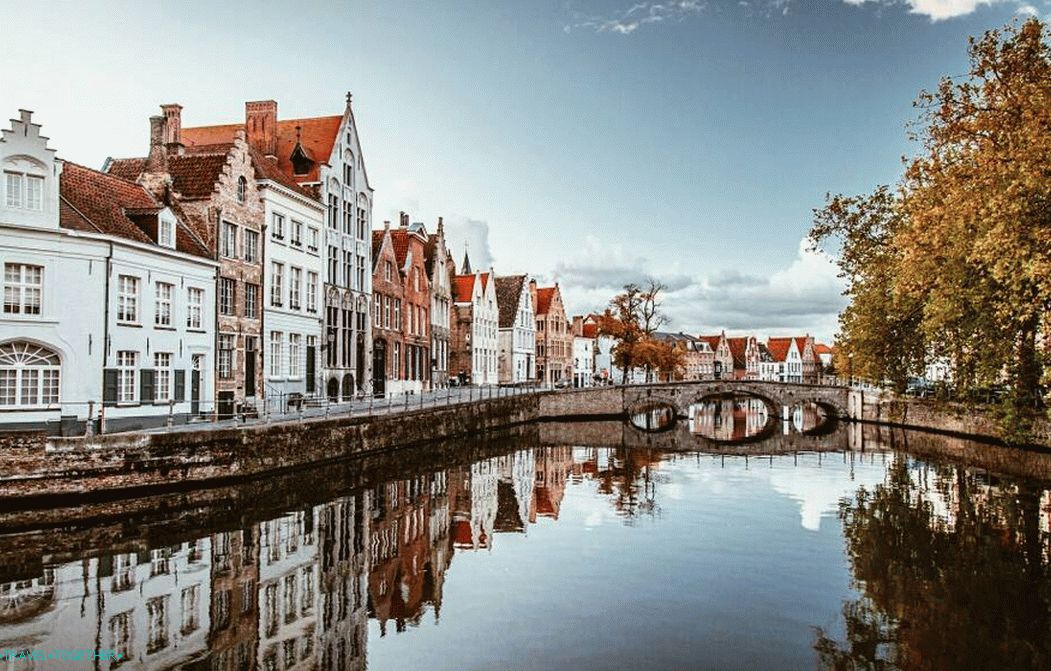 Historical center bruges
Saving money in Bruges
Bruges is not a cheap city. Prices are getting significantly higher. as you approach the historic center and popular tourist destinations. places. This includes accommodation, meals, entertainment and parking lot. But here you can save a little. If you do not want spending too much money on food and drinks, then you can eat away from tourist routes or buy food at market (or in large chain stores). If you want to save on walking around the city you can walk or rent bicycle. To save on accommodation we recommend booking hotel rooms and hotel in the lowest tourist seasons February, March, October, November.
Shopping and shopping
Bruges is not only interesting sights, museums and routes. This is also an excellent opportunity for shopping and shopping. Here many interesting shops, as well as shops known brands. The main shopping street is Steenstraat. Other popular shopping districts are Noordzandstraat, de Vlamingstraat, de Katelijnestraat and de Geldmuntstraat. Also Bruges is one of chocolate capitals of Europe. Sweet teeth cost to look at Katelijnestraat and Market Square de Markt. So how exactly most chocolate shops are located here.
 Bruges Streets
Hotels and Accommodation
In Bruges, a lot of hotels in different price categories. Of course, it is best to book hotels in the historic center. cities. The numbers in them, of course, will be more expensive, especially in “high season “. Be careful, not every hotel has a good sound insulation. Therefore, it is better to avoid renting rooms that go to noisy and crowded streets and squares. Living better Look in advance for more options.
Museums Bruges
Bruges is a city of museums. Here are the most interesting ones:
- Archaeological Museum – Historical Expositions Related to city and region. Address – Mariastraat 36 a, Brugge
- Beer Museum – all about the history and subtleties of the Belgian brewing. Address – Breidelstraat 3, Brugge
- Salvador Dali Gallery Gallery – Graphic Collection art of the famous artist. Address – Markt 7, Brugge
- The Museum of Diamonds – diamond exhibitions, the technology of their grinding and etc. Address – Katelijnestraat 43, Brugge
- Groeningemuseum – an overview of the history of Belgian art and masterpieces of Flemish artists. Address – Dijver 12, Brugge
- Gruuthusemuseum – Palace of Famous Lords, a rich collection tapestry, lace, furniture and silverware. Address – Dijver 12, Brugge
- The Torture Museum is an interesting collection of artifacts in one of Europe’s oldest prisons. Address – Wollestraat 29, Brugge
- The Lamp Museum is the largest collection of lamps in the world from the old until modern. Address – Wijnzakstraat 2, Brugge
Story
The founding of Bruges dates from the ninth century AD. Status the city was assigned to the settlement in 1128. Brugge fast turned into an important shopping center in Western Europe. promoted advantageous strategic location on the intersection of northern hanseatic trade and southern trade ways.
The golden age of the city begins in the 12th century and lasts until 15 century. In Bruges, then, there are almost fifty thousand inhabitants, while time like Amsterdam then was a village population of about three thousand people. Presence The Burgundian dynasty also had a huge positive effect on Bruges. A very important point was that there were held the largest flemish fairs. Interestingly, the city authorities were quite entrepreneurial. When the old fair system became faltering, Bruges merchants began to use new forms economic exchange – promissory notes and letters of credit. Also the city has always eagerly welcomed foreign merchants.
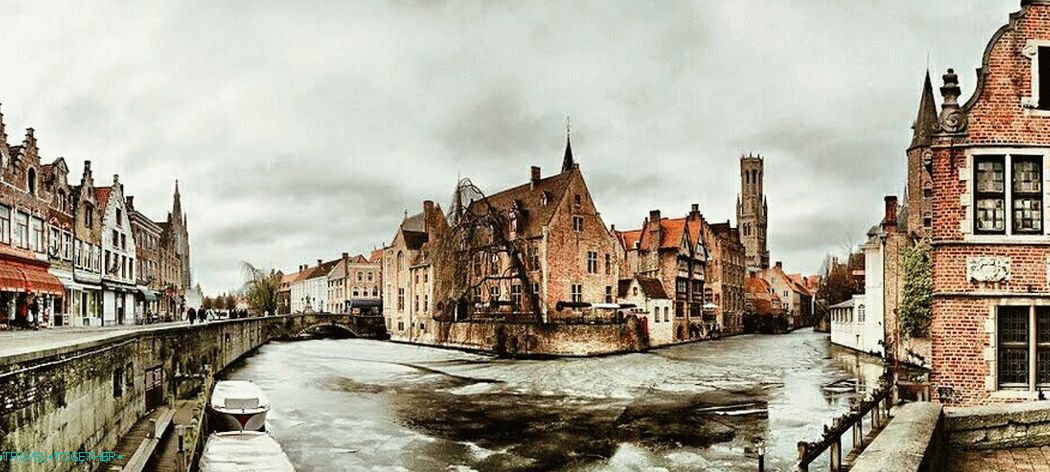 Historical center bruges
The decline began in the 15th century, when the Zwin canal began to silt, who literally cut off Bruges from the sea. Main functions port city passed to Antwerp. Attempts to return the city dominant position in the 17th and 18th centuries did not lead to success.Antwerp firmly held their positions. City population rapidly declined from 200,000 inhabitants to 50,000 inhabitants by 1900 year
Bruges could not regain its position as the main shopping center. Flanders, but it has become a popular tourist destination already in beginning of the 20th century and remains so still! Yes, and the second World War almost did not leave scars on the face of the city, therefore almost all historical buildings are original.
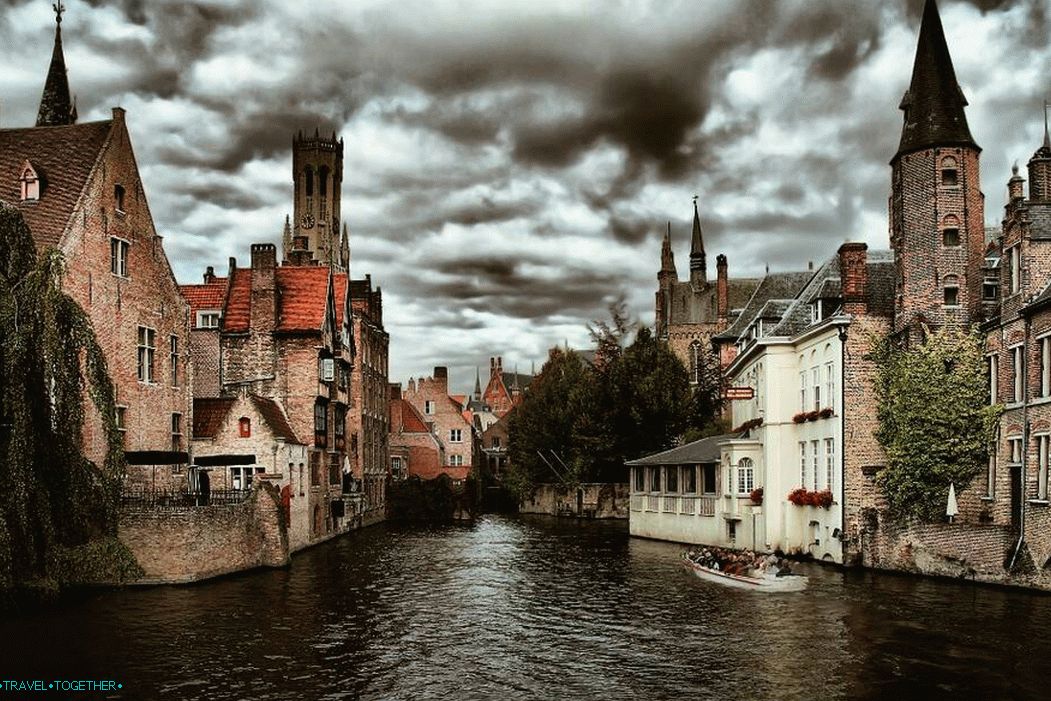 Canals Brugge
Sights of Bruges
The historic center is the main attraction Bruges. Walking on it, it seems that this is a museum under open-air streets, charming squares and beautiful facades of buildings that seem to be frozen in the past. Sounds of horses, which still walk through the streets of Bruges, and a small number of cars only strengthen it feeling
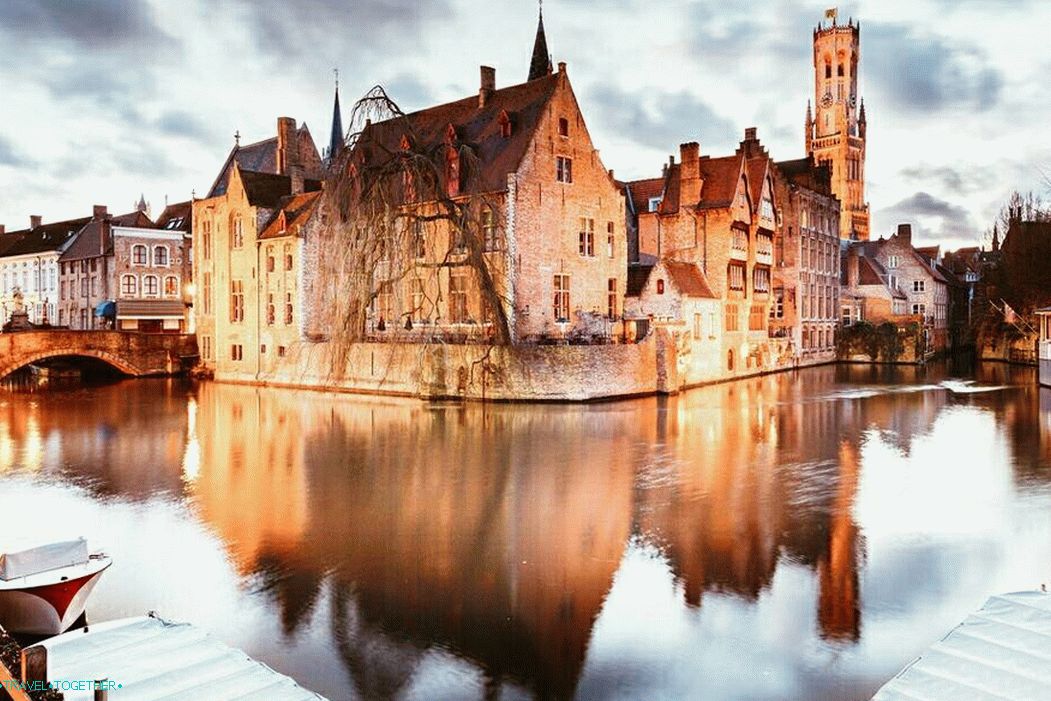 Canals Brugge
Another interesting attraction of Bruges are famous channels. Thanks to them, the city is often referred to as “North Venice “. These water arteries are very organically integrated into the architecture cities, and picturesque bridges and amazingly beautiful landscapes of you for sure will not leave indifferent!
The most picturesque channels: Rozenhoedkaai, Groenerei and Minnewater.
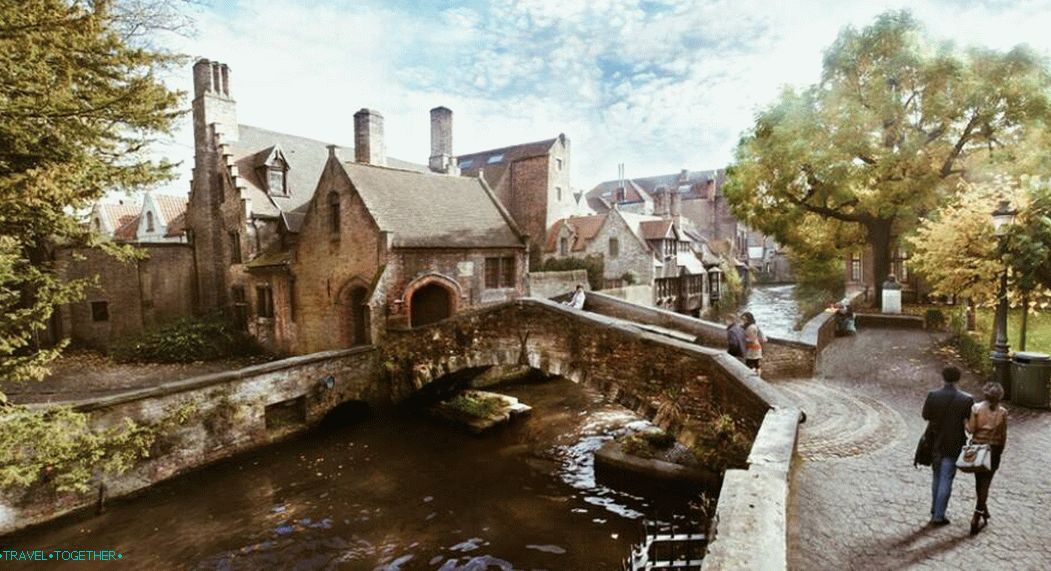 Boniface Bridge
Boniface Bridge is a surprisingly romantic place of Bruges. it a small stone bridge built at the beginning of the 20th century is one of the youngest bridges of the city. He quickly conquered popularity and became one of the business cards of the city.
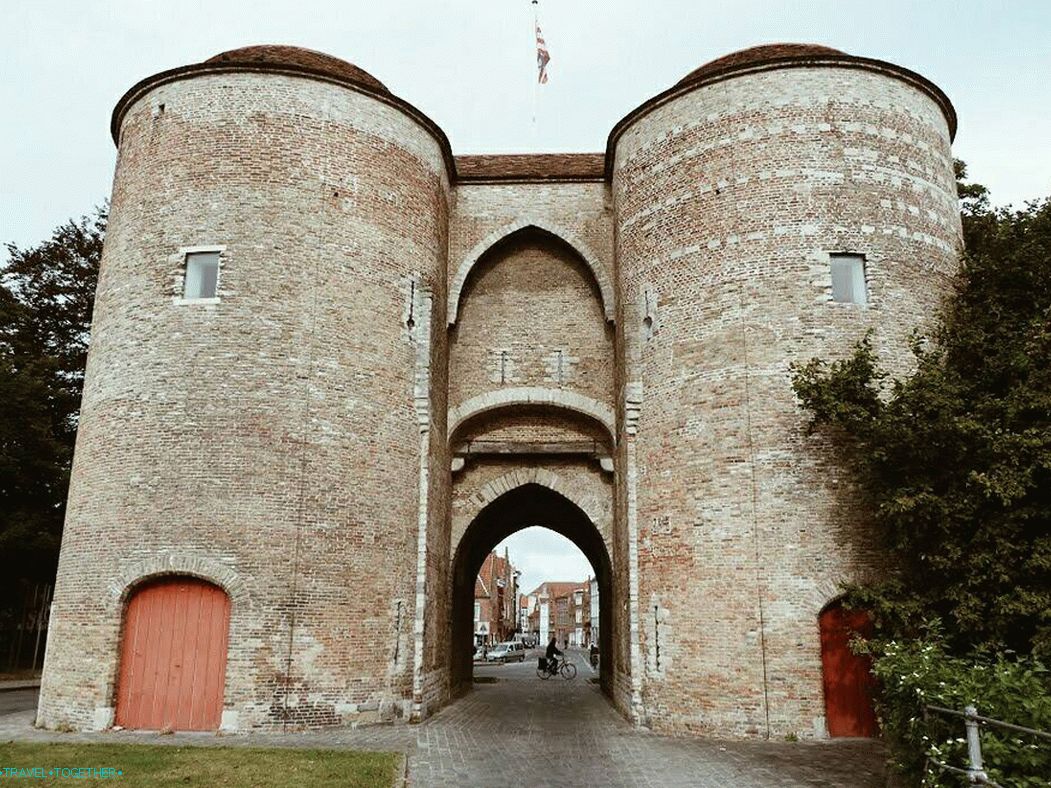 City gate Kruispoort
The Kruispoort city gate is an ancient gate of the early 15th century with two massive towers. Through this gate were the army of Charles V and Napoleon.
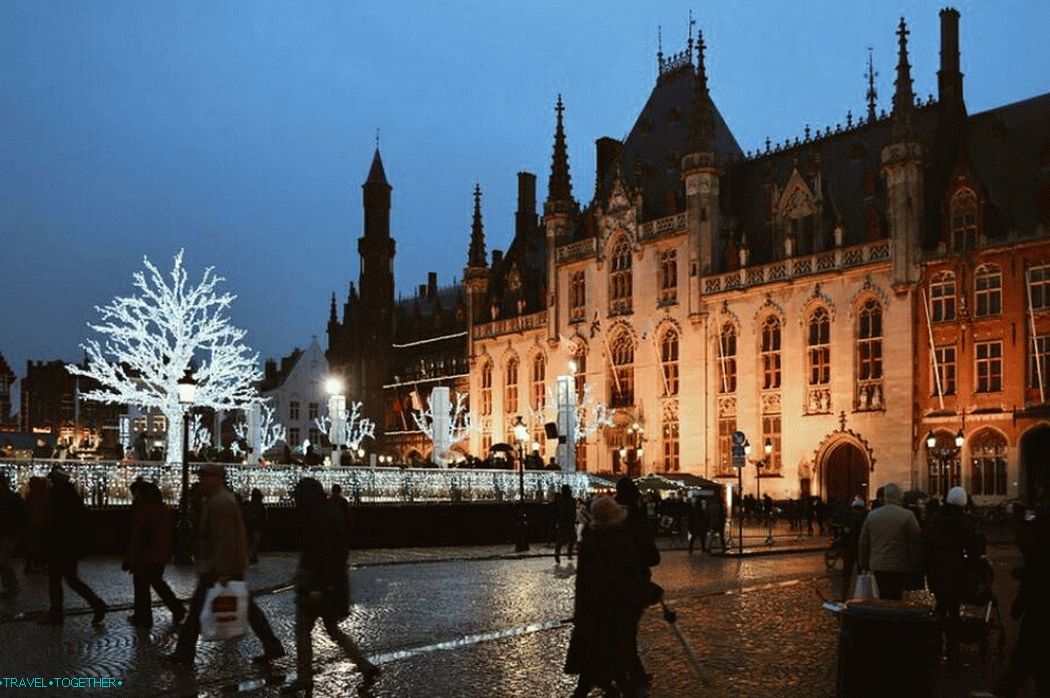 Courthouse
The courthouse is a beautiful neo-gothic building built at the end. 19th century.
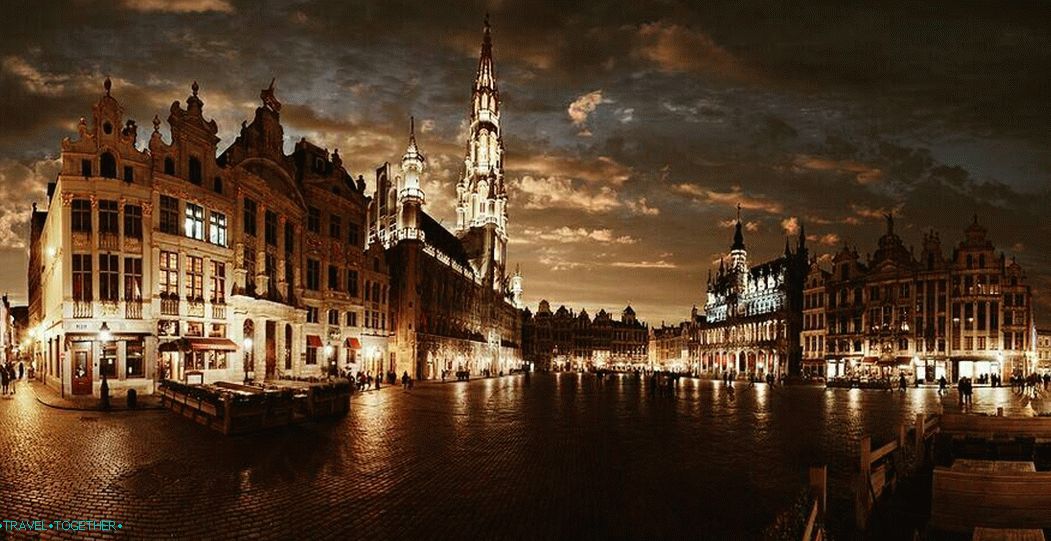 Tower of the Virgin
Tower of the Virgin – 115.5 meter brick tower The Virgin illustrates the mastery of the builders of Bruges. Church Shows a valuable collection of works of art: the world famous Madonna and Child of the work of genius Michelangelo, countless paintings of the 13th century, located here Tombs of Mary of Burgundy and Karl the Bold.
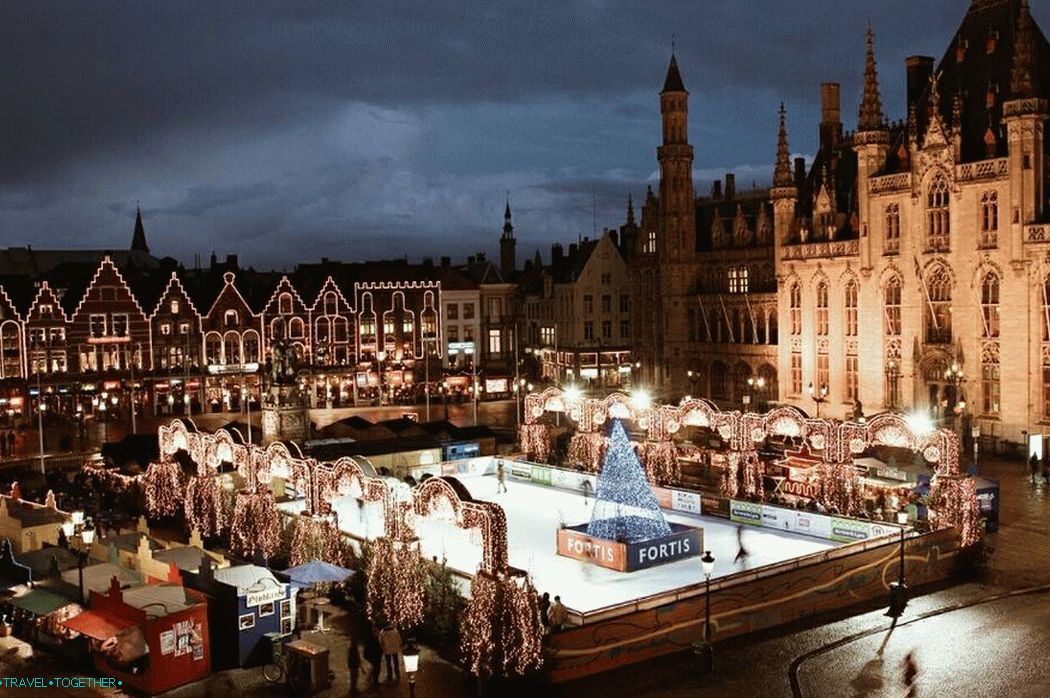 Market Square
Market Square – the card of Bruges. Beautiful old architecture and interesting sights beckon the square many tourists. The highest belfry dominates the architecture.
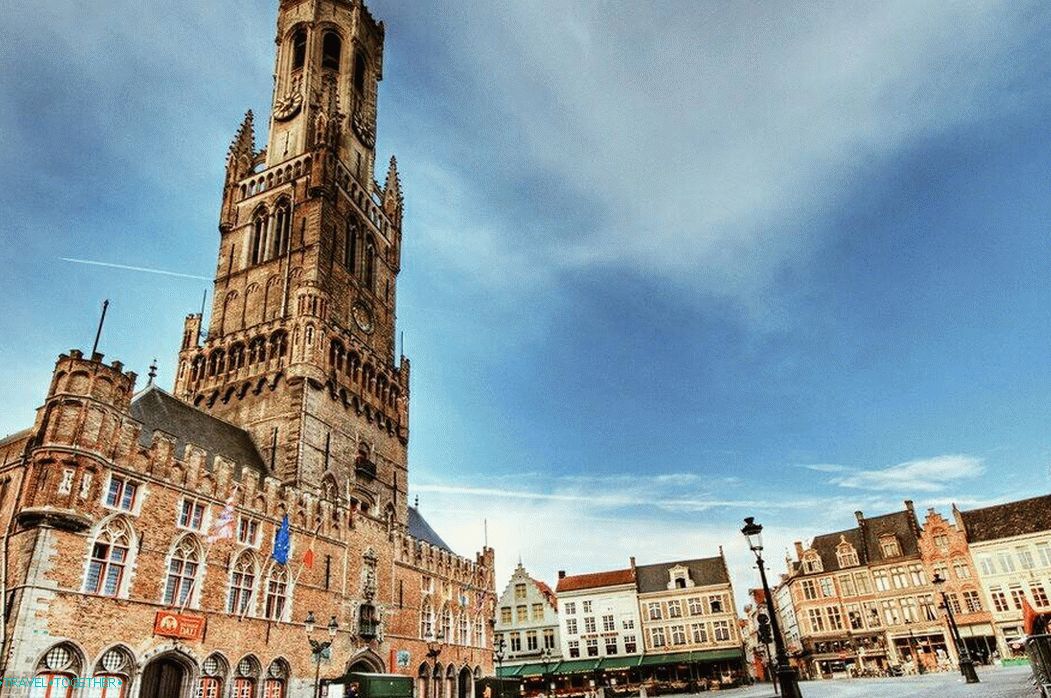 Belfry Belfort
Belfry Belfry or Belfry of the Market Square – one of the most recognizable symbols of Bruges. This is the 83 meter tower, built in the 13th century. 47 bells are installed in the bell tower. To To climb up you need to overcome 366 steps. But it’s worth it! From here, a beautiful view of the old city!
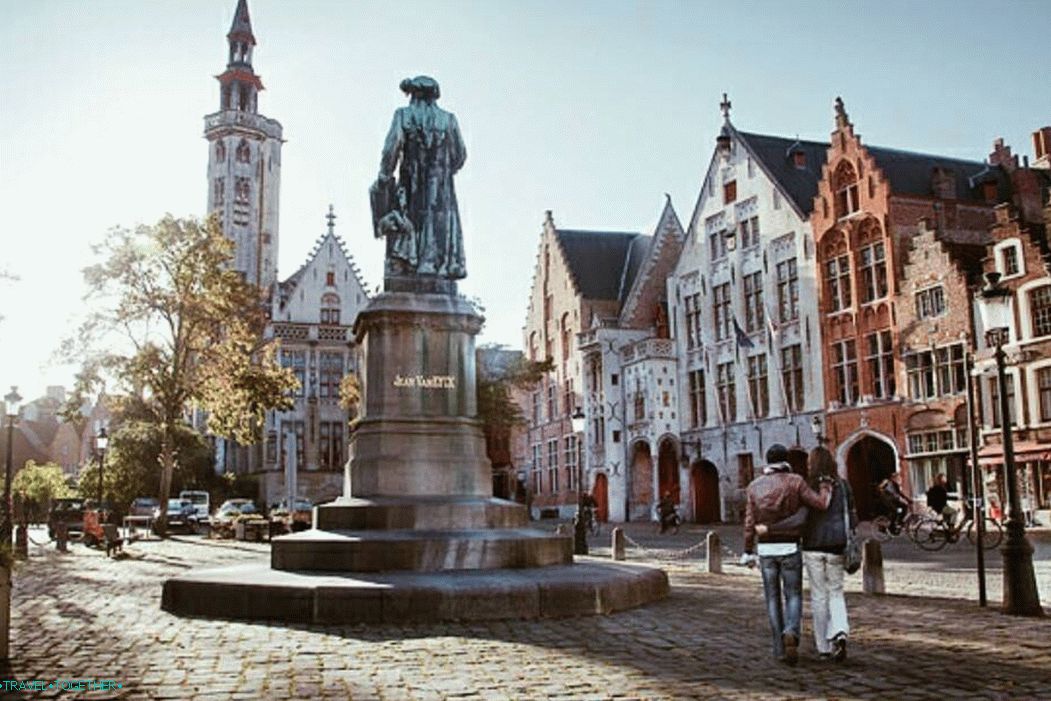 Jan van square Eyck
Jan van Eyck Square – the charming Bruges Square, which is named after a famous painter, a native Bruges.
Other interesting sights:
- The town hall is one of the oldest town halls in Western Europe, which there are more than 6 centuries. This is a beautiful gothic building with beautiful halls.
- Right on the corner of Jan van Eyck Square is a wonderful building with a striking tower built at the end of the 14th century and served to meet merchants.
- Prinsenhof is the favorite palace of the 14th century Burgundy courtyard.
- The Boechoute House is a 15th century building in the corner of the market square with clockwork.
- The Barge Bridge is a prime example of asymmetric architecture.
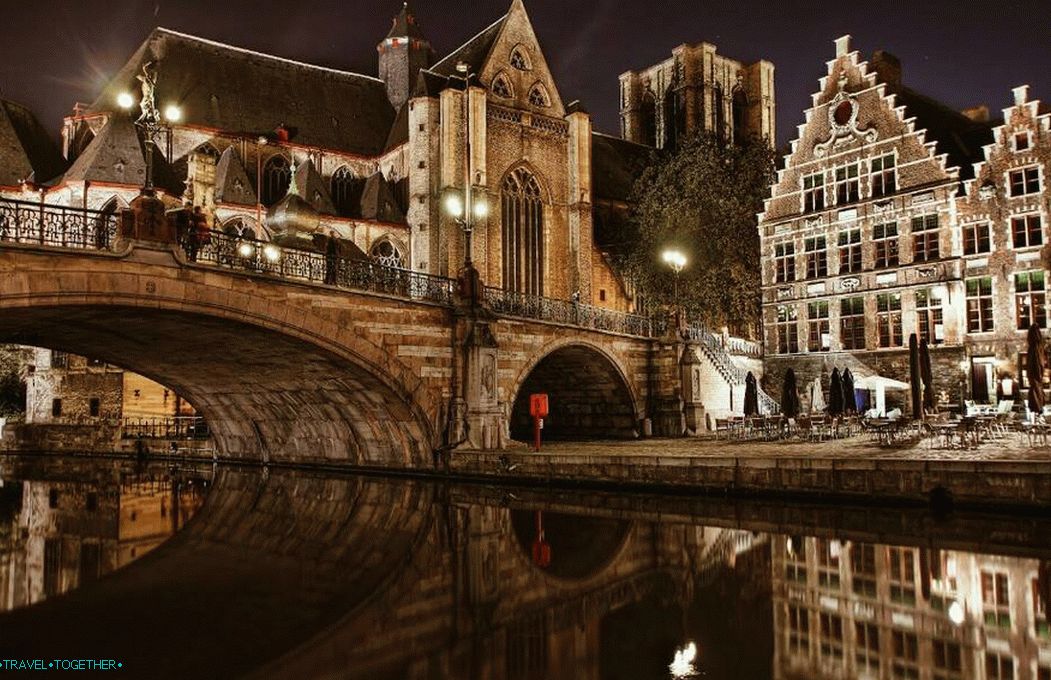 Night channel bridge … brugge
- The Church of St. Anne is a simple 17th century Gothic church, which surprises with its rich baroque interior.
- St. Giles Church is a fine example of brick Gothic, built in the 13th century. The interior is neo-gothic.
- St. John’s Mill is an old mill, the only one in Bruges, which is open to the public and has maintained its original location and still can grind grain.
- Saint Sebastian Building – Archers Guild Building, history which is 600 years old.
- Seminary – 17th century Cistercian Abbey, unique green spot in the middle of stone Bruges.
- St. James Church – the modest chapel of St. James, built in the 13th century, in the 15th century turned into a large church. The church is known for its many treasures of art. received from the rich people of the city.
Bruges video
Maps and guides
Tourist map of Bruges with landmarks (download)