Brasov (Romania) – the most detailed information about the city with photos. The main attractions of Brasov with a description, guides and cards.
Contents
Brasov (Romania)
Brasov is a city in Romania and a famous resort. Located in the central part of the country in the southeast of the historical region Transylvania in the picturesque Carpathians. Brasov is one of the most beautiful cities of Romania with a charming medieval core and several great sights that often called the “Romanian Salzburg”. It is famous for atmospheric old streets, old gothic architecture and stunning romantic atmosphere, representing a mixture of beautiful mountain landscapes and medieval history with significant Saxon influence.
- Geography and climate
- Practical information
- Story
- sights
- Video
- Maps and guides
- Comments and reviews
Geography and climate
Brasov is located in the heart of Romania and is surrounded by southern Carpathians. The city is located 170 km north of Bucharest and 380 km from the Black Sea coast. Brasov has moderate continental climate with cool summers and cold enough in the winter.
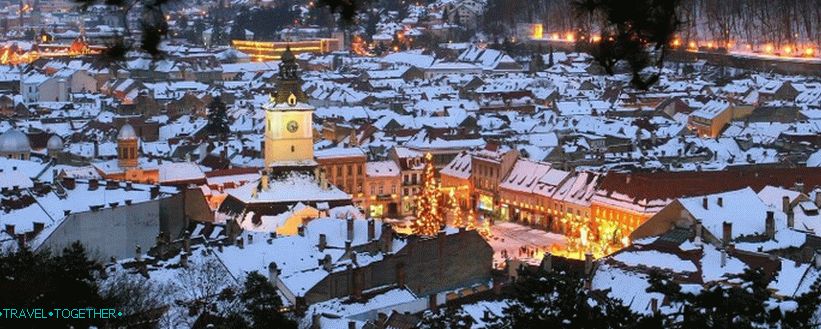 Brasov in winter
Practical information
- Population – more than 250 thousand people (the seventh largest population of the city of Romania).
- The area is 267.32 km².
- The currency is leu.
- The language is Romanian.
- Time – UTC +2, in summer +3.
- Brasov is one of the most visited cities in Romania thanks to the famous ski resort Poiana Brasov, which actually is part of the city.
- The nearest international airport is located in Bucharest in three hours by bus or train. Brasov also has a direct rail connection with Vienna and Budapest.
- Most brand stores are concentrated in the area of Republic, as well as in shopping centers Unirea, Eliana, Coresi Shopping Resort. To buy inexpensive food better visit the Astra Market (Piaţa Astra) or supermarket chains Lidl, Penny Market, XXL Discount, Carrefour, Kaufland.
- Brasov is one of the safest cities in Romania.
Story
Brasov was founded in 1211 as a fortress of the Teutonic Knights. under the name of Kronstadt. In 1256, first mentioned under modern title. Throughout its medieval history the city changed its name several times: Brasco, Brasso, Stephanopolis, Kronstadt Brasov was founded by German settlers, so here Saxon influence is especially felt.
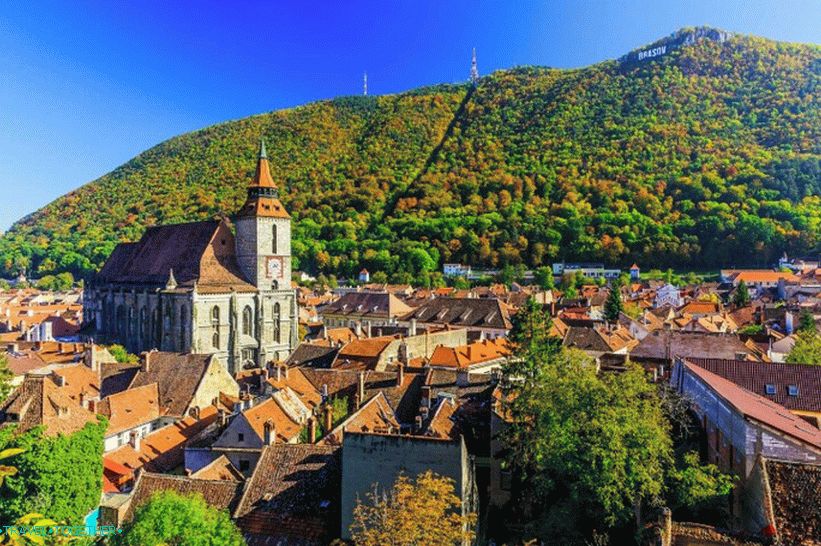 Panorama of Brasov
Due to the favorable position between Wallachia and Moldova quickly became one of the economic and cultural centers Transylvania At the same time, Brasov occupies a prominent place in history. Romania. Here was published the first book in Romanian and opened the first Romanian school.
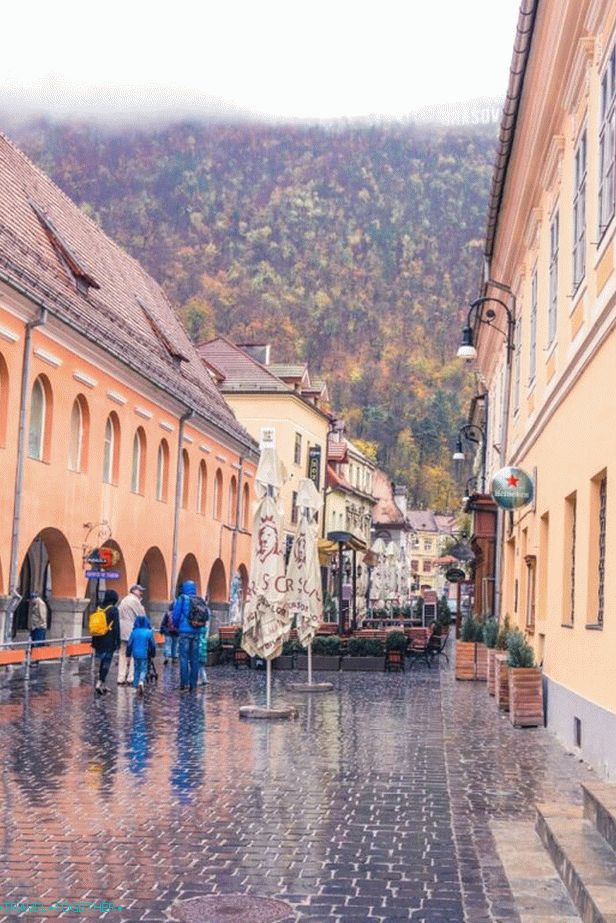 Streets of Brasov
sights
Brasov has an excellent historical center that is built in traditional German style and very reminiscent of the ancient city Western and Central Europe. It includes some interesting medieval sights: from the fortress walls and towers, which surrounded the city hundreds of years ago and were preserved only in parts, to gorgeous old churches and charming cobbled streets, which fully convey the historical atmosphere of the Middle Ages.
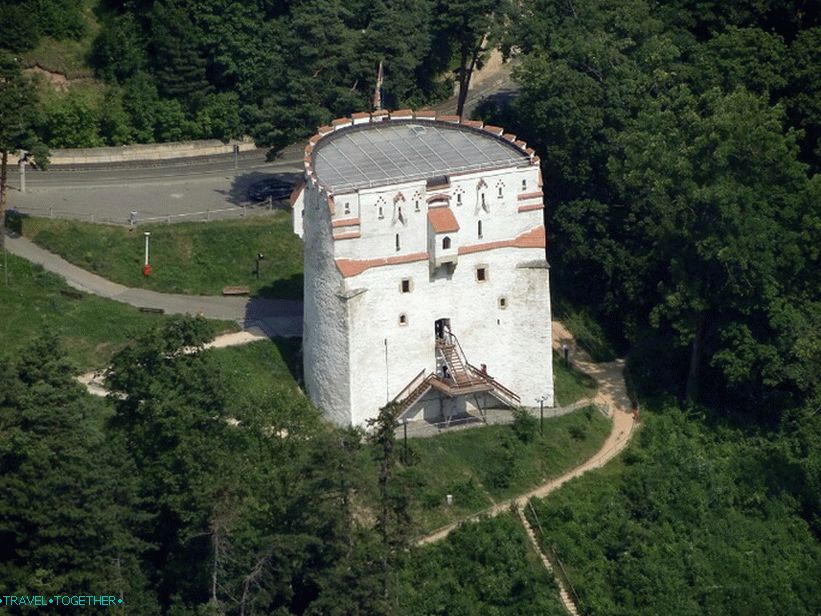 White Tower
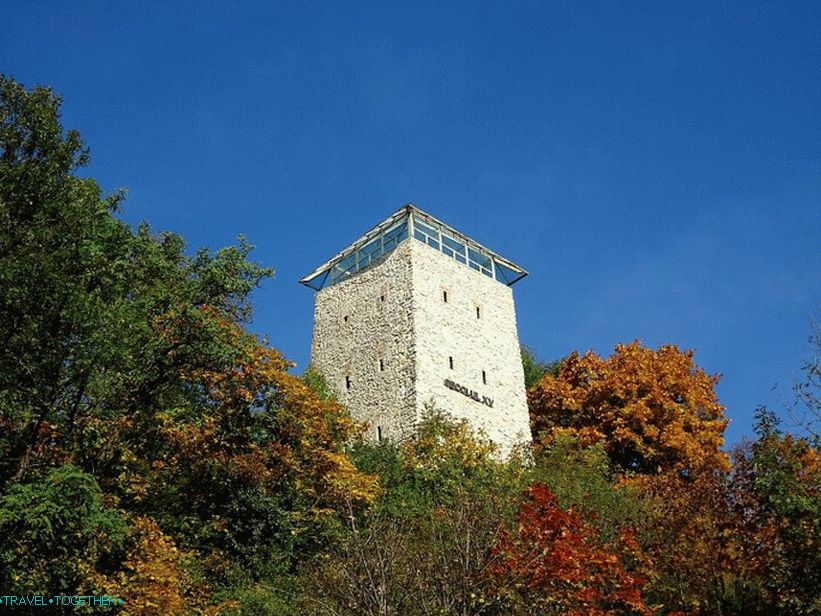
The initial fortification system of the medieval city included several lines of walls, 27 towers and 8 bastions, as well as ditches and ponds. At that time, Brasov was one of the most fortified cities. Transylvania, which reflects its significant historical role. The most well-preserved objects of the old fortifications are The Black and White Towers, which were part of the Lower Walls. Before them easy to reach on foot from the old town.
Interestingly, German settlers who in the Middle Ages ruled the city, forbade the Romanians to settle inside its serfs walls.
 Black tower
The black and white towers date back to the 15th century and represent powerful fortifications. The black tower is named after color, but due to lightning and subsequent fire.
 Catherine’s goal
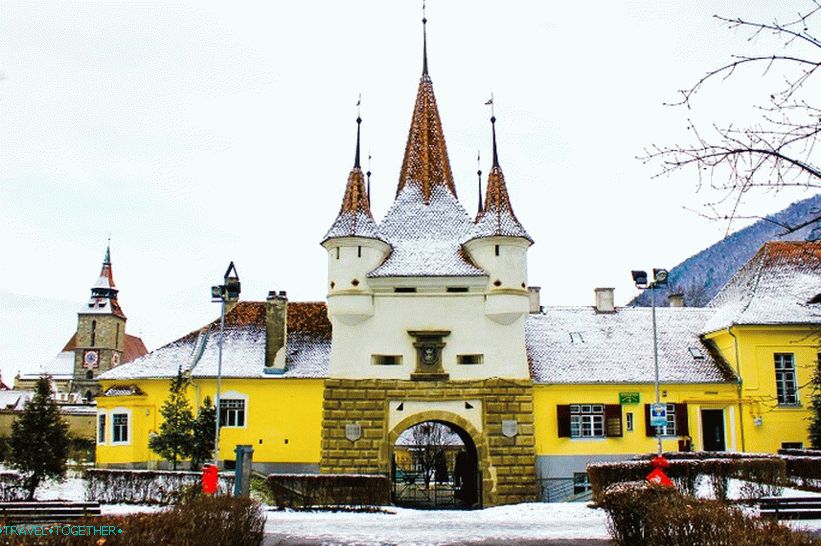
Near the Upper walls are medieval Yekaterinburg gate built in the 16th century. This magnificent structure is the only preserved original entrance to the old city. AT The Middle Ages in Brasov led three city gates.
 Gateway sheck
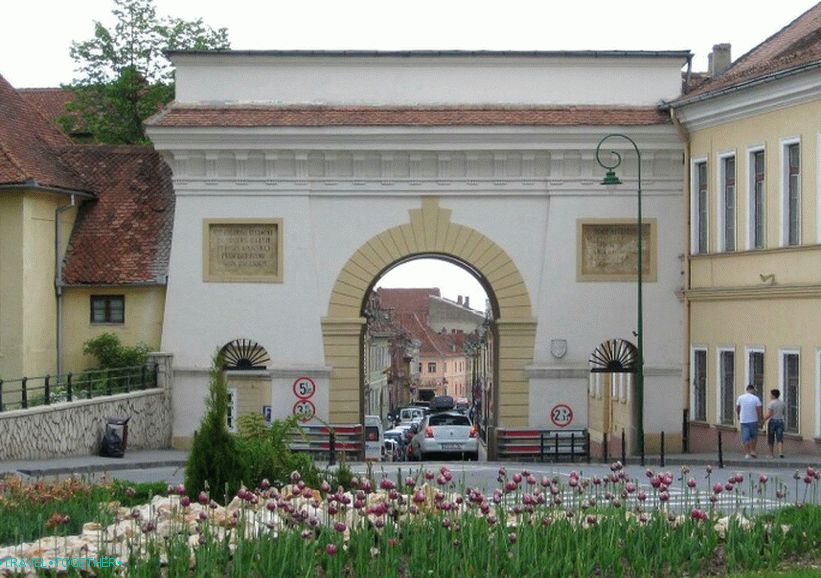
Not far from the Ekaterinburg Gate are the gate of Schei, built in 1827-1828, respectively. They separate the old city from district of the same name, which in the Middle Ages was the Romanian part Brasov.
 Black church
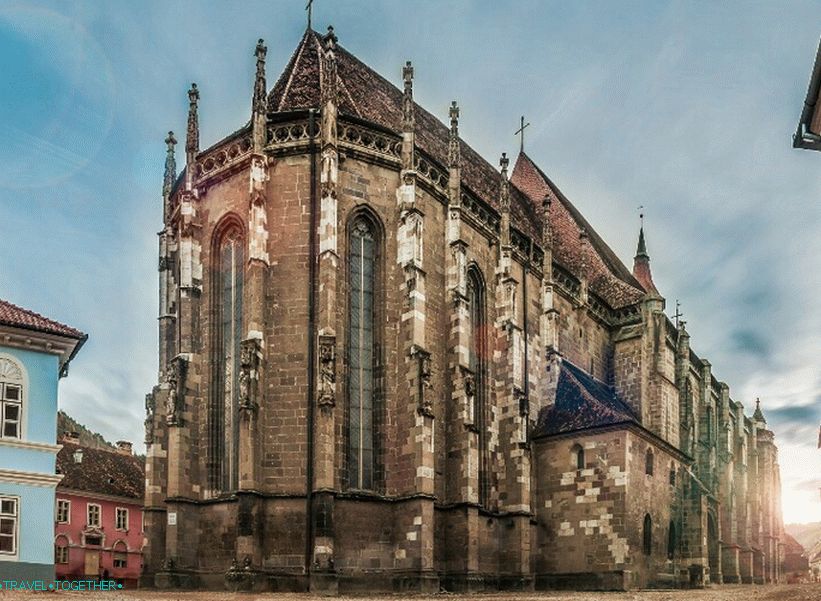
The most famous attraction of Brasov is Black a church that is considered a great example of gothic architecture. This religious building was built between 1385 and 1477 years the German community and is considered the largest medieval Christian temple of Southeast Europe. Church can take up 5000 people, has one of the largest organs in Europe and The largest collection of Turkish carpets.
The black church is named because of the fire, after which it blackened walls.
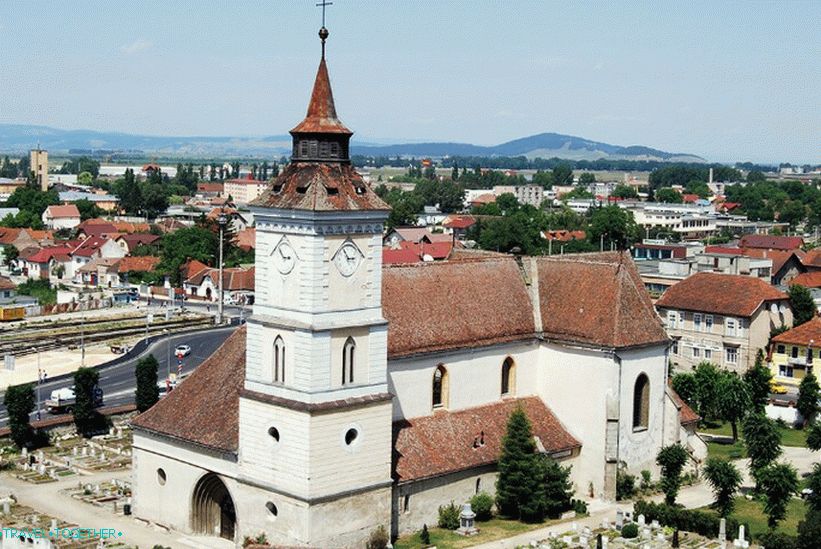 Church of sv. Bartholomew
Brasov’s oldest religious building is a fortified church of sv. Bartholomew, which dates from the 13th century.
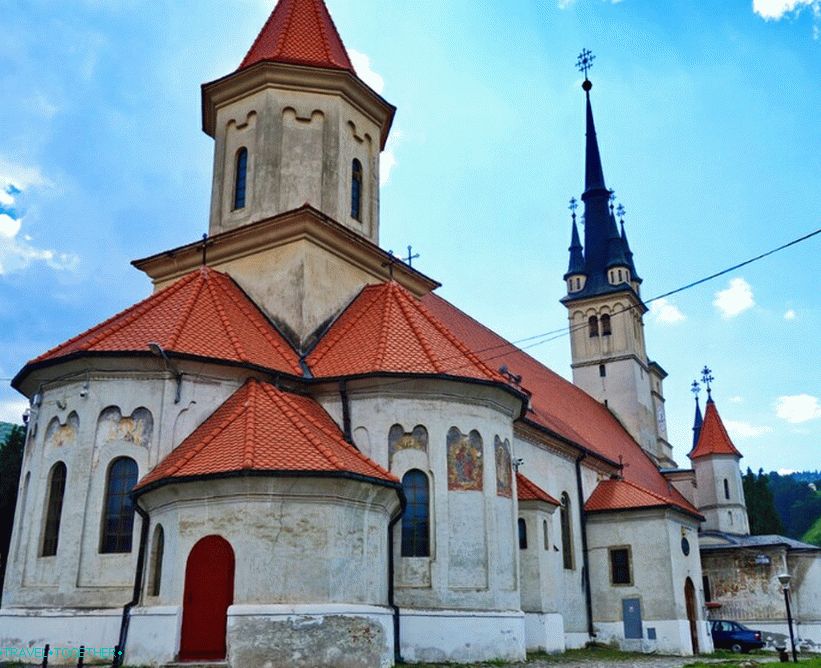 Church of sv. Nikolay
Another important monument of sacred architecture is orthodox church of sv. Nicholas, founded in the 14th century. This building throughout its history has undergone many changes, but always played an important role for the Romanian community of old Brasov.
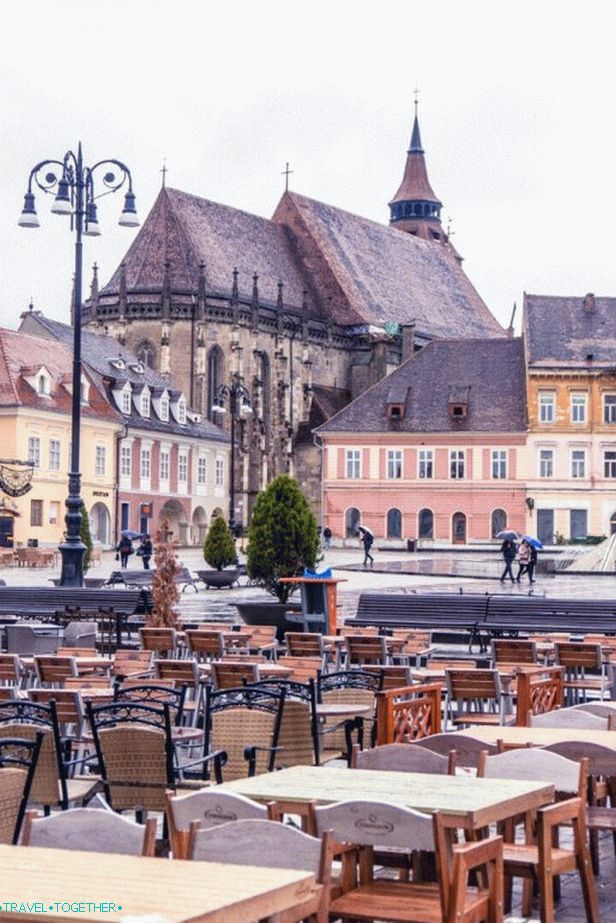 Council Square
Council Square – the heart of old Brasov and the central city space since the Middle Ages. In the center of the square is located historic town hall building with a tower of the 15th century.
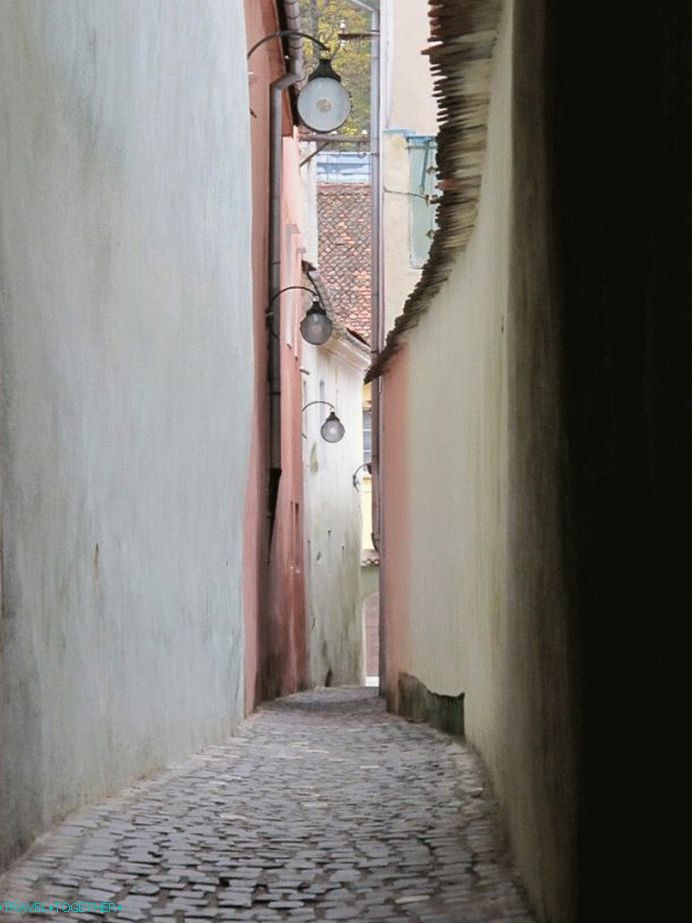 Street Sforii
Brasov’s Old Town is famous for its charming old streets, walk along which will bring real pleasure. One of the most The beautiful streets of the city is Lunga Street, which was built in middle ages and has kept numerous houses and monuments of the past centuries. The most remarkable is Sforia street, which is one of the narrowest streets in Europe (its width ranges from 110 to 135 cm).
Also near Brasov are some gorgeous old ones. castles, including the legendary Bran and the fabulous Peles.
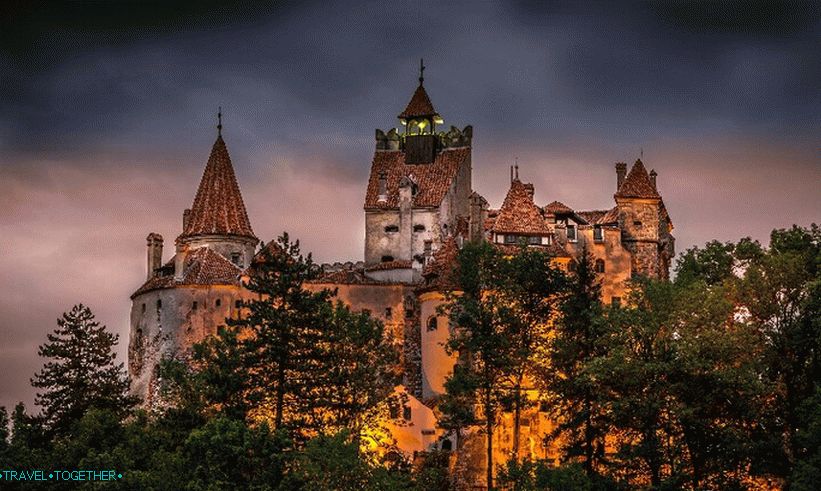 Bran Castle
Bran Castle – one of the most famous sights Romania owes its fame to the myth of Dracula created by Bram Stocker based on a real historical figure (Prince Vlad Impaler). This magnificent structure is built on a high cliff and surrounded by a halo of secrets and legends. The castle was built in the 14th century on place of the medieval citadel of the Teutonic Knights of the early 13th century. Narrow winding stairs lead through many wooden rooms, many of which are connected by underground passages. They are stored wonderful collections of furniture, weapons and armor 14-19 century.
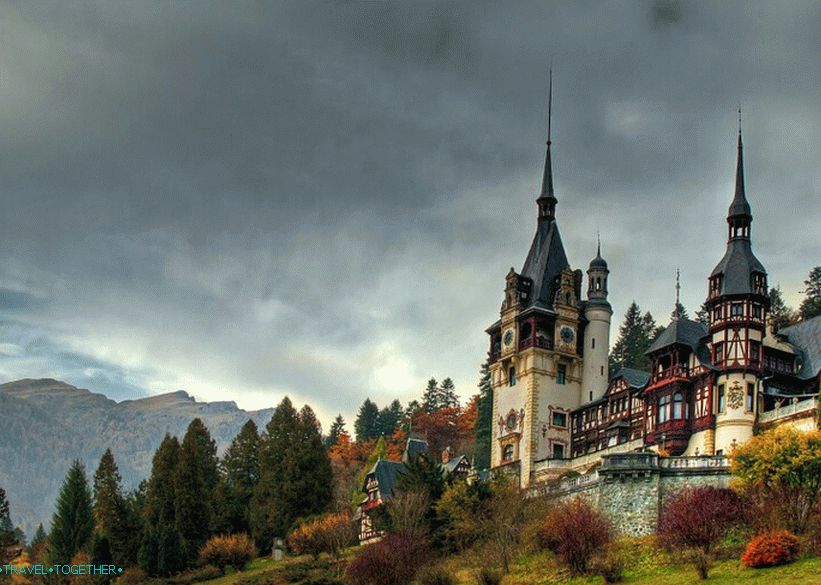 Peles
Peles
Peles is a masterpiece of German Renaissance architecture and one of The most beautiful castles in Europe. It was built in the 19th century in a picturesque terrain at the foot of the mountains Bucegi.
Video
Maps and guides
Old Town Map