Bologna (Italy) – the most detailed information about the city with photos. The main sights of Bologna with a description, guides and cards.
Contents
Bologna City (Bologna)
Bologna (Bologna) – a city of students, scientists, culinary, city towers and arcade buildings, one of the main intellectual centers Italy. He will certainly fascinate with his extraordinary atmosphere, where creativity and science, youth and old age, emotions and sober calculation intertwined together.
Bologna is located in the region of Emilia-Romagna in northern Italy near Florence and Rimini. Due to the good location and developed industry is one of the richest cities in the country with a high standard of living. Bologna is the flavor of old italian cities: walls, narrow and crooked streets, ancient buildings, porticos and arcades, numerous historical and cultural monuments – magnificent churches, magnificent palazzo, tall towers. Architecture The historic center of the city dates back to the 13th – 14th centuries.
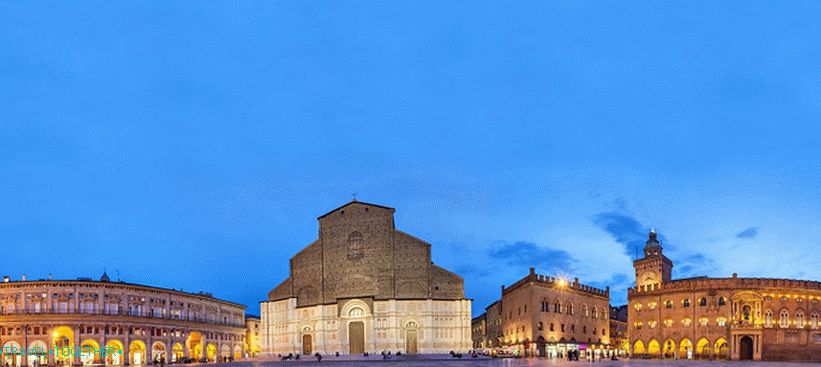
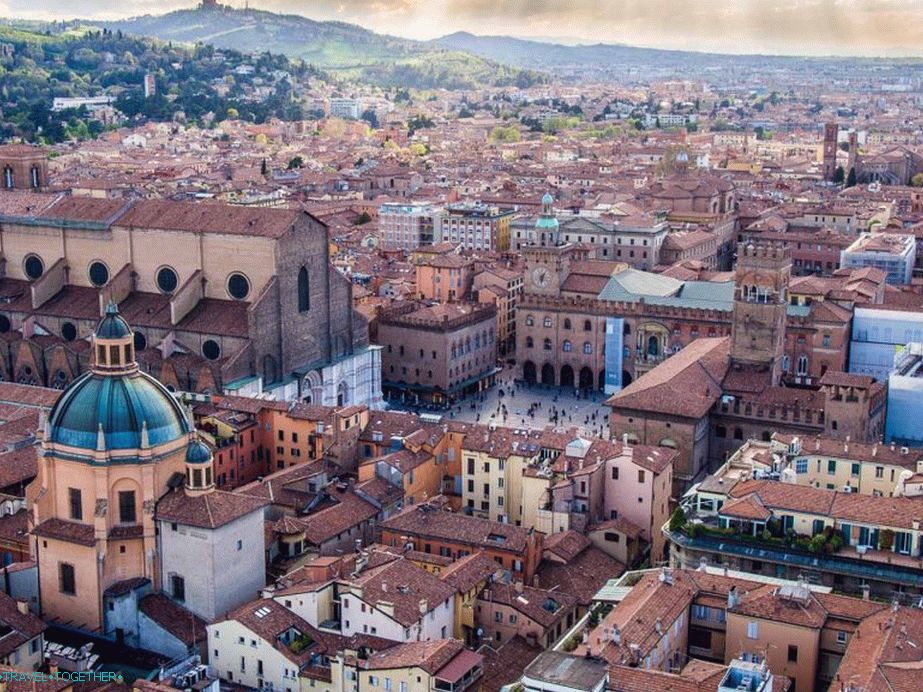 Panorama of Bologna
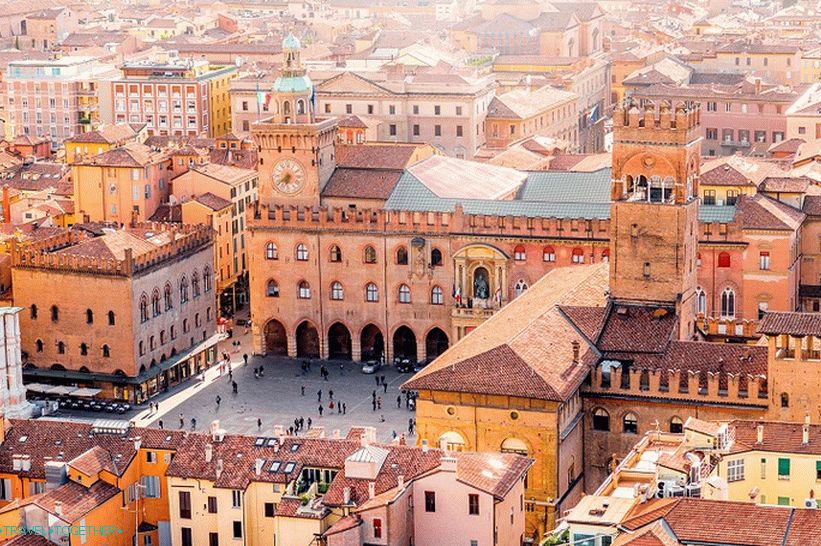
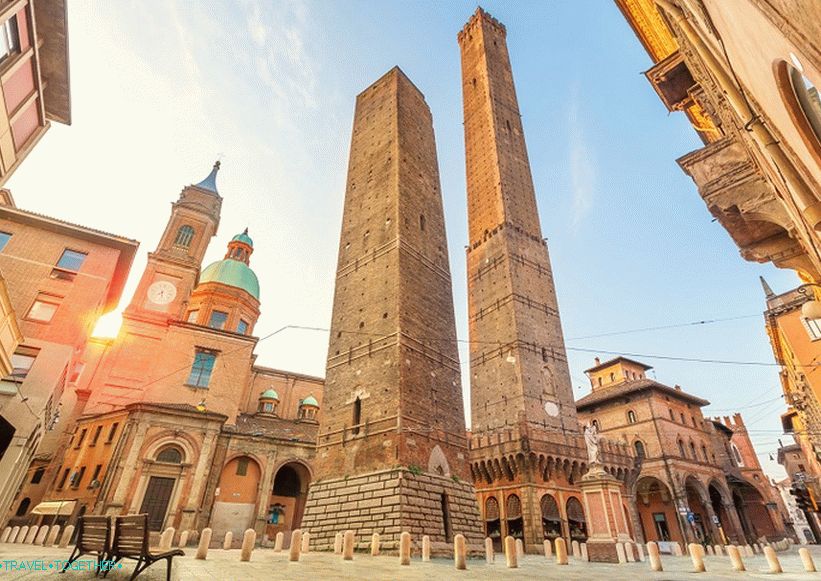
The main squares of the city are Piazza Nettuno (Neptune Square) and Piazza Maggiore (Large Square), which featured interesting historical monuments. Other interesting historical objects are high towers – the pride of the rich families of the city. Before them there were over a hundred. Currently, there are far fewer towers but they still stand out in urban architecture.
Also here is the oldest University of Europe, which founded in the 11th century. 90,000 students are currently studying at the University of Bologna students (almost 1/3 of the population of the city).
- Practical information
- Story
- How to get there
- Food and drink
- sights
- Video
- Maps and guides
Practical information
- The population is more than 380 thousand people.
- The area is 140 km².
- The language is Italian.
- Currency – Euro.
- Visa – Schengen.
- Time – Central European UTC +1, in summer +2.
Story
Scientists believe that Bologna was founded by the Etruscans at about 510 BC er Then the city was called Felsina and was built around the ancient sanctuary. In the 4th century BC the city was captured by the Celts, renaming the city to Bonnonia.
In the second century, Bologna became a Roman colony. In the heyday the might of the Roman Empire the city turned into one of the most large and richest cities, beautiful buildings were built in it and monuments, which, unfortunately, to this day preserved.
 Bologna – old city
With the collapse of the Roman Empire in the early Middle Ages, Bologna went under the rule of the Ravenna Greek Exarchate, then Lombard King Luitprand. While the emperor Charlemagne is not granted the settlement the rights of a free city. From now until now on the coat of arms is emblazoned the word “libertas” – freedom.
In the 11th century, the University of Bologna was founded – one of the oldest in Europe, in the 13th century, serfdom was abolished.
 Bologna – old city
In the second half of the 12th century, the city became part of the Lombard league, which was the opponent of Frederick Barbarossa. Despite on striving for democracy, Bologna has always zealously supported the power of the Pope.
In 1512 the city was again annexed to the Roman possessions.
 Bologna – old city
In the 17th century, Bologna became the intellectual center of the whole Europe. Famous scientists, graduates of the University come here. make important discoveries (here, for example, Copernicus studied). AT a new time the city became part of the Tsizalpinsky Republic.
In 1860, Bologna, along with all of Romagna, joined the Italian kingdom.
How to get there
Bologna is located 220 km from Milan, 370 km from Rome, 100 km from Florence and 120 km from Rimini. The city has an international Airport Marconi.
Food and drink
Bologna is the culinary center of Italy, the birthplace of the bolognese sauce, tortellini, sausage sausages and mortadella. Be sure to stand here try traditional dishes: Tagliatella Bolognese, Tortellini, Spuma di Mortadella, Lasagne Verdi alla bolognese, Raviole Bolognesi, Friggione.
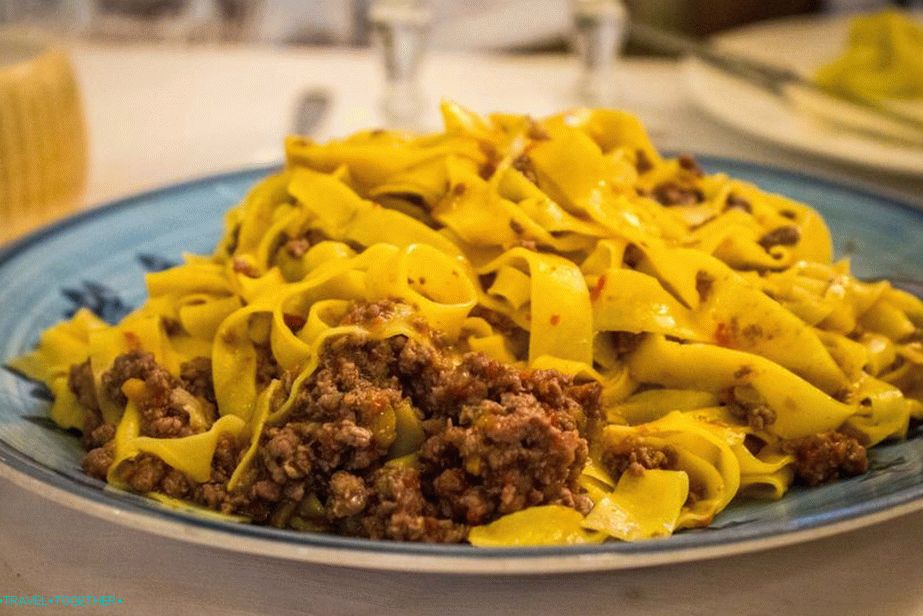 Bolognese
sights
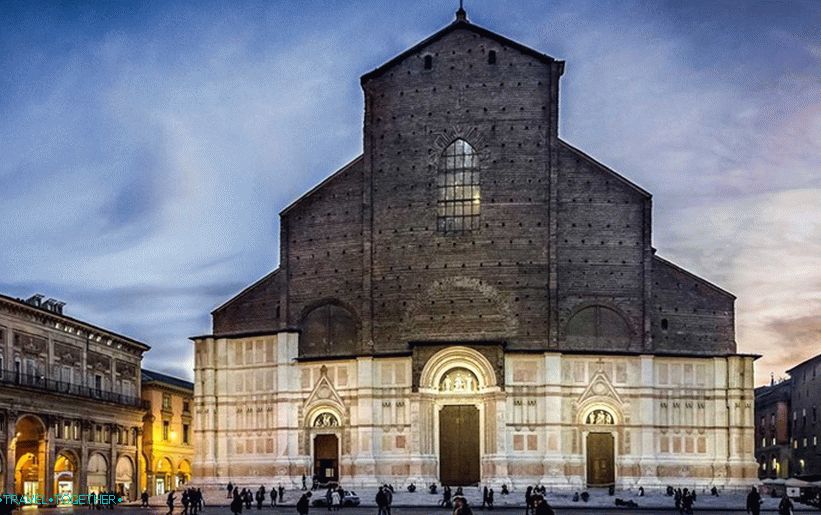 San Basilica Petronio
Basilica San Petronio – one of the most important and most the large churches of Bologna are 132 meters long, 66 meters wide, 47 meters high. The basilica is located in the historic center. cities on Piazza Maggiore.
Construction of the basilica began in 1390. Later structure The building was changed to the shape of a Latin cross. Roof of the nave and apses were completed only in 1663 by the project of Girolamo Raynaldi. It should be noted that in the church there is an organ built at the end of the 15th century.
Mode of operation: Daily from 8:00 to 18:30 (until 18:00 in the winter period).
Cost: Free. Group tour 8 euros.
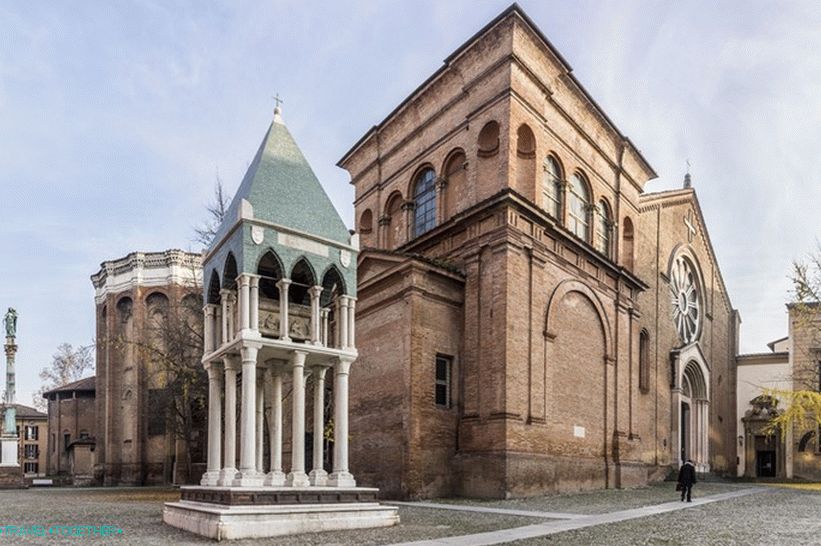 Basilica San Domenico
Basilica San Domenico – a beautiful old church, built in the early 13th century by the founder of the dominican spaniards Dominic Guzman. His remains are kept here in a beautiful chapel in marble ark. The interior of the basilica is decorated with the frescoes of Guccino, Lippi, Karachi
Address: Piazza San Domenico, 13 40124 Bologna
Working hours: Monday to Friday from 9:00 to 12:00 and 15:30 to 18:00 Saturday from 9:00 to 12:00 and from 15:30 to 17:00. Sunday from 15:30 to 17:00.
Cost: Free
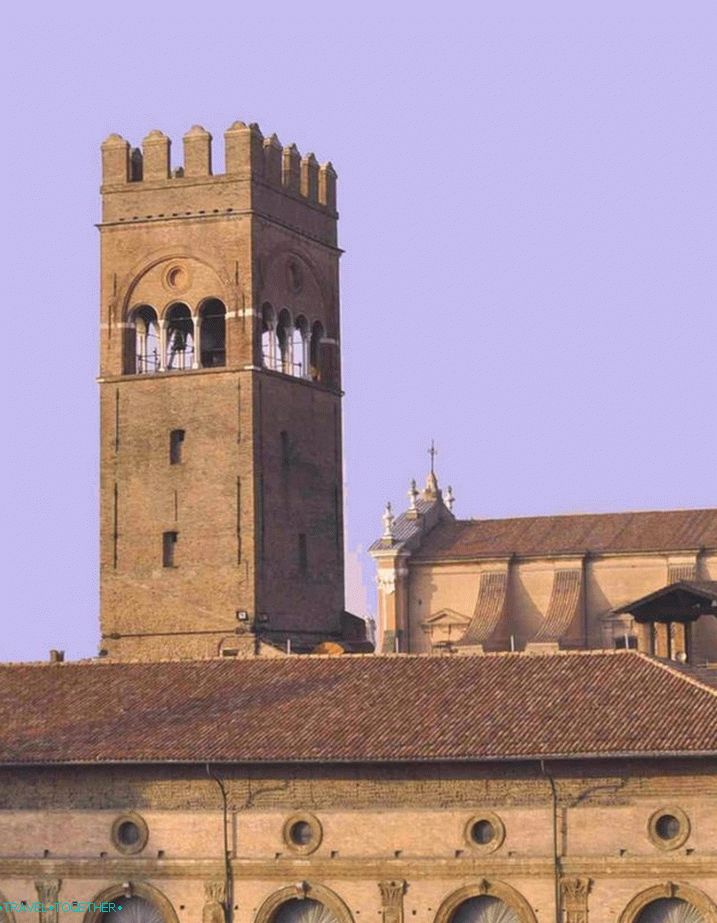 Arengo Tower
Trenre Tower (TORRE DELL’ARENGO) – a tower in the historic the center of Bologna, on Neptune’s Square, unique in its history and structure. The tower creates a single ensemble with the Palazzo Podesta. Tower was built at the beginning of the 13th century. In the middle of the 15th century there was installed a bell tower with a 47-ton bronze bell.
Address: Piazza del Nettuno, 40124 Bologna
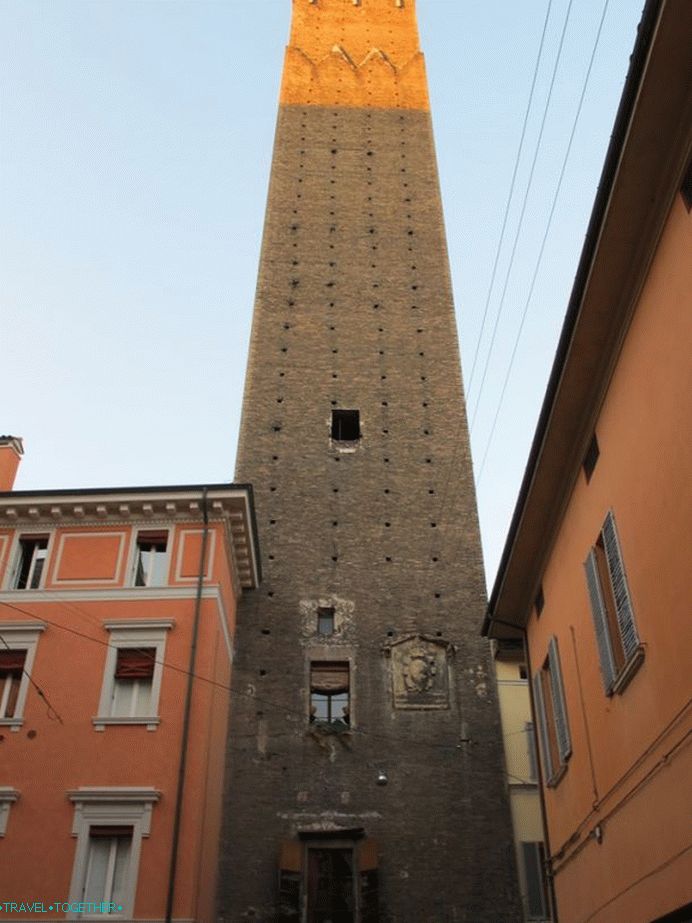 Prendiparte Tower
The Prendiparte Tower is a brick tower of the 12th century in Bologna, built by a rich family of helloves. Tower height is 60 meters. One of the oldest towers of the city. AT the middle of the 18th century was turned into a prison.
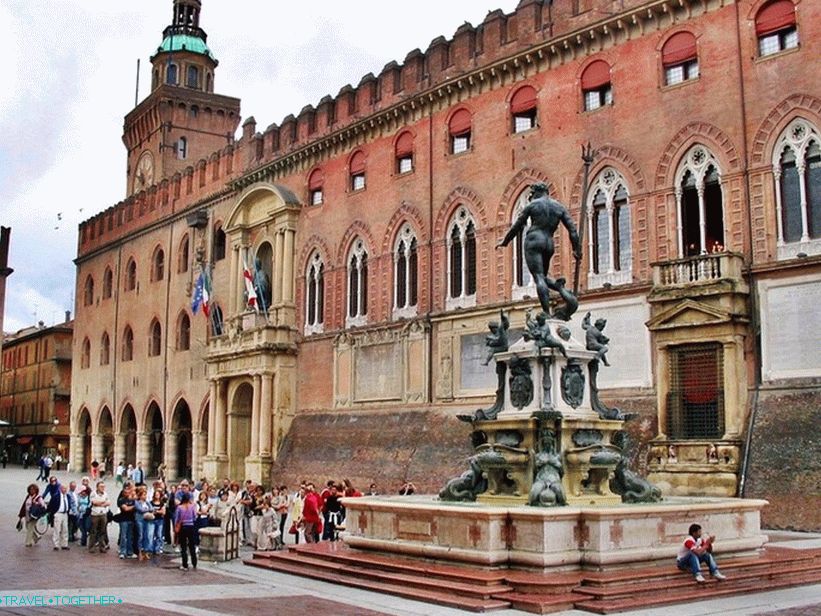 Bolognese the university
University of Bologna – the oldest university in Europe founded in 1088. Dante Alighieri, Francesco studied here. Petrarch, Guinicelli, Nicolaus Copernicus. They spent here research Galvani, Alessandro Volta. The university study 90 thousand students.
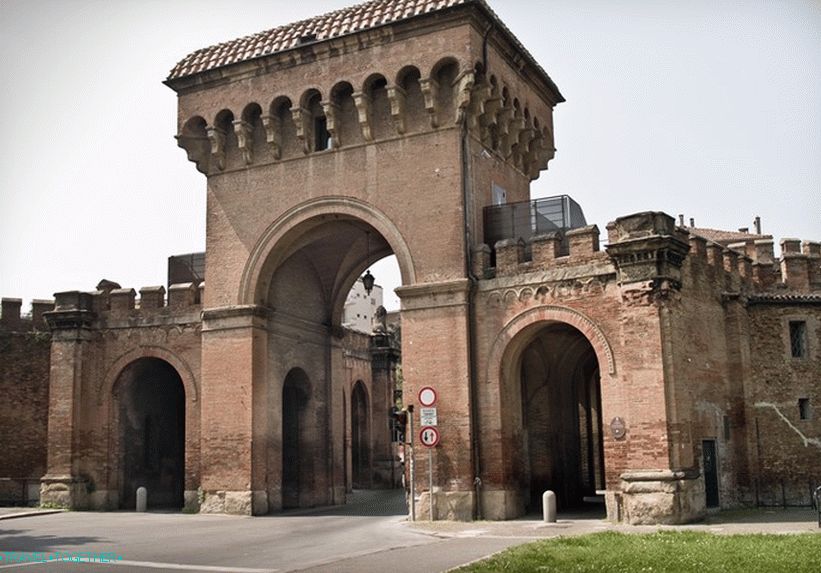 Zaragoza Gate
The Zaragoza Gate is a 17th century gate in the city of Bologna. Their also called the gate a pilgrim, because believers passed through them on the way to the monastery of San Luca.
Address: Piazza di Porta Saragozza – 40123 Bologna
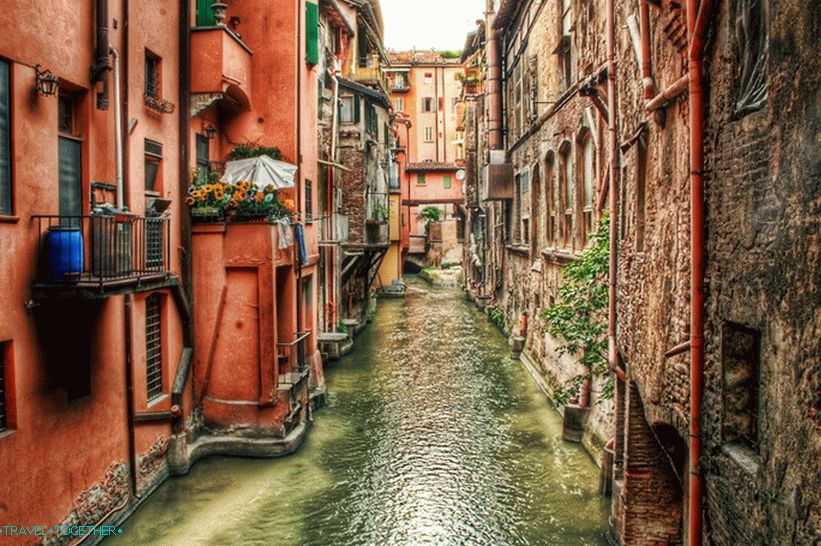 Canal moline
The Molin Canal is “little Venice” in the center of Bologna, picturesque small canal between old buildings. Channel is a continuation of the channel Reno.
Address: Via Capo di Lucca – 40126 Bologna (BO).
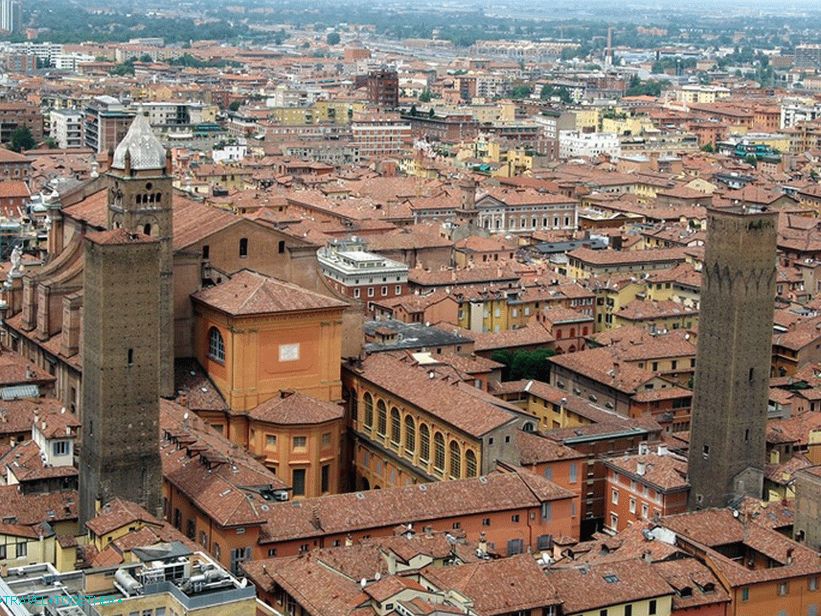 Cathedral of San Pietro
Cathedral of San Pietro – the cathedral church of Bologna, built at the end of the 16th century by Pope Gregorio XIII. Although the origins of the first church in this place date back to the 10th century. Inside the temple decorated with paintings by Prospero Fontana, Carracci, Franceschini and Donato.
In the architecture of the cathedral stands 70 meter high bell tower, which began to build in the 11th century, and finished at the beginning of the 15th century. Most a large bell weighs 33 tons, and the weight of all the bells is 65 tons.
Address: Via dell’Indipendenza, 64 40126 Bologna
Mode of operation: Daily from 8.00 – 18:45. During worship tourists may not be allowed.
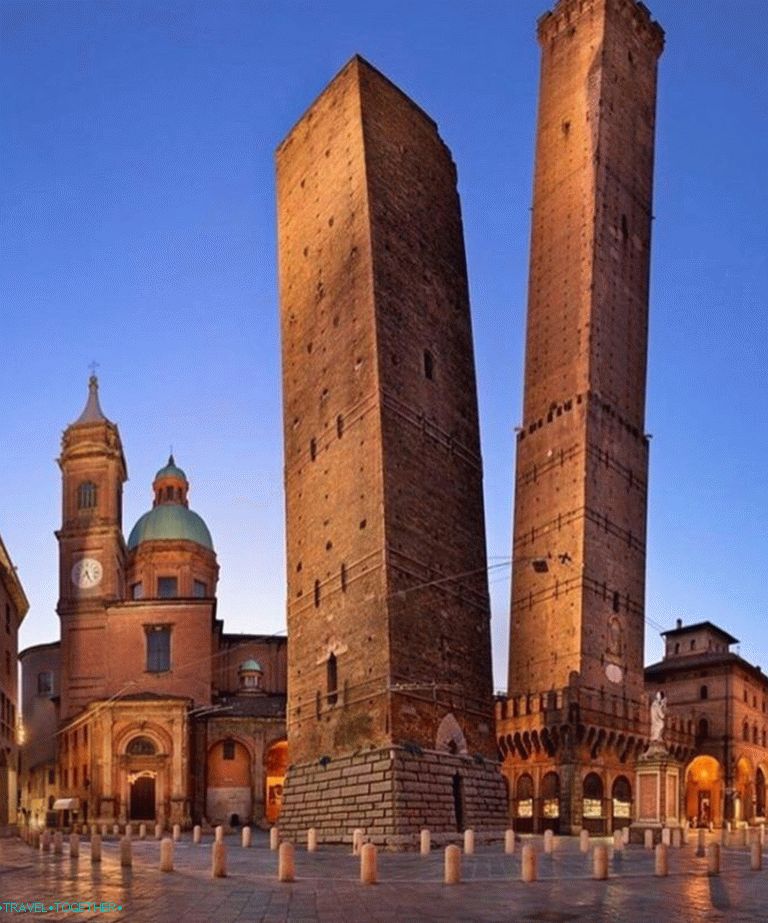 Falling towers Garisenda and Azinelli
Garisenda and Azinelli Falling Towers – Vertical dominant of Bologna. Built from simple bricks.
Azinelli Tower was built at the beginning of the 12th century. Tower height 97.2 meter To get to the top you need to overcome 498 steps. Tower rejected from the axis by 2.2 meters.
Garisenda Tower was built in the 14th century. Its height is “only” 47 meters, and the deviation from the axis is more than 3 meters.
At the top of the tower Azinelli works viewing platform with stunning panorama of Bologna.
Address: Piazza di Porta Ravegnana, 40126 Bologna, Italy
Working hours: From April 1 to September 30, 2016: from 9:00 to 19:00 From 1 to 31 October 2016: from 9:00 to 18:00. From November 1 2016: from 9:00 to 17:00
Cost: 3 euros
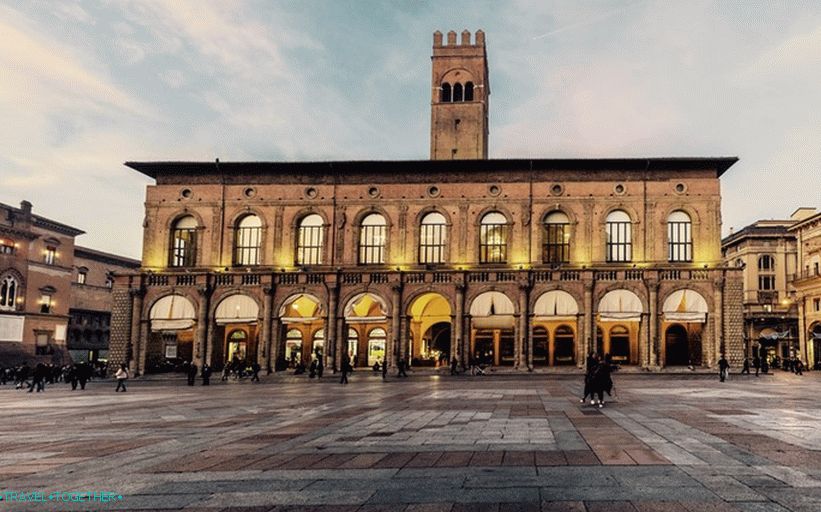 Piazza Maggiore
Piazza Maggiore or Big Square – one of them central squares in the historic center of Bologna. Main Attractions Square: Basilica San Petronio, Palazzo Accursio, Palazzo Podesta. It was formed in the early 13th century.
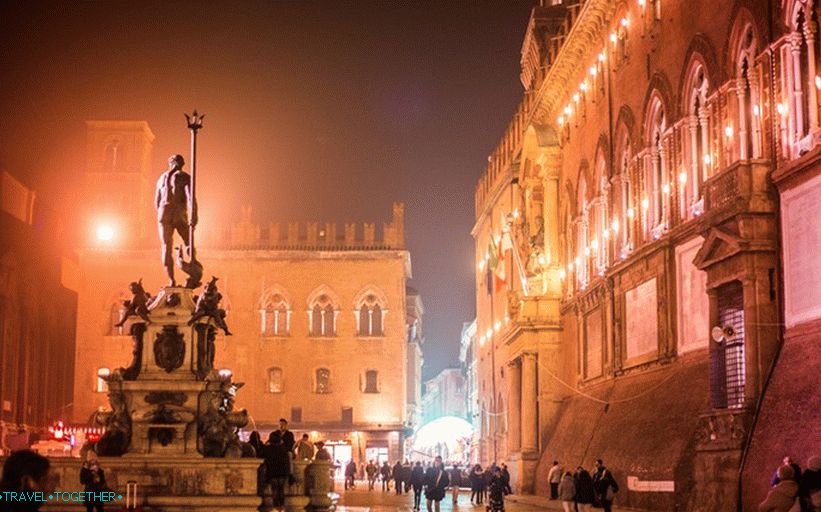 Piazza Neptuno
Piazza Neptuno – the square in the historic center of Bologna, founded in the second half of the 16th century. The main purpose of the area – expansion of the existing space between Palazzo Communale and Palazzo Podesta. On the square is set Neptune’s fountain, developed by Laureti between 1563 and 1566.
Address: Piazza del Nettuno – 40124 Bologna
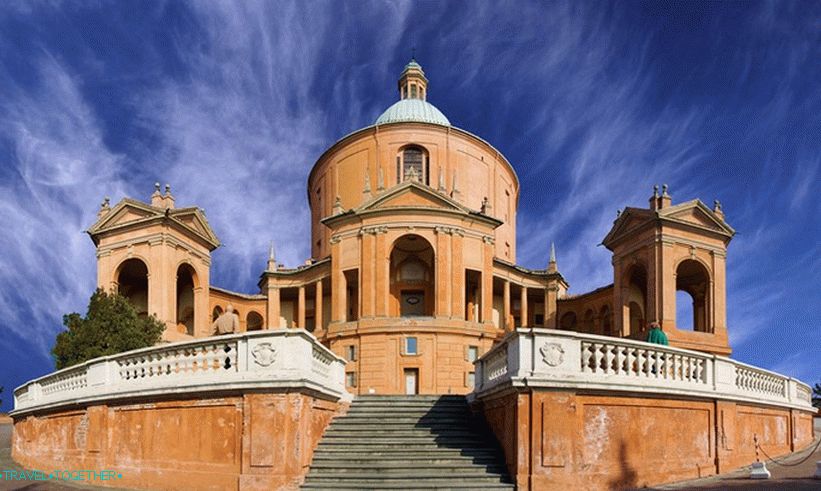 Sanctuary Madonna San Luca
Sanctuary of the Madonna of San Luca – a religious building in honor of the Blessed Virgin in Bologna, one of the symbols of the city. The building was built by Dottie in the middle of the 18th century. Way here from the city over 4 kilometers decorated with more than 600 arcade arches.
Address: Via di San Luca, 36 40135 Bologna
Operating mode: From 6.30 to 17.00.
Cost: Free
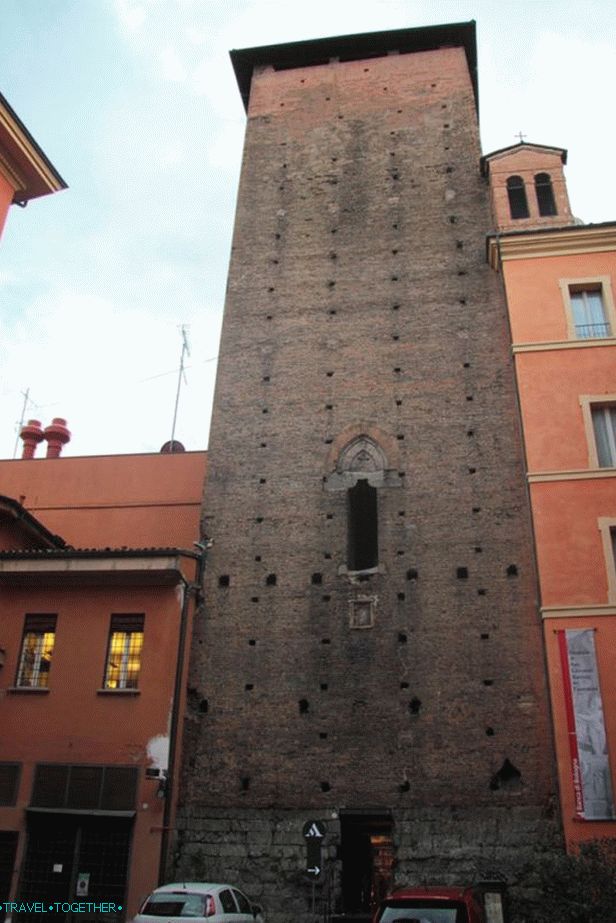 Tower Galluzzy
Galluzzi Tower – a tower in a small square of Piazza Galvani in Bologna, one of the three “medieval skyscrapers” cities. Belonged to an influential Guelph family. Tower height is 30 meters.
Address: Piazza Galvani, 4, 40124 Bologna
Video
Maps and guides
Tourist Card