Arles (France) – the most detailed information about the city with photos. The main attractions of Arles with a description, guides and cards.
Contents
City of Arles (France)
Arles – a city in the south of France in the Provence-Alpes-Côte d’Azur region Coast. Located in the Rhone Valley in the department of Bouches du Rhone. Arles is one of the most beautiful cities of Provence with magnificent historical and cultural heritage. Here preserved magnificent sights of the Roman Empire, and the Romans themselves called Arles “little Gallic Rome”. This is a city with magnificent Provencal atmosphere – beautiful stone houses with lovely multi-colored shutters and flowers on the windows, green cozy square with a cafe and a measured rhythm of life.
The famous artist Vincent Van Gogh created in Arles several of his pictures.
- Geography and climate
- Practical information
- Story
- sights
- Video
- Maps and guides
- Comments and reviews
Geography and climate
Arles is located at the beginning of the mouth of the Rhone, on the border of its huge marshy delta and reserve Camargue. The city has a warm Mediterranean climate. Summer in Arles is hot and dry, and winter relatively mild. In the cold period, the Rhone delta is subject to influenced by mistral, which can bring a cold snap and even frosts.
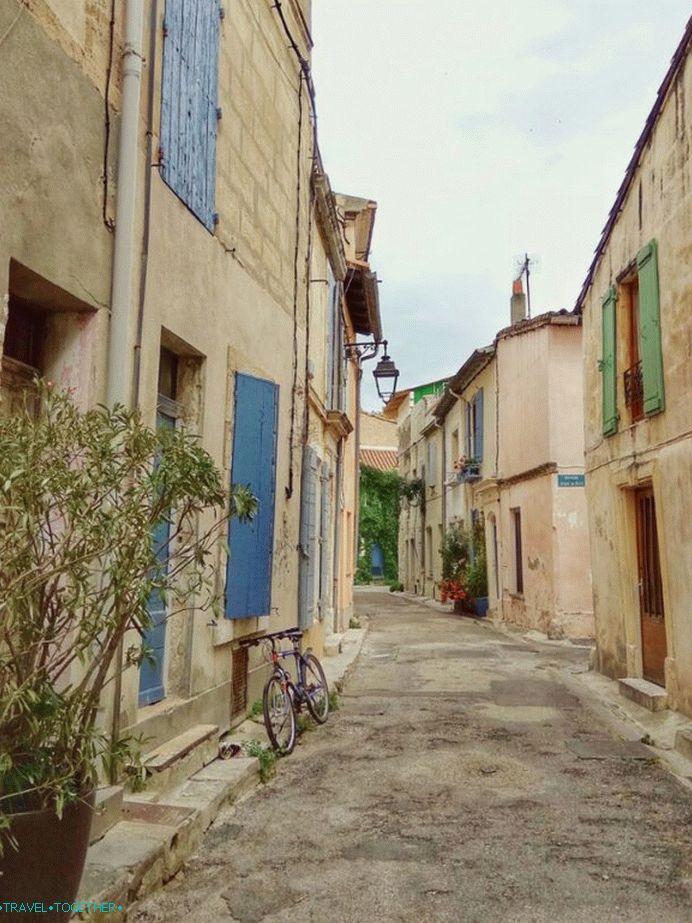 Streets of Arles
Practical information
- The population is more than 50 thousand people.
- The area is 758.93 km2.
- The language is French.
- Currency – Euro.
- Visa – Schengen.
- Time – Central European UTC +1, in summer +2.
- The nearest international airport is in Marseille, which has a railway connection with Harlem. Also by train you can get here from Avignon.
- Arles has a regular bus service to many cities. Department of Bouches du Rhone.
- Most stores are located in the Republic Square. and arenas.
- Arles is known for its gastronomy: Saucisson d’Arles (dry sausage), broufade (beef stew), fougasse (bread, similar to Italian Foccata), Gardianne (lamb stew cooked with thyme and sage), Taureau de Camargue (camargue meat bull).
- Popular traditional products: olives, bacon, cheese, anchovies, wine.
- Prices for hotels in Arles are lower than in Avignon. And tourists are here less. At the same time, the city is located relatively close to the most popular places of Provence and the Mediterranean coast.
Story
A settlement on the site of modern Arles existed even before the conquest of these territories by the Romans. In the 8th century BC lived here ligurs. Later, the settlement became an important port of the Phoenicians. The romans conquered the city in 123 BC. The city was named Arelat. For some time, the ancient Arles was in the shadow of the ancient Marseille. Everything changed after the conflict between Julius Caesar and Pompey the Great, when Massalia supported the latter. After his victory, Caesar gave all the privileges of Arlu.
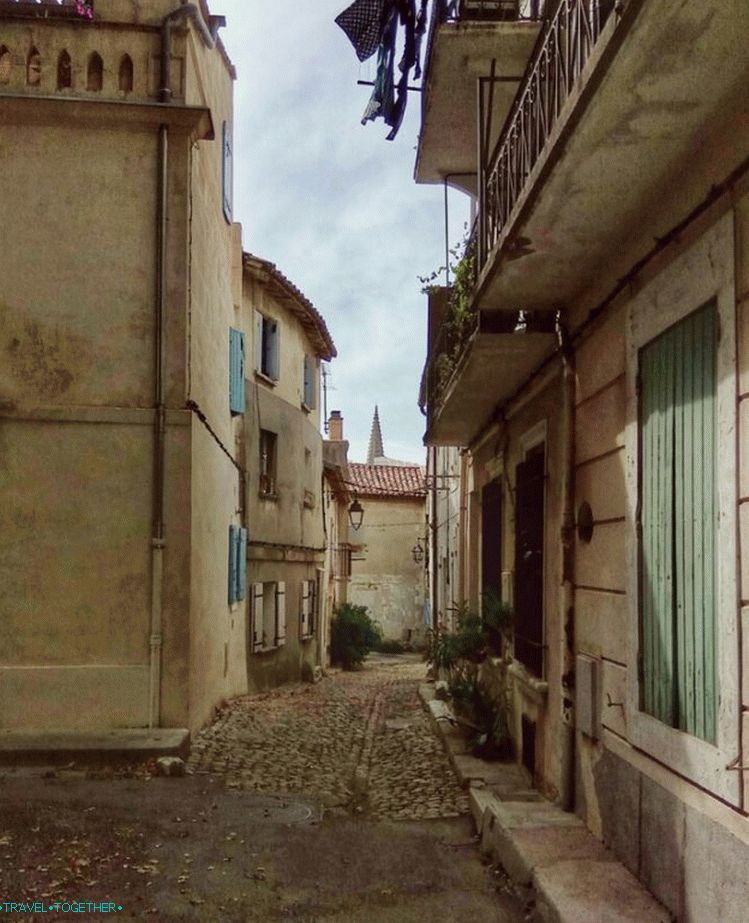 Streets of Arles
The city reached its highest peak in the Late Roman period. And even some time was considered the main city of Gaul. At the end of the 4th century AD its population was about 100 thousand people (twice more than now). Arelet also loved the emperor Constantine, who visited him several times. The prosperity of the city ended in 5th century, when it was looted by the Visigoths. In the 8th century, Arles was again looted, but now by the Arabs.
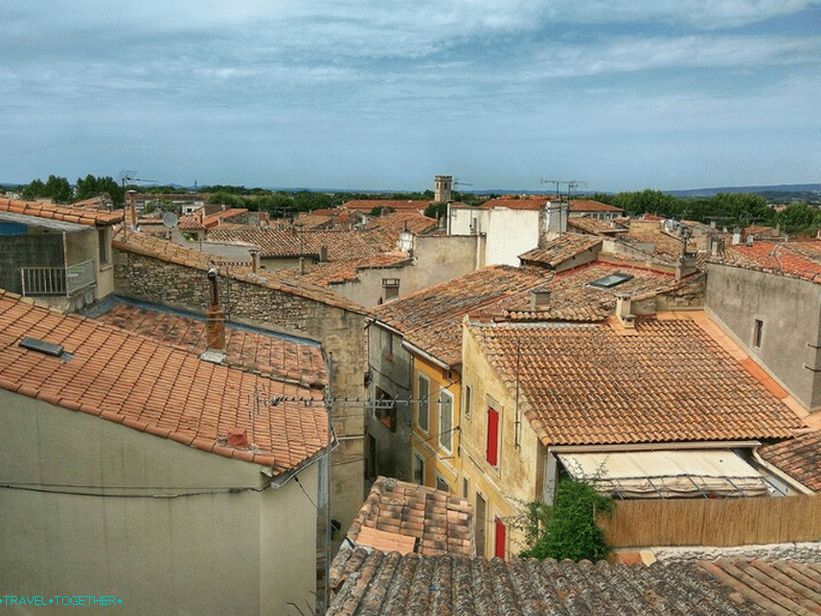 Panorama of the city
In the 8th century, Provence was incorporated into the Carolingian empire. AT the middle of the 9th century, Arles became the capital of an independent kingdom, which was one of the most powerful states of the South of France. In 1032 the kingdom became part of the Holy Roman Empire, but the city retained great autonomy. In the 12th century, Arles received the status free city, which he maintained until the French Revolution. In the first half of the 13th century, the city became part of Provence and ceded the title of the main center of the region Marseilles.
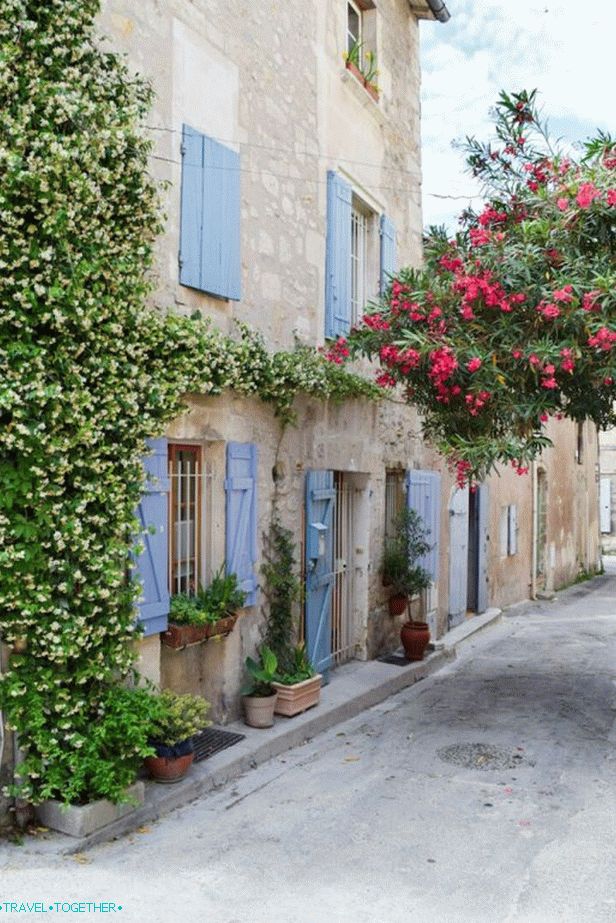 Arles
Arles
At the end of the 19th century, Paul Gauguin and Vincent Van lived and worked in Arles. Gog For the latter, this period is considered its heyday. creativity.
sights
Arles is known for its magnificent Roman heritage. Among the antique The ruins stand out amphitheater, theater, ancient forum and terms.
 Amphitheater (Arena)
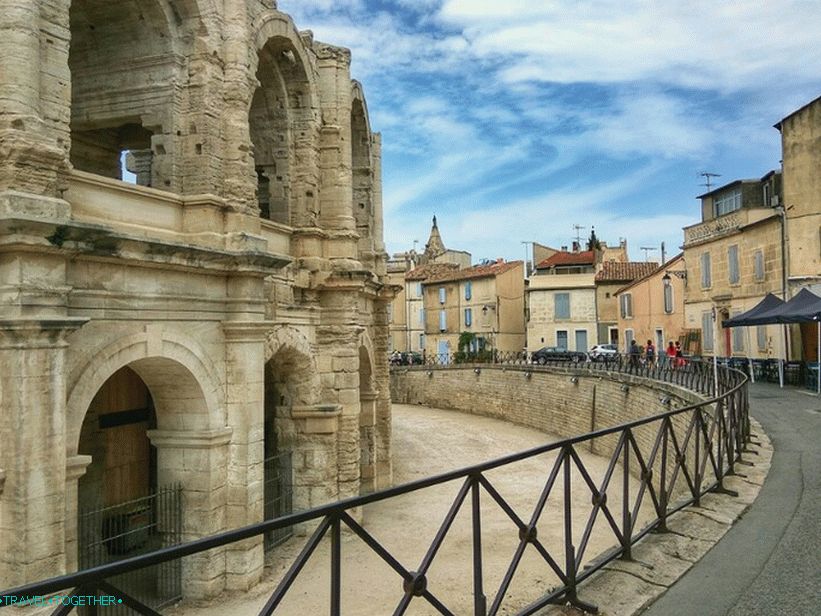
Amphitheater (Arena) – the main attraction of Arles and one of the largest antique buildings built in France. The amphitheater dates back to the 1st century AD. and could hold over 20,000 viewers. The structure has a length of 136 meters and a width of 107 meters. The facade has a double row of arcades with 60 arches and 4 entrances. Amphitheater had 34 rows of seats covered with wooden planks. In the Middle Ages Towers were added to the structure of the amphitheater. On the tower above the main the entrance you can climb and admire the beautiful view of the old Arles and the nearby ancient theater. The arena is still used for bullfighting (bullfighting).
 Roman theater
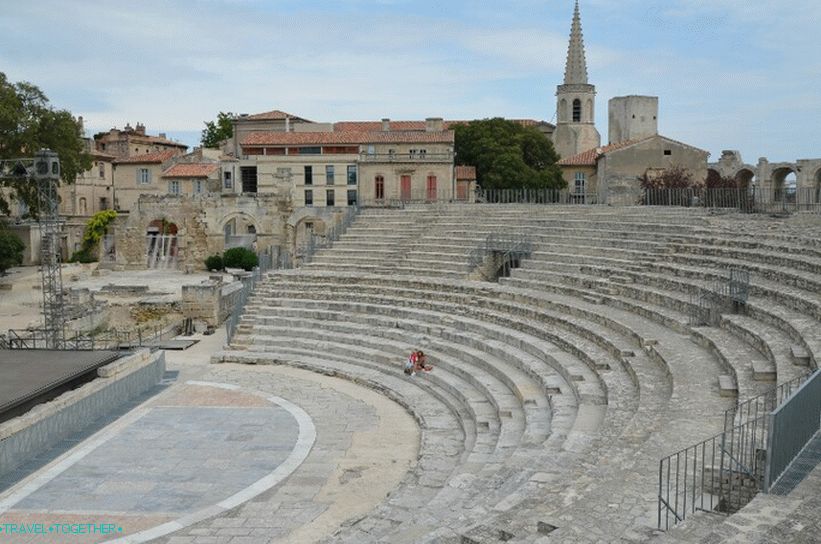
Roman theater – an amazing ancient monument built in the 1st century AD during the reign of Octavian Augustus. Theater accommodated 8 000 spectators and had 33 rows of seats. The back of the scene was decorated with columns and statues. In the early middle ages theater dismantled for the construction of urban fortifications. Most valuable the find from here (Venus Arles) is stored in the Louvre.
 Champs Elysees
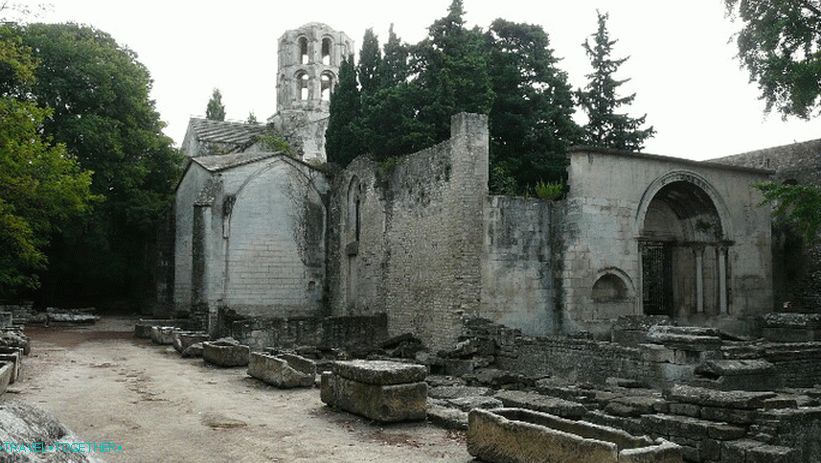
Champs Elysees (Alyscamps) – extensive Roman burial, which is evidence of the ancient history of Arles. This the Gallo-Roman necropolis is located on the southeastern edge of the old cities. In the Middle Ages, this cemetery was very revered, therefore there are burials from all around. Most stone tombs date back to the Middle Ages. The most beautiful sarcophagi were placed in museums. At the end of the necropolis there is a small medieval 12th century church with a tomb in the side chapel 4th century.
 Saint Trofim
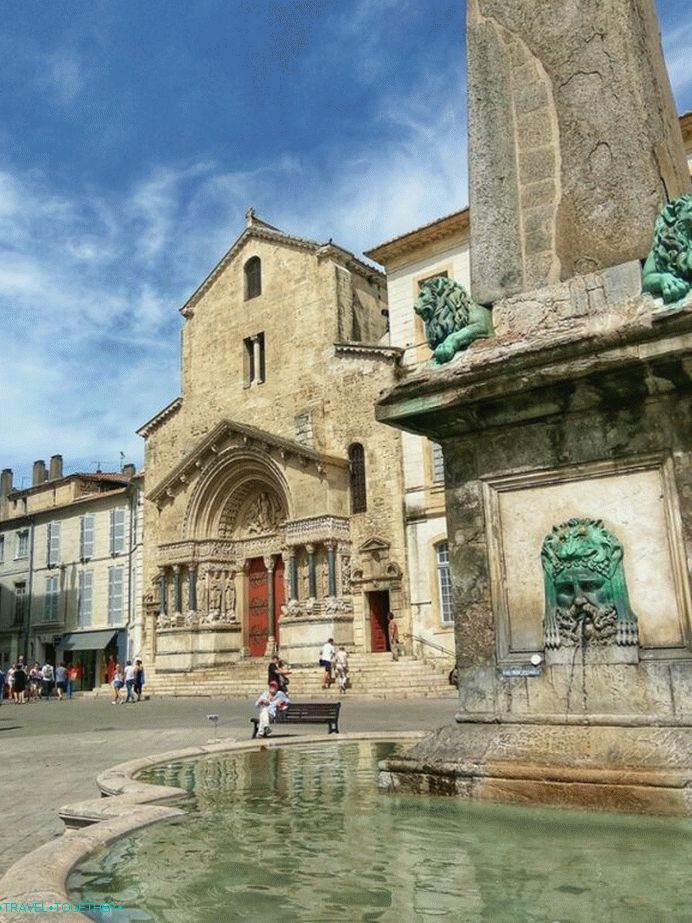
Saint-Trofim – a monastery with a church, which is considered the main landmark of the Middle Ages period in Arles. Monastery was founded in the 12th century and combines various medieval architectural styles, including romance and gothic. Saint Trofim is famous for its sculptures and rich architecture, and also beautiful tapestries. The nearby church is also dedicated to St. Trofimu. It is built in the Romanesque style and has a beautiful facade with scenes from the “Last Judgment”. In the interior of the church you can admire on ancient tapestries and gothic choir.
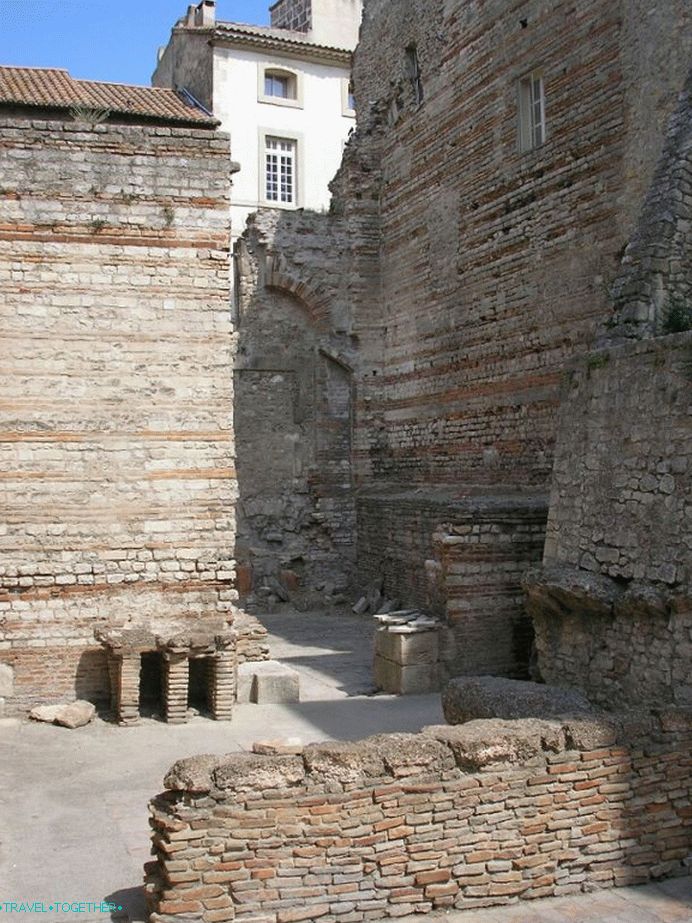 Terme Constantine
The terms of Constantine – a vast antique bath complex, built in the 4th century AD Terms were built on behalf of Emperor Constantine, who was very fond of being in Arles. Once It was a stately complex of buildings resembling a palace. Now ruins.
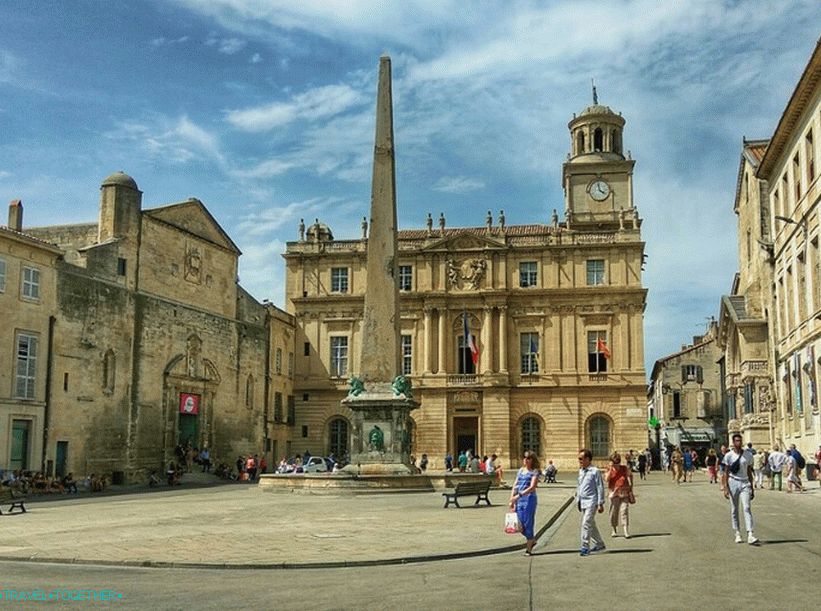 Republic Square
Republic Square is the central square of Arles, located in heart of the old city. Interesting sights: monastery and the church of Saint-Trofim, the gothic church of sv. Anna (pictured left), built in the 17th century and abandoned after the French Revolution, 17th century town hall and a 15 meter ancient Egyptian obelisk in front of her.
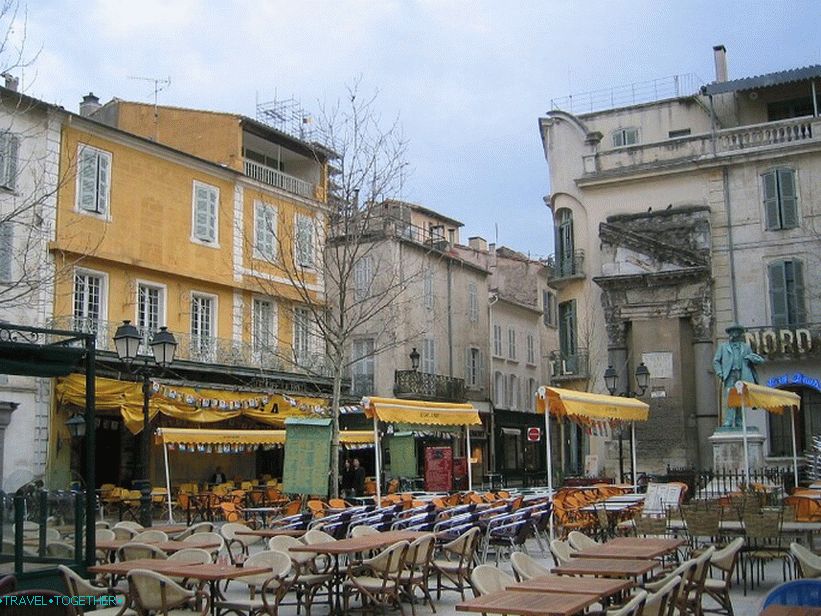 Forum
Forum
The Forum is the central square of ancient Arles, from which now only the underground arcade has survived.
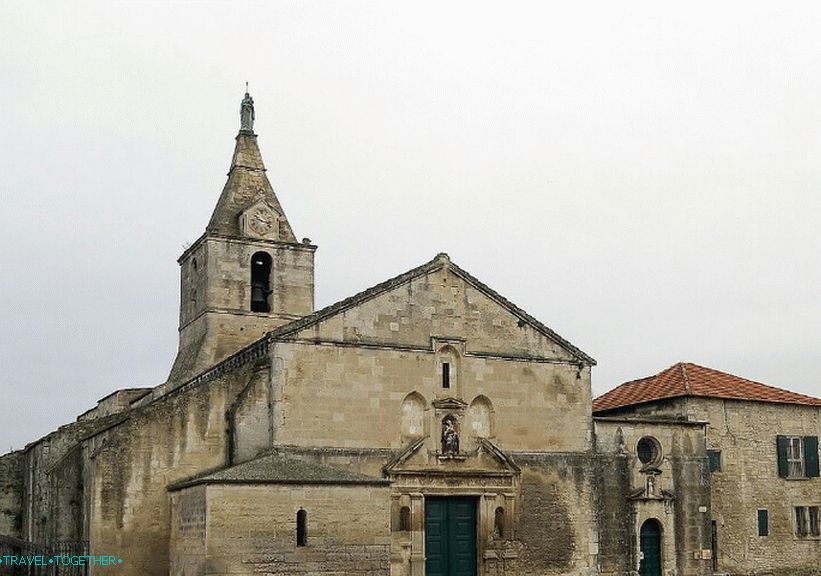 Notre Dame la Mayor
Notre-Dame la Mayor – the oldest church of Arles, founded in 5 century. In the 12th century, the old building was replaced by the Romanesque church, and in It was rebuilt in the Gothic style in the 16th century. Bell tower was built in 1579. The church has a strict gothic interior and several interesting religious artifacts and items art.
Video
Maps and guides
Tourist City Map