The apostle Paul, also known as the apostle of tongues, is one of the most significant figures in the history of Christianity, preacher of the christian faith who introduced significant contribution to the development of theology.
12.09.2013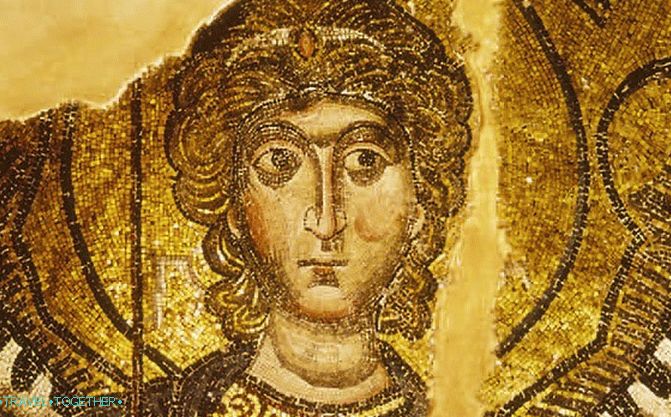
Бывший гонитель первых христиан, Савл стал апостолом, которыйtraveled the world to pass on the news of the Crucifixion and Resurrection of Jesus Christ. During his three journeys, he went through unbelievable trials – was imprisoned, subjected torture, however, did not give up the mission.
In Greek territory, the apostle preached in sixteen locations. His teachings are set forth in the Corinthians, Philippians, Thessalonians, Ephesians, and Romans.
In 49 AD Paul begins his journey by going to the path along the high road Egnatia, built by Proconsul Gneem Egnatiom. This road connected Durres on the Adriatic Sea with Byzantium and passed through all the major cities of Macedonia.
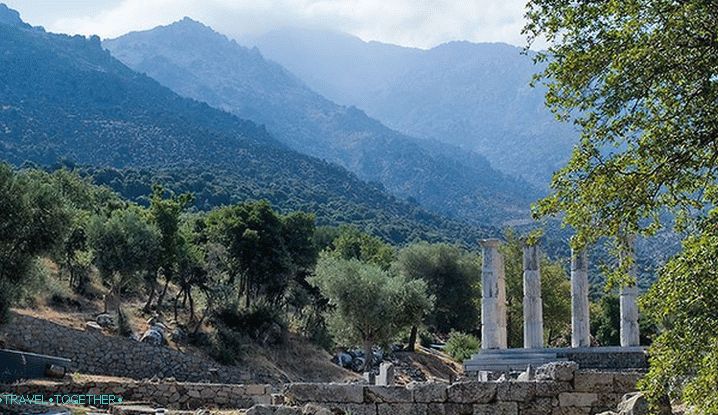
Paul visited Samothrace – a wonderful island in northeastern Aegean Sea with a rich history – there still preserved Byzantine temples and finds that They are of great archaeological value – they testify to the period of prosperity that once experienced Isle. The statue of Nika of Samothrace, which today stored in the Louvre Museum in Paris, as well as antique columns, scattered throughout the island mainly those who are in Paliapoli (the ancient city of Samothrace) say about the high level of cultural development in antiquity, especially in Hellenistic period. The sanctuary of Samothrace was open to all who wished to be initiated into the Cabir mysteries.
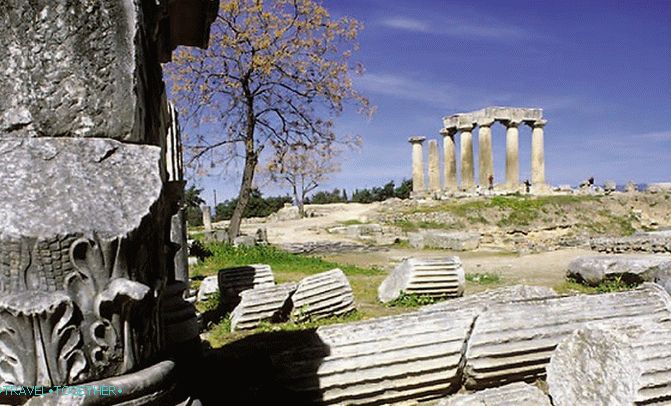
From the island of Samothrace, the apostle Paul went to Naples (Kavala Prefecture) in the northern part of Greece.
Philippi Huge and significant archaeological reserve and the ruins of early Christian temples, surviving to this day, irrefutable evidence of significant bloom that once experienced this city. Before A part of the ancient agora (market) and ruins of an early Christian basilica (5th century).
On the way to Thessaloniki, the apostle Paul also visited Amphipolis and Apollonia.
Another significant Macedonian city – Amphipolis – was founded in 437 BC survived by General Agnon, son of Nikias significant flourishing during the reign of Philip, king of Macedonia 2nd
Apollonia was built in 432 BC. on the southern shore of the lake Volvi migrants from the city of Chalkida on the island of Evia. From the north side of the ancient temple of the god Apollo is located Vema (tribune the apostle Paul), it was also believed that from nearby spring flowing water, consecrated by the apostle (agiasma).
Thessaloniki. Thessaloniki was founded in 315 to AD Cassander, who gave the new city the name of his wife Thessaloniki, sisters of Alexander the Great. Apostle Paul arrived here in the autumn of 49 AD
The majestic early Christian and Byzantine temples, of significant historical value, such as Temple of the Savior (5th century AD), Temple of the Holy Wisdom Of God (Hagia Sophia) (7th century AD), were built on the ruins Early Christian basil. You should definitely visit the temple of the Holy Dimitri, dedicated to the patron saint and protector of the city, built on the ruins of the term, where in 303 AD great martyr Dimitri was imprisoned and buried, as well as the church Virgin Hulkeon (1028 AD). Ancient Agora, Arch and Ruins Galerius Palace, preserved in Navarin Square, the Rotunda, built in the 4th c. AD and turned into a Christian temple in the reign of Emperor Theodosius the Great, invariably lead visitors delighted.
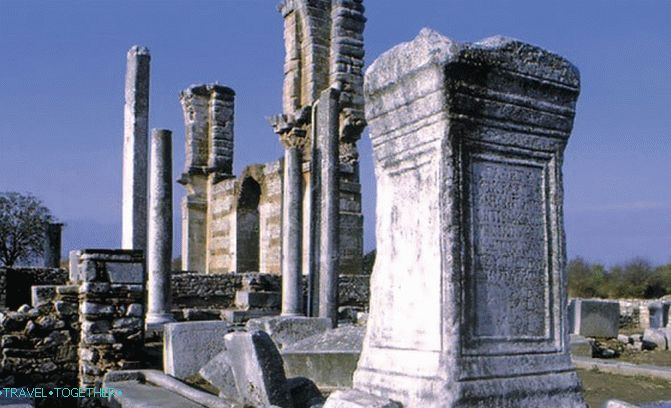
Athens. In 51 AD the apostle Paul visited Athens – the cradle of civilization, philosophical thought and the arts, the city, who is proud of his Parthenon. Paul arrived by ship at Faliron – the then port of Athens – and walked to the city where he discovered an altar with the inscription “to an unknown God.” Awaiting arrival his disciples, Silas and Timothy, from Macedonia, the apostle roamed about the ancient agora and the Acropolis, visited the synagogue and led discussions with the philosophers of that remeni, until he was brought to the Areopagus (rock Ares), where he taught an unknown god. Up to our days in Athens many early Christian and Byzantine temples have survived, such as the church of Kapnikarea (11th century AD), the monastery of Kesaryani (11th century AD) with frescoes of the 16th century. AD, temple dedicated to the apostle Paul (1887 AD) in the center of Athens and others.
Corinth Around 50 AD the apostle arrived in Corinth, where he stayed for 18 months. Top tourist the sights of this city are ancient monuments, Byzantine churches and monasteries. During his third trip Paul visited Lesbos, Chios and Samos – three wonderful islands in northern Aegean Sea.
Kos and Rhodes. Kos Island considered the birthplace of Hippocrates, who is known as the father of medicine. On the area of the Loggia in the city of Kos preserved a huge centuries-old the plane tree in which the apostle preached.
Rhodes is a well-known and one of the most beautiful. Greek islands, the historical mention of which are found since the Neolithic period. The island with its impressive numerous archaeological monuments and finds such as as a fortress of knights hospitallers (or johnnites) is one from the favorite tourist destinations, and it certainly should to visit.
Material taken from the brochure “Religious tourism” (* .pdf)
Greek Ministry of Tourism Greek National tourist organization www.visitgreece.gr